NEC 660.7 Discharge Lighting Conductor Rating Guide
In this guide, we focus on how commercial and industrial facilities handle modern electrical safety, using the NEC Section 660.7 discharge lighting conductor rating as our starting point. That rating matters because it helps ensure conductors for discharge lighting connect, protect, and perform as the National Electrical Code intends, especially where loads, conditions, and inspections get real. And yes, we know it sounds like paperwork. Still, when our technicians walk job sites, they see what happens when the conductor rating is guessed instead of verified. Then the “mystery hum” turns into a costly event. So we explain the rules in plain business terms, with the calm confidence of professionals who have seen every kind of bad wiring decision, from the tragic to the “how did that pass last time” variety.
How NEC 2026 updates shape conductor choices
When people ask what the NEC changes mean, we do not answer with vague summaries. Instead, we break it into decisions that impact real panels, conduit runs, and inspection outcomes. The NEC is built to handle safety under load, fault conditions, heat, moisture, and installation practices. As a result, later editions keep tightening clarity around lighting circuits and how conductors must be selected.
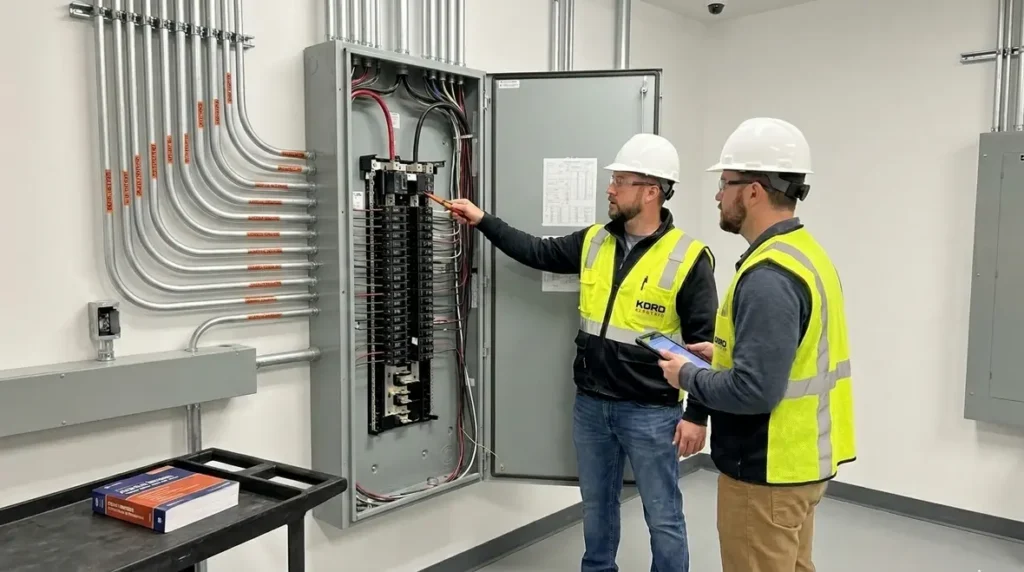
In practice, we align our design reviews and field verification with the NEC framework for discharge lighting. That means we confirm conductor ampacity and temperature ratings, evaluate termination types, and check that equipment compatibility holds up. Additionally, we look at the full path of the circuit: from breaker to ballast to luminaire, because the code cares about the whole system, not just the “right breaker on the label.”
Our expert service staff will tell you that the biggest mistakes do not come from one dramatic error. They come from small mismatches: a conductor with the wrong rating, an improper term, or a routing choice that boosts heat. Therefore, we treat conductor rating as a foundation, not an afterthought.
Translating code language into job-site decisions
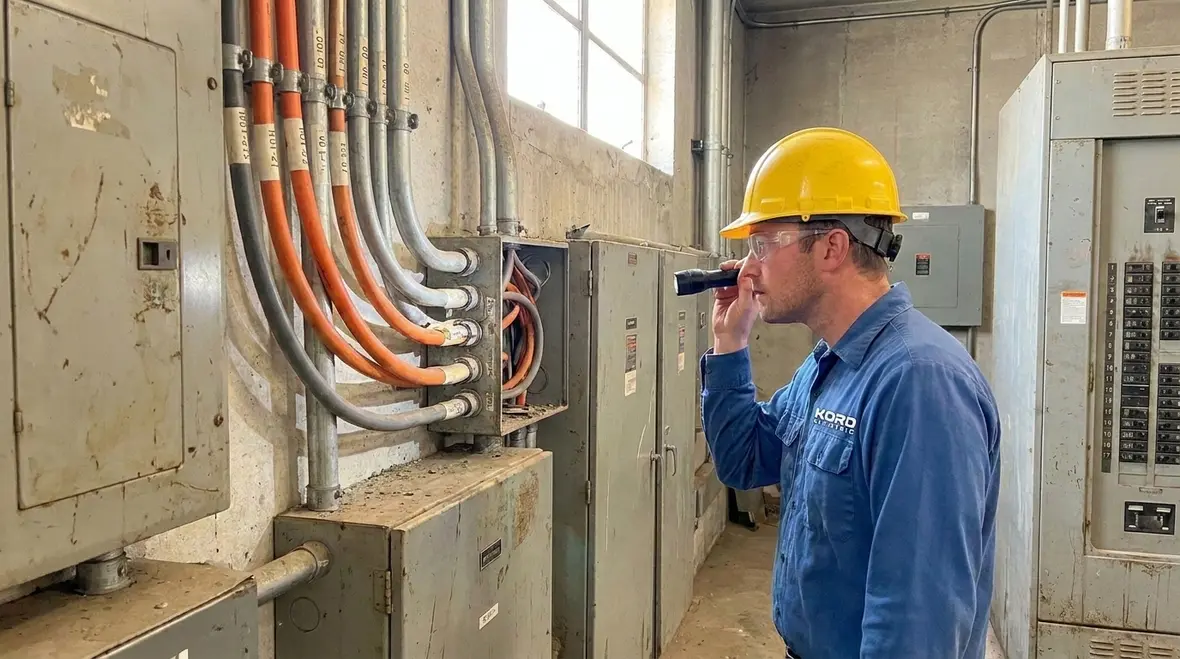
NEC language can feel abstract until you are standing in front of a panel with conductors that have been living next to heat sources, bundled in tightly packed raceways, or landed on terminals that were never meant for that insulation type. Our team bridges that gap by turning article references into specific questions: What is the operating temperature here? How will this conductor behave in this raceway under this load for the next decade? Which termination devices are actually listed and labeled for the wiring method you want to use?
That is where the NEC 2026 updates matter. As clarity improves around conductor selection, derating, and equipment compatibility, it becomes easier for owners and facility teams to defend design choices, not just “hope” they are right. We take that defense seriously, because an inspector asking tough questions after the walls are closed is not the time you want to look for fine print.
NEC Section 660.7 explained for commercial lighting circuits

NEC Section 660.7 focuses on discharge lighting and sets requirements tied to the NEC Section 660.7 discharge lighting conductor rating concept. In simple terms, it tells us that the conductor used for those lighting loads must meet a specific standard so the wiring stays safe under expected operating conditions.
Moreover, that standard is not just about “can it carry current.” It also ties into heat rise, insulation performance, and how the circuit handles normal and abnormal events. If a facility uses discharge lighting in a warehouse, parking structure, plant area, or large retail floor, we plan the wiring like it will be inspected and maintained, because it will be.
Here is how our team approaches it. First, we identify the type of discharge lighting and the circuit configuration. Next, we confirm the conductor temperature rating and insulation system. Then we verify termination devices and connections that will actually be used in your building. Finally, we document what we verified so the next inspection is not a guessing game.
And yes, if someone tries to “save money” by upsizing nothing and downsizing conductor selection, we gently explain that safety is not the place for budget magic tricks.
Where NEC 660.7 fits with the rest of the NEC
Article 660 does not live in isolation. Conductor selection under NEC Section 660.7 must still respect the general rules for ampacity, temperature correction, and wiring methods found elsewhere in the code. That includes how conductors are installed in raceways, how terminations are listed and labeled, and how overcurrent protection coordinates with the equipment.
Our technicians use that bigger picture to prevent conflicts. When we size conductors for discharge lighting circuits, we also look at the rest of the panel schedule, shared raceways, and any nearby high-heat sources. We do this so you do not end up with a technically “correct” conductor on paper that operates on the edge of its comfort zone in real life.
Conductor rating, ampacity, and termination details that matter
Many electricians know ampacity, but code compliance demands more than a number on paper. In commercial and industrial facilities, we deal with power demand changes, vibration, and sometimes harsh environments. Therefore, conductor selection needs to match the real installation conditions.
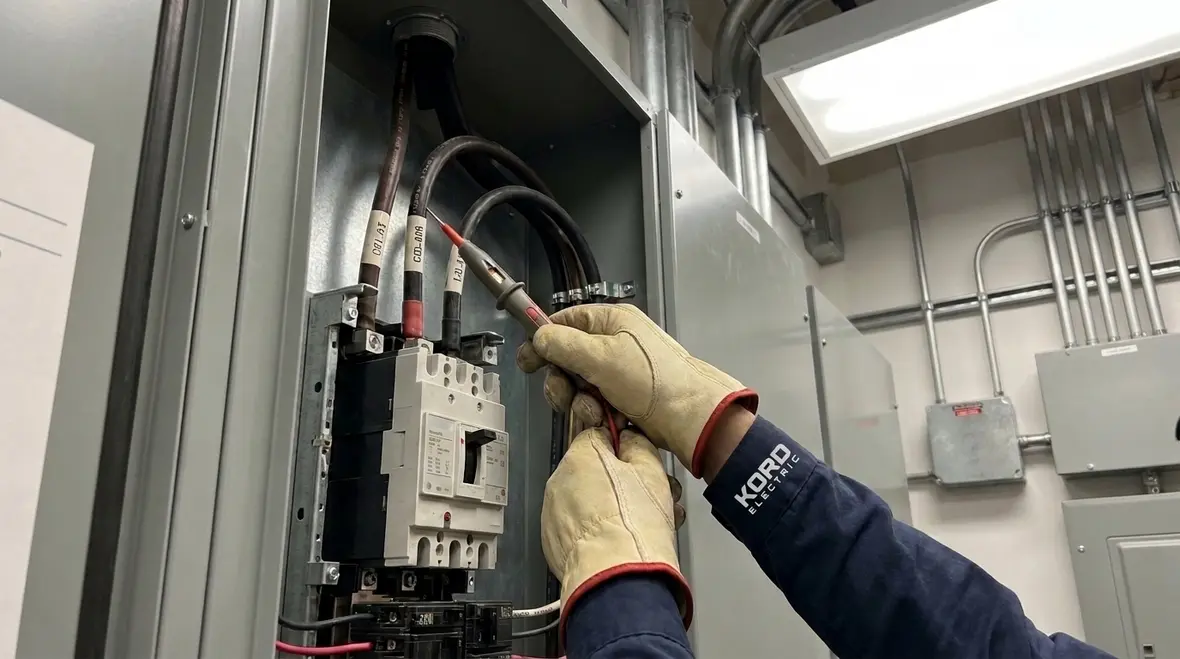
Our technicians typically evaluate three areas in sequence. First, we confirm the conductor insulation type and temperature rating so the insulation survives heat and time. Second, we verify the conductor size and ampacity based on the conditions of use, including any adjustment factors needed for the installation. Third, we inspect terminations and splices, since loose connections and incompatible parts create heat where the code least wants heat to live.
Transitioning from theory to practice, we also check grounding and bonding integrity. That matters because discharge lighting circuits still depend on fault paths. So if a fault occurs, the protection system must act quickly and reliably. We coordinate this with breaker and protective device settings, ensuring the system design stays consistent from the first device to the last connection.
Typical pitfalls in conductor and termination choices
On real projects, the problems that cause callbacks or inspection delays often look deceptively small. Someone lands a conductor with higher temperature-rated insulation on a device only listed for 60°C terminals. Another team bundles multiple loaded discharge lighting circuits tightly in a raceway and forgets to apply adjustment factors. Or a splice is made with hardware never intended for that combination of conductor material and size.
Each of those issues chips away at the safety margin that NEC Section 660.7 and related articles are designed to protect. Our crews watch for those details, because that is how you avoid the late-night troubleshooting session where everyone asks why a perfectly “legal” circuit is running hotter than it should.
Coordination with NEC basics and how we verify in the field
The NEC connects rules like links in a chain. If one link breaks, the whole system weakens. That is why we do not treat conductor rating as a lone requirement. Instead, we coordinate discharge lighting wiring choices with the NEC sections that govern general wiring methods, installation practices, and protection logic.
During field verification, our expert staff uses a method that reduces surprises. We check circuit schedules, confirm conductor labeling, verify termination torque practices where required, and test continuity and insulation where applicable. In addition, we review routing paths to ensure conductors are protected from physical damage and installed with the right support. This also helps prevent thermal buildup along runs, especially in tight spaces common in retrofits.
We also manage documentation. For larger properties, owners and facility managers need clear records that support maintenance teams and future upgrades. So we generate notes that connect what the code requires with what was installed. In other words, we make the paperwork boring, so your maintenance team does not have to be the one solving puzzles at 2 a.m.
From NEC theory to inspection-ready installations
Our field teams treat inspections as a milestone, not a surprise event. That means conductor selections, terminations, labeling, and documentation are lined up with the expectations in the NEC and in the local jurisdiction long before an inspector walks on site. When questions do come up, we can point directly to conductor ratings, installation details, and supporting references that show how NEC Section 660.7 discharge lighting conductor rating requirements were satisfied.
This approach also protects future work. When you decide to add lighting, controls, or emergency egress upgrades later, you are not starting with a mystery system. You are building on a documented, code-aligned foundation.
Common compliance gaps we see in industrial and commercial builds
Our experience across major property buildings shows the same patterns. First, teams sometimes select conductors before they finalize lighting equipment. Then they discover later that the luminaire requirements, ballast or driver specs, or termination needs do not match what was assumed. Second, they forget that installation conditions can change conductor performance. For example, bundling, raceway fill, or confinement can raise operating temperatures.
Third, some facilities treat discharge lighting circuits like regular branch circuits and stop there. Yet discharge lighting often brings specific considerations for conductor rating and installation methods. Therefore, we review the entire lighting system, not just the nearest junction box.
Finally, the inspections. We see repeat issues when teams rely on memory instead of a checklist. When our technicians follow a deliberate review flow, they catch those gaps early. And yes, we keep a friendly sense of humor while doing it. We just do it in a way that protects your building, not your punchline budget.
Design coordination and renovation scenarios
Compliance gaps appear most often during renovations and phased upgrades. A tenant improvement might introduce new discharge lighting while sharing existing raceways and panels. If conductor ratings and NEC Section 660.7 requirements are not revisited at that moment, you can end up with mixed wiring ages, mismatched insulation types, or conductors that no longer make sense for the new loading and temperature profile.
That is why we encourage owners and facility managers to treat each renovation as a chance to verify conductors, terminations, and documentation, not just the new luminaires. A little extra coordination upfront costs far less than re-pulling conductors after the final inspection fails for reasons that could have been prevented.
NEC and safety resources we use to stay current
Staying current matters, because electrical code content evolves, and good compliance depends on accurate interpretation. We rely on code-focused guidance and training references such as articles that break down the National Electrical Code and its applications in real settings, including content published by our related brands and community resources like firepumps.org. We also reference the broader NEC explanations from our company network, including Kord Electric and Kord Fire materials, because they help us translate the code into job site decisions.
For facility teams that want a deeper background on the rulebook behind conductor decisions, we often recommend exploring our company’s NEC overview content, such as the Kord Electric blog guide on understanding NFPA 70: The National Electrical Code explained for 2026. That background makes it easier to see how a requirement like NEC Section 660.7 discharge lighting conductor rating fits into the larger safety story for your building.
In addition, we use these resources to support continuing education for our staff and to strengthen our internal review templates. When you work with us, you benefit from that ongoing work. You get a team that looks at the code, then looks at your building, then connects the two with clear, practical steps. For commercial and industrial facilities, that approach keeps systems safe and inspections smoother.
Why internal standards matter as much as the code
The NEC sets minimums, but strong companies build on top of those requirements with internal standards, checklists, and training. At Kord Electric, we turn lessons from past projects into consistent procedures. That includes how we verify conductor ratings, how we document discharge lighting circuits, and how we prepare inspection-ready packages so owners have a clear record of what was installed.
When internal standards align with NEC expectations, facilities get a double benefit: fewer errors during construction and more confidence during audits, insurance reviews, or future capital planning.
What Kord Electric does next for your property
When we support a facility, we start with the goal: safe, code-aligned discharge lighting installation that fits your building plans and schedules. Then we verify conductor rating needs, especially around discharge lighting rules tied to the NEC Section 660.7 discharge lighting conductor rating framework. After that, our technicians review terminations, protection coordination, routing, and documentation readiness.
Next, we explain what we find in plain language. Our service staff does not hide behind technical jargon. Instead, they show you what the rule says, what your equipment needs, and why the installation must match both. And if you are upgrading a major property, we help plan the work to reduce downtime and keep the safety baseline intact.
| Step | What we verify |
| Design review | Conductor temperature rating, ampacity logic, circuit layout |
| Field verification | Termination quality, routing, labeling, protection coordination |
| Documentation support | Inspection-ready notes tied to NEC discharge lighting requirements |
That is how we help owners and facility teams keep projects compliant and reduce avoidable rework. Because in the commercial and industrial world, time is expensive, and redoing wiring is the most expensive kind of “learning experience.”
If your facility team is also planning broader infrastructure upgrades, our regional Los Angeles County electrical services offering can align conductor verification, discharge lighting work, and larger system improvements under one coordinated plan.
FAQ: NEC 660.7 and discharge lighting conductor rating
Conclusion
If your facility uses discharge lighting, we recommend treating conductor rating and NEC discharge wiring requirements as an upfront safety step, not a last minute fix. Kord Electric works with commercial and industrial properties to verify conductor selection, termination quality, and inspection readiness, with technicians who explain the “why” behind the rule. Reach out to us for a design review or field verification, and we will help you build confidence into your electrical system. After all, nobody wants surprises, unless it is a holiday event. Book your assessment today.