
NEC Section 660.9 Discharge Lighting Minimum Conductors
Kord Electric designs and maintains electrical systems that help commercial and industrial buildings run safely and smoothly. In that work, we follow the NEC closely, including NEC Section 660.9 discharge lighting minimum conductors, which sets rules for conductor sizing and related wiring details. Right away, we want you to know this: those minimum conductor rules are not “paperwork.” They help prevent overheating, reduce failure risk, and keep life safety features dependable when they matter most.
Now, we get it. The NEC can feel like a phone book written by someone who hates sleep. Still, our technicians and expert service staff break it down in plain language. They show your team what the code expects, why it matters, and how we plan the job so you do not get surprised during inspection.
What NEC 2026 sets out for discharge lighting conductors
When people ask about discharge lighting, we first explain the bigger picture. The NEC does not just say “wire it.” It sets performance goals using rules for conductor size, insulation, support, and the way circuits run through the building. NEC Section 660.9 discharge lighting minimum conductors sits inside that larger framework. Therefore, it helps define the baseline conductor requirements that support safe operation of discharge lighting systems.
Because inspections often focus on the details, we recommend you treat these conductor minimums like the foundation of a building permit. If the foundation is off, everything on top wobbles. So, our team reviews drawings, confirms load calculations, checks equipment ratings, and then verifies the wiring method aligns with the code. In other words, we do not guess. We measure, document, and build to match the NEC.

We also coordinate with other trades. For major property buildings, discharging lighting systems may touch fire alarm coordination, emergency power planning, and life safety circuit routing. Therefore, we avoid “handoff chaos,” where one group assumes another group handled the last inch of responsibility. In a commercial or industrial facility, that last inch matters.
How Section 660.9 fits into the broader NEC framework
Discharge lighting conductors do not live on an island. Section 660.9 interacts with wiring method rules, overcurrent protection, and insulation ratings that appear throughout NFPA 70. When we evaluate your system, we read Section 660.9 in context: conductor ampacity, ambient conditions, raceway fill, and how those elements behave when the building runs at full load instead of “demo mode.” That helps facility leaders see that compliance is really about performance, not paperwork.
If your team wants to dig into the larger NEC structure around these requirements, Kord Electric also maintains education resources such as Understanding NFPA 70: The National Electrical Code Explained for 2026, which connects section-by-section rules to the real systems in commercial and industrial facilities.
NEC compliance for commercial and industrial lighting: what we verify on site
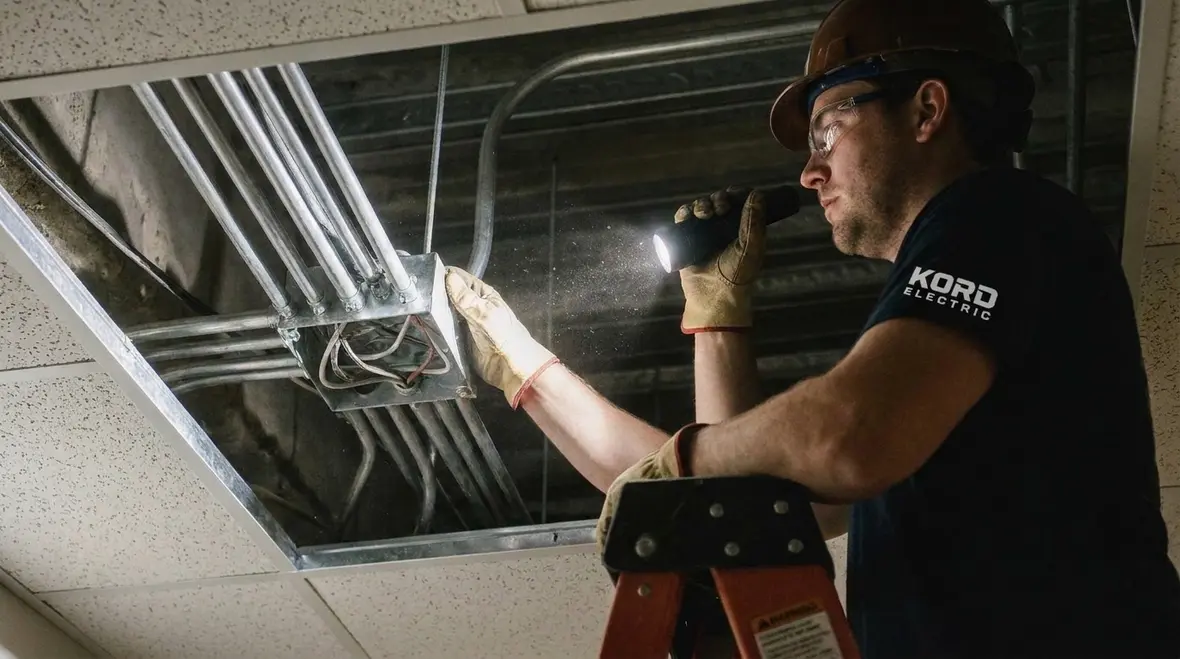
Our technicians follow a repeatable process that fits commercial and industrial facilities. First, we confirm the system type. Then, we check the application and the wiring method. After that, we verify the conductor sizing meets the NEC minimum requirements, including the discharge lighting minimum conductor expectations tied to Section 660.9.
Next, we look beyond the conductor size. We check how the conductors run through the space, how they remain supported, and how terminations are made. A system can have correctly sized conductors and still fail if the installation practices ignore real-world conditions like vibration, heat, moisture, and building movement. As a result, our service staff focuses on both code intent and practical durability.
Then we address the “inspection moment.” Inspectors often ask for documentation. So, we prepare the notes your inspectors care about: conductor sizing details, circuit identification, equipment labeling, and routing. Moreover, we make sure the electrical system aligns with the building’s safety plan, including how emergency and standby lighting gets treated in your design.
And yes, we have seen the classic mistake: someone “fixes it” last minute with the wrong conductor size and assumes nobody will notice. Spoiler: inspectors notice. Our team aims to make sure that does not happen in your facility.
Documentation that keeps projects inspection-ready
For major property buildings, “we think it is compliant” is not a strategy. We build documentation that ties Section 660.9 discharge lighting conductors back to load calculations, panel schedules, and equipment submittals. That way, when an authority having jurisdiction asks, “Why did you choose this conductor size and this wiring method?,” your team can answer with clear, traceable information instead of guesswork.
How conductor sizing connects to heat, life safety, and reliability

Conductor minimums do more than satisfy a checklist. They support thermal performance. When conductors run at higher loads than intended, they can overheat. Overheating shortens insulation life, increases voltage drop, and can create nuisance failures. Meanwhile, voltage drop can reduce the performance of lighting systems and connected controls.
For discharge lighting, proper conductor sizing supports stable starting and steady operation. Therefore, the code links minimum conductors to safe system behavior, not just “legal wiring.” In a commercial or industrial building, stable lighting matters for security cameras, access control areas, wayfinding, and safe work conditions. Also, in spaces with life safety functions, poor electrical performance can complicate emergency readiness.
Our expert service staff explains this connection during walk-throughs. We show teams how heat forms, where it accumulates, and why tight routing and correct terminations matter. Then we translate that into practical installation steps: torque values, conductor finishing practices, and correct connection methods.
Think of it like cooking. You can follow a recipe and still get burnt food if you ignore the stove temperature. Similarly, you can specify “the right system” and still run into trouble if the conductor details do not match the NEC expectations.
Why NEC Section 660.9 discharge lighting minimum conductors protect your budget too
When conductors run too hot for too long, you do not just risk failures. You risk unplanned shutdowns, damaged gear, and repeat service calls that eat into operating budgets. By building to Section 660.9 from day one, you reduce the chance that a “small” conductor decision turns into a big replacement cost later. That is why we tell facility teams that NEC compliance is a cost-control strategy disguised as safety language.
We plan and document NEC electrical work for fast inspections
At Kord Electric, we support major property buildings that need predictable timelines and clean inspection outcomes. So, we treat NEC compliance as a planning task, not an afterthought. We build a documentation trail early and keep it consistent through the project.
First, we review the NEC requirements for the relevant system sections, including how discharge lighting conductor minimums tie to the wiring rules in the code. Then, we align our design review with the actual equipment schedule. Next, we coordinate wiring method selections with the building layout and environmental conditions. Finally, we confirm that the installation details match what the drawings state.
Also, we use our experience to spot mismatches before they become delays. For example, if equipment submittals do not match the design assumptions, we raise it early. If a conduit route changes, we evaluate the impact on conductor derating and physical routing. In many projects, this reduces rework and keeps crews focused.
And because commercial and industrial work rarely stays still, we manage change requests carefully. When scope shifts, our technicians document the updated wiring requirements. Therefore, your team gets clarity instead of confusion.
Connecting discharge lighting planning to broader NEC strategy
Section 660.9 might feel narrow, but the systems it touches live inside a much bigger NEC landscape. Our team often pairs discharge lighting reviews with broader planning tools like our NEC reading and application guides, so that your facility treats conductor sizing, routing, labeling, and protection as one connected plan instead of isolated tasks. That approach keeps your documentation aligned from the single conductor up to the building-wide power map.
Working with related fire code and emergency systems
Electrical compliance rarely stands alone in major propertie buildings. Lighting systems can affect evacuation routes, emergency operations, and security coverage. So, we coordinate electrical work with life safety considerations and with the site’s broader compliance framework.
When discharge lighting links to emergency power or life safety strategy, we confirm how that system gets powered, monitored, and protected. Then, we ensure the conductor minimums and installation practices support that strategy. This is where experience helps, because emergency systems often involve more than one layer of requirements.
We also bring a calm, methodical approach. Our technicians and expert service staff explain the “why” behind the rules, and we do it in a way your team can use during coordination meetings. If you need help aligning electrical work with your fire and life safety partners, we work with you to keep the plan consistent.
For teams that want additional context on national code and compliance, we point stakeholders toward the resources we reference across our platforms, including the NEC-focused explanations at kordfire.com and the broader fire and life safety overview at kordfire.com.au. In addition, fire pump and related life safety resources at firepumps.org can help teams connect electrical planning with wider emergency systems. We do not replace your full design team, but we do help you align the electrical details with the safety goals.
Keeping discharge lighting aligned with building safety intent
Discharge lighting often appears where you cannot afford confusion during an emergency: exit routes, stairwells, production floors, and exterior paths. By tying NEC Section 660.9 conductor decisions to your fire and life safety strategy, we make sure the lighting that matters most has the electrical backbone it needs, rather than hoping that “whatever was available on the truck” will hold up on the worst day the building ever sees.
Common installation issues we prevent during discharge lighting wiring

Even well designed projects can stumble during installation. So, we focus on the error points that tend to show up in commercial and industrial facilities. Here are some of the issues we prevent or correct early.
- Wrong conductor size at terminations: crews sometimes substitute based on availability. We verify the minimum conductor expectations tied to discharge lighting before final connections.
- Loose or incorrect connections: small connection errors can create heat at the termination point. Our technicians follow correct torque and connection methods.
- Improper wiring method selection: a wiring method that does not match the design can affect compliance and performance. We confirm the method during rough-in.
- Poor routing and support: conductors need stable support to resist strain. We ensure proper securing and avoid sharp bends.
- Labeling gaps: when circuit IDs are missing or unclear, inspections take longer. We document and label clearly as work progresses.
And yes, we have heard the joke: “The wire will just work, it is not a rocket launch.” In a sense, that is true. But buildings are not forgiving like a backyard project. In a facility, electrical errors show up as downtime, safety risk, and inspection delays. We prevent those outcomes by treating details with respect.
Field checks we use to catch Section 660.9 problems early
Our teams run a consistent set of field checks around discharge lighting: conductor size verification against calculated load and code minimums, termination torque checks, routing inspections for support and strain relief, and labeling reviews that match panel schedules. By doing this before energization, we turn potential rework into quick corrections instead of last-minute scrambles under inspection pressure.
FAQ: NEC conductor minimums for discharge lighting
Request a code-aligned electrical review with Kord Electric
When your project faces inspection pressure, we help you stay ahead of it. Kord Electric reviews discharge lighting wiring details, verifies conductor sizing requirements tied to NEC Section 660.9 discharge lighting minimum conductors, and helps your team install systems that perform safely in commercial and industrial environments. If you want a calm, documented path from design to commissioning, we invite you to contact us. We will talk through your layout, your equipment schedule, and your timeline, then build a plan your inspectors can trust.
For facilities across the region, our team also supports broader code-focused planning and coordination. If your building is located in or around Los Angeles County and you need a contractor who treats the NEC as a working roadmap instead of a last-minute hurdle, explore how we support regional facilities through our Los Angeles County electrical services offering, which aligns day-to-day electrical work with code expectations and long-term reliability.
Whether you are designing a new discharge lighting system or trying to clean up an existing installation before the next inspection cycle, Kord Electric can help you turn NEC language into a practical, field-tested plan that keeps conductors cool, lighting stable, and safety systems ready when they matter most.