
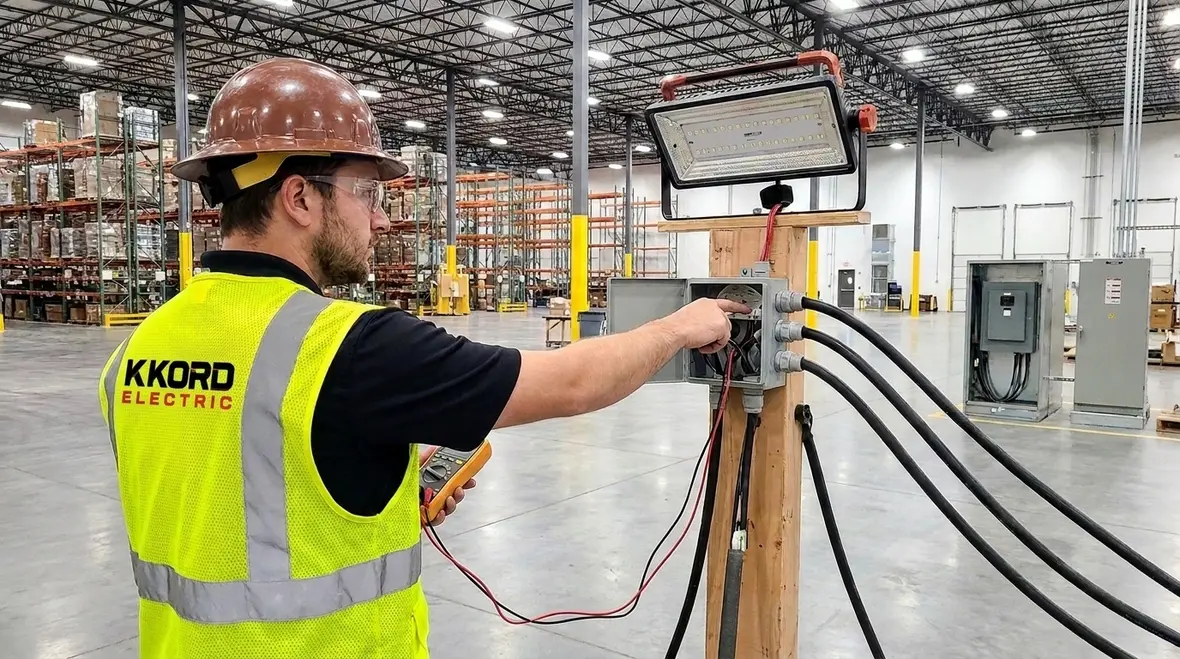
NEC Section 660.21 Portable Discharge Lighting Compliance Guide
Kord Electric supports commercial and industrial facilities and major property buildings with safe, code minded electrical work. When teams plan lighting for emergency use, we focus on NEC Section 660.21 portable discharge lighting right up front, because those fixtures often get installed with great confidence and tested with great surprise. And surprise, as we all know, is not the friend of compliance.
In this guide, we explain how the National Electrical Code and related safety rules come together for portable discharge lighting, including what you should ask for during design, what our expert technicians verify on site, and how maintenance teams protect reliability over time. We will keep it clear, practical, and grounded in real field work, not just theory.
How NEC rules shape real portable discharge lighting
When people hear “code,” they picture a thick binder and a long stare from someone holding a clipboard. However, code is really a set of decisions that prevent hazards. In practice, the NEC shapes how portable discharge lighting is supplied, installed, protected, and maintained in commercial and industrial spaces.
At Kord Electric, our approach starts with the premise that lighting systems have to work when they matter most. Therefore, we treat portable discharge lighting as part of a larger emergency and safety plan. Then we align electrical methods to the NEC framework so the system remains consistent with how inspectors and fire safety teams evaluate it.
Our expert service staff explains the “why” during planning sessions, because it reduces costly rework later. In other words, we help your team avoid installing something that looks fine but behaves poorly under fault, heat, or incorrect connection conditions.
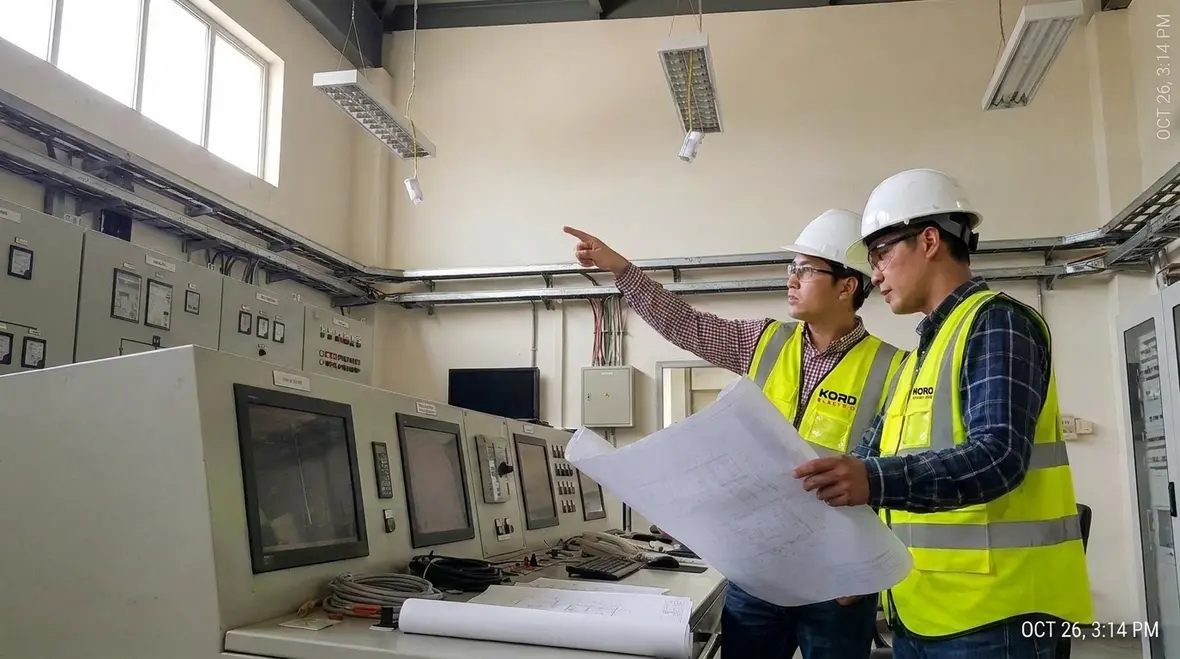
Design and installation checks we perform before energizing
To keep portable discharge lighting compliant and dependable, our technicians verify key details before power is ever applied. First, we review the intended use area and the operational mode. Then we check wiring method, conductor sizing, termination quality, and how the equipment is secured and protected against damage.
Next, we examine the system for compatibility with the building’s emergency and safety strategy. Many facilities mix normal lighting and emergency power in the same planning effort, but they do not always coordinate how those circuits switch and how the lighting equipment behaves during transfer.
At this stage, our expert service staff also reviews labeling and identification. We do not treat that as paperwork. Instead, we treat it as operational clarity for maintenance crews. When someone later needs to isolate a circuit or confirm a device type, clear identification prevents guesswork.
Finally, we verify the physical environment. Portable discharge lighting may face vibration, impact risk, moisture exposure, or temperature changes. Therefore, we confirm that the installed arrangement fits the rated conditions for the equipment and for the surrounding electrical components.
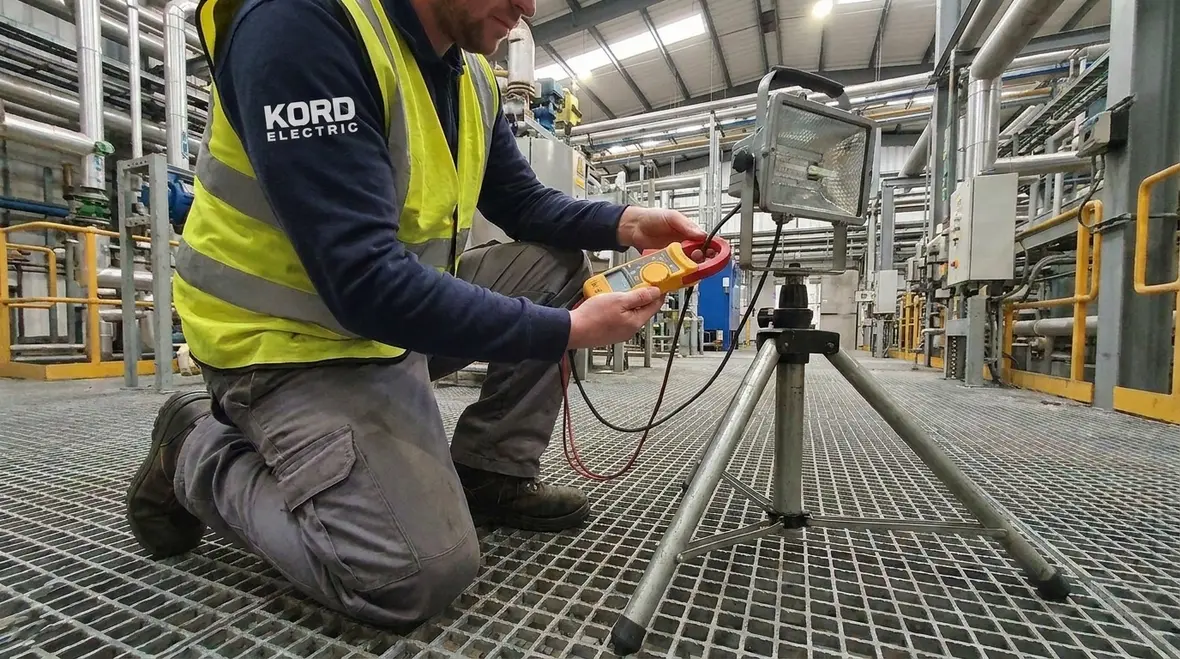
What NFPA 70 expects from electrical safety planning
The NEC is contained within NFPA 70, and it focuses on practical safety outcomes. When you plan portable discharge lighting, the goal is simple: reduce shock, fire risk, and unsafe operation. Yet the path to that goal depends on how your facility routes power, manages overcurrent protection, and maintains separation where it matters.
We often see teams focus only on the fixture and skip the electrical path. That is like buying a fancy lock and installing it on a door with a rotten frame. It might look impressive, but it will not perform.
According to common NEC interpretations used in commercial planning, compliance includes consistent circuit design, safe wiring practices, and safe installation methods. Our technicians walk your team through these points while we review drawings and field conditions. We explain how the rules translate into spacing, support, protection, and termination quality.
Then we align it with how your facility staff actually operates. In major property buildings, maintenance schedules, inspection timing, and access limitations are real constraints. So we recommend installation details that simplify testing, replacement, and documentation over time.
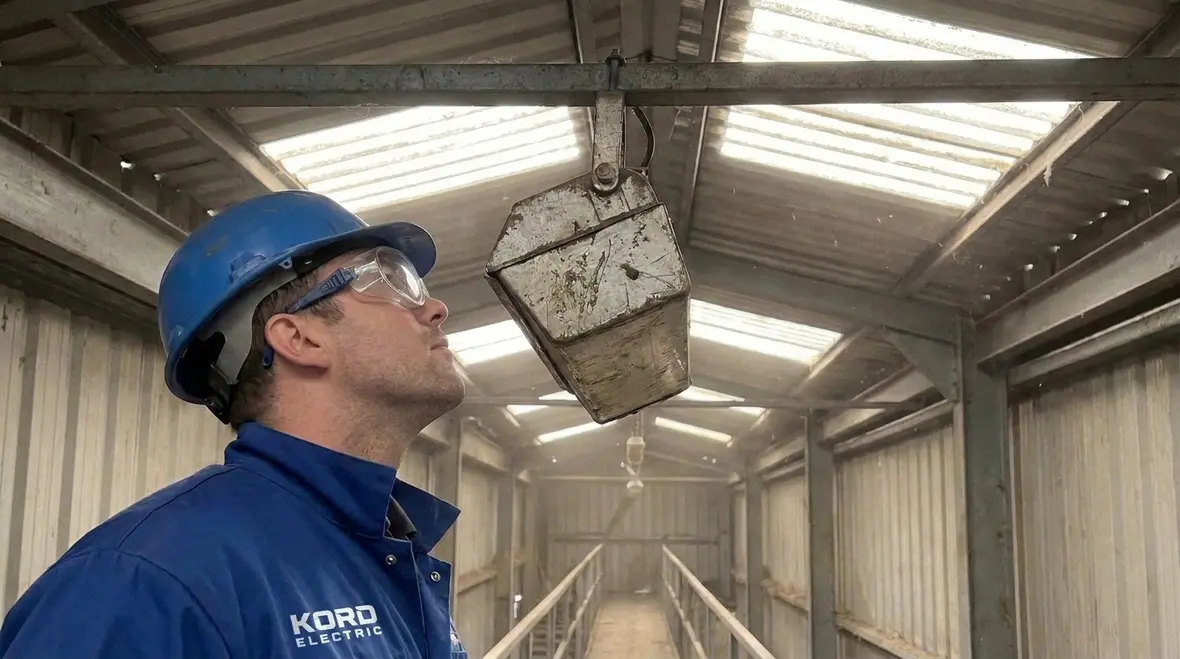
Critical coordination for commercial and industrial buildings
In commercial and industrial facilities, portable discharge lighting does not live in isolation. It must coordinate with fire protection planning, emergency power systems, and building operations. That means electrical work connects to more than just a single circuit.
At Kord Electric, we support facility teams by coordinating the lighting design with the broader building safety system. We also make sure the installation details support inspection and maintenance. This is where our expert technicians earn their keep, because they anticipate the “future problems” that often show up at the worst time.
To keep things straightforward, here is how we approach coordination:
System alignment
- We confirm how portable discharge lighting operates during emergency modes
- We review how the building power system transfers or supports safety loads
- We check that control methods do not create delays or unsafe states
Field readiness
- We verify mounting, protection from impact, and safe routing paths
- We confirm that terminals stay accessible for future service
- We document installation details for ongoing facility maintenance
And yes, we joke that documentation is the “adult supervision” electrical work forgets to schedule. Yet it truly helps when a maintenance tech needs answers quickly.

Maintenance practices that keep portable discharge lighting compliant
Code compliance does not stop after installation. It continues during operation. Portable discharge lighting performance depends on consistent power delivery, clean connections, proper equipment condition, and timely replacement of worn parts.
Our technicians advise commercial facility teams to treat maintenance as a reliability system, not a last minute repair sprint. Therefore, we recommend periodic inspection of connections, supports, and protective hardware. When connections loosen due to vibration or thermal cycling, the risk increases. When a cover cracks or a route gets damaged, the system becomes fragile.
We also stress testing routines that match your facility’s safety program. We can help you set up a process that supports operational requirements and inspection readiness. That includes verifying that portable discharge lighting responds correctly during emergency scenarios and that indicators and controls provide accurate status signals.
Finally, we help teams maintain clear records. Maintenance logs allow your staff to track changes, identify patterns, and reduce troubleshooting time. In major buildings, that reduces downtime and cuts the “guess and replace” habit that costs money and patience.
Common mistakes and how we prevent them
Even experienced teams can stumble during electrical planning for portable discharge lighting. Usually the mistakes come from assumptions, not from ignoring rules. For example, some facilities select equipment that looks compatible but does not match the required installation method or environment. Others wire a device correctly, then route it in a way that creates heat stress or physical damage risk.
Another common issue is missing coordination between drawings and field conditions. In busy construction schedules, field teams sometimes adapt routes or mounts quickly. Later, those changes can affect protection, access, or safe support. Our technicians prevent this by verifying field conditions early and by communicating clearly with project leaders.
We also address termination quality. Poor torque, mismatched terminals, or rushed connections can lead to intermittent faults. And intermittent faults are the worst kind, because they show up exactly when you are trying to look calm. Our expert service staff focuses on correct terminations, proper strain relief where needed, and consistent workmanship standards.
Most importantly, we align with NEC expectations and the safety intent. For guidance and context on NFPA 70 and how others interpret it in practice, teams often review resources from fire and code focused organizations such as kordelectric.com and kordfire.com, along with industry education outlets like firepumps.org for broader safety planning concepts. We use those materials as a foundation, then we apply them to your exact facility needs. For a deeper code overview that pairs well with NEC Section 660.21 portable discharge lighting usage, many facility leaders also reference companion resources like “NFPA 70: All About The National Electrical Code (NEC) 2026,” which reinforces how code language turns into everyday safety decisions.
If your team is also exploring broader electrical upgrades tied to capacity and reliability, you can connect your lighting strategy with guides like “Electrical Panel Upgrades: When Commercial Buildings Need More Capacity” and other resources in the Kord Electric blog, including articles that walk through how NFPA 70 shapes modern commercial work. These references help you see portable discharge lighting as one part of a unified, code informed electrical plan rather than a standalone project.
How this ties into broader NFPA and NEC planning
NEC Section 660.21 portable discharge lighting usage does not live in a vacuum. It ties directly into how your facility approaches NFPA 70, fire codes, and broader life safety planning. When Kord Electric reviews a project, we look for the seams where electrical work meets fire protection, emergency response procedures, and inspection expectations. That is where compliance usually succeeds or fails.
On many projects, we collaborate with fire protection teams who follow NFPA guidance the way we follow the NEC. That collaboration ensures emergency lighting, alarms, suppression, and egress plans all speak the same language. It also means your portable discharge lighting is not just “present” on paper, but actually positioned, powered, and protected in a way that supports safe evacuation and incident response.
Because Kord Electric supports a wide range of commercial and industrial facilities, we often help connect these dots. One facility might be focused on production uptime, another on public occupancy, and another on critical data or healthcare operations. In each case, we tune portable discharge lighting and associated circuits so they align with your risk profile, occupancy type, and local enforcement patterns, not just theoretical best practices.
If you want a deeper dive into how NFPA 70 shapes electrical decision making across your property, it can be helpful to pair this guide with more code focused explainers like “NFPA 70: All About The National Electrical Code (NEC) 2026” from our sister company’s resource center. Together, these perspectives give you both the big picture and the practical field details needed to keep your portable discharge lighting compliant and dependable.
FAQ
Ready for code compliant lighting that holds up under pressure
If your facility needs portable discharge lighting that works during real emergencies and passes the scrutiny that comes with major projects, Kord Electric is ready. We bring expert technicians, disciplined pre energization checks, and maintenance minded planning to commercial and industrial sites and major property buildings. Reach out to us for a review of your design, install plan, or existing system. We will help you reduce risk, avoid costly rework, and keep your lighting reliable when it matters most.
Call Kord Electric today and let’s get it right the first time.
If you are coordinating portable discharge lighting with larger upgrades or new construction work, our dedicated Los Angeles County electrical services team can support everything from panel capacity planning to emergency power integration and long term maintenance strategies, so your lighting compliance is backed by a solid electrical foundation.
For ongoing education and context around how the National Electrical Code keeps evolving, you can also explore in depth explainers such as “NFPA 70: All About The National Electrical Code (NEC) 2026” in our extended resource family. Pairing those code overviews with field tested services from Kord Electric gives your facility a practical, reliable path to NEC Section 660.21 portable discharge lighting usage that stands up to real world pressure and formal inspections alike.


