
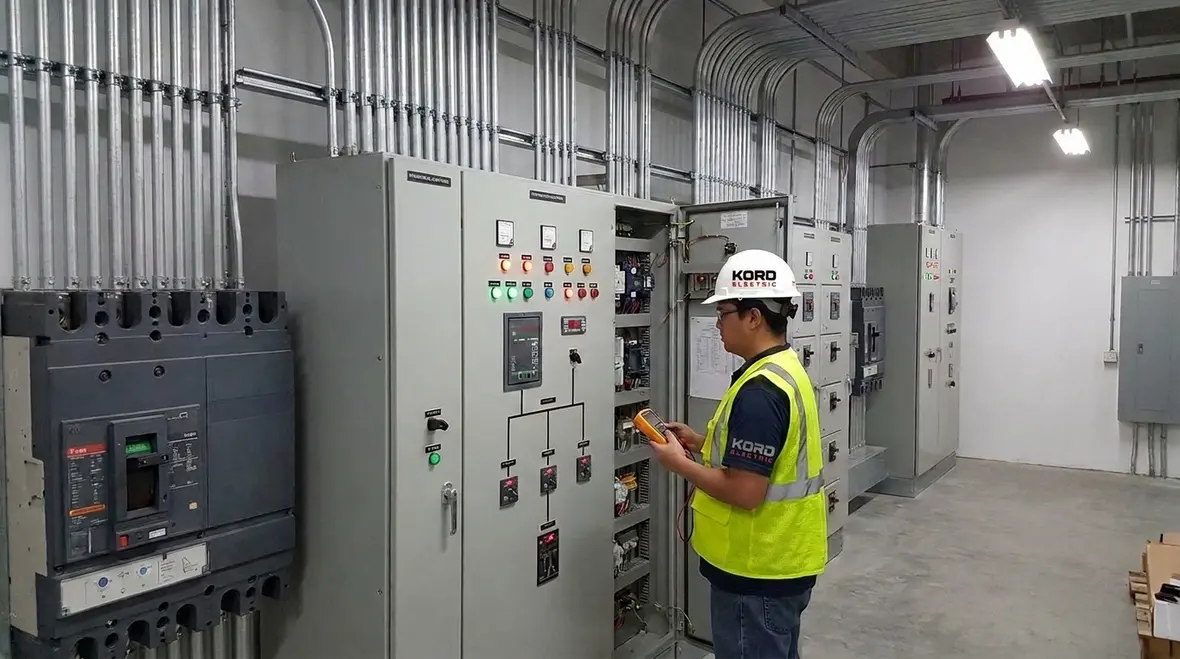
NEC Section 660.24 Discharge Lighting Independent Control
NEC Section 660.24 discharge lighting independent control: what it means for commercial and industrial sites
In the first 100 to 150 words of this guide, we will address a key piece of safety planning: NEC Section 660.24 discharge lighting independent control. This rule focuses on how emergency discharge lighting gets controlled so it can perform when people need it most. In other words, when the power situation changes, the lighting system must not act like it is “just along for the ride.”
At Kord Electric, we support commercial and industrial facilities and major property buildings only. Therefore, we speak in the language of real life: code sections, wiring realities, commissioning checks, and the practical steps our technicians take when systems must work for years. And yes, we also like to keep the process calm, because nobody wants a fire drill that turns into a comedy show.
How the NEC treats emergency and discharge lighting control
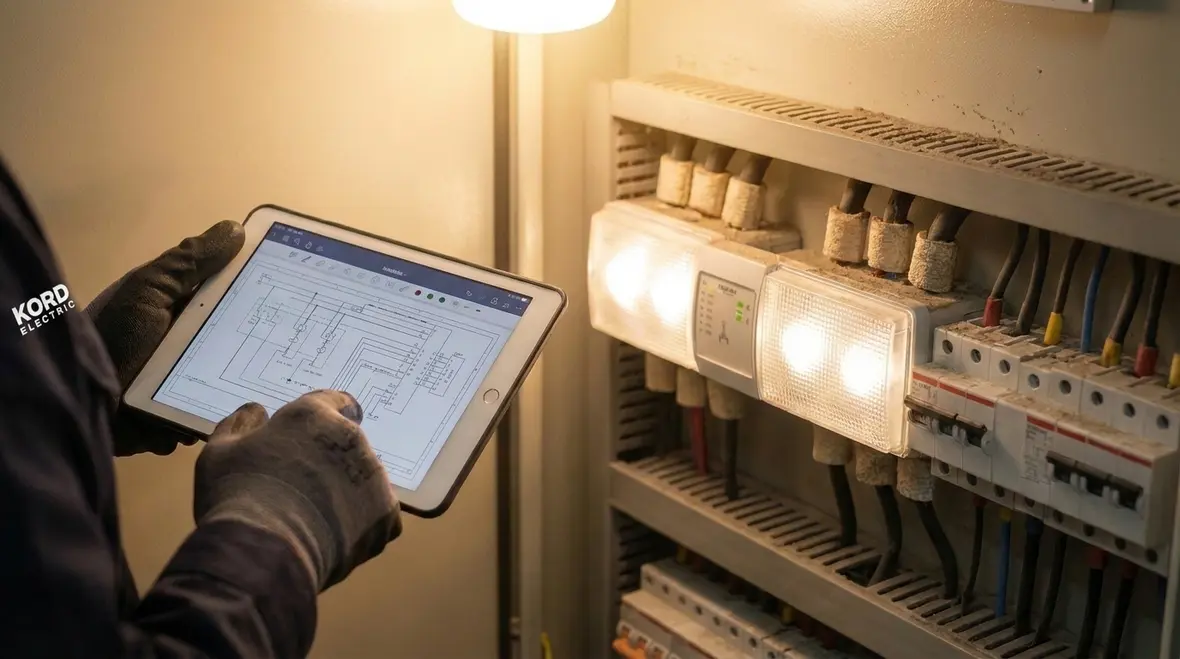
To understand why NEC Section 660.24 matters, we start with the bigger intent of the National Electrical Code. The NEC does not simply name parts and call it good. Instead, it sets performance expectations for life safety systems so failures do not cascade across the building.
When we review discharge lighting independent control requirements, we look at how the system isolates control from normal power behavior. As a result, the building does not rely on a single control path that could fail in one mode and leave the lights confused in another. Moreover, we consider how the building’s controls, sensors, panels, and emergency power systems coordinate under stress.
Our expert service staff explains this step by step during site walks. They point out that the code approach aims for dependable operation, not “creative interpretation.” In our world, creative interpretation is great for art, and not for safety lighting.
Also, for property owners and facilities teams, the practical takeaway matters: the system must remain controllable in the emergency mode in a way that matches code intent, design documents, and testing results. That is where planning, documentation, and installation quality come together.
If you want a broader code baseline before you dive into specific sections like this, resources such as Understanding NFPA 70: The National Electrical Code Explained for 2026 help facilities see how life safety lighting fits into the larger NEC picture.
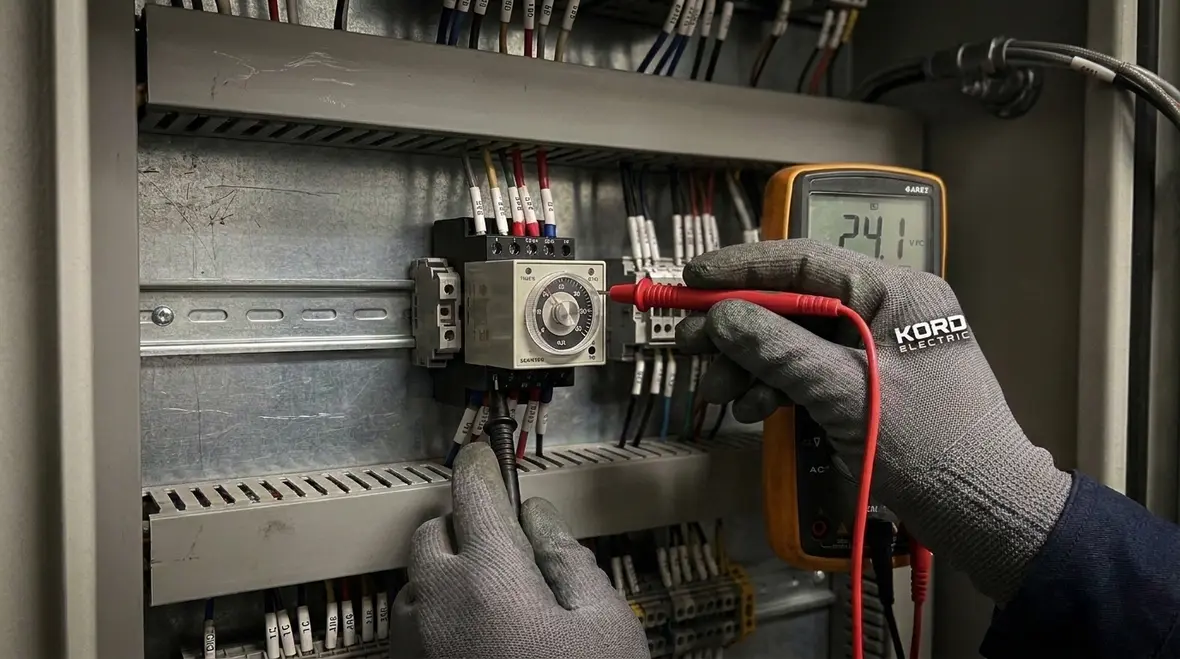
NEC compliance approach for discharge lighting independent control
We help teams build compliance by treating it as a process, not a checkbox. First, we confirm what lighting qualifies under the emergency or discharge lighting category based on the project scope and design documents. Then we map the control strategy to the requirements for independent operation.
Next, we review the electrical arrangement. We check how the control circuits connect, how they interact with emergency power, and how the system separates normal and emergency control paths. After that, we verify that labeling, panel schedules, and wiring methods line up with the design. Finally, we run operational checks that prove the system behaves as expected.
Our technicians take the lead on these field realities. They do not just glance at drawings. Instead, they trace circuits, verify terminations, and confirm that the actual install matches what the code and drawings demand. If something is not consistent, we correct it before it becomes a “later problem.” And later problems usually show up during audits, not during a calm Tuesday morning.
Control design details that prevent failure during emergency mode
When emergency power transitions, timing and control logic can make or break a life safety system. Therefore, we focus on design details that reduce confusion when the building shifts states.
Here are key areas we examine closely for discharge lighting independent control planning:
- Isolation of control paths: We ensure the emergency lighting control does not depend on the same normal mode control behavior that could fail or behave unexpectedly.
- Correct switching behavior: We verify that the switching sequence supports emergency operation, rather than creating gaps where lights could stay off longer than allowed.
- Clear separation of system functions: We confirm the emergency lighting system control stays distinct from unrelated building control functions.
- Proper integration with emergency power: We check the relationship between emergency power sources, distribution equipment, and the discharge lighting control logic.
- Testing access and repeatability: We help facilities teams maintain systems through serviceable design, so checks stay consistent over time.
As the system ages, small changes can also show up. So we do not treat the initial install as the end. We align maintenance and service schedules with the control strategy, because a system that tested well once can still drift if maintenance ignores the details.
If you are thinking “we already did this during construction,” that is great. However, we still advise ongoing verification. The code intent stays the same, but components, settings, and operational conditions can shift.
Commissioning, inspection, and documentation for major property buildings
At commercial and industrial facilities, commissioning is where plans meet performance. Therefore, we guide teams to commission in a way that proves the system meets the requirements for emergency operation control. Also, we make sure the documentation supports both engineering review and facility operations.
Our process typically includes these steps:
- Review of design intent: We compare the final field arrangement to the design scope and control method.
- Verification of control behavior: We check that independent control actions perform correctly during emergency mode transitions.
- Operational and functional checks: We confirm that discharge lighting responds the way the system is supposed to, not the way it “usually does.”
- Labeling and circuit identification: We ensure the right people can find the right circuits quickly.
- Service records and maintenance notes: We document what we verified so future teams do not start from scratch.
In our experience, facilities teams value clear records. They reduce confusion during troubleshooting, and they make it easier for others to maintain compliance during property turnover, upgrades, or seasonal testing. In that sense, documentation becomes a quiet hero. It does not shine in photos, but it saves time when problems show up.
And if you are wondering how this ties to broader safety thinking, resources from code-focused organizations and related safety communities help teams build a full picture. We also stay aligned with the NEC approach covered in our code and fire safety content, including the NEC overview and guidance you can find on sites like Kord Fire and Kord Electric.
Common mistakes we see during upgrades and retrofit projects
Retrofits can look simple until the control logic meets the real world. So we help owners and contractors avoid recurring issues that undermine discharge lighting independent control performance.
Here are the top mistakes we see in the field for major property buildings:
- Mixing normal and emergency control behavior: Controls that “almost” work can fail in the exact moment emergency mode needs them most.
- Changing equipment without updating drawings: If the control arrangement changes, documentation must follow. Otherwise, future maintenance becomes guesswork.
- Skipping functional testing after modifications: Operational checks prove the system responds correctly. Without them, problems hide until the next outage.
- Unclear circuit identification: Confusing labeling slows response time. When seconds matter, confusion costs.
- Ignoring field conditions: Raceway routing, termination quality, and grounding conditions can affect system reliability.
Now, a quick joke, because we are still human. Some teams treat emergency lighting like a museum exhibit. They dust it occasionally, admire it quietly, and then act surprised when it does not perform during an actual event. We take a different approach. We test, verify, and maintain like the building depends on it, because it does.
Where Kord Electric fits: expert electrical service for life safety systems
We serve commercial and industrial facilities and major property buildings, which means we focus on the kind of projects where reliability, documentation, and service planning matter. We also work with facility teams, contractors, and stakeholders who need predictable outcomes.
Our approach blends code awareness with field expertise. Our technicians explain what they see in plain language, then we connect it back to the NEC intent. Furthermore, our team supports your project lifecycle, including planning support, installation oversight, commissioning help, and service maintenance.
We also keep our learning loop active. That means we stay aligned with fire safety and NEC-focused guidance, including content hosted on Kord Fire and related training and safety communities like firepumps.org. When we combine that knowledge with on site experience, we help ensure your discharge lighting control strategy supports safe operation.
If your facility is in Southern California and you need help translating NEC Section 660.24 discharge lighting independent control into a real project plan, our Los Angeles County electrical services team supports large commercial, industrial, and major property buildings with code-minded installation, upgrades, and testing.
If you want a calmer way to handle code compliance, you call professionals who already know where the trouble usually hides. Then you let us handle the tracing, testing, and documentation, while you focus on running the facility.
FAQ
How we help you move from code text to real performance
When your facility depends on emergency lighting, we do not treat NEC requirements like trivia. We treat them like the reason the system works when it counts. At Kord Electric, our expert service staff supports commercial and industrial facilities and major property buildings with clear planning, careful installation, and testing that proves the control strategy performs as intended. Reach out to us for an assessment, a compliance review, or service support, and let us turn code language into dependable operation.


