NEC 680.14 Pool Corrosive Environment Wiring by Kord Electric
NEC Section 680.14 pool corrosive environment wiring sits at the center of many pool and water feature electrical plans, and we treat it that way at Kord Electric. When a facility has water, chemicals, and moisture in the same neighborhood, corrosion moves in fast. That is why we explain to facility owners, contractors, and engineers how we apply requirements for pool corrosive environment wiring and related practices in commercial and industrial settings. Our approach is practical, code-minded, and built for real job sites where schedules slip and “temporary” fixes somehow live forever.
To keep things clear, our expert service staff walks through the logic step by step. And yes, we still laugh a little when we hear someone say, “It is just a pool.” In our experience, it is never just a pool. It is a system, and it deserves proper electrical protection.
Why NEC 680.14 pool corrosive environment wiring matters for commercial pools
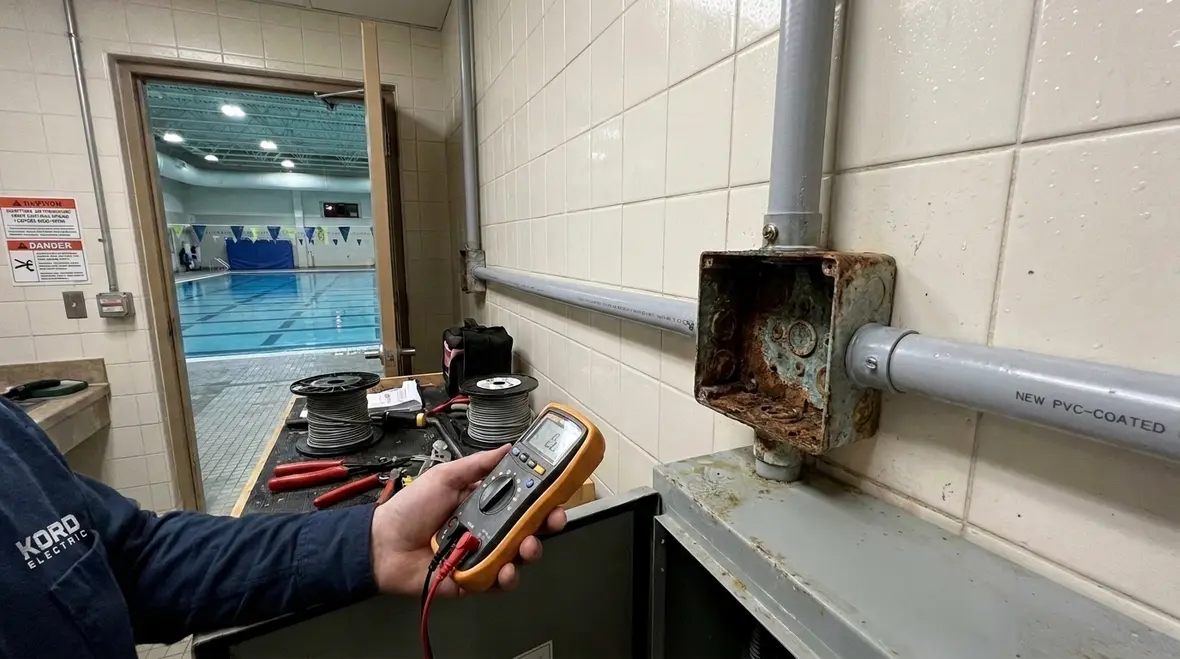
When we design or review electrical systems for commercial and major property buildings, we focus on long term safety and dependable performance. NEC Section 680.14 pool corrosive environment wiring exists because pool areas create harsh conditions that attack conductors and metal parts. Chlorine, salt water, damp air, and cleaning chemicals can break down materials over time, even when the system looks fine during commissioning.
Therefore, the requirement is not about fear, it is about timing. If corrosion starts early, it can weaken connections, degrade insulation, and increase resistance in ways that do not show up until later. Then, maintenance costs jump, and operations lose time. In a commercial setting, that downtime rarely comes at a convenient moment. So, we plan ahead, and we document what we do.
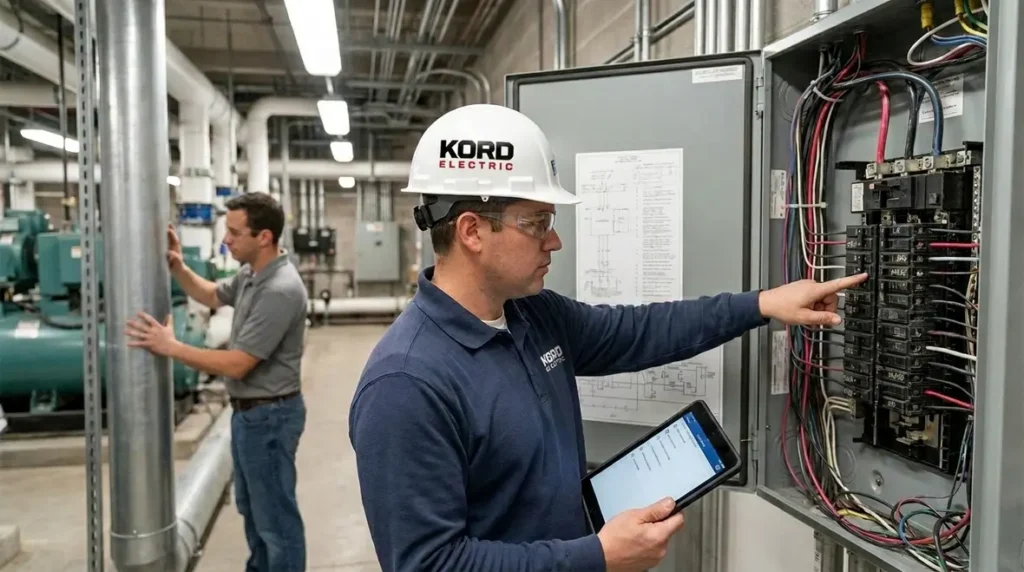
Our technicians also know how to read the room. They explain what to expect during inspections, which components are most vulnerable, and how the right wiring method protects the system. That way, building teams can make informed choices without guessing.
What corrosion does to electrical systems in pool areas
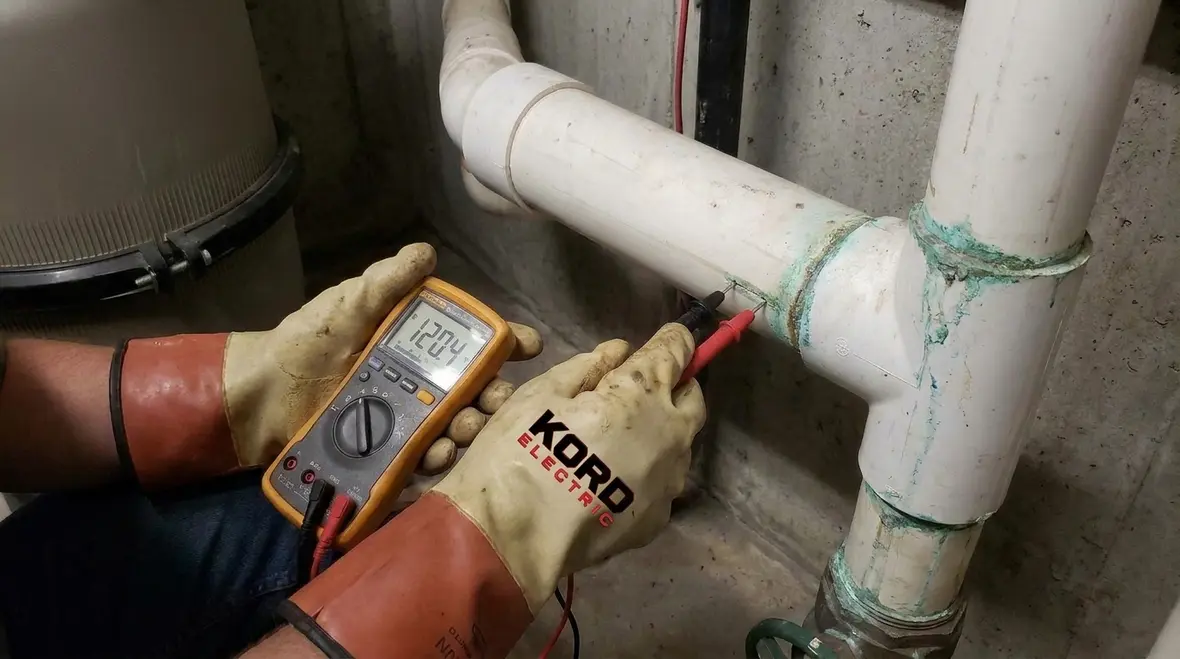
First, corrosion targets metal surfaces and terminations. It creeps in at joints, fittings, and bonding points, especially where water and chemical vapors linger. Next, corrosion can reduce contact integrity at splices or connectors. Then, heat builds at higher resistance points, which can shorten cable life and create nuisance faults.
In addition, pool environments often include areas with different exposure levels. Some zones stay wetter, while others get chemical vapor but not direct spray. Because exposure changes across a site, we help teams avoid one size fits all thinking. We also avoid relying on “it worked once” experience. We verify the conditions, and we match wiring methods to the environment.
Our expert service staff explains these risks in plain language. They do not just cite the code. They translate it into what happens in the field when insulation, conductors, and equipment face constant moisture and chemical action.
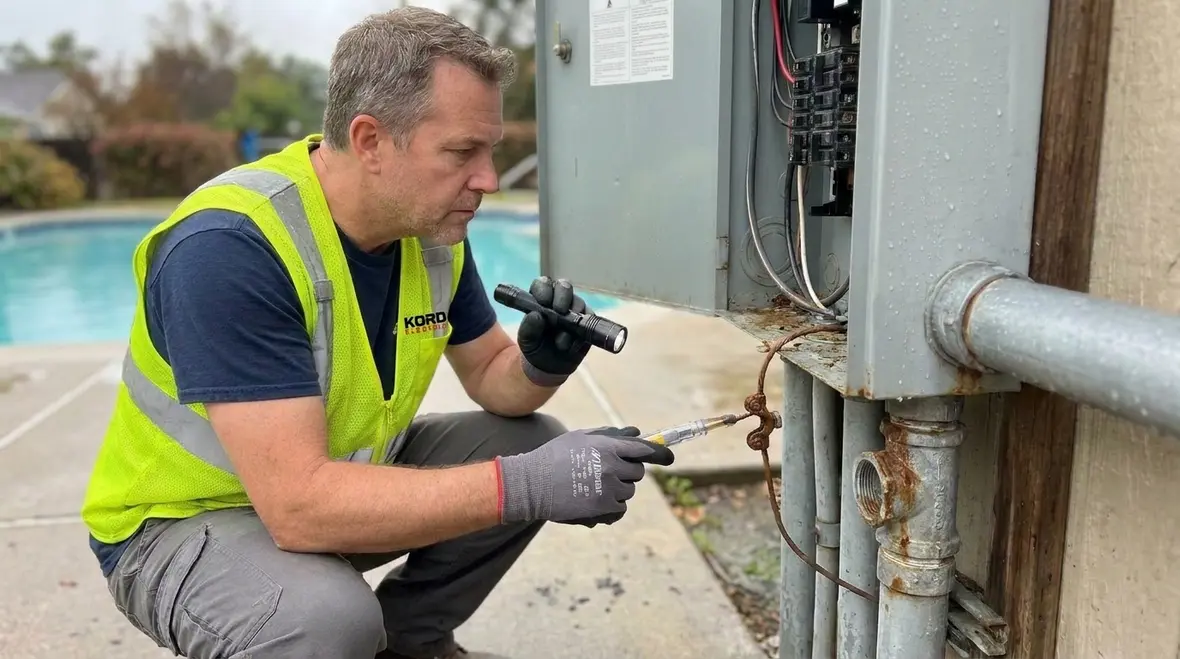
How we apply the NEC for raceways, conductors, and protection
At Kord Electric, we apply the National Electrical Code in a way that supports safe, durable installations. However, we also keep the facility’s realities in view. That means we think about accessibility, maintenance, and replacement planning, not just compliance.
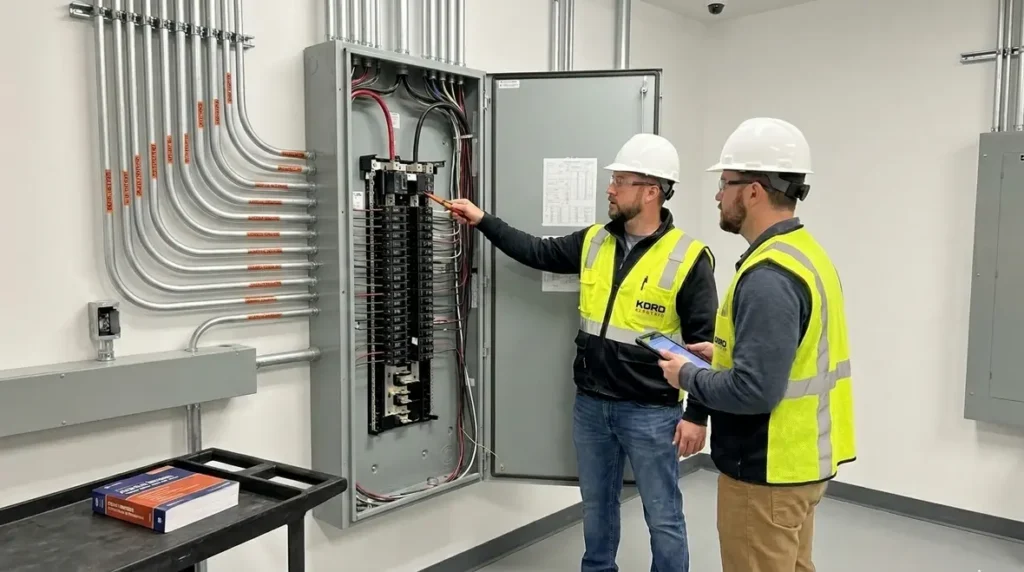
When a site needs NEC aligned pool corrosive environment wiring, we evaluate the entire path: the route, the fittings, the way conductors enter equipment, and how terminations stay sealed. We check for compatible wiring methods and protective measures. We also consider bonding and grounding needs that keep the system stable during normal operation and fault conditions.
Now, here is where we often save teams from expensive mistakes. Some projects specify equipment first, then treat the wiring route as an afterthought. Meanwhile, corrosion does not care about your schedule. It follows the weakest exposed connection. So, we coordinate early between electricians, site leadership, and any design team.
And yes, we have seen installations where someone used the “most convenient” fitting. Later, that convenience turns into a leak and a corrosion trail. We do not do that. Our technicians plan the route so protection stays intact end to end.
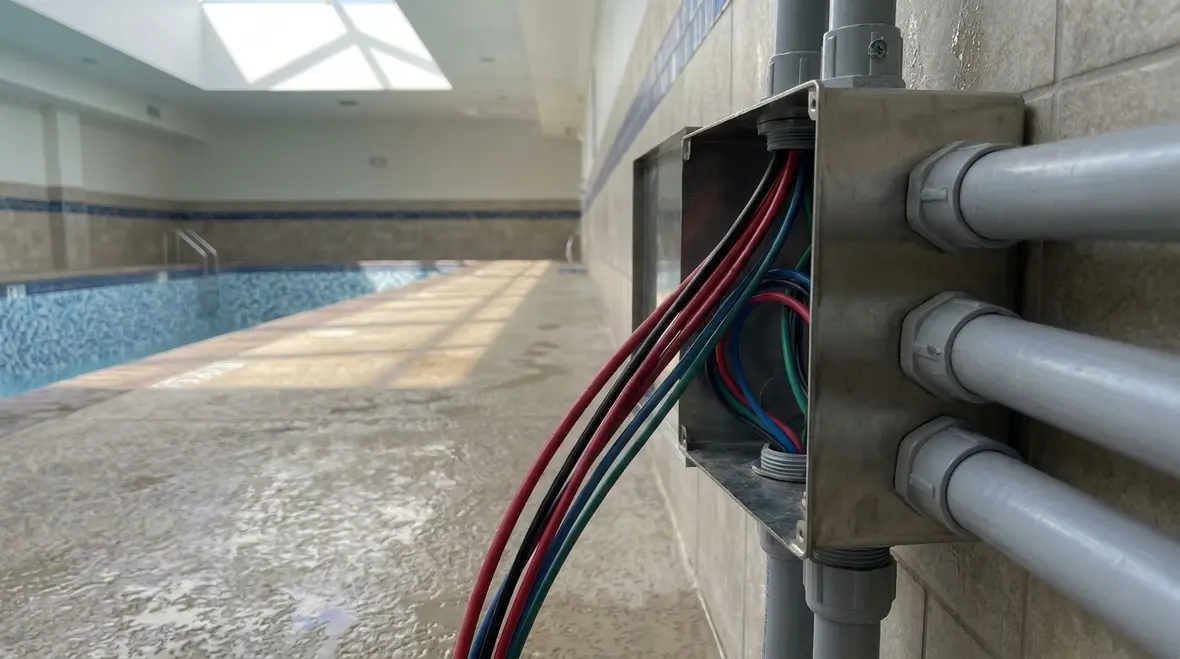
Inspectors, documentation, and field proof that the system will last
To reduce surprises, we support projects with documentation and clear job site practices. Even when everyone is working hard, inspection outcomes can vary if installers cannot show how the system matches the plan. Therefore, we build a process that makes the requirements easy to verify.
First, we label key components and wiring methods clearly. Next, we keep notes on cable routing decisions and protective steps. Then, we coordinate with the right parties so inspectors can understand the logic quickly. This helps keep the project moving and protects the owner’s investment.
We also explain the “why” during walk-throughs. Our expert service staff shows what corrosion resistance looks like in real terms: where moisture tends to collect, how transitions can fail, and how the chosen wiring method prevents degradation. If the goal is longevity, then field proof matters.
For teams who want to go deeper, we point them to resources that discuss NEC updates and the reasoning behind code structure, including the guidance published around the National Electrical Code themes for 2026 and the broader NEC overview. You can find those references through the Kord Electric and Kord Fire resources online, including pages that cover the National Electrical Code context and related fire and electrical topics. A helpful starting point is our internal guide Understanding NFPA 70: The National Electrical Code Explained for 2026, which ties code language directly to planning decisions for commercial and industrial facilities.
Working with pool and fire systems in major property buildings
Pool areas rarely operate alone. In many major property buildings, pool environments connect to filtration equipment, lighting, controls, and sometimes fire and life safety systems in nearby spaces. Because of that, we coordinate electrical work with related infrastructure planning. We do not treat wiring as isolated tasks.
Additionally, we consider how water treatment equipment and controls interact with power distribution. If corrosion damages conductors feeding pumps or lighting, the impact can spread to operations. Then, reliability suffers and service calls rise.
In facilities where fire protection systems matter, we also stay mindful of how electrical reliability supports the full safety picture. If building teams use professional references and guidance from fire and life safety organizations, they often include electrical coordination points that help keep systems dependable. Kord Electric works with the same mindset: electrical systems must support the safety and operational goals of the property.
So, our technicians focus on stable power delivery, correct protection, and clean installation practices that stand up to chemical and moisture exposure. We help keep the pool equipment running and the facility team confident.
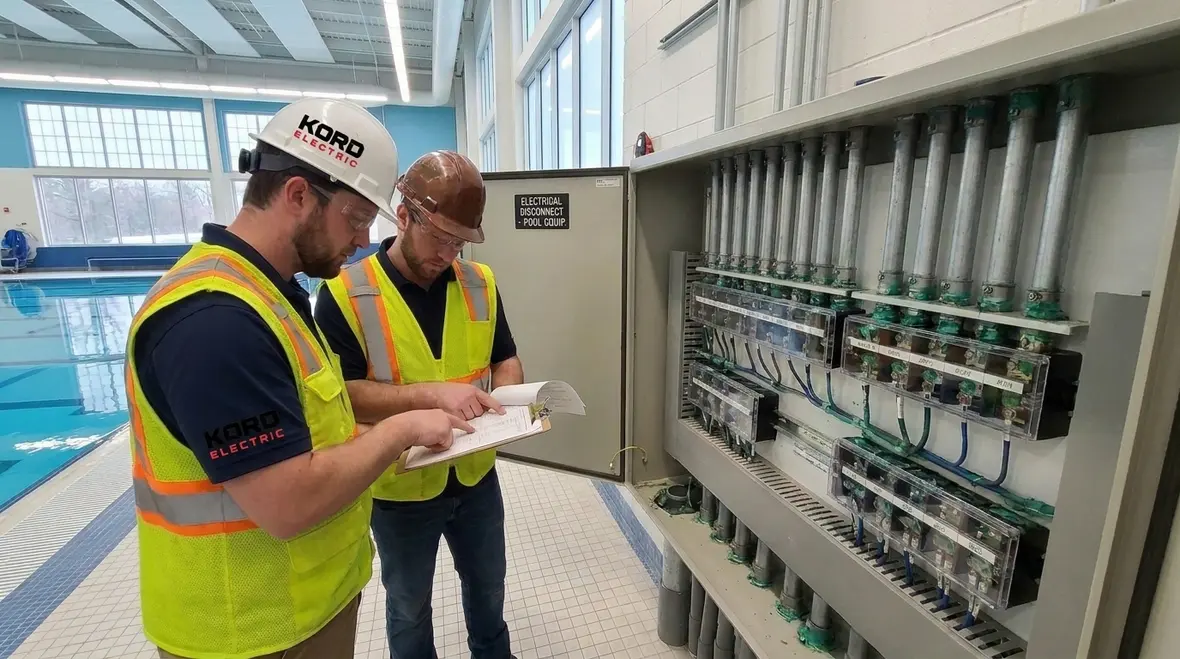
Planning and budgeting for code based pool wiring upgrades
Upgrades often happen after problems surface. Yet, we encourage teams to plan before corrosion becomes visible. When owners treat NEC Section 680.14 pool corrosive environment wiring as an upfront requirement, they reduce costly late changes.
We help commercial and industrial facilities think through scope early. That means we discuss where wiring methods need adjustment, which sections face the highest exposure, and how much downtime the facility can tolerate. Then we align the work with operations.
Budgeting gets easier when teams understand tradeoffs. For example, choosing a durable wiring method can reduce future labor and replacement. Even if a project cost looks higher at first, we often find it pays back through fewer call backs and longer component life. And if someone tries to cut corners, we remind them that corrosion is not a negotiator. It just keeps working.
Our approach stays business friendly. We communicate clearly, we schedule responsibly, and we explain what matters most for safety and longevity in major propertie buildings. When facilities in Southern California need help putting NEC Section 680.14 pool corrosive environment wiring into practice, our dedicated Los Angeles County electrical services team can align pool work with broader upgrades so critical systems move forward together.
FAQ for pool corrosive environment wiring and NEC requirements
Conclusion: talk with Kord Electric before corrosion writes the invoice
Corrosion rarely announces itself with a dramatic soundtrack. It usually shows up quietly, then demands attention when the system is already aging. At Kord Electric, we help commercial and industrial facilities plan NEC compliant pool corrosive environment wiring so your pool power stays safe, stable, and serviceable. Our technicians and expert service staff walk through the route, the protection, and the inspection-ready details. Reach out to us today to review your pool area electrical setup and map the right upgrade path.
If your facility is also preparing for broader NEC-driven changes, resources like our NEC overview for 2026 and our electrical code upgrade consulting guidance can support long term planning while we address NEC 680.14 pool corrosive environment wiring at the job site level.