
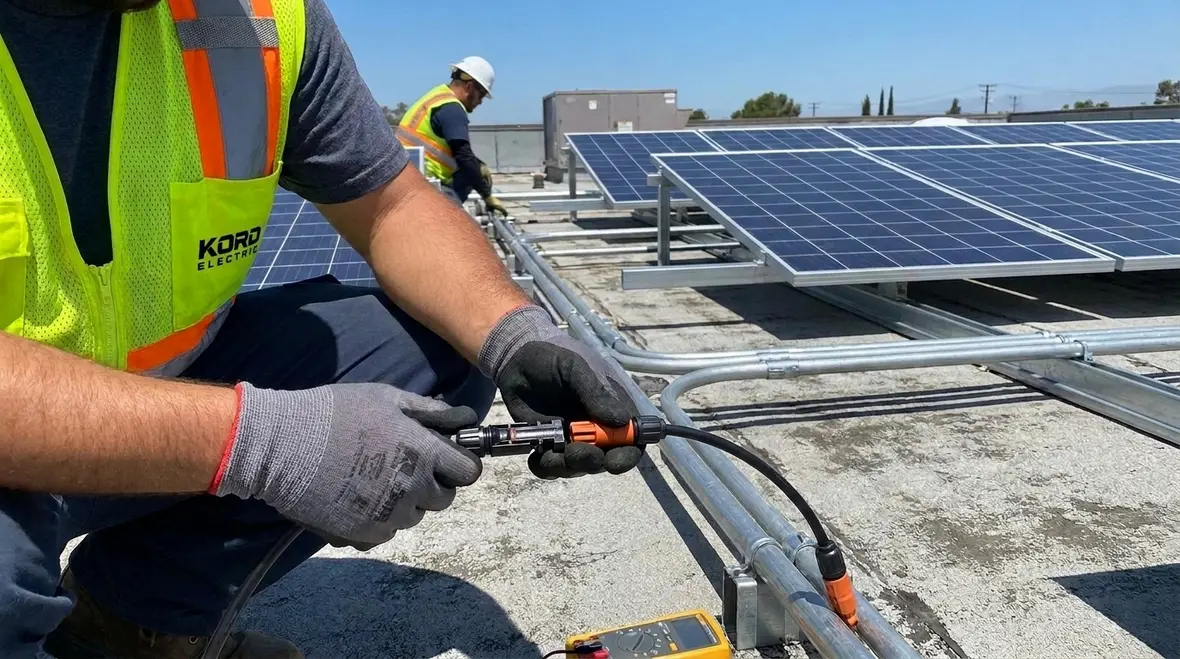
NEC 690.33 PV Mating Connectors for Commercial Installations
At Kord Electric, we design electrical and fire safety solutions for commercial and industrial facilities and major property buildings, where details matter and downtime costs money. Early in a project, we pay attention to how solar wiring gets connected and protected, including NEC Section 690.33 PV mating connectors. These connectors help crews mate circuits in a safer, more organized way. And yes, we know the solar industry has its own language. We hear it all day: “It’s fine, it’s standard, it’s in the box.” Then our technicians arrive, check the field conditions, and the “fine” becomes “actually, it must be done correctly.”
That is why our team explains the National Electrical Code in plain terms, then ties it back to how your site will be wired, inspected, and maintained. So, let us walk through what the NEC requires, how 690.33 PV mating connectors fit into the bigger picture, and what commercial facility owners should ask before installation begins.
NEC basics and why 690.33 PV mating connectors matter on real sites
The NEC is not a suggestion. It is the baseline safety standard used in commercial and industrial electrical work across the country. Additionally, local adoption and enforcement make it even more important. When a building team follows the NEC closely, we reduce shock risk, prevent fire spread, and make inspections smoother.
Within that larger framework, NEC Section 690.33 PV mating connectors addresses a key point for photovoltaic systems: how installers connect PV source and string circuits in a way that supports safe operation and service. Specifically, the intent focuses on mating compatibility, secure connections, and safe handling practices when conductors are energized or can become energized under normal conditions.
In practical terms, we tell facility teams that connector quality affects the whole chain. If the mating method does not match the code requirements or the equipment, then the installation can drift into unsafe territory. And nobody wants to be the person explaining to an inspector why the “plug kind of fits.”
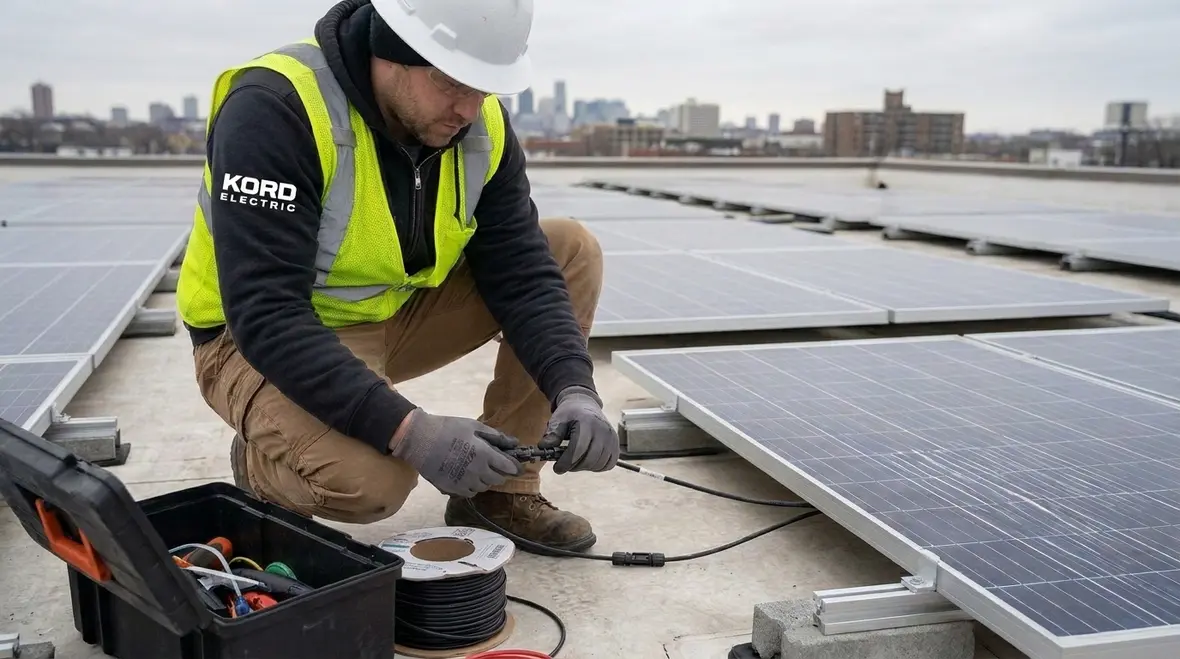
How technicians translate NEC rules into field-ready wiring plans
Kord Electric does more than install. Our technicians and expert service staff also translate NEC language into field procedures that crews can follow. First, we review the system design, then we check conductor routing, separation distances, labeling, grounding methods, and protection devices. After that, we confirm that connectors and cable assemblies match the equipment listing and the installation rules.
Because commercial schedules are tight, we also document the process. Therefore, if something changes in the field, our team can show what we verified and why. This reduces rework and helps your maintenance team later.
When we talk about PV connections, we pay attention to details like these:
- Which connectors are used for mating and whether they are designed for PV applications
- How crews handle connection points when systems are energized
- How the installation protects connectors from strain, moisture, and damage
- How labeling and access support inspection and service
And because everyone loves a smooth handoff, we also explain what your electricians and facilities staff should look for during inspections. That way, the system does not become a mystery box after we leave. It is like giving the building a map instead of a treasure legend.
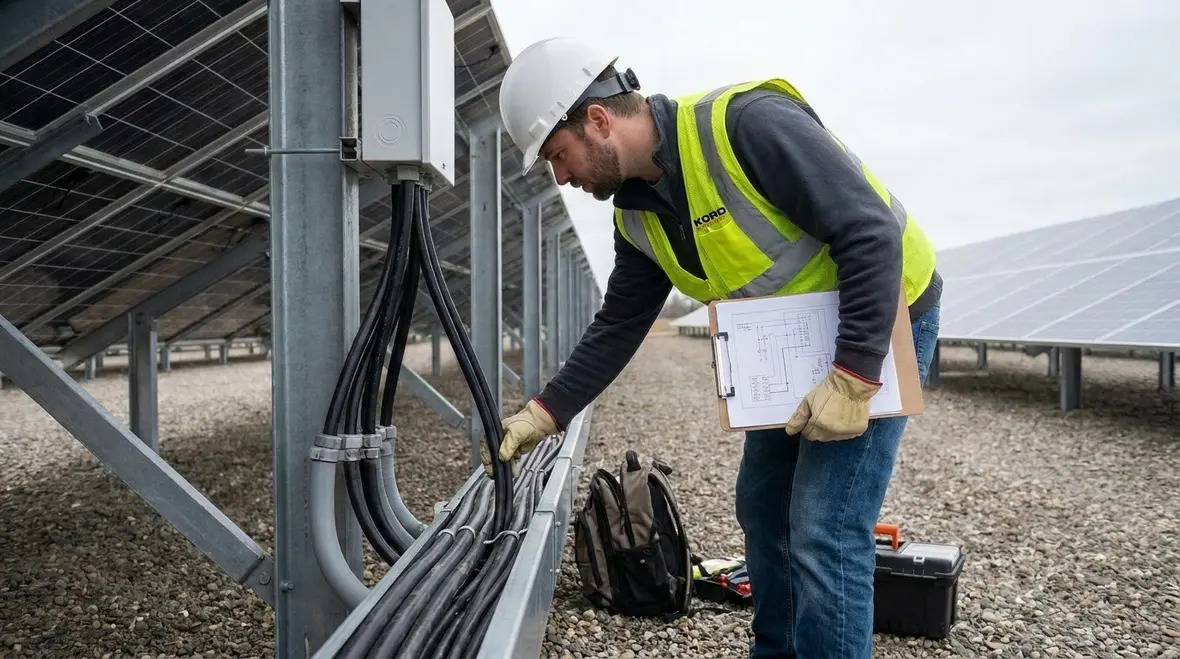
PV wiring safety: connectors, conductors, and protection working together
NEC compliance in PV is not one single checkbox. It is a system of safety layers. Even if connectors match the PV equipment, the wiring still must follow rules for conductor sizing, insulation rating, ampacity, and protection against overcurrent. Also, the installation must consider how heat, sunlight, and weather affect components over time.
Kordfire, our fire-safety related resource arm, often reminds teams of a simple truth: electrical issues can lead to thermal events, and thermal events do not care how busy your facility is. Therefore, we treat PV safety as an electrical and fire prevention issue, not just an electrical one.
Our approach typically includes these steps:
- We verify conductor routing, mechanical protection, and support spacing to prevent abrasion
- We confirm appropriate overcurrent protection and disconnecting means per code intent
- We check grounding and bonding to support safe fault clearing
- We ensure connector mating points stay protected and accessible
Then, we connect it back to your inspection reality. Inspectors look for consistent installation practices, not just “approved parts.” So, when our technicians install or upgrade PV systems, they keep the work neat, labeled, and aligned with NEC expectations.
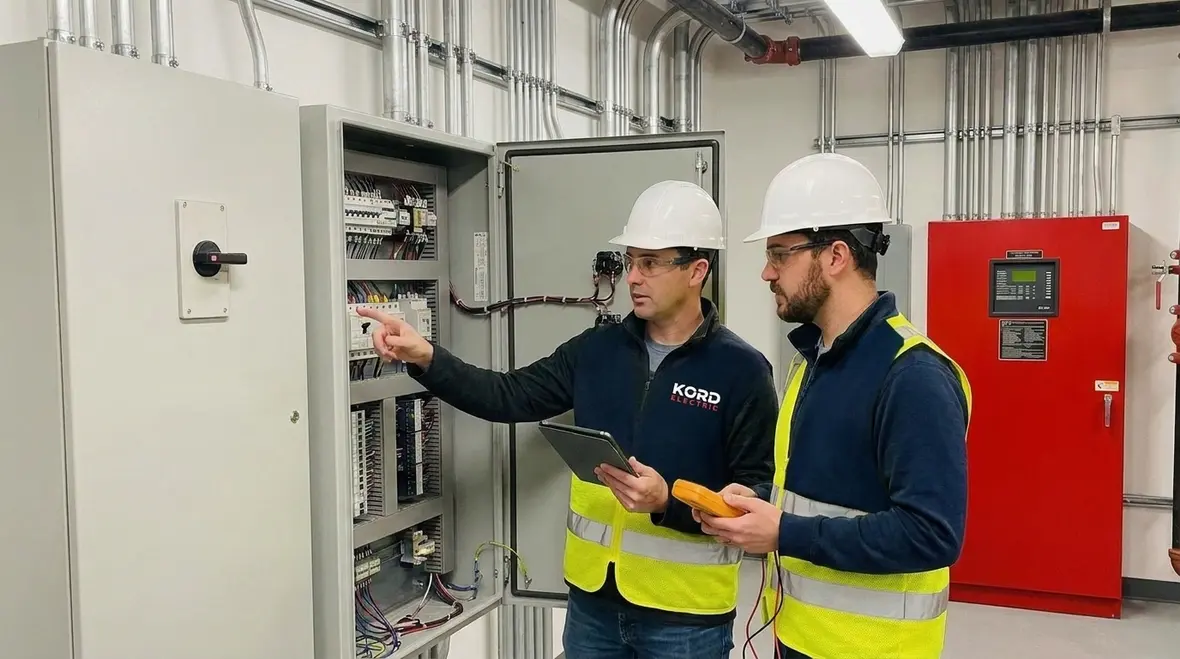
NEC structure for commercial teams: where PV rules fit with other chapters
Commercial and industrial projects often include multiple electrical systems working side-by-side: lighting, power distribution, emergency systems, grounding networks, and sometimes fire pump power. As a result, teams need to understand how NEC sections interact rather than treating PV work as a sealed-off island.
For example, PV wiring rules connect with general requirements for wiring methods, grounding, and overcurrent protection. Likewise, the PV system must coexist with facility loads, service equipment design, and sometimes switchgear coordination. If a facility team ignores coordination, then the result can be nuisance trips, slow fault response, or later compliance issues.
That is why Kord Electric builds projects with a site-wide mindset. Additionally, our service staff coordinates with facility managers and project stakeholders early, so the PV design does not surprise anyone late in construction.
For facility leaders who want a deeper code overview alongside PV work, our team often points them to our resource on the broader National Electrical Code and how it shapes modern projects, such as the article “Understanding NFPA 70: The National Electrical Code Explained for 2026”. It helps put PV decisions in context with grounding, overcurrent protection, and other core NEC topics that show up across your building.
And yes, if you have ever watched a scheduling meeting where someone says, “We will figure out the fire pump later,” you know the kind of later problem we are trying to avoid. This is where early coordination beats emergency heroics.

Fire and inspection readiness: aligning electrical work with safety outcomes
Electrical safety and fire safety share the same root goal: prevent harmful events and limit consequences when faults occur. Therefore, our process considers fire outcomes while we follow code requirements. We also keep in mind that commercial buildings involve dense occupancy, complex access, and high inspection scrutiny.
When PV systems are installed correctly, they support safer maintenance and reduce the odds of hidden damage. In contrast, when installations get sloppy, faults can hide behind covers and cable runs until they become expensive. That is why our technicians document connector placement, routing, and labeling as part of a system that stays serviceable.
For facilities also working with water-based fire systems, the connection between electrical reliability and fire performance becomes even more important. Resources from fire pump focused organizations like firepumps.org emphasize dependable power and correct installation practices for fire pump systems. While those systems fall outside PV wiring, both areas rely on disciplined electrical work and stable safety design.
As a result, we help commercial owners think in outcomes. We want the electrical system to perform as intended, and we want it ready for inspections, service, and long-term reliability.
Commercial compliance checklist: what to request before and after installation
When a major property building installs PV or upgrades electrical systems, facility stakeholders should request proof of both compliance and build quality. At Kord Electric, we guide these requests so your team knows what is normal and what is not.
Before work begins, ask for the following:
- Confirmation that PV components and connectors meet the equipment listing requirements
- Routing and mechanical protection plan for cables and connection points
- Labeling plan for disconnects, combiner areas, and service access
- Coordination plan for how PV interfaces with the facility electrical system
After work is complete, ask for:
- Testing records and verification notes completed by the installation team
- As-built documentation showing connector locations and routing
- Maintenance guidance for your facilities staff and electricians
- Inspection support, including readiness for code review
Our technicians explain each item. If something feels vague, we clarify it. Because in commercial work, “vague” usually means “future rework,” and nobody wins that game.
For buildings that need broader electrical upgrades alongside PV work, these same questions apply when you evaluate surge protection, emergency power, and power quality improvements. They also connect directly to how your facility performs during inspections and during real-world disturbances, not just on drawing sets.
If your facility is in a high-demand region like Los Angeles County, aligning this checklist with a partner that understands local enforcement and commercial operations can save considerable time. That is why many owners pair PV projects with a comprehensive scope using regional services such as Los Angeles County electrical services for commercial facilities, so PV improvements do not get isolated from the rest of the electrical work.
FAQ
Ready for a PV electrical plan that holds up under inspection?
Kord Electric helps commercial and industrial facilities build PV and electrical systems that follow the NEC with clear documentation, careful installation, and technician-led field checks. Because we work with major property buildings, we understand schedule pressure and inspection reality. If you want a system that stays serviceable, supports safer operation, and helps your team pass review with less stress, reach out to us. Our expert staff will explain the requirements, then deliver practical steps your project can trust.
When NEC Section 690.33 PV mating connectors are handled the right way, they stop being a potential failure point and instead become part of a disciplined, long-lived PV system. Combined with thoughtful wiring methods, coordination with the broader National Electrical Code, and a maintenance plan that actually fits your facility, you get a PV installation that behaves like the rest of your best electrical infrastructure: calm, predictable, and ready when you need it.
If your building is planning a new PV project, an electrical upgrade, or both, this is the moment to lock in a code-aligned plan instead of improvising under deadline pressure. From connector selection to final commissioning, our technicians are ready to guide your team through each decision so your next inspection feels like a confirmation, not a surprise.


