
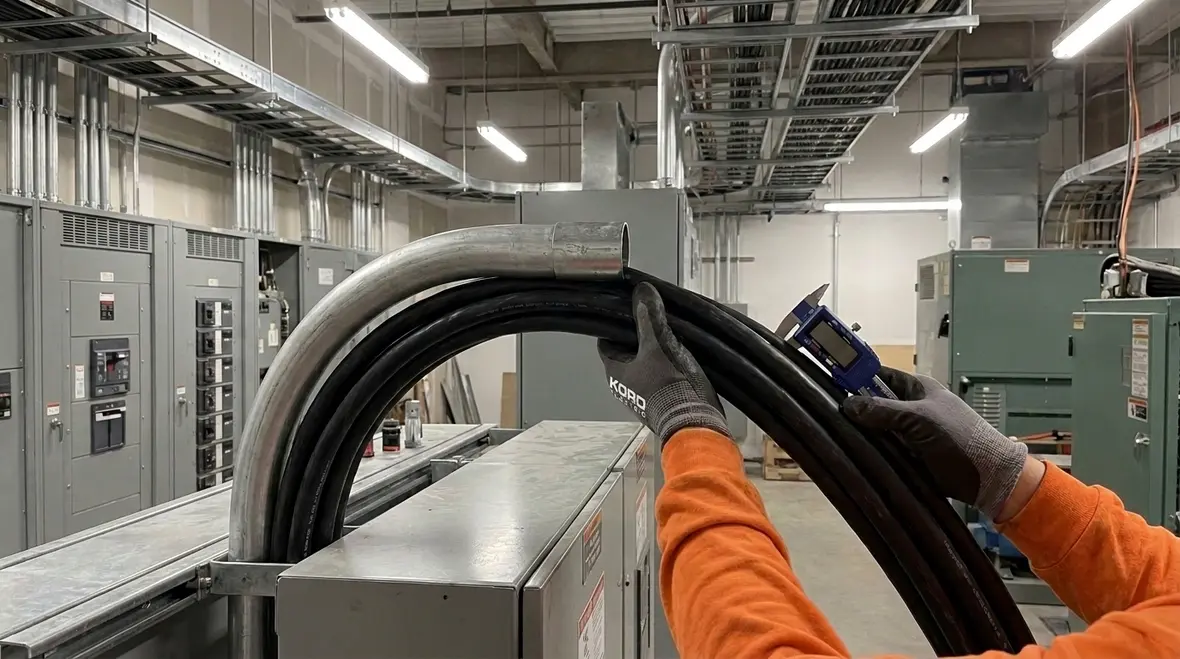
NEC Branch Circuit Bending Radius NFPA 70 334.24 Requirements
NEC Branch-Circuit Bending Radius: What NFPA 70 Section 334.24 Requires
When commercial and industrial projects ask for clean installs and reliable power, we start with the NEC branch circuit bending radius. In this article, we explain NFPA 70 Section 334.24 rules in plain language, so our clients can avoid costly rework. We also note how technicians on our team check cable routes, plan bends, and document decisions before the first conduit is pulled. And yes, we treat conductor bending like a craft, not a video game where you can just “respawn” later.
To keep the story calm and useful, this guide follows the same order our expert service staff uses in the field: what the rule means, why it matters, how to measure, and what to do when conditions get tight. Other contractors may rush. We don’t. We like electricity behaving like it has manners.
Why Section 334.24 Matters for Commercial Electrical Installations

In many commercial and industrial facilities, a small bend today can turn into a big failure later. Therefore, NFPA 70 Section 334.24 sets limits on how sharply branch circuit conductors can be bent. When installers ignore these limits, they risk damage to insulation, conductor strand deformation, and long term heating. As a result, the system can lose performance, trigger premature aging, or lead to nuisance faults.
Now, our expert service staff often tells building owners a simple truth: power systems do not forgive shortcuts. However, we also make it practical. When a project uses the right bending radius, the conductors keep their mechanical integrity, install cleaner, and stay easier to troubleshoot. That means less downtime, fewer callbacks, and a smoother path to inspection.
Section 334.24 also sits inside the larger NFPA 70 framework that shapes how commercial power systems get designed and inspected. For facility teams who want that bigger picture, resources like our partners’ NEC explainers on topics such as NFPA 70: All About the National Electrical Code (NEC) help connect individual rules like branch-circuit bending limits to everyday installation decisions in real buildings.
Our Technicians Measure the NEC Branch-Circuit Bending Radius the Right Way
We approach bending radius checks as a job you cannot “eyeball.” First, our technicians identify the conductor type and insulation rating, then confirm the raceway or cable method being used. After that, they verify the manufacturer instructions and the NEC rule requirements that apply to the installation.
Next, we focus on bend location and bend geometry. Then we ensure the bend radius stays within the allowed limits along the pull path. This includes transitions, offsets, and any tight turns that happen near wall penetrations, equipment rooms, and junction points. In other words, we check the route, not just the bend at the end of the tape measure.
And because reality is messy, we also plan for field constraints. If the route cannot maintain proper bends, we may adjust the layout, change the raceway sizing, or revise the routing. Of course, every decision connects back to code compliance and long term reliability.
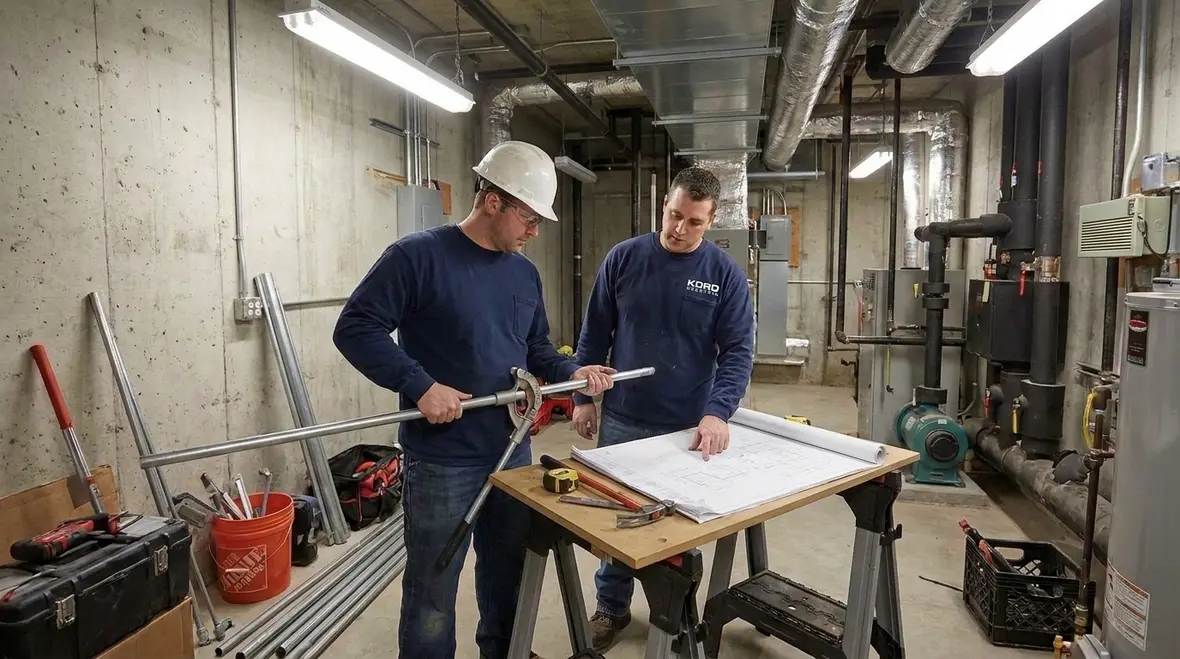
How Bending Radius Affects Cable Pulls, Insulation, and Longevity
When conductors bend beyond permitted limits, you can get hidden harm. For example, excessive bending can stretch insulation layers, distort conductor shapes, and increase internal stress. Over time, that stress can contribute to higher resistance spots and heat buildup. Meanwhile, a cable that pulls “okay” during installation might still carry damage that shows up later under load.
So, we treat bending radius as part of the full installation quality chain. Therefore, we also coordinate with pulling practices, because pushing too hard while bending too tightly creates a double problem. Additionally, we consider how the cable will experience vibration, thermal cycling, and movement from building settling. Commercial and industrial spaces often run equipment hard, and the electrical system has to keep up.
We often reference our understanding of NFPA 70 requirements through the lens of Kord Electric guidance for major property buildings, where planning and documentation protect both schedule and safety. For those who want the larger picture, our team points clients to our NEC explainer content, including how the national electrical code fits together with real construction decisions and how individual topics like NEC MV conductors, open conductor supports spacing, and NEC ungrounded DC systems all trace back to the same code-first mindset.
Common Field Scenarios Where Contractors Miss the Mark
Even skilled crews can slip when the job gets tight. For instance, in busy mechanical rooms, conduits crowd together and bends get forced into awkward locations. Likewise, when a route crosses structural beams or must avoid other systems, contractors sometimes reduce bend radii to “make it fit.” Then the conductor takes the hit.
We see typical problem spots in three places. First, at offsets near panels and disconnects, where space is limited and many raceways converge. Second, at long pull sections, where the pull direction and bend timing affects stress on the conductor. Third, around large equipment, where installers try to avoid moving conduit supports even when doing so would improve routing.
We also remind clients that inspection is not only about visible work. Inspectors may ask how bending radius was achieved, especially in commercial and industrial projects with complex pathways. Consequently, our technicians keep the reasoning clear and traceable, so the job stays defensible and smooth.
Coordination and Documentation for Code Compliance
Compliance should not rely on hope. Therefore, we build a workflow that supports proper installation from start to finish. Our expert service staff reviews the planned conduit and raceway routing early, then confirms conductor selections and bend strategy. When the design allows flexible pathways, we help teams choose routes that maintain the NEC branch circuit bending radius without squeezing every turn into a corner.
Additionally, we document the key decisions. We note conductor and raceway details, routing changes, and where we adjusted the plan to protect bend geometry. If the project requires coordination with architects, engineers, or other trades, we communicate clearly so everyone understands why bend limits matter and how to protect the cable path.
When clients want to connect this to broader code context, we often point them to resources from our network and partner education, including Kord Fire pages that cover NEC background and the “why” behind code rules. We also encourage safety minded teams to rely on trusted industry sources when they verify their understanding of NFPA 70, then pair that knowledge with field-proven workflows that stand up to real inspections.
Commercial and Industrial Best Practices We Use on Real Projects
In the field, best practices look less like theory and more like calm habits. We plan the route before the conduit gets buried behind trays and ductwork. We use proper tools to create consistent bends. And we keep the cable protected during pulling so insulation stays intact.
Also, we manage change orders carefully. When field conditions shift, we recheck bend geometry instead of assuming the original plan still holds. If someone tries to reroute late, we pause, evaluate the conductor path, and confirm that the NEC branch circuit bending radius stays within allowable limits.
Occasionally, a contractor brings in extra cable length “to fix the pull.” We politely explain that longer cable does not fix a bad bend. It just adds more material that can carry stress. Electricity, like a sitcom plot, still needs logical structure. Otherwise the whole episode ends with a call back.
These same best practices support broader reliability work across a property. Whether our team is addressing NEC open conductor supports spacing, feeder barrier guarding, NEC ungrounded DC systems, or medium-voltage conductor layouts, we keep the same mindset: code compliance first, documented decisions, and installations that look as calm as they operate.
How NEC Branch Circuit Bending Radius Ties into Wider Services
Branch circuit bending radius is not a tiny one-off detail—it links directly to how your overall electrical system behaves. When bends are correct, pulls stay cleaner, terminations land with less stress, and troubleshooting years later becomes faster because the wiring path makes sense. That is exactly why our technicians line up NEC branch circuit bending radius decisions with broader planning for feeders, surge protection, emergency work, and preventive maintenance.
For property managers who want a single partner across design, installation, and upgrades, we also show how branch-circuit work connects to larger efforts such as building electrical system design and emergency electrical repairs. Those programs often tap into our wider Los Angeles County electrical services, so your branch-circuit decisions fit the same strategy that drives feeders, life-safety circuits, and specialized equipment power.
FAQ: NFPA 70 Section 334.24 and Bending Radius
Call Kord Electric When Your Project Needs Code-Right Conductor Handling
When your commercial or industrial facility depends on dependable power, we help you install branch circuits with care and confidence. Our technicians and expert service staff review routing plans, verify bend geometry, and support code compliance through documentation that holds up. If you want fewer surprises during inspection and less downtime after energization, reach out to Kord Electric. We will help your team handle NFPA 70 requirements with clear steps, practical guidance, and a calm approach that keeps systems working.
For deeper NEC context around section-level topics like branch circuit bending radius, MV conductors, feeder guarding, and ungrounded DC systems, we also connect clients to educational resources such as our NEC 2026 explainer series and our sister company’s NFPA 70 coverage. That way, every bend, pull, and termination in your project lines up with a code strategy you actually understand, not just a checklist you hope is correct.


