
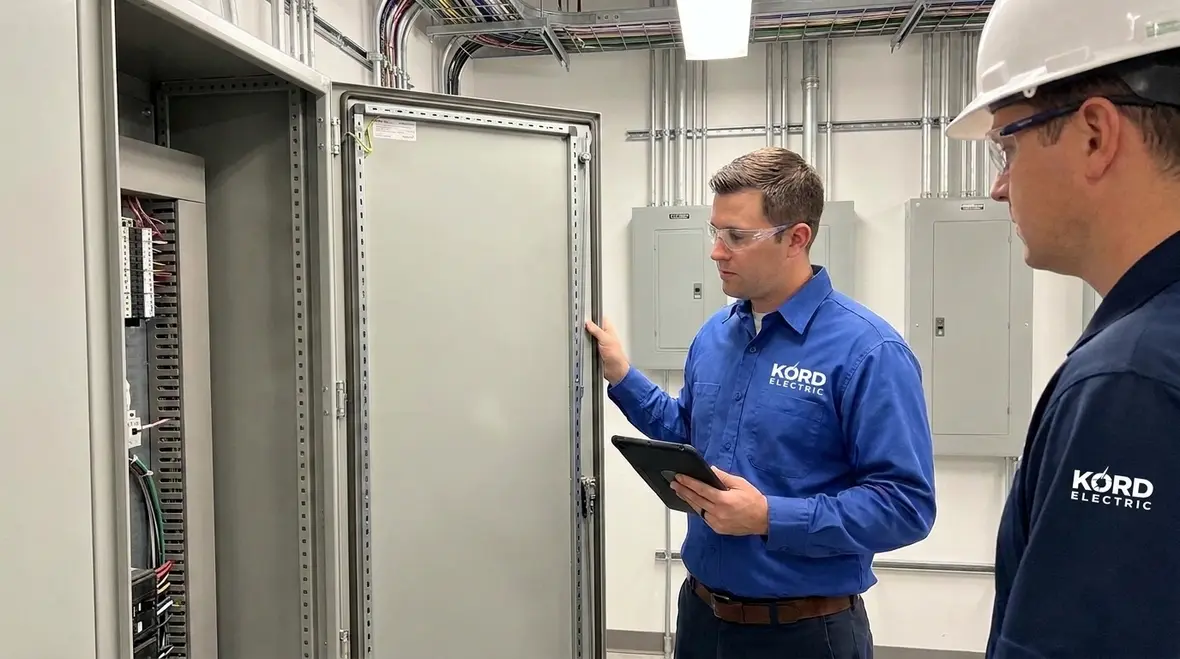
NEC Cabinet Doors Covers and NFPA 70 Section 312.102
At Kord Electric, we start every project with a simple goal: keep electrical gear safe, accessible, and compliant. That is why we pay close attention to NEC cabinet doors covers and the way they are built, mounted, and maintained. When NFPA 70 looks at cabinet enclosures, it does not treat them like decoration. It treats them like protection. And when those covers and doors fail, we all feel it later, usually in the form of outages, inspections that take longer than they should, or worse, heat and damage inside the enclosure.
In this article, we explain NFPA 70 Section 312.102 in plain business terms. We also share how our technicians and expert service staff help teams in commercial and industrial facilities follow the rules without turning compliance into a never ending headache. No fluff, no mystery. Just clear guidance, delivered at a calm pace, like a well timed sitcom punchline that still respects electrical code.
What NFPA 70 Section 312.102 requires for cabinet openings
NFPA 70 Section 312.102 focuses on how NEC cabinet doors covers and related covers are handled for cabinets and similar enclosures. In short, it supports the idea that openings must be properly protected. That means doors, covers, and other means of closing the enclosure need to do their job when the equipment is in normal operation.
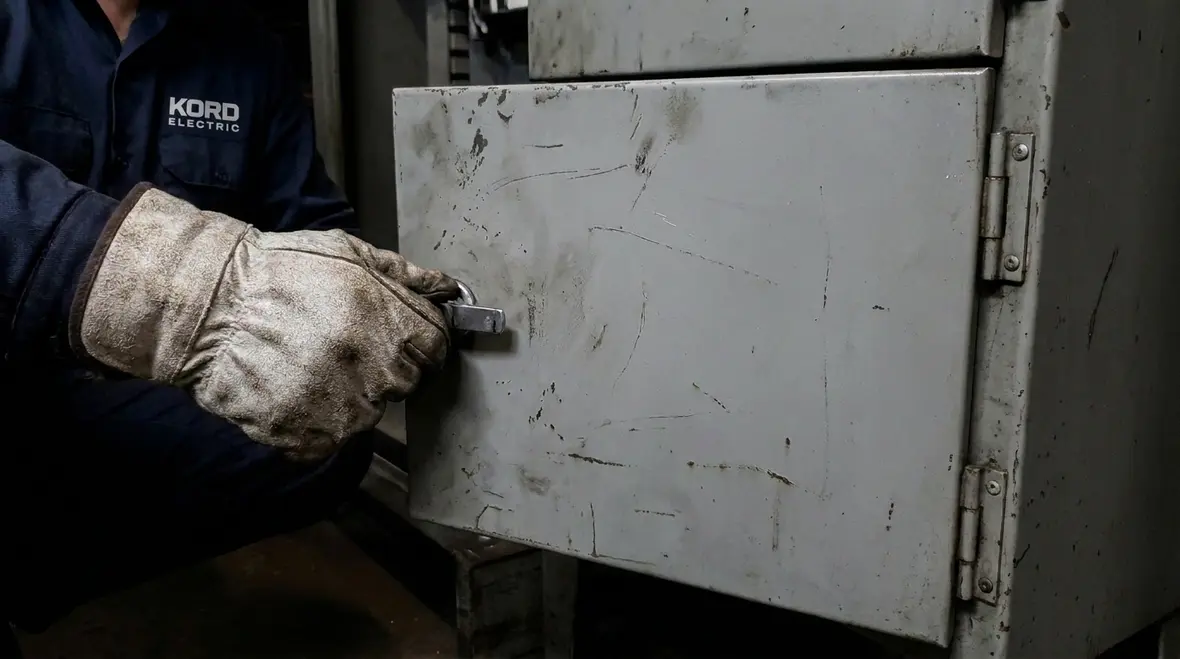
First, the code ties these requirements to the NEC’s broader rules for enclosures, wiring protection, and safe access. Then, it expects the cabinet to stay secure against practical hazards like contact with energized parts, entry by untrained persons, and conditions that can lead to damage. Additionally, the code approach supports consistent inspection outcomes, meaning the enclosure should not look “close enough” and pass by luck.
In our experience at Kord Electric, commercial and industrial teams often discover issues during walk downs, not during initial installation. That is where our technicians step in. They check the actual hardware, alignment, and closure method rather than trusting assumptions. After all, a cabinet that looks fine from across the room can still leave gaps that do not belong there.
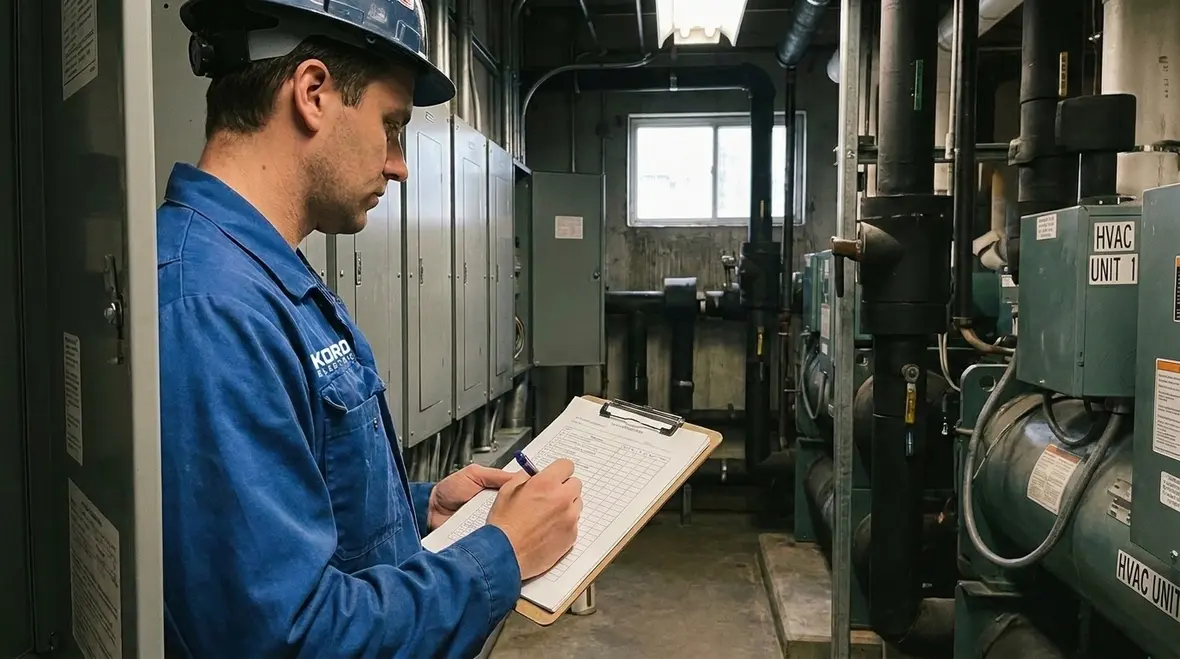
To put this in context, cabinet openings sit inside the bigger story of NFPA 70 and how it protects facilities. If you want a broader, code level view for your team, Kord Electric’s resource Understanding NFPA 70: The National Electrical Code Explained for 2026 walks through how the NEC shapes everyday design, installation, and inspection decisions across commercial and industrial buildings.
By treating Section 312.102 as part of that same framework, facility leaders can see cabinet doors and covers not as small accessories, but as visible proof that the electrical system is being managed with the same seriousness as conductors, overcurrent protection, and working clearances.
How cabinet doors and covers protect people and equipment
Cabinet doors and covers do more than cover wires. They act like a boundary between people and energized components. Therefore, the enclosure must close in a way that reduces the chance of accidental contact. Also, proper closure helps limit exposure to dust, moisture, and other conditions that can worsen corrosion or create insulation problems.
Next, consider the practical side. In major property buildings, equipment is exposed to daily activity. People, carts, cleaning staff, and maintenance work all move around. Consequently, cabinet openings that do not fully close can turn normal maintenance into an unplanned risk. And if the enclosure must be opened frequently, doors and covers still need to maintain safety each time they are shut.
Our expert service staff explains this clearly during facility support calls. They walk stakeholders through what “safe closure” really means in the field, not in theory. In other words, we show teams how closure affects access control and how it reduces the chances of damaged internal parts after repeated use. When those conversations bring up broader questions about the NEC itself, our team often points managers to deeper primers such as Kord Electric’s guides on what NFPA 70 covers in practical terms and how it supports safety, not just paperwork. That way, every decision about a cabinet door or cover lines up with the code’s bigger safety story, not just a line item on a punch list.
Over time, that boundary function becomes even more important. Dust layers build, seasonal humidity shifts, and load profiles change as tenants add or retire equipment. Doors and covers that closed tightly on day one can start to drift if the hardware is not chosen well or maintained with care. Section 312.102 reminds everyone that a cabinet opening must not quietly turn into an open invitation for exposure and damage just because a building got busier.
Materials, installation quality, and why details matter
NFPA 70 does not treat installation quality as a side note. Even when a cabinet has the right form factor, poor installation can undermine the safety intent of the code. For example, a door that does not latch fully or a cover that sits unevenly can create a path for unintended contact. Meanwhile, improperly secured hardware can loosen over time due to vibration, building traffic, or routine maintenance.
At Kord Electric, we focus on the details that hold up after the first month and after the thousandth access. That includes correct mounting, sturdy hinges, proper alignment, and closure that stays consistent. When we install or service NEC cabinet doors covers, we check for physical fit and reliable operation. Then we confirm that the hardware supports continued use, not just first day appearance.
For teams managing commercial and industrial facilities, this is especially important. Electrical gear often serves critical loads like process systems, life safety circuits, or production power. So, when access hardware fails, the downtime is not small. It is expensive. And yes, sometimes it feels like replacing a zipper on a heavy winter coat in July. You know you will need it, and you still wish you did it sooner.
Those details go hand in hand with other workmanship expectations inside the NEC. Just as NFPA 70 Section 110.7 looks at wiring integrity and workmanship standards, Section 312.102 asks a quieter but equally important question: did the installer and maintenance team treat the cabinet doors and covers like serious safety components, or like afterthoughts? Our technicians check torque, alignment, fastener type, and even how the door behaves when someone closes it with one hand during a busy shift. If it cannot close cleanly under that kind of everyday use, it will not protect the equipment properly.
Access control and inspection readiness in real facilities
In a major property building, inspections do not just happen once. They happen repeatedly, and they involve multiple stakeholders. Therefore, the enclosure closure method should support easy verification without shortcuts. When the cabinet doors and covers are compliant, inspections become smoother and less stressful. When they are not, teams often spend hours chasing missing parts or reworking closure points.
To keep things clear, our technicians approach this like a checklist with accountability. First, they verify the cabinet closure components are present and functional. Next, they confirm that the enclosure can be closed as intended and that the closure helps maintain safe conditions during normal operation. Then, they document what they find so stakeholders can act quickly.
Also, we explain how facility teams should handle routine access. Many problems show up because staff open enclosures and do not fully resecure the doors or covers. Thus, we recommend clear internal steps for maintenance crews. Our expert service staff often helps build those simple procedures, so everyone knows exactly how to close and secure cabinet enclosures in a way that aligns with code intent.
Inspection readiness for cabinet openings also connects to bigger NEC topics such as working space clearances and equipment labeling. Even if the door itself closes correctly, an overcrowded area with blocked access, missing identification, or improvised hardware still makes an Authority Having Jurisdiction pause. By treating NEC cabinet doors covers as one piece of a clear, well-documented electrical room, Kord Electric helps facilities avoid the scramble that happens when an inspector asks to see how enclosures actually behave under real access conditions.
Relationship to enclosure types and equipment protection strategies
Section 312.102 works within the larger framework of NFPA 70 and the NEC’s enclosure protection concepts. That means the doors and covers work together with the equipment inside. Consequently, teams should not treat closure hardware as an isolated item. It connects to how the cabinet protects conductors, devices, and terminations under real environmental conditions.
In commercial and industrial settings, enclosure strategies often include choosing suitable types of construction, managing airflow, and maintaining safe temperature limits. While cabinet doors and covers do not solve every exposure issue alone, they support the rest of the protection plan. For instance, a cabinet enclosure that expects a controlled indoor environment can still suffer if the closure fails and lets in contaminants.
We see it often: an enclosure is selected correctly, but the hardware is worn, misaligned, or replaced with something that does not close like the original. Then the building system absorbs the cost. So, we advise teams to treat NEC cabinet doors covers as part of the protection system, not just a cover-up detail.
This mindset mirrors how Kord Electric approaches broader electrical code strategy. When clients review resources on topics like NFPA 70A, NEC working clearances, or electrical connection quality standards, the repeating theme is simple: safety and reliability come from systems that work together. Cabinet openings are one of the most visible examples of this. A well-chosen door and cover assembly supports the enclosure rating, keeps internal devices within their expected environment, and helps the entire protection strategy perform the way the NEC envisioned.
Common compliance problems we see during service calls
Field issues tend to repeat across facilities, especially when the building changes hands or when maintenance shifts between vendors. Therefore, it helps to know the most common failure patterns.
1) Doors that do not latch fully
Even a small gap can undermine safe closure. It also creates a spot where vibration can worsen the problem.
2) Covers missing, loose, or replaced incorrectly
If a cover is replaced with hardware that does not match the original design, the enclosure may not close correctly every time.
3) Hinges and fasteners wearing out
Over time, hinges wear, and fasteners loosen. This turns a safe closure into an unreliable one.
4) Misalignment after maintenance
Sometimes an enclosure gets opened for work, and then the door does not return to perfect alignment. That is a common “small fix” that becomes a compliance risk.
Here is the good news: our team can help. Kord Electric supports commercial and industrial facilities with practical service, and our expert service staff explains what needs to be corrected and why it matters. We also help teams plan for closure hardware that holds up during ongoing access, not just at the moment of installation.
During these service calls, we also pay attention to how NEC cabinet doors covers interact with NEC cabinet labeling, working space rules, and the surrounding electrical layout. For example, if a cabinet door requires awkward movement to latch because other equipment crowds the area, that is a hint the overall design is inviting bad habits. Our role is to call out those patterns before they turn into inspection findings or, worse, into a near miss involving contact with energized parts.
Benefits of choosing quality cabinet closure components
When a facility uses properly matched cabinet door and cover components, several outcomes follow. First, safety improves because the enclosure reliably limits exposure to energized parts. Second, equipment protection improves because the cabinet closes as intended, reducing entry of dust and moisture.
Next, operational reliability improves because doors and covers function consistently. And finally, inspection readiness improves because the facility can demonstrate closure practices that align with NFPA 70 and NEC expectations.
We build our approach around commercial and industrial realities, including frequent use, strict schedules, and the need for steady performance. If you manage critical gear for a major property building, you need closure hardware that performs like it is part of the electrical system, not like it is an afterthought. We treat it that way, and our technicians make sure the details get checked each time.
Those benefits also show up when it is time to coordinate upgrades or renovations. Quality NEC cabinet doors covers, installed with care, make it easier for engineers and electricians to understand how the enclosure is supposed to behave under new loading or control strategies. Combined with code minded consulting on topics like electrical code upgrades for renovations, cabinet closure quality gives project teams one less variable to worry about when they are juggling schedules, budgets, and shutdown windows.
For facility leaders in jurisdictions like Southern California, pairing reliable cabinet hardware with experienced commercial electrical support is especially valuable. Local enforcement of NFPA 70 can be strict, and buildings that serve critical operations cannot afford long outages. That is why many property and operations managers choose to work with a contractor that already understands regional expectations and offers full Los Angeles County electrical services for commercial and industrial sites instead of piecing together fixes one enclosure at a time.
FAQ: NFPA 70 Section 312.102 and cabinet doors
Ready to improve cabinet enclosure safety and compliance?
If your facility serves critical operations, you cannot leave enclosure closure to chance. Kord Electric helps commercial and industrial teams verify and improve how cabinet doors and covers are secured so your equipment stays protected and your inspections stay calm. We send technicians and our expert service staff to explain what they find, what must change, and how to keep it correct after every access. Contact Kord Electric today to schedule a service review and get your electrical enclosures performing the way the code intends, every time.
Whether you are planning a renovation, preparing for a new inspection cycle, or simply tired of seeing cabinet doors that never quite close the same way twice, giving attention to NEC cabinet doors covers is one of the most cost effective steps you can take. Paired with a broader understanding of NFPA 70 and its 2026 direction, a focused review of cabinet enclosures turns what feels like background hardware into a quiet, reliable backbone of your electrical safety program.


