
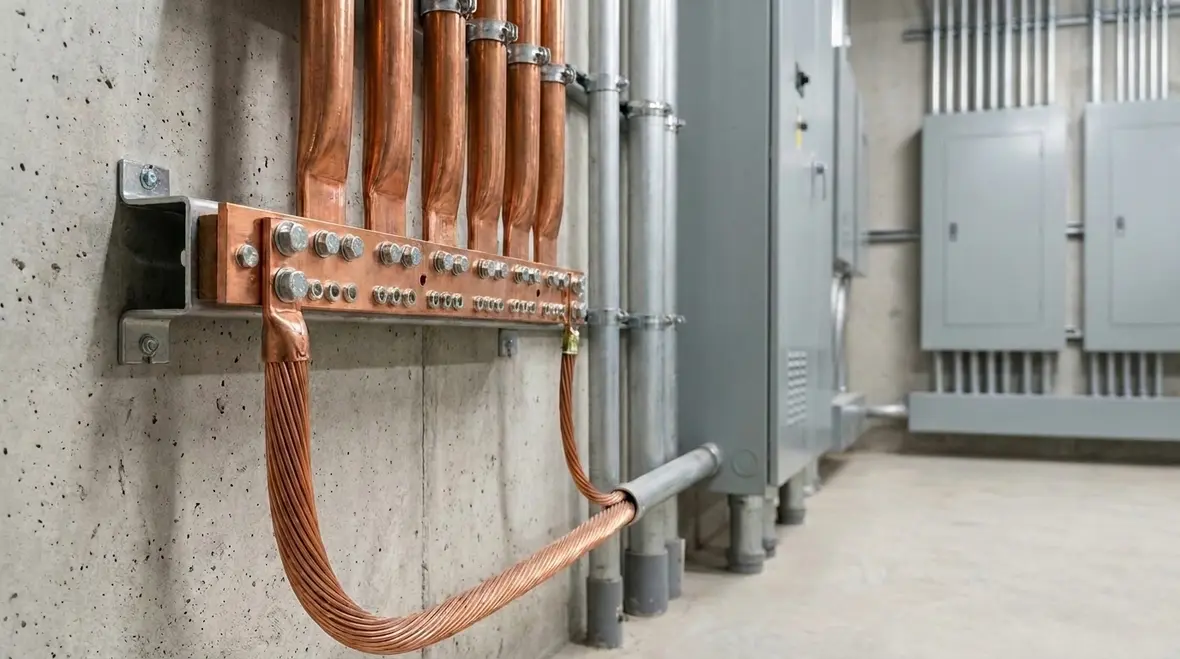
NEC Common Grounding Electrode 2 kV with 270.58
When you move past everyday building voltages and into higher voltage territory, grounding stops being a background detail. It becomes a core safety system. At Kord Electric, we work with commercial and industrial facilities and major property buildings across Los Angeles County, and we take that responsibility seriously. This guide walks through how NEC common electrode 2 kV conditions interact with NFPA 70 Section 270.58, why common grounding electrodes matter, and how we help facilities treat grounding like the quiet hero it should be instead of an afterthought that only gets attention when something goes wrong.
NEC grounding at and above 2 kV with NFPA 70 Section 270.58
At Kord Electric, we work with commercial and industrial facilities and major property buildings, and we take grounding seriously. When systems exceed 2 kV, NFPA 70 Section 270.58 focuses on common grounding electrodes for better safety and fault control. In plain terms, we help others understand how a facility can tie grounding paths together so equipment, structures, and personnel stay protected. And yes, grounding can sound like something you do to a toaster, but here we deal with systems that do not forgive mistakes. As our expert service staff explains on site, you do it correctly once, then you stop thinking about it.
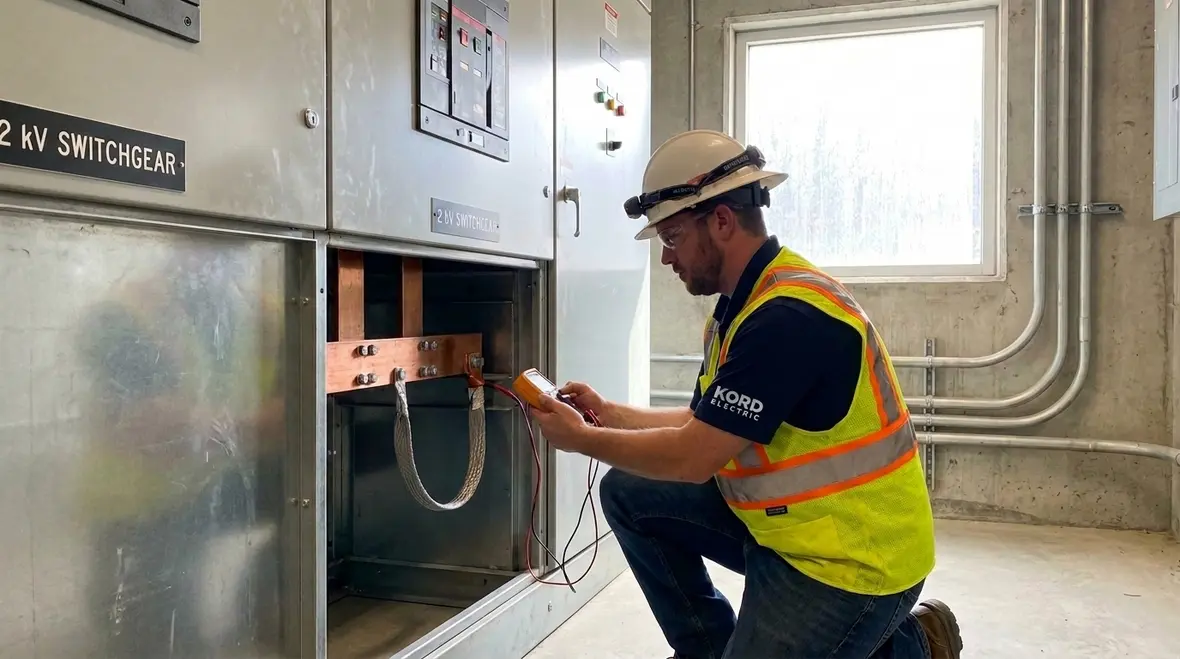
That mindset fits into the broader National Electrical Code approach. Higher voltage installations introduce larger fault currents, more demanding insulation requirements, and stricter expectations for how everything responds when something goes wrong. A well planned grounding electrode system gives all of that energy a defined path to follow instead of letting it wander through building steel, cable trays, or equipment frames in unpredictable ways. When we talk to facility teams, we frame it as the difference between a practiced evacuation plan and a crowd guessing which exit might work during an emergency.
What 270.58 requires for common grounding electrodes
To follow NFPA 70 Section 270.58, we focus on how grounding electrodes work when you have NEC common electrode 2 kV type conditions. First, the code expects you to use a common grounding electrode system rather than separate, isolated paths that behave like different islands during a fault. Then, we connect those electrodes in a way that supports equal potential and reliable fault current return. That reliability matters in commercial and industrial environments, where you might have complex equipment, multiple services, and large metallic systems.
In practice, our technicians verify the site’s grounding electrode scheme before we connect anything. Furthermore, we look for the details others often miss: what counts as an electrode, what bonding must happen, and how the system is designed to reduce differences in voltage between accessible conductive parts. When those steps line up with NFPA 70, the grounding path stays predictable during abnormal conditions. In other words, we help the electrical system act like it has a plan, not like it is improvising jazz.
As part of that review, we often walk through how NFPA 70 ties into the broader National Electrical Code structure. For facilities that want a deeper dive into how the NEC shapes day to day decisions, Kord Fire has outlined the bigger picture in a dedicated guide to NFPA 70 and the National Electrical Code. Pairing that perspective with focused sections like 270.58 gives facility teams a clearer map of why the rules exist and how they interact with real equipment layouts.
Another practical step in meeting 270.58 involves documenting the grounding electrode system in a way future teams can actually use. We recommend as built diagrams that show electrode locations, bonding conductors, and connections to building steel or structural elements. When those diagrams match what is in the field, troubleshooting gets faster, upgrades get easier, and inspections move forward with fewer surprises.
How NEC common electrode 2 kV supports safety and fault control
Here is the core idea: when higher voltage equipment fails, current needs a return route that helps keep voltages in check. Consequently, grounding electrodes connected as a common system reduce the chance that parts of the facility “float” at unsafe potentials. Also, they help limit touch and step voltage hazards near equipment and conductive structures.
In facilities with large electrical rooms, switchgear, and grounded metal building elements, grounding influences more than just protection. It can affect surge performance, equipment longevity, and the way protective devices operate. Therefore, we do not treat grounding as a box on a checklist. We coordinate it with how the facility actually runs.
Our expert service staff explains it this way during commissioning and upgrades. If you separate grounding paths, then during a fault the facility can experience uneven voltage rises. However, when you use the NEC common electrode 2 kV approach and follow NFPA 70 Section 270.58, you create a shared reference and a more controlled response. It is like making sure every department uses the same calendar. Nobody likes confusion, especially when sparks are involved.
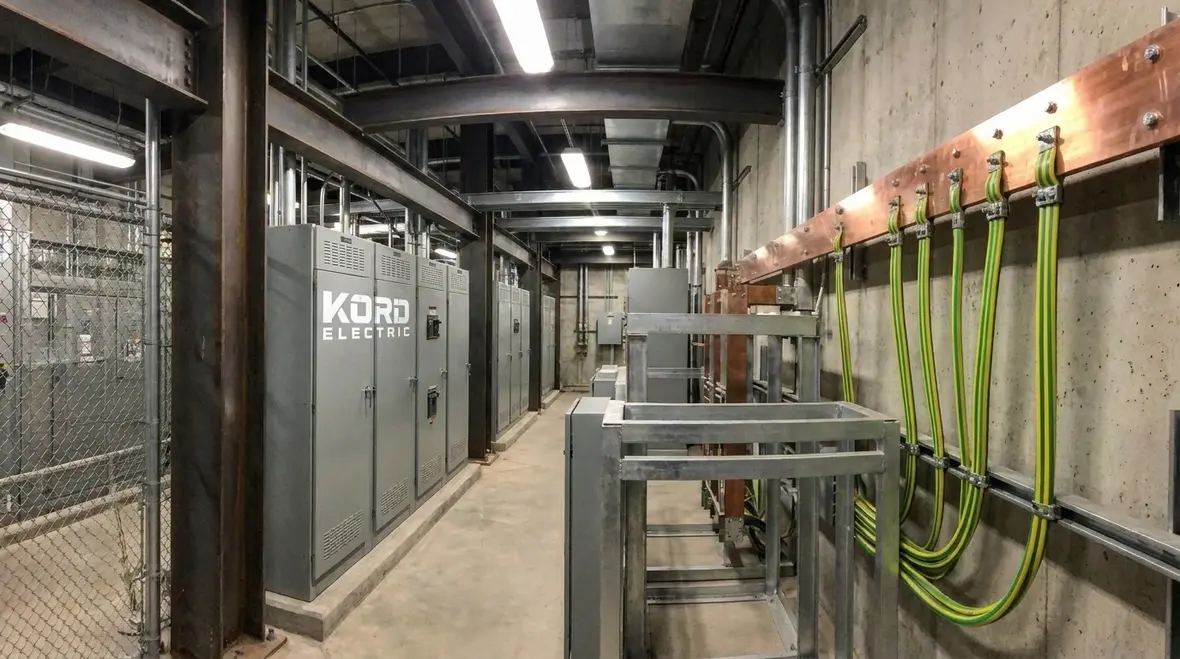
From a fault control perspective, the common electrode system also helps protective relays and overcurrent devices see the fault clearly. When return paths are well defined and impedance is predictable, fault currents reach levels that cause breakers, fuses, or relays to operate as designed. When paths are fragmented, the system can respond sluggishly or inconsistently, which is not what you want during a fast moving event in a high energy system.
We also see benefits in lightning and surge scenarios. Higher voltage facilities often sit at the center of large metallic networks, including rooftop equipment, structural steel, and long runs of conduit. A coordinated common grounding electrode system helps that entire network ride through transients with fewer dangerous potential differences between components that staff can touch or stand near. That translates into lower risk and fewer headaches after every storm or switching event.
Designing a grounding electrode system for major buildings
Commercial and industrial sites often include multiple electrodes that interact with soil and building metals. As a result, designers and contractors must consider the overall electrode system, not just single rods or plates. We help our clients plan for what makes sense for their specific location, soil conditions, utility interface, and facility layout.
To get this right, we typically evaluate several factors. First, we review existing grounding elements to see how the system ties together. Next, we confirm whether additions or upgrades require new electrode connections. Then, we check bonding points that connect metallic systems, ensuring they align with code intent.
Meanwhile, we make sure the layout supports reliable connections and future service access. That matters because facilities rarely stay still. Equipment gets added. Rooms get renovated. Switchgear gets replaced. When you already built a solid common grounding electrode system, those changes go smoother.
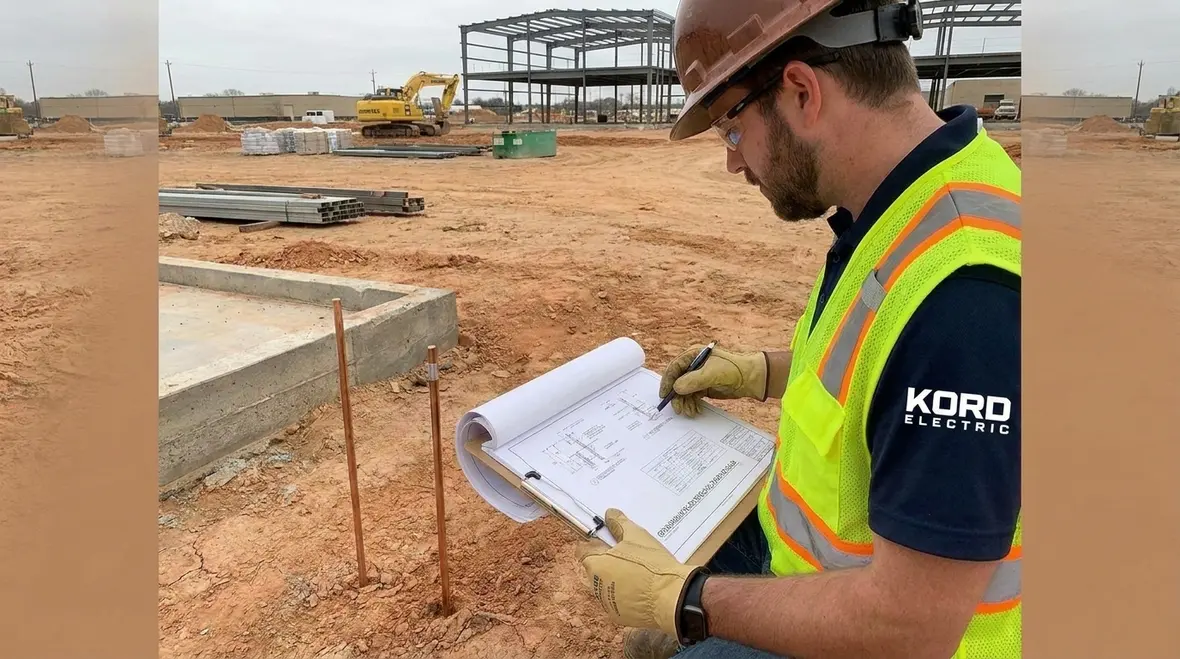
There is also a practical coordination angle. Grounding electrodes often share space with site utilities, foundation systems, and underground infrastructure. When we join early design conversations, we can help structural and civil teams avoid conflicts that would otherwise show up as change orders later. A thoughtful plan might shift an electrode grid slightly, adjust conductor routing, or incorporate building steel more effectively so the finished facility gets better performance without layout battles in the field.
For large projects planning new electrical distribution, it can be helpful to align grounding decisions with the broader power system design strategy. Kord Electric provides this type of integrated planning support through our building electrical system design services, tying together feeders, switchgear, protective devices, and grounding so the entire system works as a single, predictable unit instead of a patchwork of unrelated parts.
Bonding, interconnections, and practical installation details
NFPA 70 does not stop at “install electrodes.” It also requires the right bonding and interconnections so the grounding system behaves as one. In real-world installations, we see two common failure patterns. One is missing bonds, where conductive paths do not connect as intended. The other is poorly made connections, where corrosion, loose terminations, or rushed workmanship weaken performance.
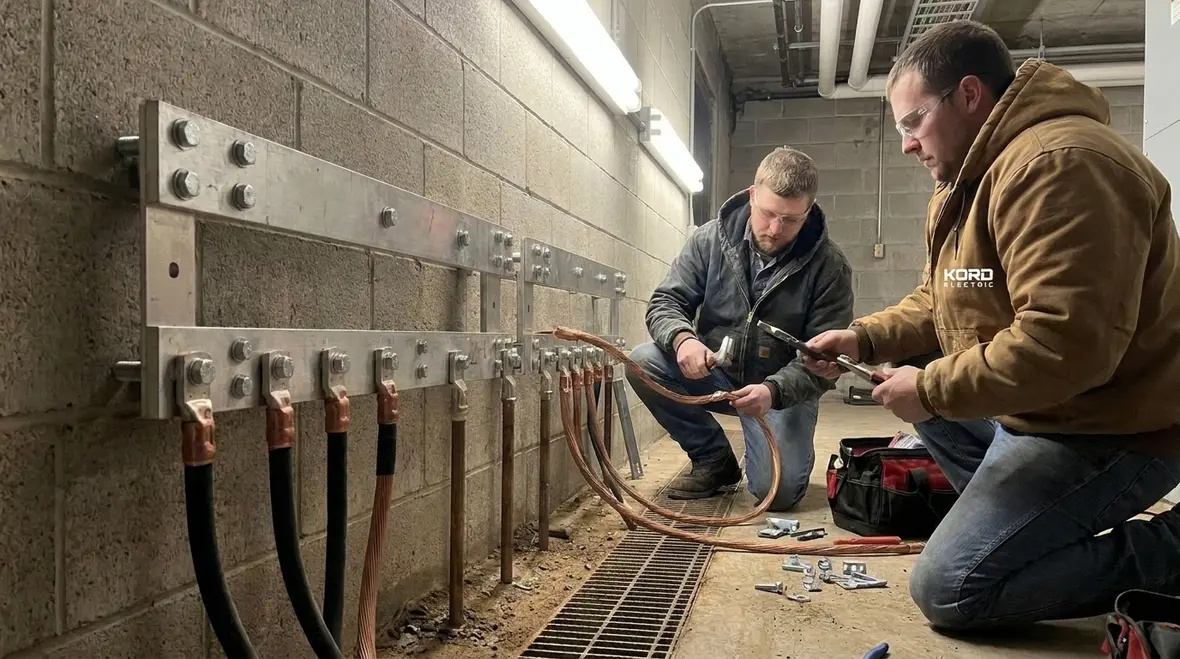
That is why our technicians follow a disciplined process. They verify conductor routing, check connection integrity, and ensure the bonding method fits the building’s environment. Additionally, we label and document what we install, so future maintenance teams do not play the guessing game. If you have ever watched a TV detective chase clues with a flashlight and a shrug, you know how that ends. We do not want anyone to “solve” an electrical grounding issue after the fact.
Also, we keep the installation coordinated with power distribution. We align the grounding electrode system with service equipment, transformers, and the grounding of feeders and equipment frames. This coordination improves the overall protective system response, which matters most during fault conditions.
On jobs with phased construction or complex renovations, we pay special attention to temporary conditions. Often, temporary feeds, construction power, or partial energization can create odd grounding and bonding scenarios if nobody is watching the details. Our crews keep that picture clear so temporary setups stay safe and the transition to the final common grounding electrode system happens smoothly.
Coordination with engineers, inspectors, and utility requirements
At Kord Electric, we serve commercial and industrial facilities, and we know that approvals rely on more than technical compliance. We coordinate with electrical engineers, inspectors, and site stakeholders to ensure the grounding design matches the full project scope. Therefore, we help confirm details early so the project does not stall during review.
In many major property buildings, utility requirements may include specific practices for the service interface. Even when the core rules come from the NEC and NFPA 70, the utility might expect certain documentation or field verification steps. So, we make sure the grounding electrode plan and bonding strategy integrate with the service entrance and utility metering arrangement.
Our team also values the inspection path. We prepare the site with clear access and orderly documentation. Then we support the inspection with measurements and test results where required. In short, we do not just install. We guide the process so it stays calm, clear, and on schedule.
On projects where fire protection and electrical work intersect, we coordinate closely with fire safety teams to keep grounding aligned with fire alarm, emergency power, and life safety systems. The result is a facility where electrical reliability and code compliance reinforce each other instead of competing for space in the same conduits and rooms.
Common questions we hear from facility teams
What does NFPA 70 Section 270.58 focus on? It focuses on common grounding electrodes in higher voltage scenarios, supporting safe, reliable performance during faults.
Why do commercial sites need this level of grounding detail? Because large electrical systems involve complex interconnections, and the grounding system must stay predictable under abnormal conditions.
How do we know if we deal with NEC common electrode 2 kV conditions? It depends on the voltage levels and design of the power system. Our expert service staff helps teams confirm the equipment rating and service configuration.
Can existing systems be upgraded? Yes. We evaluate the current electrode system, bonding points, and connections, then plan additions that align with NFPA 70 and the facility layout.
Do we handle this for large buildings only? Our primary work targets commercial and industrial facilities and major property buildings, where grounding needs coordination and disciplined installation.
FAQ
Putting NEC common grounding electrode strategies into daily operations
For most facility teams, the goal is not to memorize every subsection of NFPA 70. The goal is to operate a building where equipment runs, people stay safe, and inspections move quickly. Treating NEC common electrode 2 kV requirements as part of everyday operations helps reach that goal. When technicians, maintenance staff, and managers know where grounding components live, how they connect, and what signs of trouble look like, small issues get caught before they become headline events.
We encourage property managers to pair grounding reviews with broader electrical health checks. That might include thermal imaging, panel inspections, and targeted testing as part of a preventive maintenance program. When grounding, bonding, and distribution inspections all line up, the facility gets a more complete view of risk, not just a snapshot of one conductor in one pull box on one day.
Facilities across Los Angeles County use this approach to coordinate higher voltage grounding expectations with day to day reliability goals. If your portfolio includes data centers, production studios, or large entertainment venues, the same disciplined grounding strategies that serve NEC common electrode 2 kV requirements can also support uptime targets, sensitive equipment protection, and long term infrastructure planning.
Conclusion and next steps
If your commercial or industrial facility involves higher voltage power systems, we encourage you to review your grounding electrode strategy with NFPA 70 Section 270.58 in mind. At Kord Electric, our technicians and expert service staff explain the details, check bonding and connections, and help your team move forward with confidence. Do not wait for a fault to reveal gaps. Contact us to schedule an assessment and build a common grounding electrode plan that stays safe, inspectable, and dependable.
For organizations looking to connect grounding work with broader upgrades, Kord Electric’s Los Angeles County electrical services provide a path that covers design, installation, maintenance, and emergency response under one roof. That way, the same team that understands your NEC common grounding electrode strategy also understands your panels, feeders, and mission critical loads.


