
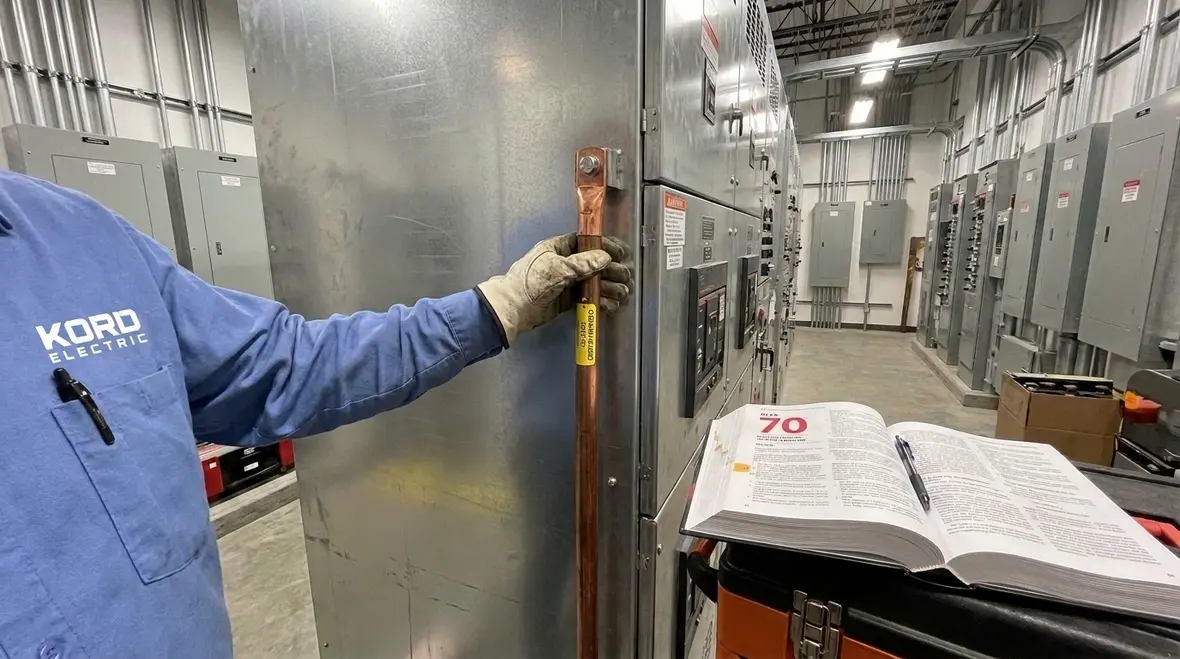
NFPA 70 270.62 NEC GEC Material for Systems Over 2 kV
Kord Electric understands that commercial and industrial power systems do not politely wait for your next outage. That is why we pay close attention to NFPA 70 Section 270.62, which covers GEC Material for Systems Over 2 kV. In this article, we explain how NEC GEC material 2 kV requirements show up in real projects, especially when engineers and inspectors start asking for details that feel “small” until the field crew has to fix them at midnight. And yes, our technicians have heard every joke about code books being heavier than the toolbox, but we still keep them close.
Third person view is helpful here because the code does not care who is writing the proposal. However, our expert service staff does care how the requirements affect installation quality, long term reliability, and compliance for large facilities.
NFPA 70 Section 270.62 and what it requires in practice
NFPA 70 Section 270.62 focuses on grounding and bonding for systems operating above 2 kV. First, it sets expectations for the grounding electrode conductor material and how it must perform when fault currents and transient events occur. Then it ties those expectations to the broader intent of the NEC: protect people, protect equipment, and make sure the system behaves in a predictable way during abnormal conditions.
In practice, 270.62 helps determine which conductor materials and constructions are acceptable when the system is above the 2 kV threshold. As a result, design teams cannot treat grounding as an afterthought. They must line up the conductor material with the system voltage range, environment, and fault duty assumptions. At Kord Electric, we see this most often in major property buildings, manufacturing sites, and commercial campuses where electrical rooms are not “simple spaces.” They are living, changing systems.
Our technicians explain it plainly for field teams. For example, when someone says, “It will still conduct current, right?” we respond, “Yes, it will. But the code also cares about durability, corrosion behavior, and how the conductor connects under real conditions.” That is the part that usually decides whether an inspection goes smoothly or turns into an impromptu training session.
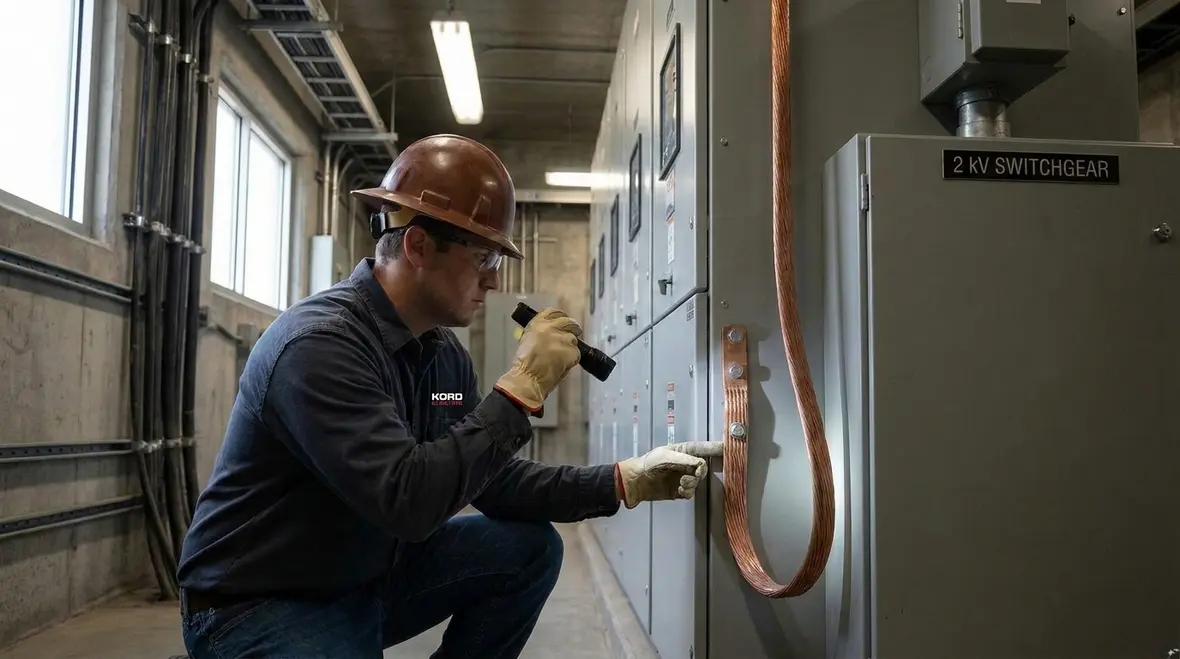
If your team also wants a broader perspective on how the National Electrical Code fits into modern projects, Kord Electric’s explainer on NEC updates for this cycle in Understanding NFPA 70: The National Electrical Code Explained for 2026 pairs well with the high voltage grounding focus in this article.
Why the system voltage range above 2 kV changes the grounding conversation
When voltage climbs, the grounding and bonding requirements get stricter for a reason. Fault energy, insulation stress, and transient behavior shift. Therefore, the grounding system must handle more demanding electrical and mechanical conditions. Even if a facility only experiences a rare fault event, the grounding path must remain reliable when it matters most.
Also, electrical rooms in commercial and industrial facilities often include multiple subsystems. You may have transformers, switchgear, feeders, and distributed equipment that all interact. Consequently, the grounding strategy must stay coordinated across those subsystems. If the GEC material selection does not match the system voltage and design intent, the facility can end up with weak links that inspections catch quickly.
We often remind stakeholders that a grounding system is not a “set it and forget it” project. It is more like a seatbelt. You may hope it never deploys, but you do not buy a seatbelt because it looks nice.
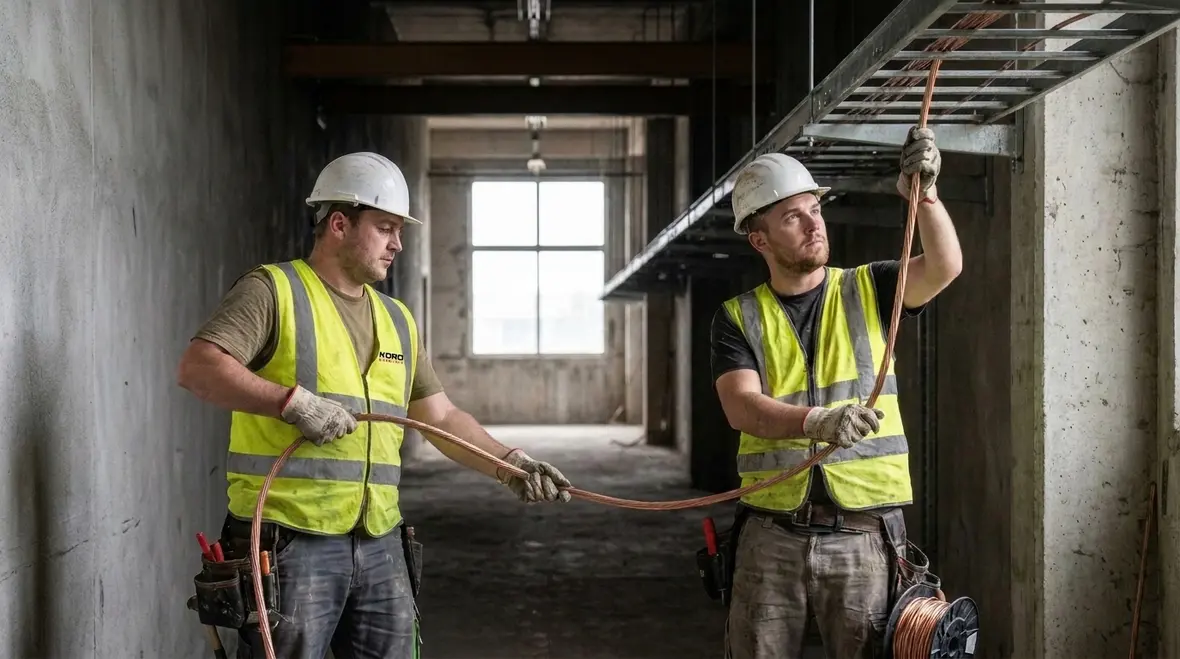
For facilities where uptime is critical, that higher voltage grounding conversation connects directly to outage risk and downtime prevention. Articles like Kord Electric’s guide on electrical downtime prevention and reducing power failures show how grounding, bonding, and coordination decisions play into the bigger picture of keeping operations stable.
How NEC GEC material 2 kV design assumptions connect to real field runs
Good design and good installation must line up. Even when documents specify the right type of conductor, field conditions can introduce issues. For that reason, we review how the GEC material is routed, supported, terminated, and protected in environments that include moisture, chemical exposure, vibration, and temperature swings.
Next, we pay attention to termination quality. A grounding conductor is only as effective as its connections. Therefore, our teams focus on the connection details that most people ignore until an inspector asks for proof. We make sure the bonding jumpers, listed parts, and compatible materials are aligned so the conductor maintains continuity and conductivity over time.
Then we look at physical protection. In industrial settings, pathways get used by maintenance crews, equipment movers, and sometimes even delivery trucks with a talent for pretending they are forklifts. Over time, mechanical damage can threaten the grounding path. So, we recommend protective routing and where needed, guarding strategies that keep the conductor intact.
Our expert service staff also supports clients with clear explanations during commissioning. We do not just hand over paperwork. We talk through what the grounding system is supposed to do during faults, and how the installation supports that goal. That way, the facility team understands the “why” rather than only the “what.”
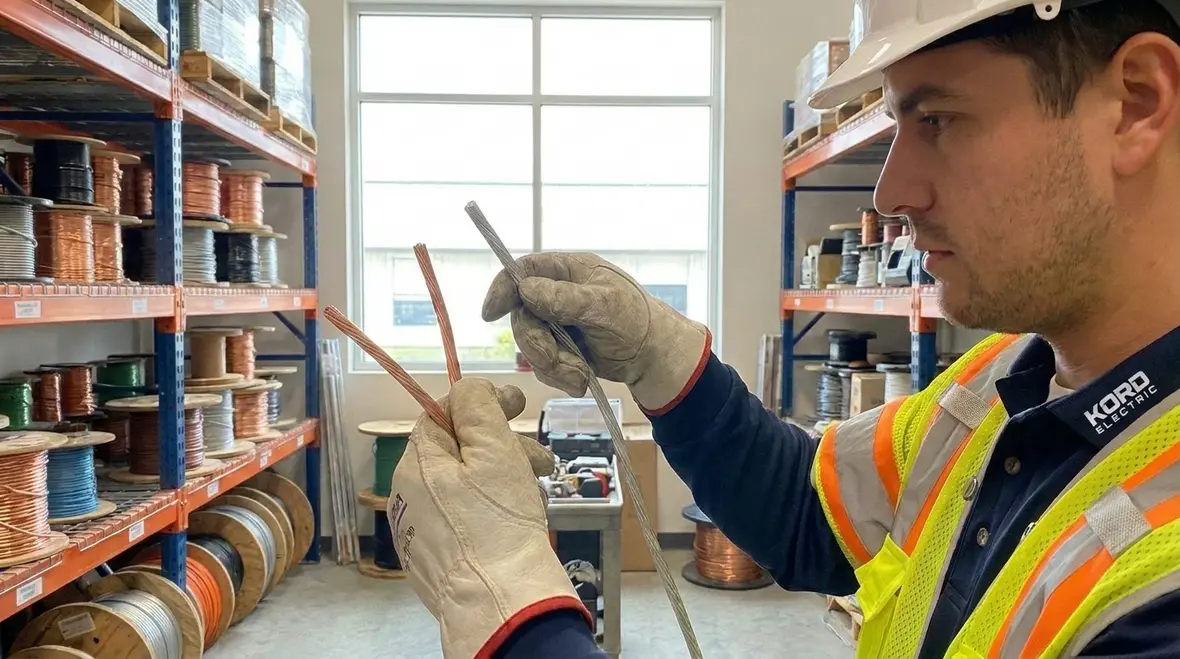
For larger projects, that commissioning support often sits alongside broader planning, such as building-wide electrical design. Resources like Kord Electric’s review of building electrical system design for commercial facilities show how these NEC GEC material 2 kV decisions connect with feeders, distribution equipment, and long term maintenance access.
Material selection: balancing performance, code compliance, and durability
NEC grounding requirements exist because materials behave differently under stress. Conductors and connections experience heat during fault conditions. They also face long term corrosion risk when exposed to moisture or chemical atmospheres. Therefore, selecting the correct GEC material for systems above 2 kV requires a balance of electrical performance and physical longevity.
In many projects, teams start by focusing on compliance checklists. However, we also encourage a reliability lens. If the conductor material resists corrosion and maintains mechanical integrity, the facility benefits for years. And if the material supports proper terminations, the system remains maintainable rather than “mysterious,” which is a polite word for “nobody wants to touch it.”
To keep things practical, our technicians document what they find during install and during service calls. Then, we compare it to the design assumptions. When we see mismatches, we address them early. That approach reduces delays and prevents rework after equipment is already energized.

Those material choices also influence long term maintenance. When the same contractor supports both design and ongoing service—through programs like Kord Electric’s preventive electrical maintenance services—the grounding design assumptions and field realities stay aligned instead of drifting apart over time.
Inspection readiness for commercial and industrial sites
Inspections can feel like pop quizzes written by people who never met your construction schedule. Still, a strong grounding approach makes those conversations easier. We help clients prepare by making sure documentation aligns with field reality and that bonding and grounding details remain traceable.
We also support a clean handoff between design, procurement, and installation. If a project uses multiple trades and contractors, small differences become big problems. Therefore, we verify conductor types, terminations, and installation practices across the system. Then we confirm that the grounding scheme still matches the voltage class and intended fault behavior.
In addition, we coordinate with facility stakeholders that operate large buildings. Many teams need guidance on access, labeling, and maintenance paths. Consequently, we include practical notes so technicians can service the system later without guessing.
If you are thinking “We will deal with it when the inspector shows up,” then congratulations, you have just scheduled risk. We prefer to reduce risk before it turns into a story people repeat in the breakroom.
In many Los Angeles County projects, inspection readiness for NEC GEC material 2 kV work is closely tied to how the rest of the building’s electrical infrastructure behaves. That is why Kord Electric often pairs high voltage grounding reviews with broader assessments documented in topics such as zero-downtime electrical solutions for critical commercial facilities.
Common mistakes we prevent on major property buildings
Large buildings involve more complexity than a typical one time service job. So, mistakes often come from assumptions, not from bad intentions. Here are the most frequent failure points we help teams avoid.
- Using the right idea, wrong material: Teams may select a conductor type that “works” at a lower voltage class, then discover that the system over 2 kV needs a different approach.
- Neglecting connection quality: Even if the conductor is correct, poor terminations weaken the grounding path. We focus on proper connections and compatible hardware.
- Routing without protection: In industrial spaces, pathways experience impact and vibration. We plan for physical protection so the grounding conductor stays intact.
- Overlooking coordination across subsystems: Switchgear, transformers, and feeders must remain aligned. When designs drift, the grounding strategy can drift too.
- Skipping explanation to the facility team: When the people who maintain the system do not understand the intent, maintenance becomes guesswork. We explain it, calmly, and we keep it practical.
Our approach at Kord Electric stays focused on commercial and industrial facilities and major property buildings. That focus helps us build repeatable quality habits, and it keeps our service team aligned with the kinds of systems these projects use.
For property managers balancing electrical reliability, fire safety, and capital planning, this same disciplined mindset shows up in related topics such as Kord’s guide on California property manager fire safety compliance, where electrical decisions are tied to broader life safety requirements across large portfolios.
FAQ for NEC grounding and systems over 2 kV
Get compliant grounding support from Kord Electric
If your facility runs electrical systems above 2 kV, you need grounding decisions that hold up during real faults and real inspections. Kord Electric supports commercial and industrial facilities with expert technicians and an approach built for major property buildings. We review grounding design intent, verify installation details, and explain the requirements so your team understands what matters and why. If you want help aligning NFPA 70 expectations with field execution, contact Kord Electric today and let us tighten the system before the next surprise.
When you need that support across an entire region—not just one project—Kord Electric’s dedicated Los Angeles County electrical services team connects NEC-compliant grounding work with broader design, maintenance, and troubleshooting for complex commercial and industrial facilities.
If your portfolio also includes fire protection concerns alongside electrical reliability, Kord Fire resources such as the NFPA codes guide for commercial building owners can help you coordinate NEC requirements with sprinkler, alarm, and life safety strategies across large properties.


