
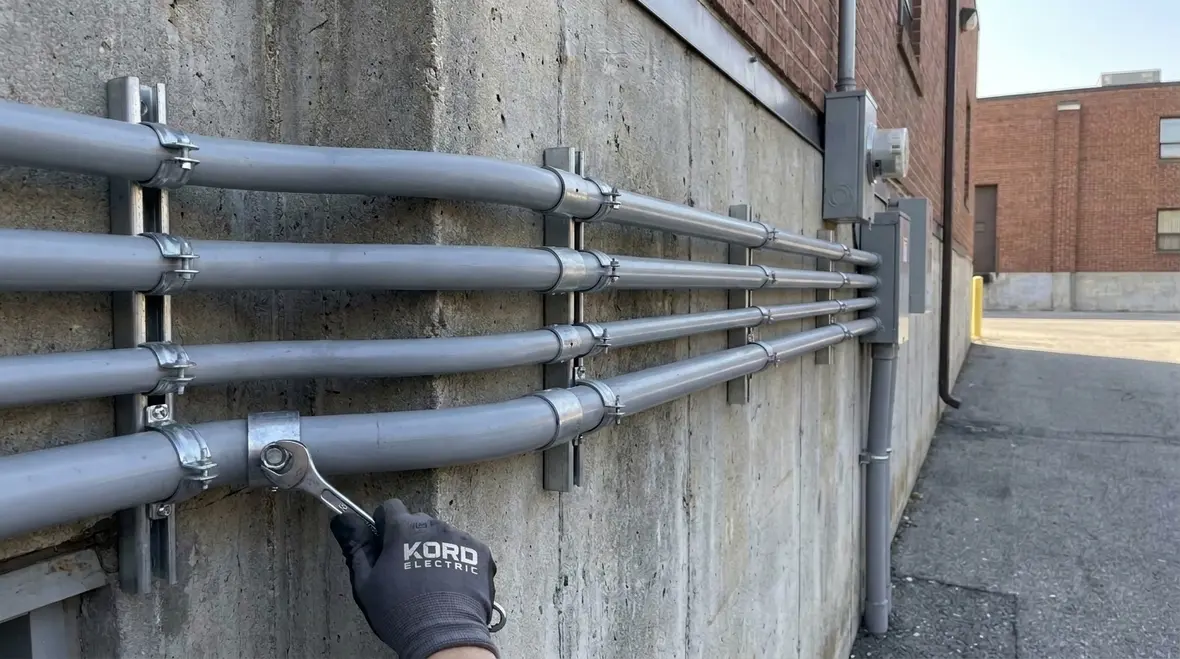
NEC Conductor Attachment to Buildings by Kord Electric
How Kord Electric helps with NEC conductor attachment to buildings
When conductors are attached to buildings, the work must be done correctly, because the building does not “forgive” mistakes. At Kord Electric, we focus on the details that matter in commercial and industrial facilities, as well as major property buildings, where safety and uptime are not optional. Our team and expert service staff explain the rules in plain language, and we help clients meet the intent behind NFPA 70 Section 267.16.
So, in this guide, others can stop guessing and start building safer electrical systems. We cover what the code means for attachment methods, support strength, routing, and protection. And yes, we will also mention the common “it seemed fine last time” mindset, because we have all heard that story. Luckily, electricity does not care about nostalgia.
What NFPA 70 Section 267.16 requires for conductor attachments
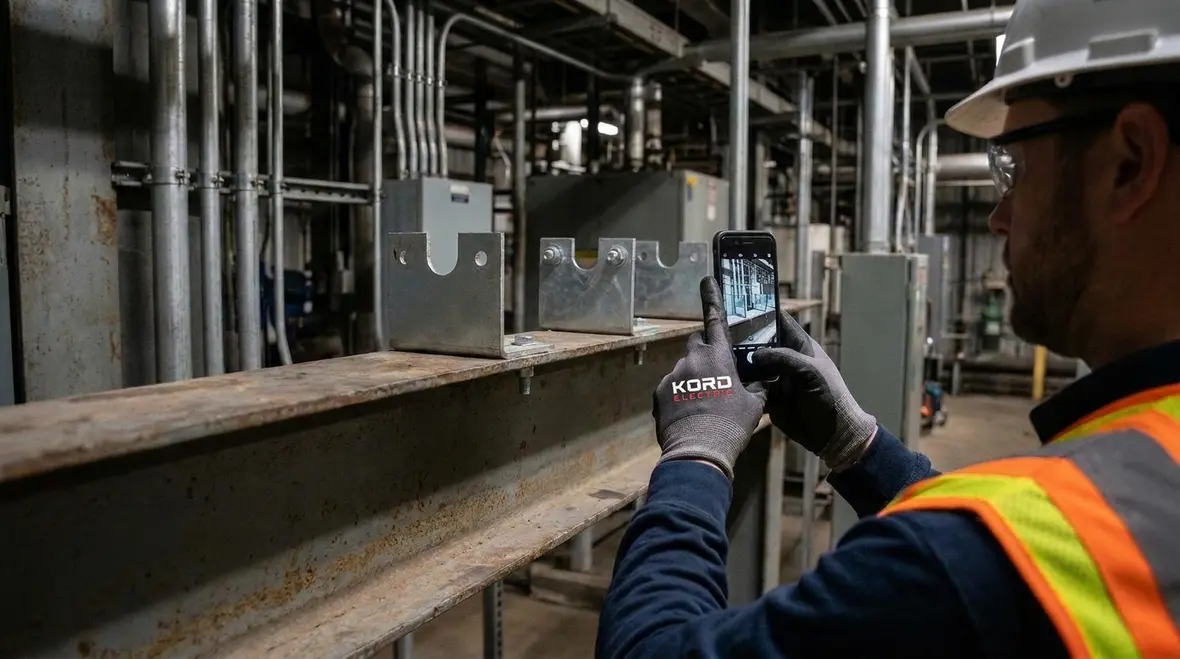
NFPA 70 Section 267.16 addresses how conductors should be attached to buildings in a way that protects people, property, and the conductors themselves. To be clear, it is not asking for fancy brackets and guesswork. Instead, it sets expectations for secure attachment, proper routing, and reliable support. In other words, it aims to prevent loose connections, abrasion, and movement that can lead to damage over time.
When we interpret this section for our clients, we start with the big idea: conductors should stay where they belong under normal building conditions and reasonable stress. Then we connect that idea to how the conductor is actually installed. For example, the attachment method needs to resist strain and keep the conductor from pulling, sagging, or rubbing on surfaces.
As a result, the correct NEC conductor attachment to buildings becomes more than a compliance checkbox. It becomes a system design requirement that supports safe electrical performance for years, not months.

We design for strength, not just “it’s mounted”
Many facilities treat conductor attachment as a quick task, but our technicians know better. For commercial and industrial settings, vibrations, thermal cycling, and building movement are real. Therefore, attachments must remain secure even when conditions change. And because HVAC starts, forklifts move, and doors slam, the electrical system should not act like a loose decoration.
To achieve this, we look at the installation path from start to finish. Then we plan the attachment points with the surrounding structure in mind. That includes understanding where conductors run, what they cross, and how they transition from one support type to another.
Next, we verify the supports do the job. That means the attachment hardware, anchoring, and spacing support the conductor without creating harmful stress. If an installer “eyeballs” spacing or relies on a flimsy fastener, the system can fail quietly. Quiet failures are the worst kind, because they often show up after hours.
Support, routing, and protection that prevent damage over time
Even when a conductor looks straight and neat, damage can still start early. For that reason, we pay close attention to routing and protection. Conductor runs should avoid sharp edges and areas where abrasion can occur. Also, routing should reduce the risk of snagging during maintenance work.
Additionally, we consider how moisture and corrosion affect attachment points. In commercial and industrial facilities, there are often outdoor sections, loading docks, or sheltered exterior routes. Moisture exposure can weaken attachments and increase long term degradation. Consequently, proper hardware selection and installation practices matter.
Then there is the issue of movement. Temperature changes cause expansion and contraction. When conductors shift, the attachment method must still hold steady. If it does not, strain can transfer to terminations, joints, and insulation. Therefore, a correct installation helps keep electrical performance stable.
How our expert staff explains the code in practical terms
At Kord Electric, we do not stop at “the rule says so.” We bring our expert service staff into the conversation so facilities can make informed decisions. When a client asks what NEC conductor attachment to buildings means for their project, we explain it with what crews will actually do during installation.
For example, our technicians break down the work into steps that connect code intent to real field practice. Then we review typical problem spots, such as unclear routing, improper spacing, missing strain support, or attachments that do not match the conductor type and environment. After that, we help clients align the installation plan with inspection expectations.
And because everyone has a different baseline understanding, we keep the communication direct. Our staff talks through risks, timing, and documentation so facility managers can track what changes and why. If you have ever seen a punch list grow like a weed, you know why this matters.
Staying compliant in commercial and industrial projects
Compliance is not only about passing an inspection today. It is about reducing future hazards and preventing costly rework. For major property buildings, conductor routes are often tied into ongoing operations, meaning disruptions have real cost. Therefore, we help teams plan attachment details early, so installation stays organized and predictable.
We also coordinate with project stakeholders so the electrical work does not fight the rest of the building plan. That means we pay attention to where other systems pass, how maintenance access is handled, and whether routing changes create new attachment stress points. In turn, this reduces the chance of “last minute changes” that lead to compromised workmanship.
Finally, we recommend a realistic inspection mindset. Rather than viewing inspections as a hurdle, we treat them as verification of a quality process. When the attachment system is built correctly the first time, the facility receives both safety and long term reliability.
Connecting attachment details to broader NEC planning
Because attachment rules interact with many other NEC topics, our teams often align conductor support planning with broader code reviews. When facilities examine building wiring requirements or review the scope of NFPA 70 for a new project phase, that is an ideal time to confirm how exterior and on-building conductors will be routed, anchored, and protected for the long term.
For facility teams that want a deeper code-level foundation, resources such as Kord Electric’s article on understanding NFPA 70 and its 2026 application can help place these attachment requirements in the bigger NEC picture, so design decisions stay consistent from feeders to supports to final terminations.
Related safety context: NEC and fire related planning
Electrical safety does not live in a vacuum. The NEC supports safe installation practices, and fire planning depends on safe and reliable electrical systems. If you operate complex buildings, you already know that reliability affects emergency response too. When electrical components fail because of poor attachment, damage can spread faster than anyone wants.
That is why Kord Electric stays aligned with broader safety goals and design thinking. We work within the NEC framework while considering how systems interact in real life. For clients who want deeper background, it helps to review authoritative resources that discuss the National Electrical Code and the role of fire related planning in facility safety. For additional perspectives, you can explore resources published through Kord Fire and related industry safety groups that focus on how electrical reliability supports fire protection and life safety performance.
As a result, our approach supports the intent of the NEC while keeping the facility’s bigger safety picture in focus. Electricity is powerful, and the last thing a facility needs is power that behaves unpredictably.
FAQ about attaching conductors to buildings
Request a code aligned electrical plan from Kord Electric
If your facility needs safe, reliable electrical installation, do not leave conductor attachment to guesswork. Kord Electric works with commercial and industrial facilities and major property buildings, and we bring our technicians and expert service staff to explain requirements and translate them into field ready plans. Next, we help you reduce risk, avoid rework, and support smooth inspections. Contact us today to review your project approach and get a code aligned path forward that stays solid for the long run.
Plan NEC conductor attachment to buildings as part of your wider code strategy
For many facilities, the smartest move is to treat NEC conductor attachment to buildings as one piece of a larger NEC and safety roadmap. When you review how wiring on buildings is handled, how exterior feeders transition into structures, and how supports interact with fire and life safety planning, your team gains a clearer picture of both risk and opportunity. Resources that explain the National Electrical Code for 2026, along with Kord Fire’s coverage of fire protection topics, give property teams context so attachment details never feel like a guess.
If your organization manages multiple properties or complex occupancies across Los Angeles County, it can be especially helpful to coordinate conductor attachment standards with broader service and maintenance work. Kord Electric’s Los Angeles County electrical services support that kind of portfolio-wide consistency, tying together installation quality, NEC alignment, and reliable ongoing operation.
By aligning attachment design with inspection planning, surge protection, troubleshooting strategies, and long term maintenance, facilities can move away from reactive fixes and toward a calmer, more predictable electrical environment that supports both everyday operations and emergency readiness.
When you are ready to take the next step, Kord Electric can integrate conductor attachment planning into new construction, renovations, or targeted upgrades, so every run, support, and termination reflects the same commitment to code intent and real world performance.
For teams that want to explore related topics, you can review Kord Electric’s NEC-focused resources, including guidance on wiring on buildings code requirements and broader NEC application scope, along with Kord Fire Protection’s articles that center on how mechanical attachments, fire systems, and electrical reliability all connect to keep people and property safer.
However your project starts, the goal stays the same: build an electrical system where conductors stay where they should, supports do their job quietly, and buildings do not become the weak link in your safety plan.
Next steps for your facility
If you are planning a new project, reviewing existing exterior runs, or investigating recurring issues tied to building-mounted conductors, this is the right moment to bring attachment details into focus. A structured review can uncover weak points before they become failures, align your documentation with NEC expectations, and set a consistent standard your team can follow on every future job.
Kord Electric is ready to help you connect those dots, from concept through installation and inspection, so your conductors, buildings, and safety strategy all work together instead of pulling in different directions.


