
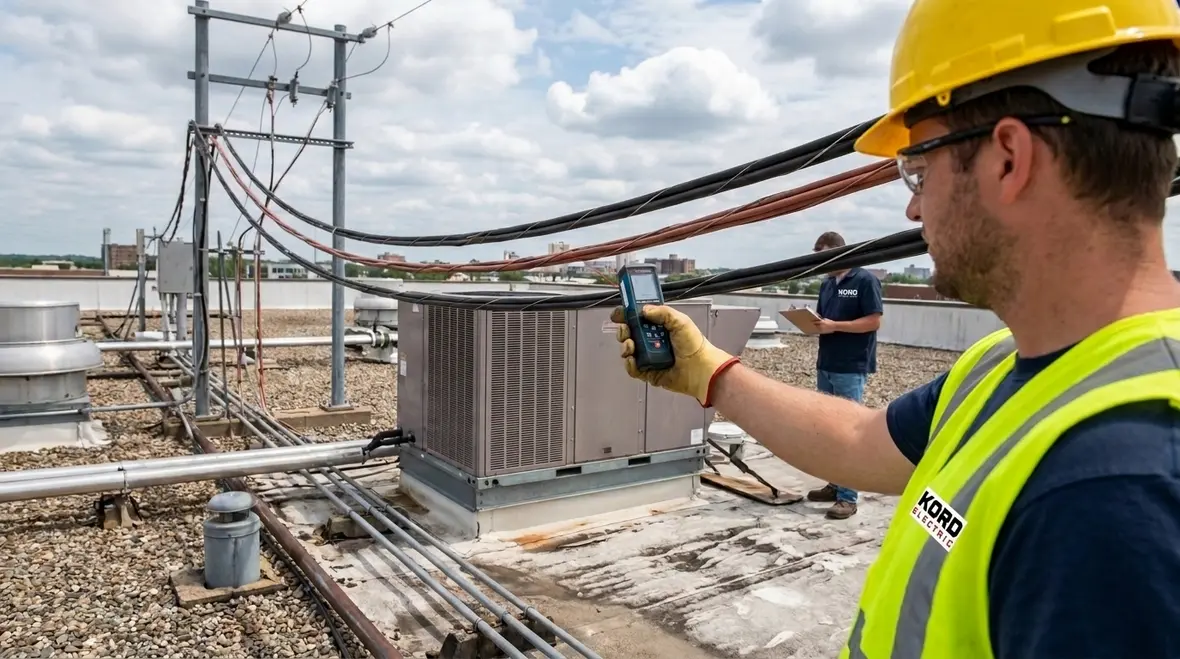
NEC Conductor Clearances Over Buildings 267.19
If you operate a commercial or industrial facility, you do not get the luxury of guessing. In the same way a loading dock needs the right door height, electrical systems need the right space around wiring. That is why NEC conductor clearances over buildings matter in real life. When teams follow NFPA 70 Section 267.19, they help keep conductors safe as they pass over structures and stay out of danger during weather, maintenance, or an unexpected accident that nobody scheduled. In this article, Kord Electric will explain what Section 267.19 demands, how our technicians and expert service staff walk clients through it, and how facility managers can apply the rules without turning every project into a suspense movie.
What NFPA 70 Section 267.19 actually controls for power over structures
NFPA 70 Section 267.19 focuses on the clearances over buildings and other structures when conductors run above or across parts of a facility. In plain terms, the code sets minimum distances so conductors do not become close enough to create arcing, shock risk, or fire risk. Importantly, these requirements apply to the space above and around structures, not to every detail of every electrical system. However, facilities often discover that one missed clearance can cascade into delays, rework, or inspection failures.
In addition, the section connects to real hazards. For example, wind and vibration can move lines slightly. Weather can cause sag. When a crew later adds a rooftop device or maintenance platform, the clearance margin can shrink without anyone meaning to change it. Therefore, Section 267.19 works like a “do not enter without permission” sign, but for electrical spacing.
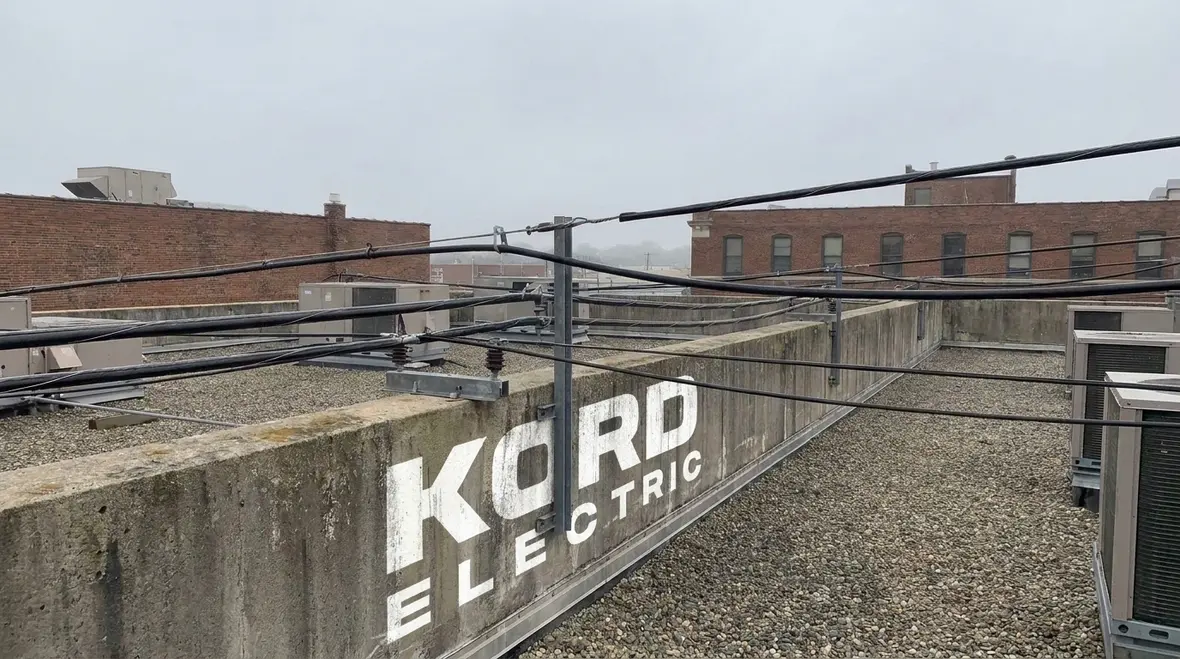
How we interpret conductor clearances in the field
At Kord Electric, we do not treat clearances like paperwork. We treat them like physical reality that a technician must measure and verify. Our technicians and expert service staff explain the requirements in plain language during site walks, then we confirm the routing, height, and distances before anything gets energized.
Next, we account for the way facilities operate. Commercial and industrial buildings often include rooftop equipment, pipe racks, cranes, and maintenance access paths. As a result, the “safe zone” for conductors needs to stay safe even when people and equipment move around. And yes, sometimes the biggest issue comes from the simplest change, like relocating a temporary scaffold and forgetting the clearance it passes under.
Our team helps clients avoid that kind of surprise by mapping conductor routes against structure geometry, then documenting compliance so facility stakeholders can review it quickly and clearly.

Calculating clearance: what teams must measure before they assume
Clearance is not a vibe. It is a number. To follow NFPA 70 Section 267.19, facility teams must verify measurements at the relevant span and at the relevant point above the structure. That means the crew determines the conditions that affect conductor position, then checks the distance to the building or structure features below.
Practically, crews should plan for these common measurement realities:
- Conductor sag based on installed conditions, because a line does not hang perfectly still like a picture frame
- Changes near rooftop structures where equipment, parapets, or overhangs can bring conductors closer than expected
- Vertical changes in routes where transitions occur, since a clearance that looks fine on one end can fail near a rise or drop
- Future maintenance access where crews might work near the same area later
Then, when teams measure and document, they do not just satisfy a checklist. Instead, they build a safer electrical environment that holds up through weather and routine work. It is the difference between “it passed once” and “it stays safe year after year.”
Clearances over buildings and other structures: common layout problems
Even careful design can run into clearance trouble during installation. And even good installation can run into trouble after tenant work, equipment upgrades, or roof replacements. Because commercial and industrial facilities evolve, we often see these problems:
- Conductor routes that were coordinated early, but later changed when other trades rework the roof plan
- Rooftop upgrades that reduce usable distance such as adding mounts, ladders, or new service platforms
- Miscommunication between electrical and building teams where someone assumes the spacing “does not matter” because it looks clear from ground level
- Utility attachments near structural edges where the building geometry creates uneven clearance points
To keep clients moving, our technicians explain what they see and what it means for safety and compliance. We also help clients understand how to plan changes so they do not accidentally break NEC conductor clearances over buildings requirements. Think of it as a roof-level game of chess where every move by one trade affects the whole board.
Compliance strategy for commercial and industrial facilities
Turning Section 267.19 into a repeatable process
Facility managers need a method, not a scramble. Kord Electric approaches clearance compliance as a planned process. First, we review existing installations and any upcoming scope of work. Next, we validate the routing, heights, and points of potential proximity. Then, we document findings in a way that supports real decisions during permitting, inspection, and commissioning.
Coordinating with the trades that share your rooftop
In addition, we coordinate with the people who influence clearance outcomes. That includes general contractors, roofing vendors, and equipment installers. Because the electrical layout does not live alone, compliance becomes shared. When everyone understands the clearance limits, the project runs smoother.
Why Kord Electric focuses on major property buildings
At the same time, we keep our focus where it belongs. Kord Electric supports commercial and industrial facilities and major property buildings. We do not chase small-scale jobs. Instead, we build reliable solutions that fit the complex needs of large properties, where safety, uptime, and inspection readiness matter.
Staying aligned with NEC and local fire safety expectations
Clearances as part of a bigger safety picture
Electrical clearance rules exist for a reason, and they tie into broader safety goals. For example, fire safety planning and code compliance often overlap in rooftop and above-structure zones, especially where conductors pass near building elements. When teams treat clearance rules as isolated, they miss the bigger picture.
Using Kord Electric and Kord Fire resources together
Accordingly, we also help clients align electrical requirements with practical safety planning. Kord Fire and resources like Kord Fire’s NEC overview and Kord Fire’s broader guidance reinforce why code compliance works best when it connects to fire and site safety thinking.
And because facilities can benefit from a deeper look at how code and system readiness support safety goals, clients sometimes explore firepumps.org as part of their broader safety planning. Our team still leads the electrical side, but we respect the need for an integrated approach.
Meanwhile, for readers who want the big-picture context behind NEC updates, our Kord Electric blog can help explain how NFPA 70 concepts come together as standards evolve.
FAQ: clearances, inspections, and practical next steps
Call Kord Electric for a clearance review that actually helps
If your facility has overhead conductors or you plan roof work, equipment upgrades, or new construction, do not wait for an inspection surprise. Kord Electric can review clearances tied to NFPA 70 Section 267.19 and help your team stay compliant without slowing down operations. Our technicians and expert service staff explain the results in plain terms, then guide next steps that fit commercial and industrial realities. Call us today and get a clearance plan you can trust. Because “close enough” is not a code phrase.
For facilities across the region, especially those in and around Los Angeles County, our dedicated Los Angeles County electrical services support large commercial and industrial properties that cannot afford guesswork around NEC conductor clearances over buildings or any other part of the electrical system.
Whether you are planning a new project, updating aging infrastructure, or just want confirmation that existing spans still respect today’s code expectations, a structured clearance review turns rooftop question marks into documented, defensible answers your team can rely on.
Next step: schedule a focused NEC clearance review
When you are ready, bring Kord Electric in early, before conductors are routed or rooftop changes are locked in. We will walk the site, review drawings, verify NEC conductor clearances over buildings in the field, and leave you with documentation that keeps inspectors, safety teams, and operations staff on the same page.


