
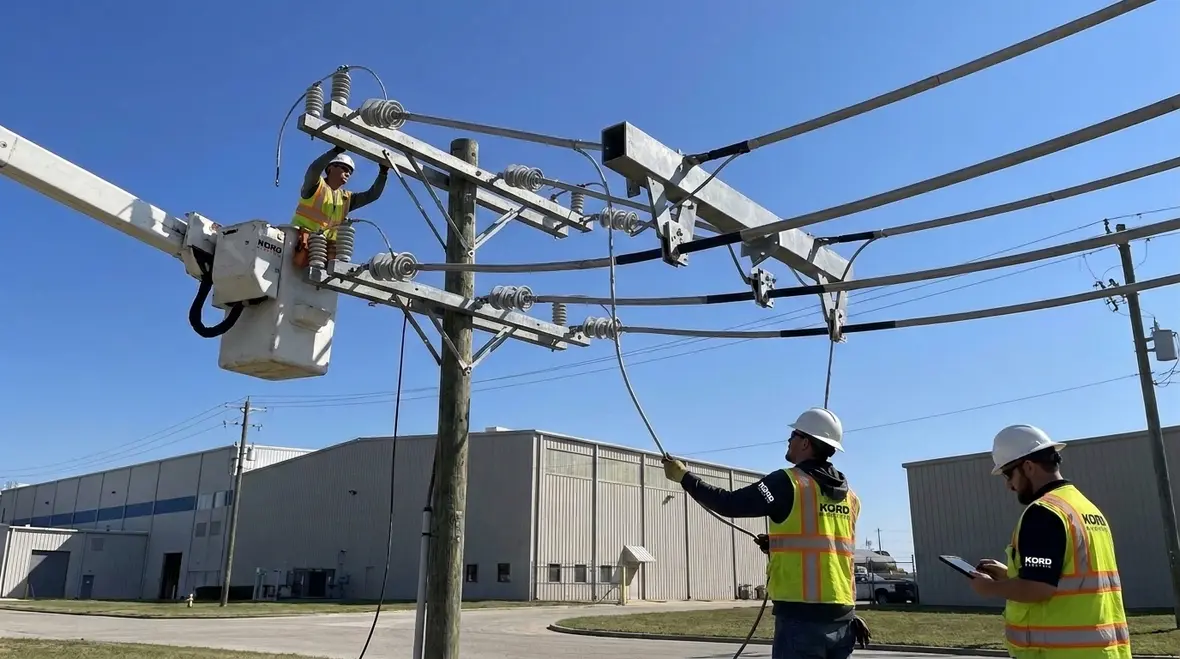
NFPA 70 Section 267.21 Outdoor Overhead Conductor Support
Kord Electric installs NEC overhead conductor support systems for commercial and industrial facilities, and we do it with the kind of patience you usually only see in slow coffee service lines or in a truly long movie trailer. In this article, we walk through NFPA 70 Section 267.21 and explain what the code expects for supporting outdoor overhead conductors. Then we connect those requirements to real installation practices our expert service staff uses on major property buildings. After all, when conductors sit outside, wind, vibration, heat, and time all show up uninvited. And if the support is wrong, the conductor does not care that the schedule is busy. It just fails quietly and eventually.
What NFPA 70 Section 267.21 requires for outdoor overhead conductors
NFPA 70 Section 267.21 focuses on the physical support of outdoor overhead conductors. The code aims to prevent movement, sag beyond safe limits, and damage from mechanical stress. In other words, the support system must keep conductors positioned so they stay safe under normal conditions. When Kord Electric follows these rules, we design the support to handle both everyday loads and the tougher moments, like gusty weather or vibration from nearby equipment.
However, the key point is not just “hang it and hope.” Instead, the code expects proper hardware selection and proper attachment methods. For commercial and industrial facilities and major property buildings, this matters because a small support issue can turn into a bigger one across a larger system. Our technicians explain these expectations step by step, so building owners understand what protects people, assets, and uptime.
Support types that actually work outdoors
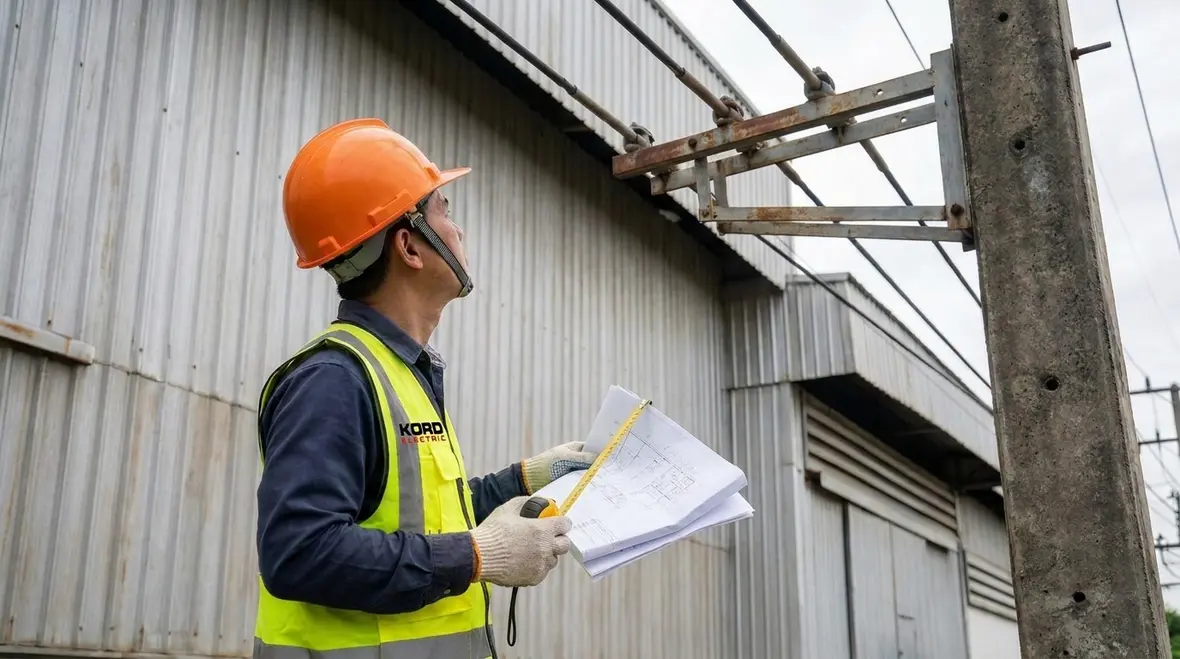
Outdoor installations face forces that indoor systems rarely see. Therefore, support materials and attachment methods must match the environment. In most real projects, Kord Electric handles support using combinations of poles, crossarms, brackets, insulators, clamps, and messenger wire arrangements where needed. Each part has to hold the conductor securely without creating sharp stress points or corrosion hotspots.
Also, the code does not treat every weather scenario as identical. As a result, we help facilities plan supports that resist movement and deterioration. For example, we consider exposure to moisture, salt air where applicable, temperature swings, and pollution buildup. If a conductor support loosens over time, the conductor may shift. Then the stress on clamps and insulators increases, which leads to a cascade of problems. And nobody wants that cascade. It is like a popcorn spill in a quiet theater. It spreads, and soon everyone is watching.
Our expert service staff reviews existing support conditions before recommending changes. If the facility already has hardware, we verify it still meets safe mechanical performance and does not violate the code intent. When we make upgrades, we keep the work tied to the NEC requirements so the entire overhead system acts as one coordinated safety plan.
Spacing, sag, and loading: keeping conductors where the code expects
Even when the hardware looks solid, support must control the conductor position. NFPA 70 requirements aim to prevent excessive sag and movement that can create unsafe clearances. Additionally, wind and ice loads add mechanical stress. So, while the support might hold the conductor at installation time, it must also hold during typical outdoor conditions.
Kord Electric approaches this by treating support as part of an engineering chain. First, we confirm conductor routing. Then we check attachment points and evaluate how the support system will behave under load. After that, we verify clearances and avoid conditions that can cause the conductor to drift closer to structures or walkways.
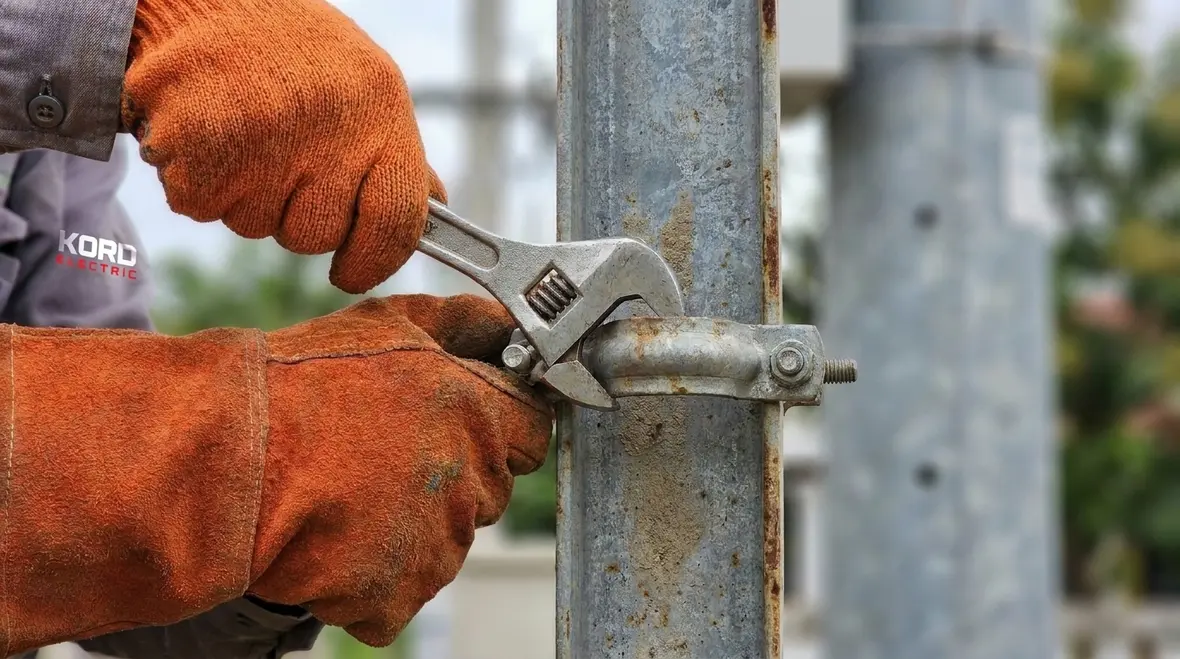
Technicians on our team also pay attention to how hardware applies force. If a clamp uses the wrong placement or applies pressure unevenly, it can damage insulation or distort strands over time. Therefore, we use the correct methods for the conductor type and the installation context. It is not glamorous work, but it is the difference between a system that performs and a system that “sort of” works.

How proper mounting prevents damage and service interruptions
When support systems fail, they rarely announce themselves with drama. Instead, they show up as gradual loosening, cracking of components, or increased vibration. Then maintenance crews get called to investigate, and the facility loses time. Kord Electric focuses on preventing that from happening in the first place, especially for commercial and industrial facilities where downtime costs real money.
We also follow code logic: if the support cannot reliably hold the conductor, the installation does not meet the safety goals. So we check attachment strength, ensure components align correctly, and confirm the support does not create undue mechanical stress. Moreover, we consider thermal expansion effects. Outdoor conductors expand and contract with temperature swings, and the support method must allow safe movement without letting the conductor wander.
Our expert service staff explains what we see during inspections. If we find early wear, corrosion, or signs of improper past support, we outline the path to correction. We do it in plain language so facility managers can make confident decisions. In the end, good support buys reliability, and reliability keeps budgets calmer than a Sunday night sitcom rerun.

Inspection and maintenance for major property buildings
Even a properly installed overhead system needs periodic checks. Therefore, Kord Electric recommends a maintenance approach that matches the real risks of the facility. We look for signs that the support system has changed since installation. That includes loosened fittings, corrosion, worn insulators, and conductor movement that suggests the support has lost performance.
For major property buildings, the inspection strategy must fit the operating schedule. We coordinate work so we do not disrupt critical activities. Then we document findings clearly, including what needs repair and what can be monitored. Our technicians handle the technical details, and we communicate the “why” so stakeholders understand the safety impact.
Also, maintenance should not treat the conductor alone. In many cases, the conductor looks fine while the support hardware deteriorates. Then the next storm turns a slow problem into a fast one. Kord Electric aims to stop those slow problems early, before they turn into emergency calls that nobody enjoys.
Working with the code: how we align practices with the NEC
Commercial and industrial facilities often have layered compliance needs, and the NEC sits at the center of that safety plan. NFPA 70 provides both technical direction and safety intent, and Section 267.21 plays a direct role in outdoor overhead conductor support. As we build or improve NEC overhead conductor support systems, we treat code alignment as a full process, not a checklist.
First, we confirm the installation conditions and the conductor system design. Next, we select support components based on mechanical performance and suitability for outdoor use. Then we install and secure the hardware following accepted NEC practices. Finally, we verify the completed system supports conductors properly under expected loads.
To keep this practical, Kord Electric often works with facility stakeholders who want answers fast. Our expert service staff explains the reasoning behind the code requirements and what changes reduce risk. For teams who want deeper context on the National Electrical Code as a whole, we often point them to resources like Understanding NFPA 70: The National Electrical Code Explained for 2026 and our sister company’s overview in NFPA 70: All About The National Electrical Code (NEC) 2026, which help teams see how section-level rules fit inside the bigger safety picture.
How this ties to safety beyond the wiring
Support requirements affect more than electrical performance. Overhead conductor systems influence public safety, worker safety, and property risk. If conductors shift too much, they can interfere with access, equipment clearances, and safe pathways. In facilities with busy loading areas, rooftops, or outdoor utilities, that becomes a serious issue.
Therefore, the support system acts like a safety barrier. When Kord Electric designs NEC overhead conductor support with NFPA 70 Section 267.21 in mind, we reduce the chance of dangerous conductor movement. We also improve the overall reliability of the electrical distribution feeding critical building systems.
In addition, proper support can help fire-related planning. While conductor support is an electrical requirement, it helps reduce scenarios that create hazards during emergencies. For teams that also follow fire protection considerations, Kord Fire and training resources such as those referenced at Kord Fire’s NFPA 70 overview help connect electrical reliability with broader life safety goals. And yes, that matters. Buildings do not run on vibes.
What our team checks on every project
Below is a simple two-column view of the work our technicians typically confirm for outdoor overhead conductor support. This helps facility teams understand how we move from code intent to real-world installation quality.
| Code focused items | Field focused verification |
| Proper support for outdoor overhead conductors per NFPA 70 Section 267.21 | Hardware selection and secure mounting that resists movement |
| Mechanical stability under expected loading | Clearance checks and control of sag and conductor position |
| Prevention of damage from stress at attachment points | Clamp placement, insulation protection, and alignment |
| Outdoor suitability and durability of components | Inspection for corrosion, wear, and early failure signs |
How overhead conductor support fits into broader electrical planning
Outdoor NEC overhead conductor support does not live in isolation. It ties into feeder routing, service entrances, equipment locations, and even future-ready plans such as EV charging or additional rooftop equipment. When Kord Electric plans new work, we look at overhead support through the same lens we use for infrastructure upgrades, load testing, and long-term maintenance.
For example, our teams often pair overhead support reviews with broader assessments like those described in our Electrical Infrastructure Upgrade Planning Guide and our NEC walk-throughs on vault spaces and in-sight-from-switch rules. By doing so, we make sure that changes to conductor routing or equipment layouts do not accidentally undermine clearances, safe access, or support performance.
When a facility commits to keeping overhead support aligned with NFPA 70, it also makes inspections easier. Inspectors see a coherent story: accurate drawings, properly supported conductors, compliant clearances, and maintenance records that show issues were caught and fixed before they turned into outages. That kind of consistency helps projects move faster through approvals and keeps rework costs out of the budget column.
Planning for upgrades and coordinating with other work
Upgrading NEC overhead conductor support rarely happens in a vacuum. Many commercial and industrial facilities tackle it alongside panel changes, transformer replacements, or distribution re-routing. Our technicians treat overhead support as one layer in that stack, so we do not miss interactions between mechanical loads, electrical loads, and construction sequencing.
In practice, that can mean phasing work around production schedules, coordinating with roofing or structural trades, and planning temporary supports while permanent structures are installed. When we review a site, we look at conductors feeding high-priority systems and align the support strategy with existing reliability plans and maintenance windows.
For facilities in dense jurisdictions or with complex occupancy types, we often align overhead conductor support upgrades with services like our Los Angeles County electrical services offering, where permitting, inspections, and AHJ expectations play a major role. That way, the support details match not only the NEC but also the local enforcement culture that decides how fast a project can move from plan to energized.
FAQ
Conclusion
Kord Electric helps commercial and industrial facilities keep outdoor overhead systems safe by aligning installations and maintenance with NFPA 70 Section 267.21. Our technicians and expert service staff explain what the code requires and how that translates into steady, durable support in the real world. If you manage a major property building and you want overhead conductor support that holds up through weather, vibration, and time, contact us. We will review your current setup, identify risks, and build a clear plan to fix them.
For property teams planning larger upgrades, overhead conductor support can be integrated into broader NEC-focused strategies, from infrastructure modernization to preventive maintenance. When those pieces line up, your conductors stay exactly where code expects them to be, and your electrical system gets the quiet, predictable reliability it deserves.


