
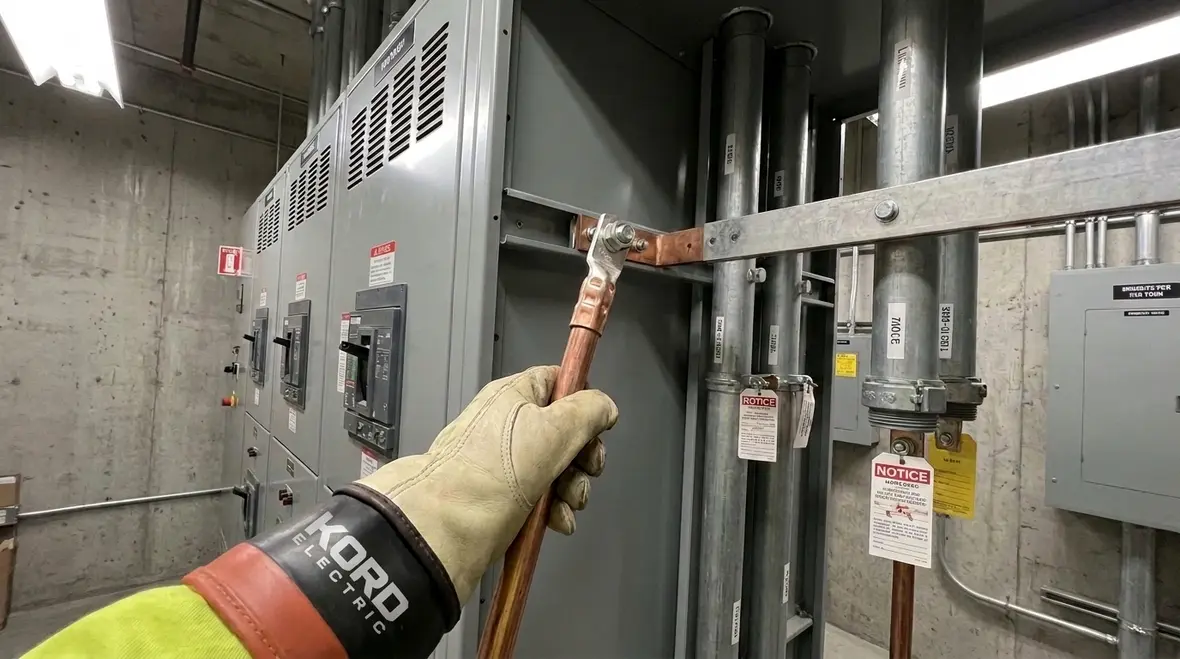
NEC Conductor to Ground 2 kV NFPA 70 270.26
The phrase NEC conductor to ground 2 kV is one of those details that separates a safe, code minded electrical system from a “it worked last time” situation. And yes, in commercial and industrial facilities, we do not bet the building on luck. In this article, we explain how NFPA 70 Section 270.26 guides what conductor to use for grounding above 2 kV, and why the choice matters for fault control, equipment protection, and long term reliability. Our team at Kord Electric, including our technicians and expert service staff, explains it in plain language, so your decision makers and installers move forward with confidence. We will keep it professional, business casual, and just engaging enough to make the code feel less like a tax form.
1) NFPA 70 Section 270.26 in plain business language
In the NEC, grounding is not a guess. It is a set of rules that tells you how conductors should be sized, selected, and connected so fault currents behave the way the design expects. NFPA 70 Section 270.26 focuses on installations where the system operates above 2 kV. That is the threshold where the electrical behavior and risk profile changes, and so the grounding approach must get more specific.
To be clear, we are talking about commercial and industrial systems, not residential work. When our technicians look at a facility, they track the system voltage, the grounding method, and how the switchgear and transformers interface with the grounding network. Then they align the conductor selection with the intent of the code and the practical needs of the site. After all, when something faults, the grounding path needs to stay dependable under stress. Pop quiz time: if your grounding conductor fails during a fault, the building does not quietly “learn from the mistake.” It just keeps hurting until it is fixed.
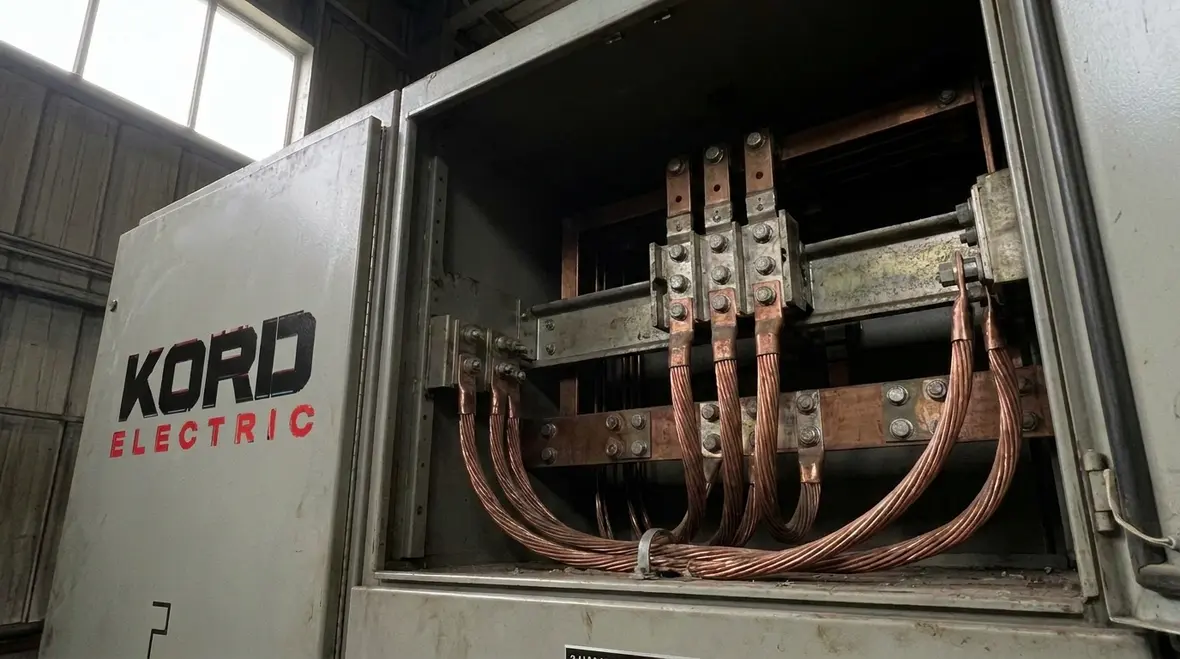
For facility leaders who want a broader code context before they zoom into Section 270.26, Kord Electric’s companion guide, Understanding NFPA 70: The National Electrical Code Explained for 2026, walks through the overall NEC direction and how it shapes day to day planning for commercial and industrial buildings. That big picture makes it easier to see where high voltage grounding fits into your wider safety and reliability strategy.
2) When voltage goes above 2 kV, what changes
Once systems exceed 2 kV, the grounding conductor must handle fault current conditions with more discipline. The NEC conductor selection rules aim to ensure you provide a reliable path that limits damage and supports protective device operation. As voltage rises, the physical and electrical demands on the grounding system increase, and so the conductor requirements become more strict.
Our expert service staff often sees confusion at the handoff between design assumptions and field reality. Someone picks a grounding conductor that “seems close,” and everyone moves on. Later, during commissioning or maintenance, the problem shows up. That is why we take time upfront, review the one line, and verify the grounding details before anything gets buried under a cable tray or hidden behind a panel. In other words, we prevent the kind of surprise that makes project managers look like they just heard a door slam in a horror movie.
Additionally, fault current behavior can affect heat rise and mechanical forces on conductors. Therefore, the grounding conductor selection and installation practice must work together, not as separate ideas. The NEC conductor to ground 2 kV choice is both a materials decision and a systems decision, and the best designs treat it that way from the beginning.
How higher voltage shifts risk and expectations
Above 2 kV, the combination of higher energy, insulation stress, and potential arc energy means fault paths have less room for error. A grounding misstep that might show up as a nuisance problem at lower voltages can translate into serious equipment damage or unsafe conditions at medium voltage levels. That is why NFPA 70 tightens the rules and why experienced teams treat these installations with extra diligence.
3) Our process for choosing the right grounding conductor
At Kord Electric, we do not treat grounding as a check box. We treat it as a system design task. First, we confirm the voltage level and the type of installation the facility uses. Then we look at the grounding method, bonding requirements, and where the grounding conductors run and connect. After that, our technicians verify conductor material and installation method match what the NEC expects for systems above 2 kV.
Next, we check the connection points. A code correct conductor that ends in a poor connection still fails the purpose. So we verify terminations, ensure proper mechanical support, and confirm that the bonding paths remain continuous. Finally, we cross check the design intent with the actual field layout, because cable routing and access constraints matter.
When we explain this to our client teams, we keep the tone calm and direct. We say, in effect, the conductor is only one piece. The grounding network must stay consistent from end to end, and it must stay that way over the life of the equipment.
Translating NEC rules into field-ready decisions
Decision makers often ask where to start when they hear phrases like NEC conductor to ground 2 kV and NFPA 70 Section 270.26. Our answer is simple: start with the system story. We map how power enters, how it steps through transformers and switchgear, and how each piece ties back to a dependable grounding network. Then we align conductors, terminations, and hardware to that story, so your one-line diagram and your actual installation tell the same tale.
4) How bonding and grounding work together above 2 kV
Grounding and bonding are cousins that share DNA. Bonding connects conductive parts together so they maintain the same electrical potential during normal operation and under fault conditions. Grounding provides the connection to earth or the grounding electrode system, based on the design. Above 2 kV, this relationship becomes even more important because the facility needs predictable behavior when protective devices react.
Our technicians often explain it like this: if bonding is the “team huddle,” grounding is the “escape route during a fire drill.” Both have to exist and both have to function as intended. If bonding is weak, touch potentials may rise. If grounding is wrong, protective clearing can slow down, and equipment can absorb more stress than the manufacturer designed for.
In commercial and industrial settings, we also consider how grounding ties into switchgear, transformers, and grounding electrode connections. We verify that bonding conductors do not get reduced or interrupted by changes in metal pathways. We pay attention to where components interface, because those are common failure points during upgrades.
And yes, sometimes the “shortcut” someone suggests at a site meeting is the same shortcut that turns into a multi week fix later. We keep conversations grounded in what keeps the system safe and what keeps the schedule intact.
Seeing bonding and grounding as one reliability chain
For medium voltage systems, bonding and grounding should be viewed as one reliability chain, not separate checklists. A strong bonding plan without a solid NEC conductor to ground 2 kV selection still leaves gaps, and a correctly sized grounding conductor with broken bonding paths still invites dangerous touch potentials. Our role is to help your team see how these links come together so you avoid those gaps entirely.
5) Installation practices that support NEC conductor compliance
Even when the correct NEC conductor to ground 2 kV selection is made, field practices determine whether the system actually performs. That is where our experience helps. Our service staff checks the details that often get overlooked: routing, support spacing, segregation from non related circuits where needed, and maintaining the integrity of the grounding path.
We also verify that the conductor size and type align with the design documentation and the requirements for systems above 2 kV. Then we check terminations for tightness, correct fittings, and proper surface preparation. Corrosion protection and environmental exposure matter in real buildings, not just in theory. When a facility has high moisture, chemical exposure, or heavy temperature swings, we confirm that installation matches the environment.
Another practical point involves documentation. We help clients maintain grounding and bonding records so future troubleshooting does not turn into archaeology. In the end, the best code compliance is one that stays usable years after the last commissioning walk.
Field checks that pay off during inspections and outages
During inspections, the details we verify on day one become the reasons your project team stays relaxed. Clear labeling, accessible terminations, and visible, continuous grounding paths help inspectors see how NFPA 70 expectations are being met. During outages, those same details help technicians locate issues quickly instead of chasing missing conductors or mystery bonds across a crowded electrical room.
6) Coordination with protective devices and system design
When fault conditions happen, protective devices must clear the fault reliably and in the right timeframe. Therefore, grounding conductor selection links to system coordination. If the grounding path cannot carry fault current as intended, the protective device performance may become unpredictable. That means more equipment stress, more downtime, and more cost.
Our team works through the coordination story with the client, especially for switchgear and transformer installations common in major property buildings. We align grounding and bonding details with the expected fault current paths, so the system design holds during both steady state and fault events. Then we confirm that the grounding network provides the low impedance path the system relies on.
This is also where we keep the explanation clear for stakeholders. We do not overload people with formulas. Instead, we show the cause and effect: the grounding system supports fault clearing, and fault clearing protects equipment and people.
Design workshops that connect NEC text to your single line
In many projects, we sit down with design teams and walk through how conductor selection, protective device settings, and grounding topology interact. The conversation is practical: will this NEC conductor to ground 2 kV choice keep protective devices operating within their time-current curves, and will it stand up to the worst case fault we reasonably expect? When those answers are clear, your one line diagram stops being just a drawing and becomes a trustworthy operating plan.
7) Direct answers in a featured snippet FAQ
8) Call Kord Electric before the “future problem” arrives
If you are planning a project, upgrading switchgear, adding new transformers, or reviewing grounding compliance for systems above 2 kV, we recommend involving Kord Electric early. Our technicians and expert service staff help you select, verify, and document the grounding conductor approach aligned with NFPA 70 expectations. That reduces redesign, prevents field rework, and supports reliable fault performance. Contact us today to schedule a review for your commercial or industrial facility and keep your electrical system operating with confidence.
For organizations building a broader reliability and safety strategy, our team can also connect your NEC conductor to ground 2 kV decisions with related topics like AHJ enforcement, workspace clearances, and load calculations, drawing on resources from both Kord Electric and Kord Fire. This integrated view keeps your electrical system, life safety approach, and inspection posture moving in the same direction instead of in separate silos.
If your facility is located in Southern California, our Los Angeles County electrical services support commercial and industrial customers that depend on medium voltage equipment, switchgear, and critical infrastructure. We align code interpretation, field installation, and maintenance planning so each project step reinforces the next.
Whether you are reviewing existing grounding, planning a new medium voltage feed, or trying to translate an NEC paragraph into a buildable detail, Kord Electric helps you move from “it worked last time” guesses to documented, repeatable practices that keep your building protected.


