
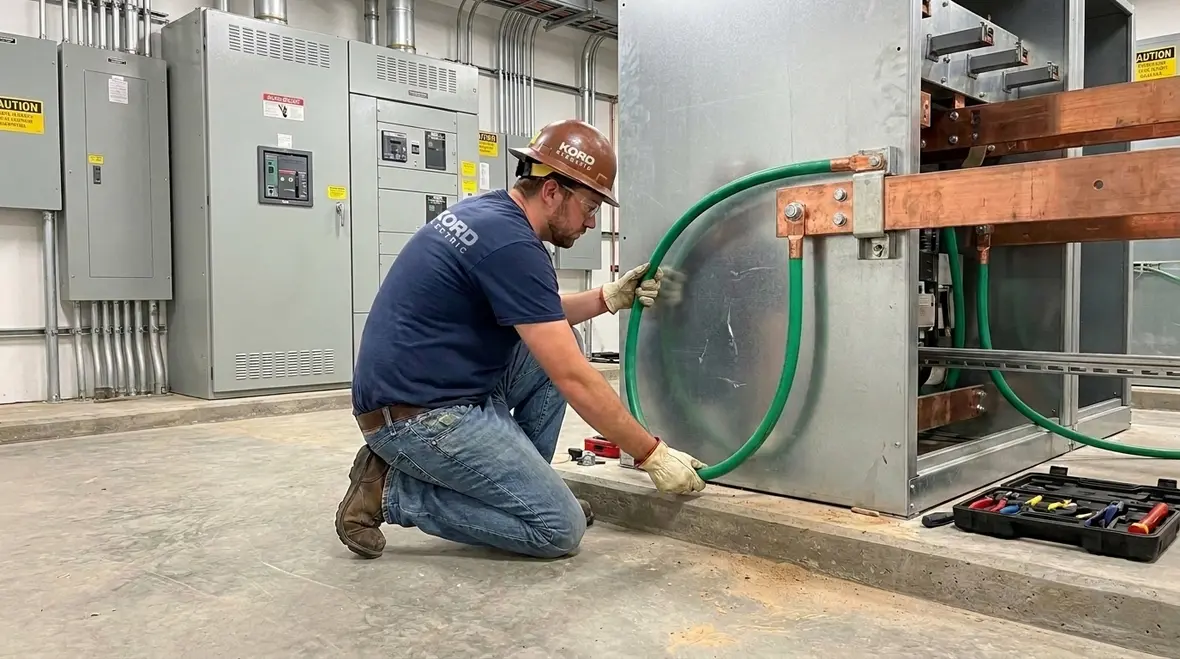
NFPA 70 270.24 NEC Service Supplied Grounding 2 kV+
When electrical work involves NEC service supplied grounding 2 kV and higher, we do not guess, we follow the code. Kord Electric supports commercial and industrial facilities and major property buildings, and we focus on safe, reliable grounding for service-supplied AC systems above 2 kV. In this article, our experts will explain what NFPA 70 Section 270.24 requires, why it matters, and how good design choices prevent dangerous surprises. Then, we will walk through practical steps our technicians use on real sites. And yes, grounding can sound as exciting as watching paint dry, but in electrical safety, boring is beautiful.
What NFPA 70 Section 270.24 requires for service-supplied AC systems above 2 kV
NFPA 70, also known as the NEC, uses clear rules for grounding systems that serve higher voltage AC equipment. Section 270.24 addresses how a grounding system must be set up for NEC service supplied grounding 2 kV and above, where the risks from fault current, touch voltage, and step voltage rise as systems get more complex.
To put it plainly, this section focuses on how the service is grounded and how that grounding connects to the building’s grounding electrode system. It also sets the expectation that the system must limit hazardous voltages during abnormal conditions. In other words, if something fails, the grounding path should carry fault current in a controlled way, so people do not become the “path of least resistance.”
At Kord Electric, our technicians often explain it in the simplest terms: the grounding system gives fault current a safe route, and that route protects both people and equipment. And because we work with commercial and industrial clients, we also plan for continuous uptime, coordination with switchgear, and clear documentation for inspections.

For facility teams who want a deeper foundation on how the National Electrical Code shapes these requirements, Kord Electric also walks through core concepts and 2026 updates in their guide Understanding NFPA 70: The National Electrical Code Explained for 2026, which connects the rulebook to real commercial and industrial installations.
Why grounding design changes when voltage rises above 2 kV
When systems operate above 2 kV, fault energy grows and the electrical field patterns around conductors become more serious. That means a grounding plan that “worked well enough” on lower voltage systems can fall short under higher fault conditions.
As voltage rises, the effects people notice during a fault do too. Touch voltage can increase at metal enclosures, and step voltage can rise across the ground surface. Even if the system clears quickly, a bad grounding setup can still create dangerous voltage gradients long enough to harm someone. Therefore, we treat grounding as a system, not a single wire.
Our expert service staff also considers practical site realities. Many major property buildings and industrial facilities have layered risks: multiple services, long cable runs, bonded steel, metallic water piping, structural frames, and sometimes equipment that operates in harsh environments. Consequently, grounding details like bonding points and electrode connections become more important, not less.
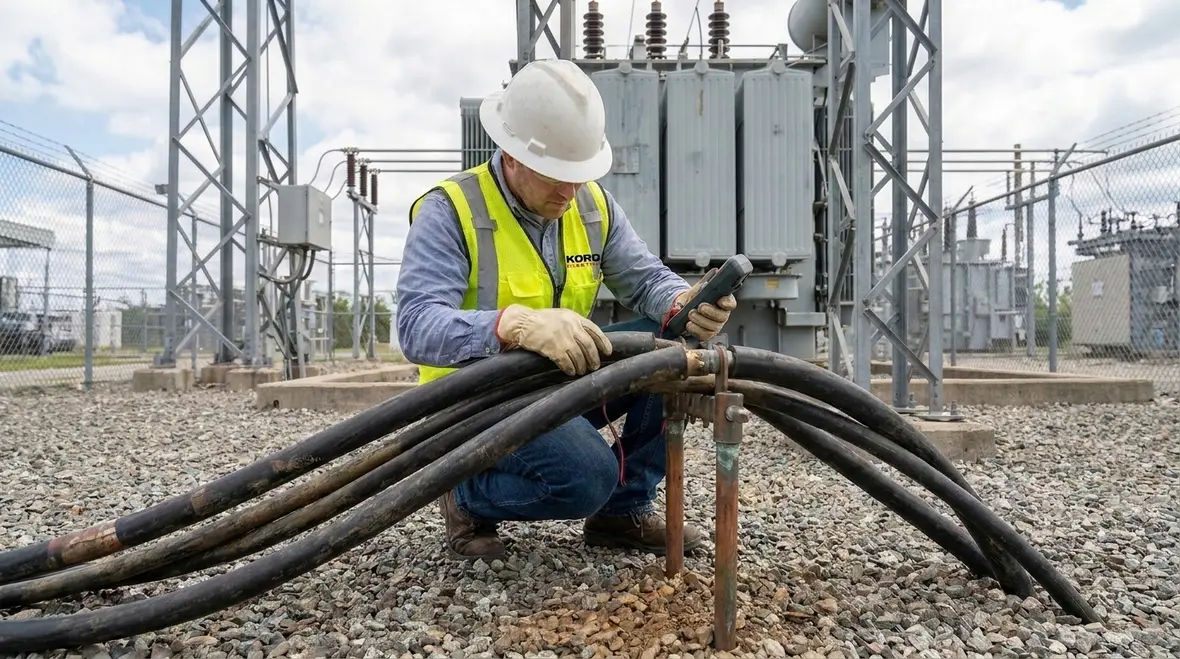
How NEC service supplied grounding 2 kV+ shapes risk and design choices
Once you move into the NEC service supplied grounding 2 kV and above range, design conversations change tone. The focus is no longer on “basic code minimum” but on how the grounding system behaves under worst-case fault conditions. That means understanding how current divides between parallel paths, how surface potential spreads across a work area, and how people, tools, and equipment interact with that environment during a fault.
In many commercial and industrial settings, especially where production lines, data centers, or process equipment depend on high voltage service, it is not enough to meet the letter of the rule. Facility leaders want confidence that the grounding and bonding scheme supports safe work practices, predictable fault paths, and recovery after an event. That is where coordination between engineering, field technicians, and operations becomes essential.
How NEC service supplied grounding 2 kV ties into fault protection and safety
Fault protection does not start in the breaker. It starts in the grounding plan. When a fault occurs, the system must push current through a low impedance path and keep the voltage rise under control at accessible surfaces.
With higher voltage service-supplied AC systems, the grounding system works alongside overcurrent protection, relays, and equipment ratings. If those elements coordinate well, the fault clears and the structure remains within safer voltage limits. If they do not, you can get delayed clearing, higher equipment stress, and hazardous conditions near enclosures.
In plain language, our technicians say it like this: breakers stop the fault, but grounding helps you survive the time before the fault is stopped. That is why, for commercial and industrial facilities, Kord Electric builds grounding strategies that match the actual electrical one line, the switchgear configuration, and the site’s metal structures.
Coordinating grounding with protection devices and system design
For NEC service supplied grounding 2 kV and higher, we pay close attention to how grounding ties into relay settings, breaker curves, and equipment interrupting ratings. A grounding system that provides a clear, low impedance path allows protective devices to “see” the fault and operate within their intended time frames. A poorly conceived path can leave the system in limbo, where voltage stays elevated while relays debate what they are sensing.
In practice, that means we coordinate grounding layouts with service transformer configurations, main switchgear locations, and downstream distribution. We also consider how future expansions might change load, fault levels, or parallel paths. The goal is not just to pass today’s inspection, but to build a fault response that stays predictable as the facility grows.
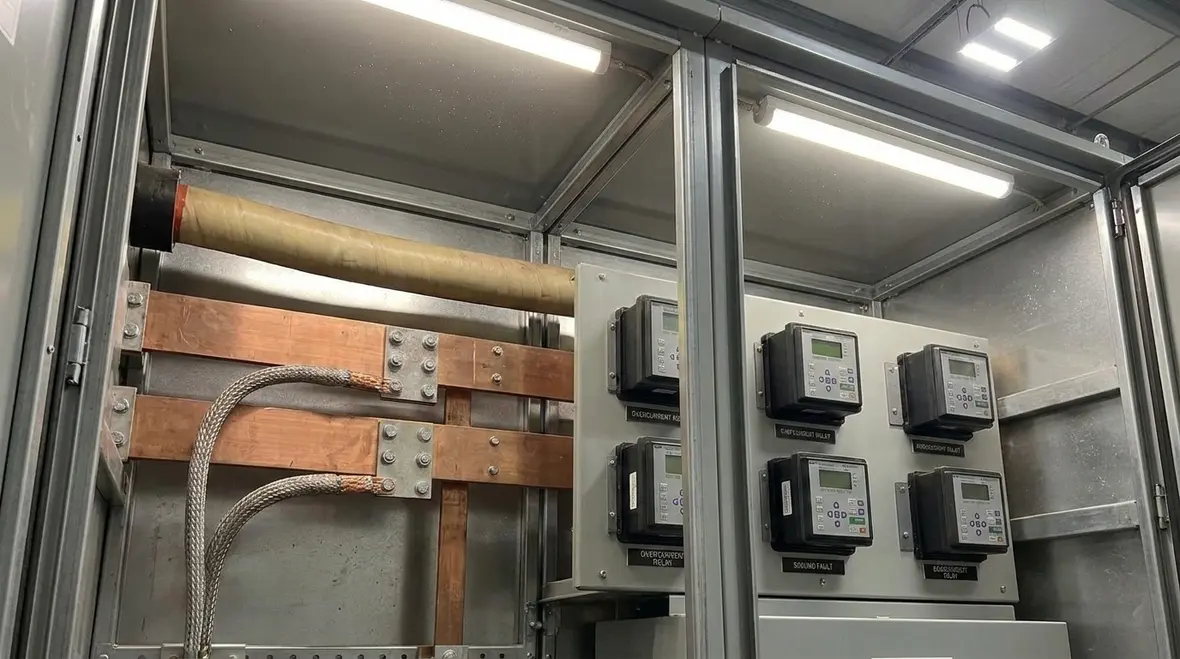
Common installation mistakes we see on major property buildings
Even when teams mean well, grounding can go wrong during design, procurement, or field installation. We often see the same themes, especially on larger campuses where multiple contractors touch the same electrical areas.
Here are issues we frequently correct during audits and upgrades:
- Broken bonding continuity at enclosures, cable trays, and steel supports, which creates unexpected high impedance paths.
- Missing or incorrect connections between service grounding conductors and the grounding electrode system.
- Improper routing that places grounding conductors near parallel power conductors without planning for induced currents.
- Incomplete documentation so the as built grounding plan does not match what inspectors and maintenance teams need.
- Electrode system oversights on sites with rebar, metallic water piping, structural steel, or prior renovations that changed the site layout.
Now, here is the pop culture truth: most grounding mistakes do not announce themselves with a dramatic soundtrack. They show up later, during maintenance, during an insulation test, or during a fault event when nobody wants a “surprise episode.”
Why documentation and coordination matter as much as copper
In high voltage environments, a perfectly installed grounding conductor can still fall short if no one knows it exists, where it runs, or how it was intended to function. That is why we treat drawings, labeling, and as built updates as part of the safety system. When documentation lags behind reality, future teams can unknowingly disconnect critical bonds, reroute conductors, or misinterpret the ground path during maintenance.
For major property buildings with multiple electrical rooms, campus loops, or shared services, we recommend periodic grounding audits. These reviews verify continuity, confirm bonding at new equipment, and reconcile records so the official grounding scheme matches what is actually in the conduits and on the steel.
What our technicians do to verify grounding compliance and performance
At Kord Electric, we treat grounding verification like a quality process, not a one time task. We start by reviewing the design basis and the actual equipment configuration. Then, our expert service staff confirms that the service grounding scheme meets the requirements for NFPA 70 Section 270.24 and works within the facility’s electrical design.
Next, we check key field details that affect real performance:
- Bonding connections at service equipment and grounding electrode interfaces
- Conductor sizing and termination quality
- Ground path continuity using proper measurement methods
- Coordination with switchgear, transformers, and system grounding points
- Clear labeling and as built record updates
Because we serve commercial and industrial facilities, we also coordinate around production schedules. In many major property buildings, downtime has a cost attached to it that management does not joke about. Therefore, we plan verification steps to minimize operational disruption while still meeting safety expectations.
Field checks that keep NEC service supplied grounding 2 kV installations honest
Verification for NEC service supplied grounding 2 kV and above goes further than a quick visual once-over. Our technicians trace the grounding path from the service entrance through the grounding electrode system and major bonded components, confirming that every intended connection exists, is secure, and has not been compromised by later modifications.
We also use test instruments to measure resistance values and continuity, checking that the theoretical design holds up under real-world conditions. When we discover issues, we document them clearly, propose corrective actions, and update records once the work is complete. That way, the next person who reviews the system sees the full story, not guesswork or missing chapters.
Installation workflow: from design review to as built records
A correct grounding outcome comes from a smooth workflow. To help clients, we lay out the typical process our team follows for high voltage service supplied systems. If you want the shortcut version, it is this: we align code requirements with the real building, then we prove the result with careful field steps.
First, we review drawings and one line diagrams, then we confirm the service voltage class and the system type. After that, we map the grounding connections from service to the grounding electrode system and the facility’s structural components. Then we plan how the install will happen, including access, conductor routing, and termination locations.
Finally, we update as built records. In practice, that means we document changes made during construction, verify bonding points remain correct, and provide the information maintenance teams need later. And yes, keeping clean records can feel like adult homework, but it saves you from chasing answers during the next service call.
| Step | What Kord Electric Focuses On |
| Design and code alignment | We ensure the grounding plan matches NFPA 70 Section 270.24 for service-supplied AC systems above 2 kV, and we coordinate with site conditions. |
| Field verification | Our technicians confirm bonding continuity, grounding conductor terminations, and safe routing for the installation conditions. |
| Documentation | We produce as built records so inspection and future troubleshooting stay clear and fast. |
Connecting NEC grounding work to broader electrical upgrades
High voltage grounding improvements often arrive as part of wider projects: modernizing distribution gear, expanding service capacity, or upgrading aging infrastructure. When Kord Electric helps modernize commercial building electrical systems or plan infrastructure upgrades, we tie NEC service supplied grounding 2 kV work into the same roadmap so grounding, protection, and distribution evolve together instead of as separate side quests.
That integrated approach reduces rework, supports cleaner inspections, and simplifies long term maintenance. Teams know where grounding conductors run, how they were designed to interact with service equipment, and what assumptions underlie protective device settings. In other words, the story makes sense from the first drawing to the final as built page.
Frequently asked questions about NFPA 70 service grounding for higher voltage
Grounding at higher voltages raises practical questions for facility teams, especially when planning upgrades or responding to inspection comments. Below are some of the most common topics we address with commercial and industrial clients.
Get expert support from Kord Electric for higher voltage grounding
If your commercial or industrial facility has service-supplied AC systems above 2 kV, Kord Electric can help you implement and verify grounding that supports code compliance and safer fault performance. Our technicians and expert service staff explain the plan clearly, then confirm key field details so your as built records match reality. Reach out to us to review your current design, troubleshoot grounding concerns, or plan an upgrade. When it comes to grounding, we prefer calm confidence over dramatic surprises.
For a broader look at how NFPA 70 shapes electrical safety and inspection expectations, you can also connect this article with Kord Electric’s 2026 NEC resources and the Kord Fire coverage of NFPA 70. Together, these guides help facility leaders understand not just what the rules say, but how they keep people, equipment, and operations safer when the voltage and fault energy climb.
Facilities across Southern California that need support with design, upgrades, or troubleshooting can also explore Kord Electric’s Los Angeles County electrical services, which bring together high voltage experience, NEC grounding expertise, and responsive field teams for commercial and industrial sites.
For related NEC and fire life safety context, you can also explore resources from our network and partners at Kord Fire and Fire Pumps, including content on the NEC and code awareness: kordfire.com, kordfire.com.au, and firepumps.org. Reviewing these alongside Kord Electric’s own NFPA 70 guides gives your team a well-rounded picture of how electrical and fire protection standards work together in real facilities.
When your next project touches NEC service supplied grounding 2 kV and above, you do not need a dramatic plot twist. You need a team that treats the rulebook with respect, treats your facility with care, and delivers a grounding system that does exactly what it is supposed to do when it matters most.


