
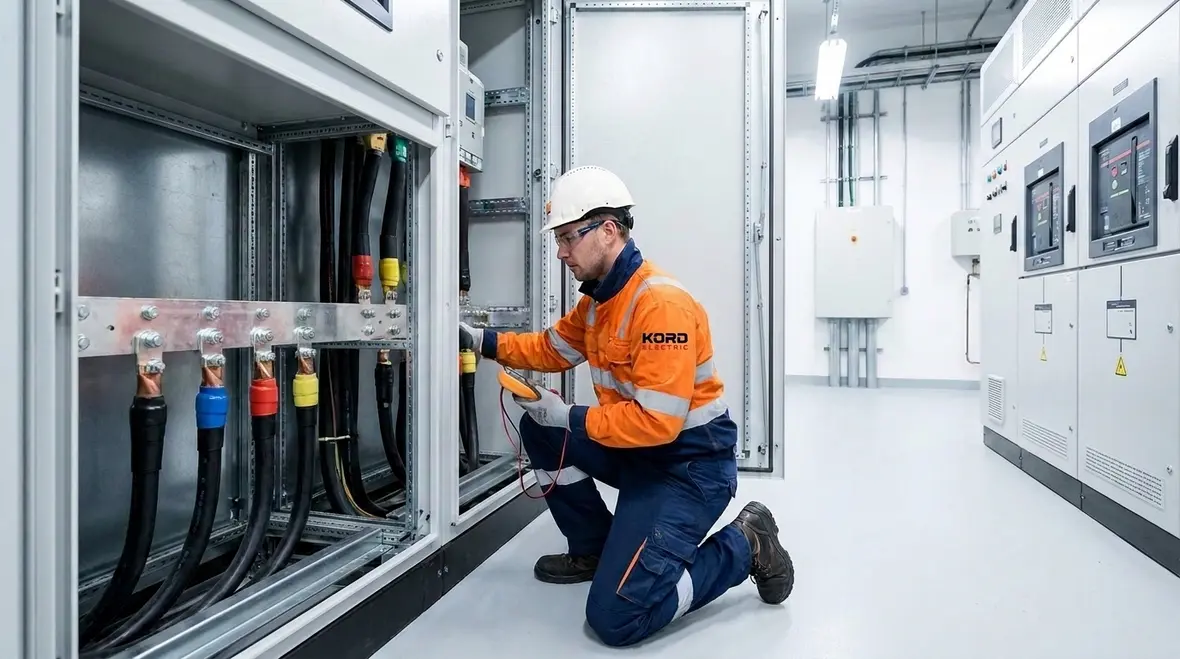
NEC AC Grounding 2 kV Explained by NFPA 70 270.20
Kord Electric breaks down NEC AC grounding 2 kV under NFPA 70, Section 270.20
At Kord Electric, we focus on commercial and industrial facilities, and we also support major property buildings where electrical systems run day and night. For that work, we follow NFPA 70 Section 270.20, which addresses AC Systems Over 2 kV That Must Be Grounded. In plain terms, NEC AC grounding 2 kV rules help control what happens when faults occur, so the facility can protect people, equipment, and operations. And yes, we know grounding can sound as exciting as watching paint dry. However, it is the part that keeps a bad day from turning into a long, expensive night.
To keep this calm and clear, our expert service team and technicians explain the “why” as much as the “what.” First we connect the rule to real electrical behavior. Then we outline how facilities should plan, install, and verify grounding. Finally, we cover common mistakes we see during service calls, and we share practical steps to keep compliance steady.
What Section 270.20 actually requires and why it matters
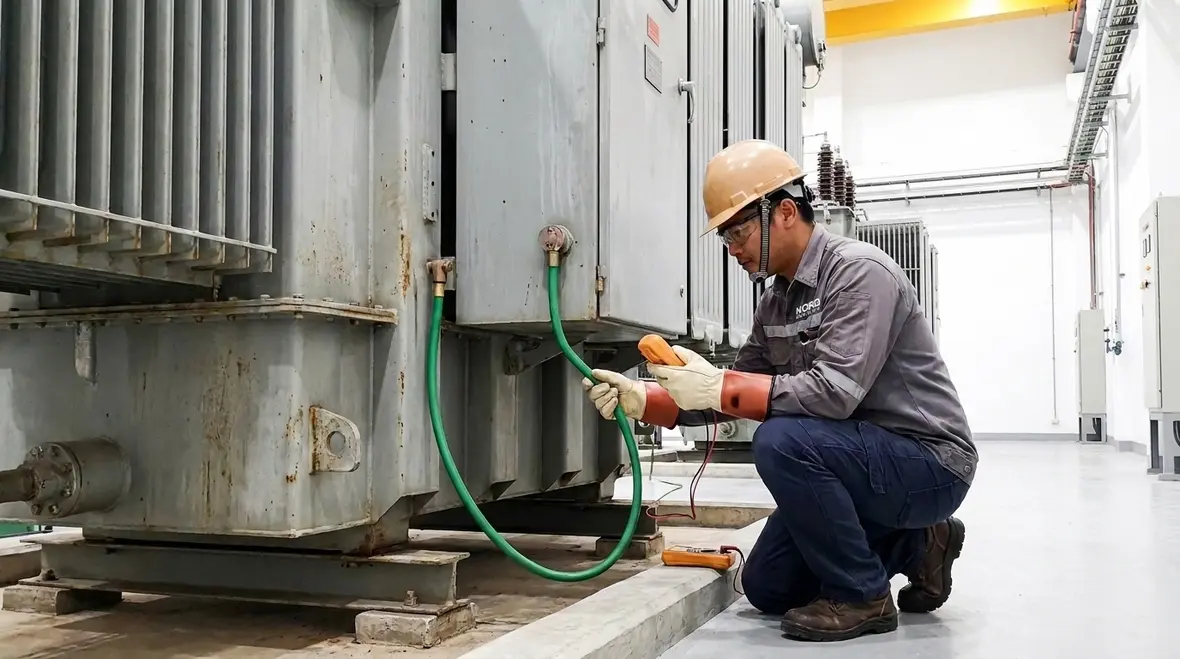
Section 270.20 focuses on AC power systems above 2 kV that need grounding. Accordingly, the rule does not aim to add complexity for its own sake. Instead, it aims to keep fault currents from becoming unpredictable hazards.
When a higher voltage AC system experiences a fault, the electrical energy seeks a path. If grounding is handled poorly, that path can turn into a dangerous voltage on metal parts, conduits, enclosures, and other conductive surfaces. As a result, workers can face shock risk, and equipment can face stress beyond design limits.
Moreover, grounding supports protective devices. When the right fault path exists, protective relays, breakers, and fuses can detect the event and clear it faster. Therefore, the facility protects uptime and reduces damage.
Our technicians often describe it like this: without grounding, the system acts like a road with no shoulder. In normal conditions you might be fine, but when something goes wrong, the chaos arrives immediately. With proper NEC AC grounding 2 kV practices, you give the fault a controlled direction, and you let the safety systems do their job.
How grounding works in real systems above 2 kV
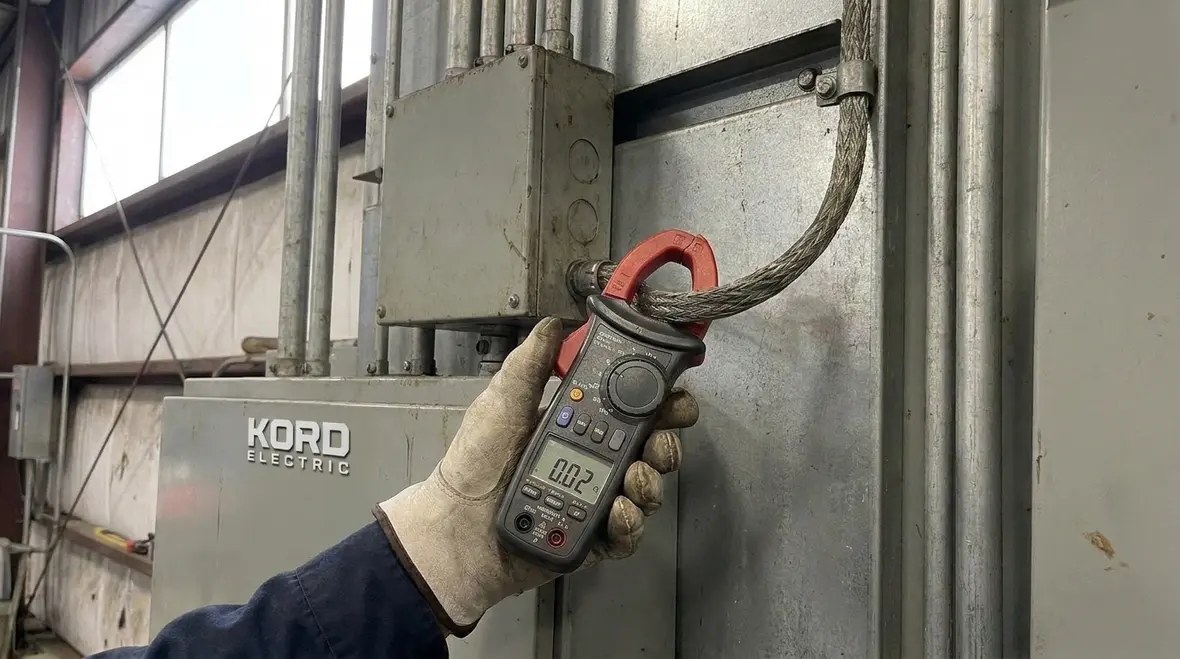
Grounding above 2 kV does more than “connect wires.” It shapes the electrical environment so that fault currents behave consistently. In a grounded system, the fault current flows into the earth or an established grounding path, and that current produces measurable effects at protective devices.
Next, those protective devices operate based on what they sense. Depending on the system design, they may detect overcurrent, ground fault current, or abnormal voltage conditions. Then they isolate the section of equipment so the rest of the facility can keep running.
At this point, our service staff emphasizes a key idea: grounding must match the system design. For example, if the system uses certain transformer connections, the grounding method must work with those connections. Otherwise, the system may not clear faults at the expected rate, and it may allow abnormal touch or step voltages to rise.
To keep things practical for facility managers, we also remind clients that grounding performance depends on more than one item. It depends on conductor size, connection quality, grounding electrode system design, continuity, and long term corrosion resistance. So, while the rule starts with “must be grounded,” the real job is ensuring the grounding network stays effective over time.
Design and install choices that keep compliance strong
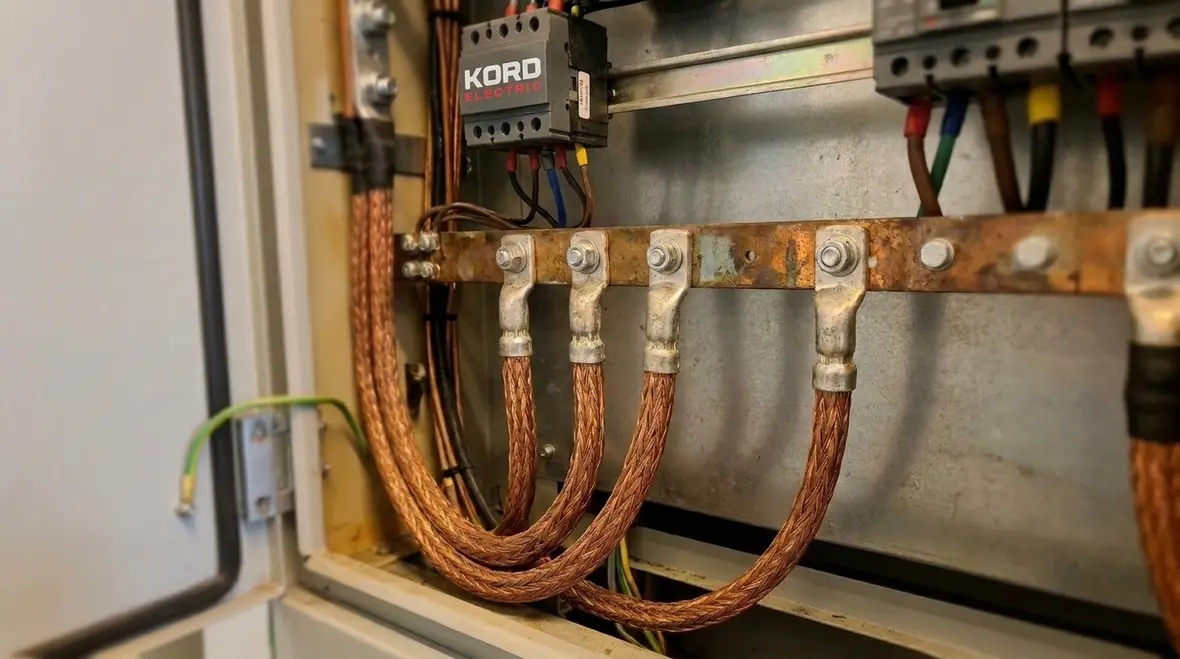
Facilities often ask what “good grounding” looks like in the field. We explain that the answer comes from coordinated design, careful installation, and documentation. First, engineers and electricians select grounding methods that meet system needs, including the transformer and service equipment design. Then, the crew builds the grounding electrode system and bonding connections with the right materials and routing.
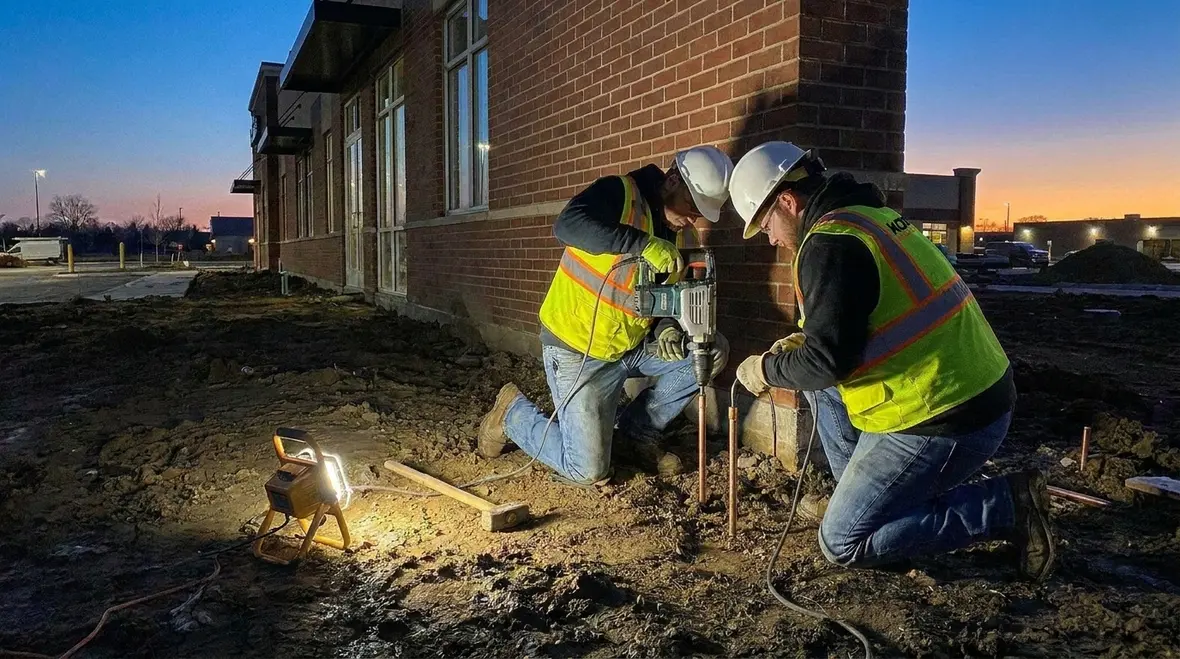
As the installation progresses, we focus on details that prevent future failures. For instance, connections must be tight, clean, and protected from corrosion. Also, grounding conductors should be sized correctly and routed to avoid unnecessary changes in impedance. In addition, bonding must connect the right conductive parts together so no “floating” metal surfaces remain.
When the facility brings us in for major property work, we also discuss testing and records. Our technicians explain that documentation helps during inspections and also helps future maintenance. If someone later modifies equipment or expands a distribution system, the facility can trace what was built and why.
We want you to get the right outcome the first time, not the second time. And if you have ever had to call for a repair because a grounding connection was “good enough,” you already know the punchline. It is rarely funny when downtime hits a loading dock, a data hall, or a critical production line.
Common mistakes we see during commercial electrical service
Even with good intentions, grounding projects can drift during construction or later upgrades. Therefore, our team pays attention to the patterns we see across commercial and industrial sites. One common issue involves incomplete bonding. People may connect equipment frames but miss other conductive items that need bonding. That creates paths where voltage can appear unexpectedly.
Another issue involves electrode problems. Some sites have grounding electrode systems that degrade due to soil conditions, moisture, or corrosion. Even when installation looks neat, the long term performance may decline. Consequently, measured performance can shift and protective device response can change.
We also see mistakes during retrofits. A facility upgrades a transformer, relocates switchgear, or adds new feeders. Then a grounding path gets altered, and the system still works, until it does not. In that moment, the facility discovers that “we kept it similar” does not equal “we kept it compliant.”
Finally, we encounter loose or inconsistent connections. Over time, vibrations, thermal cycles, and poor installation habits can loosen hardware. Therefore, our service staff routinely checks continuity and connection integrity as part of maintenance planning.
To keep risk low, our experts explain findings in clear language. We do not hide behind technical fog. Instead, we outline what failed, why it matters for NEC AC grounding 2 kV, and what the facility should fix next.
How to verify grounding performance and maintain it
Verification matters because grounding is not a “set it and forget it” job. It is an engineered system that must remain effective as the site changes. First, we confirm that the grounding network matches the approved design, including bonding points and conductor routing. Then, we measure continuity and verify that the grounding electrode system performs as expected.
Next, we check whether protective devices clear faults within safe time and current ranges. If the system design includes ground fault protection or related sensing, we confirm that the behavior aligns with the intended scheme.
Maintenance also means staying ahead of changes. When a facility adds equipment or changes cable paths, grounding can shift even if no one touches the grounding conductor. For major property buildings, that is why we encourage periodic reviews after construction activity.
Our approach stays business focused. We help facility teams reduce surprises, not just satisfy checkboxes. If an inspection comes up, Kord Electric can provide service documentation that supports your compliance story.
And because we deal with real facilities, we also consider operational constraints. We coordinate work windows, plan safe isolation procedures, and explain steps so your teams can keep running. Grounding work can be handled with calm planning. It does not need to become a chaos headline.
How this connects with the National Electrical Code and real inspection needs
NFPA 70 supports the NEC framework that inspectors use. Therefore, facilities that serve commercial and industrial tenants should build their electrical programs with consistent code alignment. We reference the NEC concepts discussed in our code education material, including Understanding NFPA 70, the National Electrical Code Explained for 2026, and align them with the practical needs of service teams and technicians.
From a compliance standpoint, the goal is not only to meet the text of the rule. The goal is to meet the behavior the rule expects: reliable grounding for systems above 2 kV, safe fault current paths, and proper protective device response. When teams understand that behavior, they plan better, install cleaner, and maintain longer.
As our technicians explain, inspectors look for more than “wires present.” They look for bonding completeness, conductor integrity, and evidence that the grounding system fits the equipment and distribution design. In addition, they often check records for changes and maintenance history.
For clients who want trusted guidance, Kord Electric also supports code education resources through KordFire and related guidance at Kordfire.com.au and firepumps.org. We keep that learning grounded in how the equipment behaves in the field, not just what the PDF says.
FAQ: NFPA 70 Section 270.20 grounding questions
Bottom line: get grounded right, then keep it that way
In our experience, NEC AC grounding 2 kV becomes a real safety advantage when design, installation, and maintenance all work together. NFPA 70 Section 270.20 sets the expectation, and we help commercial and industrial facilities meet it with careful planning and clear explanations from our expert service staff.
If you manage a major property building, we can review your grounding approach, support verification, and align documentation for inspections. Our team also connects grounding work with broader code planning, including resources like our article on What Is NFPA 70? Understanding the National Electrical Code, so your program stays consistent instead of pieced together.
For facilities across the region, including those that rely on robust medium voltage infrastructure and emergency power, pairing NEC AC grounding 2 kV compliance with disciplined service gives you a calmer risk profile. When faults occur, the system behaves the way the code intended: predictable, cleared, and documented. Grounding is not the glamorous part of a project, but it is the part that keeps your equipment, people, and schedules out of avoidable trouble.
If you need help planning upgrades, commissioning a new system, or reviewing existing grounding on a complex site, our team is ready to assist. From data centers and distribution hubs to mixed‑use towers, we support commercial and industrial power systems so they stay safe, reliable, and inspection ready. For facilities in Southern California, you can explore our broader capabilities through our Los Angeles County electrical services, where NEC alignment, including NEC AC grounding 2 kV, is part of how we keep projects steady from design through operation.
Contact Kord Electric today, and let us keep your electrical system calm, compliant, and ready for whatever the day brings.


