

NEC Electrical Continuity Raceways Armor for Metal Paths
NEC Electrical Continuity Raceways Armor: The Metal Path That Must Behave
At Kord Electric, we see it all the time: a facility runs smoothly until someone touches a small detail that should have been boring in the first place. That’s why our approach starts with NEC electrical continuity raceways armor and ends with dependable electrical pathways. In many commercial and industrial buildings, metal raceways carry more than cables. They carry the job of bonding and continuity, and when that continuity fails, the whole system can get unpredictable fast.
So, in this guide, third person experts at Kord Electric walk through NFPA 70 Section 300.12, how it guides electrical continuity of metal raceways, and how our technicians and expert service staff explain the “why” behind the requirement. Then we outline what good looks like in the field for major property buildings, because nobody wants surprise failures that act like uninvited guests at a board meeting.
What NFPA 70 Section 300.12 Requires for Metal Raceways
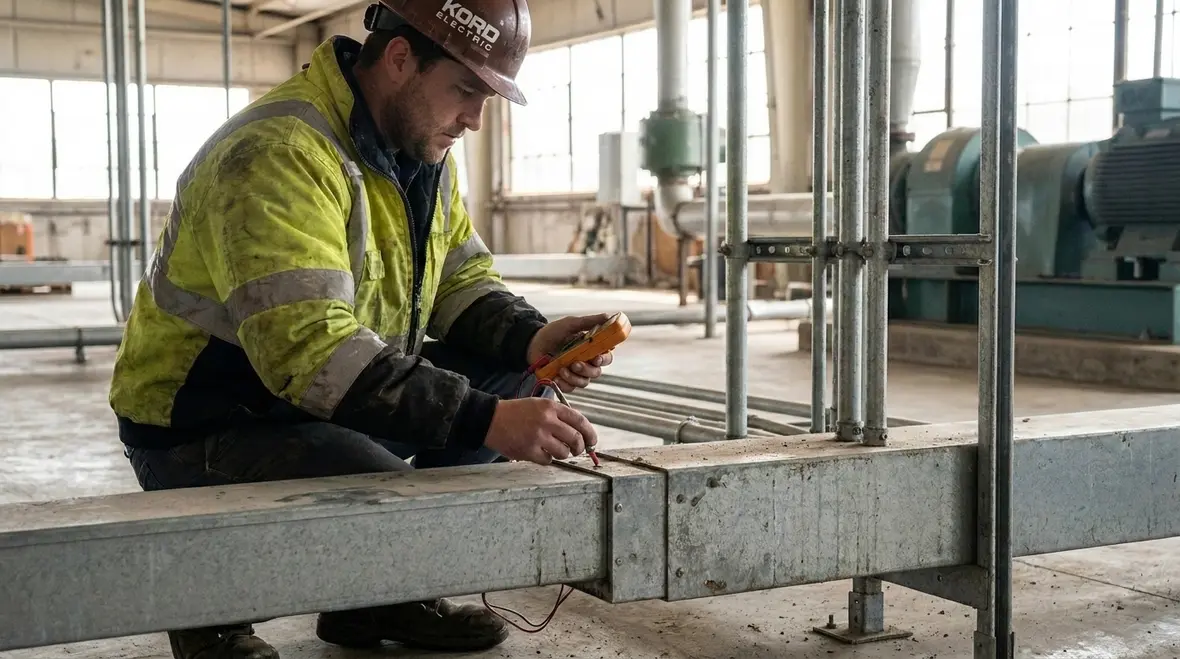
NFPA 70, also known as the NEC, sets rules for electrical systems, and Section 300.12 focuses on the electrical continuity of metal raceways. In plain terms, it tells us that metal raceways must maintain a reliable electrical connection along their run. That means when raceways connect through couplings, fittings, boxes, and terminations, the system must still act like one continuous electrical path.
To make this practical, experts at Kord Electric treat continuity as a design and installation requirement, not an afterthought. For commercial and industrial facilities, the stakes are higher because more circuits, more load, and more people depend on that system every day. In other words, a raceway that “looks connected” might still fail the continuity test if the connection relies on paint, corrosion, loose hardware, or imperfect contact.
In many cases, Section 300.12 also becomes a bridge to other NEC expectations. When facility teams want deeper context around NFPA 70 and how the National Electrical Code shapes real world decisions, Kord Electric often points them to in depth code resources such as the NEC overview guides maintained by our sister company on the Kord Fire knowledge center. Those resources explain how NFPA 70 fits into the broader safety and compliance picture for major properties and critical facilities.
Why Continuity Matters More in Commercial and Industrial Buildings
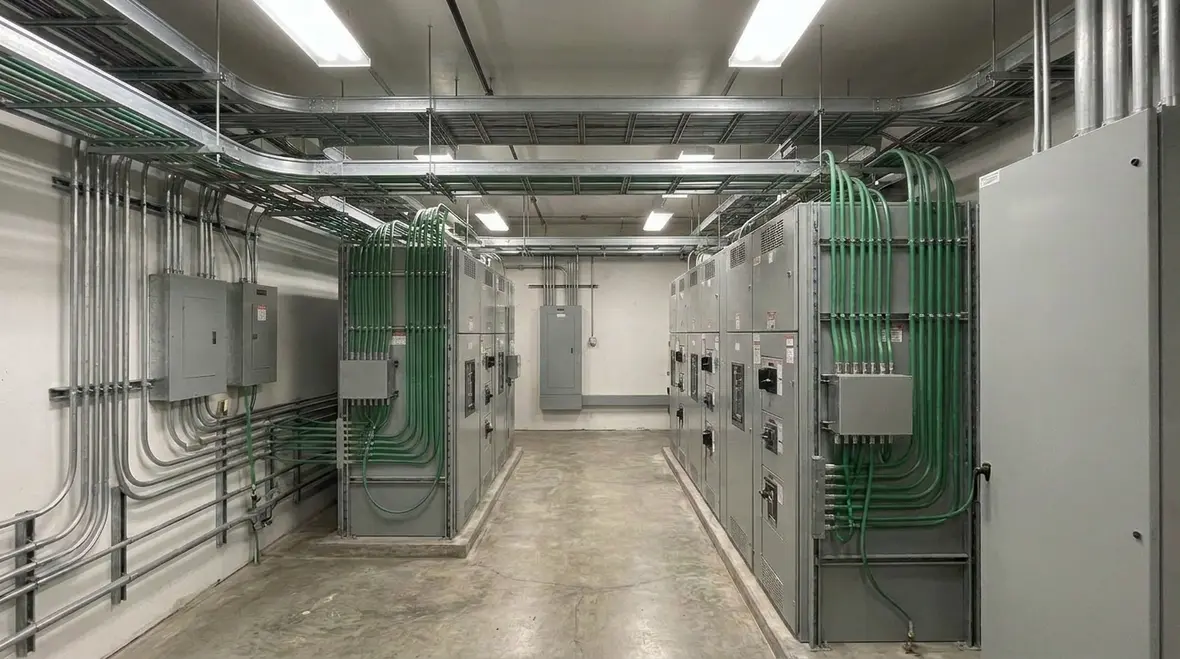
Facilities do not fail politely. They fail when conditions line up, like moisture plus vibration plus a marginal connection. And once the metal path breaks down, protective systems can struggle. Bonding and fault current paths depend on low impedance connections, and continuity of metal raceways supports that requirement.
Additionally, continuity issues can create other headaches: noisy electrical behavior, nuisance trips, higher temperatures at weak points, and maintenance callbacks that nobody schedules during budget season. Therefore, Kord Electric and our experienced service staff emphasize early verification and strong installation practices, especially for major property buildings where uptime matters and downtime becomes expensive.
As a helpful analogy, continuity is like a bridge railing. If it feels solid but has one weak fastener, you may not notice until stress hits. Then the bridge suddenly becomes the problem. In electrical systems, “suddenly” is never a fun moment.
In commercial and industrial occupancies, those “sudden” moments can land during production runs, live events, or high traffic hours. That is why Kord Electric treats NEC electrical continuity raceways armor decisions as part of the reliability strategy, right alongside overcurrent protection, selective coordination, and power quality planning.
How Connections, Fittings, and Couplings Influence Bonding

Metal raceways connect through a chain of parts: straight runs, couplings, elbows, offsets, junction boxes, and devices. NFPA 70 Section 300.12 expects the assembly to remain electrically continuous through that chain. Thus, the details inside the connection matter.
For example, if a coupling relies on corrosion prone contact surfaces, or if insulating coatings interfere with metal contact, the continuity can break even if the raceway appears physically assembled. Likewise, if a fitting uses hardware that does not clamp firmly, the contact points can loosen over time due to thermal cycling and vibration.
Our technicians at Kord Electric typically look for these real world causes of continuity problems:
- Paint or coatings at contact points that block direct metal-to-metal contact
- Corrosion that forms on mating surfaces and raises resistance
- Loose or mismatched hardware that reduces clamping force
- Improper raceway alignment that leaves partial contact rather than full contact
- Gaps at fittings that prevent a stable electrical connection
Next, Kord Electric helps facility teams understand that continuity is not just “tight screws.” It also includes correct parts, correct installation steps, and correct inspection habits. In other words, we treat the connection like a team sport: everyone has to do their job, not just the loudest player.
When we review raceway assemblies, we also consider how the bonding path interacts with other NEC expectations, such as overcurrent device performance and grounding electrode connections. A beautifully installed raceway that fails continuity still undercuts the NEC’s core mission of managing shock and fire risk in the building.
What Our Technicians Check During Installation and Service

Kord Electric supports commercial and industrial facilities with field-ready practices. While codes provide the baseline, successful results depend on how teams execute. Therefore, our technicians and expert service staff verify the system in a way that matches how the building will operate.
During installation and service, we commonly focus on practical checkpoints that align with the intent of NFPA 70 Section 300.12:
- Routing consistency so raceways follow a stable path with fewer unnecessary terminations
- Proper connection methods for couplings and fittings so the metal path remains intact
- Surface preparation at bonding contact areas where coatings may interfere
- Hardware selection that matches the raceway type and installation conditions
- Inspection readiness so documentation matches what was built
- Follow up testing when the building schedule allows, especially after changes or repairs
Also, when major property buildings undergo renovations, we remind teams that continuity can be broken during “small” work. A contractor swaps a fitting, a crew touches a junction box, or someone adds a new run and assumes the existing path still behaves. In reality, continuity can change when metal-to-metal contact changes. That’s why our service staff explains requirements clearly to the people doing the work, not just the people signing off on it.
And yes, sometimes the problem turns out to be the electrical version of a broken zipper. The cable still goes through, the cover still closes, but the thing that matters does not connect the way it should.
Because continuity is so central to safe operation, Kord Electric often pairs these field checks with broader NEC education for facility teams. Articles like “What Is NFPA 70? Understanding the National Electrical Code” and other NEC focused resources on our blog help connect what technicians see on ladders and in conduits with what managers see in budgets, inspections, and long term risk planning.
How NEC Electrical Continuity Raceways Armor Supports Reliable Systems
Metal raceways often incorporate designs that improve electrical continuity performance. That is where NEC electrical continuity raceways armor comes into play in a way that fits real installations. This type of approach supports bonding along the run when installed correctly, and it helps facilities maintain stable behavior for protective paths and overall system reliability.
To keep it grounded, continuity depends on more than the raceway material. It depends on how the system handles contact at joints and how it maintains integrity over time. Therefore, Kord Electric evaluates raceway selections and installation practices together, especially for commercial and industrial projects where performance needs to hold steady across years.
Our team also coordinates with property managers and project leaders so the right expectations land early. Next, we explain how continuity decisions affect inspection outcomes, troubleshooting speed, and long term maintenance. That means fewer “mystery faults” that show up like a plot twist in a movie you already paid for.
Finally, for major property buildings, we treat raceway continuity as part of the electrical system story, not a separate chapter. When the metal path holds, other parts of the system work the way they should.
In some facilities, this story also includes electrical infrastructure that supports other life safety systems. Because Kord Electric works closely with Kord Fire Protection, our teams understand how NFPA 70 interacts with fire protection codes, suppression systems, and inspection routines. That shared perspective helps facility leaders avoid situations where one trade’s decision quietly creates problems for another system years later.
FAQ: NFPA 70 300.12 and Metal Raceways Continuity
Call Kord Electric for a Continuity Check That Actually Helps
When we support a commercial or industrial facility, we do more than “stamp the paperwork.” We help your team understand NFPA 70 Section 300.12, then we verify that metal raceways keep electrical continuity where it matters most. Our technicians and expert service staff walk through findings in plain business language, so decisions land with confidence. If your building faces repairs, renovations, or ongoing reliability goals, contact Kord Electric to schedule an electrical continuity review and keep your system steady, calm, and ready.
If your operations span multiple facilities across the region, you can also align continuity checks with broader services. Kord Electric’s Los Angeles County electrical services team supports commercial and industrial clients with design, upgrades, maintenance, and troubleshooting that keep the entire electrical path behaving, not just passing a quick visual test.
For facility leaders who want a deeper dive into how raceway continuity fits into the broader NEC picture, it can also help to pair this discussion with resources like “Understanding NFPA 70: The National Electrical Code Explained for 2026” and other NEC focused articles in the Kord Electric and Kord Fire knowledge centers. Together, they turn code language into a practical playbook for keeping your electrical systems predictable, compliant, and ready for the future.
When you are ready to turn continuity from a background assumption into a documented strength, Kord Electric is ready to help you walk the metal path from panel to load, verify how it behaves, and plan the next upgrades with clarity instead of guesswork.
Reach out, schedule a continuity review, and let our team connect NEC electrical continuity raceways armor requirements with how your building actually runs on its busiest day.
Conclusion: when your raceways are quiet, your operations can be loud, productive, and predictable—the way they were meant to be.


