
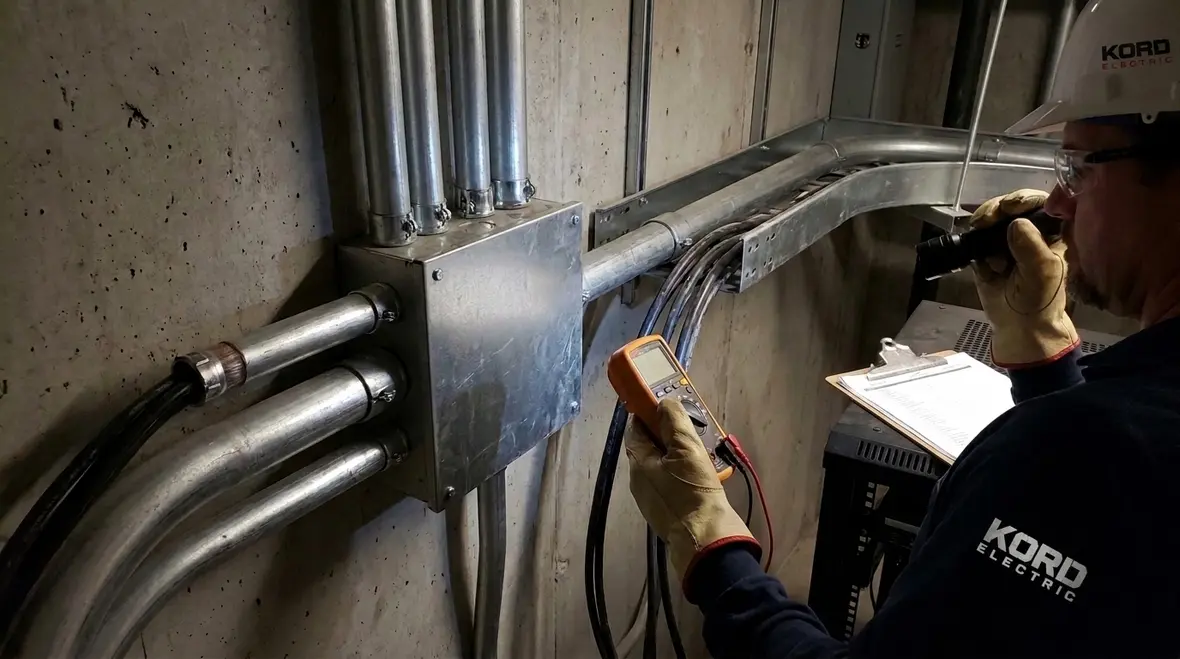
NEC Mechanical Continuity Raceway Cables NFPA 70 300.14
Kord Electric understands that NEC mechanical continuity raceway cables are not a “nice to have” detail. They are the quiet backbone that helps current travel safely when a fault happens. In other words, when something goes wrong, the electrical path must stay dependable, connected, and ready. That is why we guide commercial and industrial facilities and major property buildings through the rules that support safe installation. Our technicians and expert service staff explain it in plain language on site, and then they verify the work with the kind of care you would expect when the stakes include downtime, code compliance, and people staying safe. Now let’s walk through NFPA 70 Section 300.14, step by step, like a calm tour of the electrical room where nothing jumps out at you wearing a Halloween mask.
NFPA 70 Section 300.14 in plain terms
NFPA 70 Section 300.14 covers mechanical continuity for raceways and cable sheaths. In simple terms, it tells us the wiring system must remain effectively continuous. That continuity matters because raceways and cable supports are not just “holding things in place.” They also help maintain a safe, reliable electrical path, especially when metal parts get used as part of grounding or bonding strategies.
However, we do not treat this section like a trivia question. Instead, we apply it during layout, installation, and inspection. When our technicians explain 300.14, they often point out the same theme: if joints, fittings, and enclosures are loose, misaligned, or improperly made, then continuity can fail. Then you can get a system that looks correct but behaves like a bad handshake. Everyone thinks it is fine until it becomes a problem under load or during a fault.

Why continuity matters when faults happen
In a commercial or industrial facility, electrical systems face vibration, heat cycles, moisture, and frequent maintenance activity. So, even if an installation passes an initial check, it still has to perform over time. That is where mechanical continuity earns its keep.
When there is a fault, bonding and grounding rely on low impedance paths and dependable connections. If raceways or cable sheaths lose continuity due to poor installation, the protective system can behave unpredictably. Then breakers may trip late, equipment may not clear faults the way the design expects, and conductive metal parts can become energized.
To make this real, our expert service staff often tells clients this: “You can’t troubleshoot trust.” And then we show them how continuity rules reduce the guessing game. We verify that the raceway runs stay securely connected and that cable terminations and supports keep their integrity.
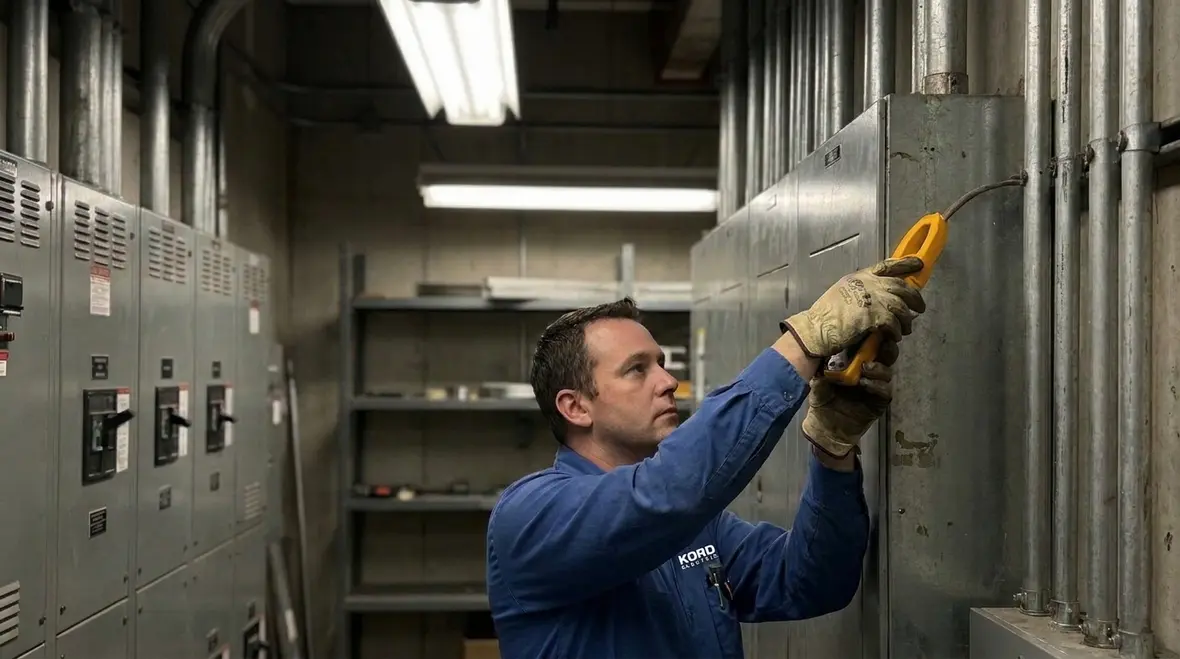
How we interpret “mechanical continuity” for raceways and cables
We treat Section 300.14 as a practical requirement with measurable outcomes. To do that, we focus on the physical connection quality between raceway sections and associated components.
First, we look at how each raceway segment connects to the next. That includes fittings, couplings, boxes, and enclosures. Next, we confirm that the connection allows the raceway to function as intended and supports the bonding approach used in the project. Then, we ensure that cable sheaths and raceway components remain protected and properly secured where the system is installed.
Because some facilities demand stricter documentation, we also help teams align their installation practices with the NEC approach described in resources like our NEC guidance articles from Kord Electric and Kord Fire. Even when a project uses different equipment, the continuity principle stays consistent: connections must stay effectively continuous and reliable.
For facility teams who want a broader NEC foundation alongside 300.14, our article Understanding NFPA 70: The National Electrical Code Explained for 2026 walks through how the code frames safety, grounding, and wiring integrity before you zoom into specific sections.
Common installation issues we prevent on commercial and industrial sites
This is the part where we save people from the classic “we will fix it later” trap. Later rarely arrives when you need it. So, our technicians focus on the issues that most often break continuity in real buildings.
Loose or improper fittings
If fittings do not fully engage, or if they are installed with the wrong method, the raceway system can lose effective continuity. We ensure proper assembly and correct parts for the intended conduit type and environment.
Gaps at joints and misalignment
When raceway sections do not align correctly, the connection may not hold consistent electrical continuity. We plan the layout, manage offsets, and verify fit-up before final installation.
Inadequate bonding points
Even when the raceway looks intact, bonding may not meet the design intent if connections are missing or improperly made. Our service team checks bonding strategy so the protective scheme functions as expected.
Damage during pulls and handling
Cable placement can introduce stress or damage if teams do not use proper pulling methods and supports. When cable sheaths suffer damage, continuity and protection can be affected. We supervise cable routing and support spacing to reduce stress points.
And yes, we have heard jokes on site about electricians “making it work” with whatever is in the truck. On commercial work, we do not play that game. You can’t build safety on luck, even if it feels like a sitcom and the code is the laugh track.
What to check during inspection and maintenance
To keep systems dependable, we do not treat mechanical continuity as a one-time event. We treat it as a life cycle item. Therefore, during inspection and ongoing maintenance, we focus on specific checks that help confirm continuity still exists.
Visual condition and secure assembly
We inspect joints and fittings for proper engagement, correct installation, and signs of loosening or corrosion. Then we confirm that enclosures and raceway components remain securely fastened.
Continuity at raceway connections
Our technicians verify that the system still maintains continuity where sections connect. If maintenance work has happened since installation, we re-check those points first.
Cable support and protection
We confirm cable routes remain protected and supported. Over time, cable movement and stress can develop, and that is when issues can start. However, early detection is usually cheaper than emergency repairs, and our clients appreciate that difference.
Documentation for facility teams
Because commercial and major property buildings often involve multiple contractors and long-term facility management, we help clients keep clear records. That includes what was installed, what was verified, and what areas received attention.
Practical examples for major property buildings
Every building has its own personality. A hospital wing moves like it is always in a hurry, a data center runs on discipline, and a mixed-use tower has its own rhythm of renovations. Yet mechanical continuity still follows the same rules.
Example
In a high-traffic commercial building, raceways run through areas that see frequent maintenance access. Over time, doors and access panels get opened, equipment gets serviced, and contractors change. Because of that, we recommend continuity checks at connection points after major work events. Our technicians use a structured approach: they verify joint condition, confirm secure fittings, and check cable protection where the routing changes.
Meanwhile, in major property buildings with long conduit runs, the risk of misalignment or joint stress increases. So, we plan support spacing and routing to prevent strain. Then we install and test with care so NEC mechanical continuity raceway cables are built to handle real site conditions. And when the project team asks why we care so much about something that sounds “small,” we calmly remind them that electrical safety rarely fails loudly. It fails quietly, and then it shows up as downtime. The building does not need that plot twist.
NEC resources we align with, from code to field
We do not build our approach from guesswork. We align with NEC guidance and practical explanations published through trusted resources, including our own educational content on Kord Electric and Kord Fire sites. We also stay aware of broader fire and electrical system knowledge that supports safety planning for facilities.
In particular, our teams review NEC themes described in our articles, including the background on NFPA 70 for the 2026 context, and we use those insights to keep our field methods consistent. Then we translate the code ideas into installation steps that contractors can follow and facility teams can verify.
If you want a company that can explain the code without turning your meeting into a lecture hall, that is exactly the style our technicians bring to the work. We slow down, we clarify, and we show where continuity affects real outcomes.
For larger projects that need design changes or upgrades to stay aligned with NFPA 70, many facility leaders also combine our continuity work with broader Los Angeles County electrical services from our commercial and industrial team so code compliance and real-world operations stay in sync.
FAQ
Conclusion: let our team protect your systems with correct continuity
Kord Electric serves commercial and industrial facilities and major property buildings, and we treat NFPA 70 Section 300.14 like it matters, because it does. When our technicians explain mechanical continuity, we do more than talk. We guide installation practices, verify connection quality, and help reduce the kind of hidden failures that lead to downtime and unsafe conditions. If you want a reliable electrical system built to last, contact us to schedule an assessment and get clear, code-aligned recommendations from our expert service staff.


