
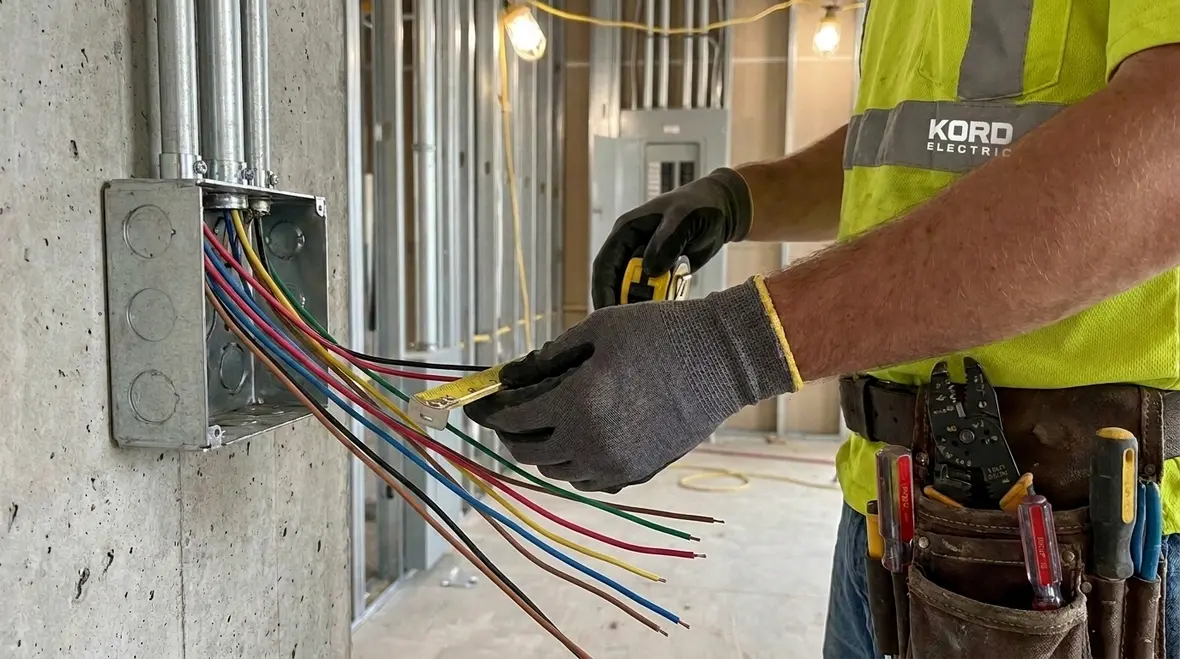
NEC Free Conductor Length Outlets and Junctions Explained
NEC free conductor length at outlets and junctions: what it means in real life
At Kord Electric, we see the same question come up in commercial and industrial facilities: “How much conductor do I leave at an outlet or junction?” Our team explains it in plain terms, because NEC free conductor length outlets is not just a rule on paper. It is a hands on requirement that affects how electricians terminate devices, how future maintenance happens, and how easily a crew can fix problems without tearing up finished work.
In this guide, others call it the “free length” part of NFPA 70 Section 300.16. We call it the difference between a job that gets closed out smoothly and one where everyone is improvising, like a sitcom character duct taping a plot hole. And yes, we help keep it professional.

How NFPA 70 Section 300.16 sets the margin for error
NFPA 70 is the NEC, and Section 300.16 focuses on conductors that must extend beyond outlets and junctions. It requires enough extra conductor so terminations can be made or re made later, without guessing, cutting blindly, or turning a simple service call into a full project. Therefore, the code creates a buffer that protects the system and the people working on it.
When our technicians plan an installation, they follow the intent of this section: allow proper connection and ensure the conductors remain usable after normal wear, adjustments, or minor relocation. Meanwhile, inspectors look for consistent application, not dramatic exceptions. We do not gamble with free length. We calculate it, document it, and install it in a way that fits commercial and industrial building schedules.
What “free conductor length” applies to and where it shows up
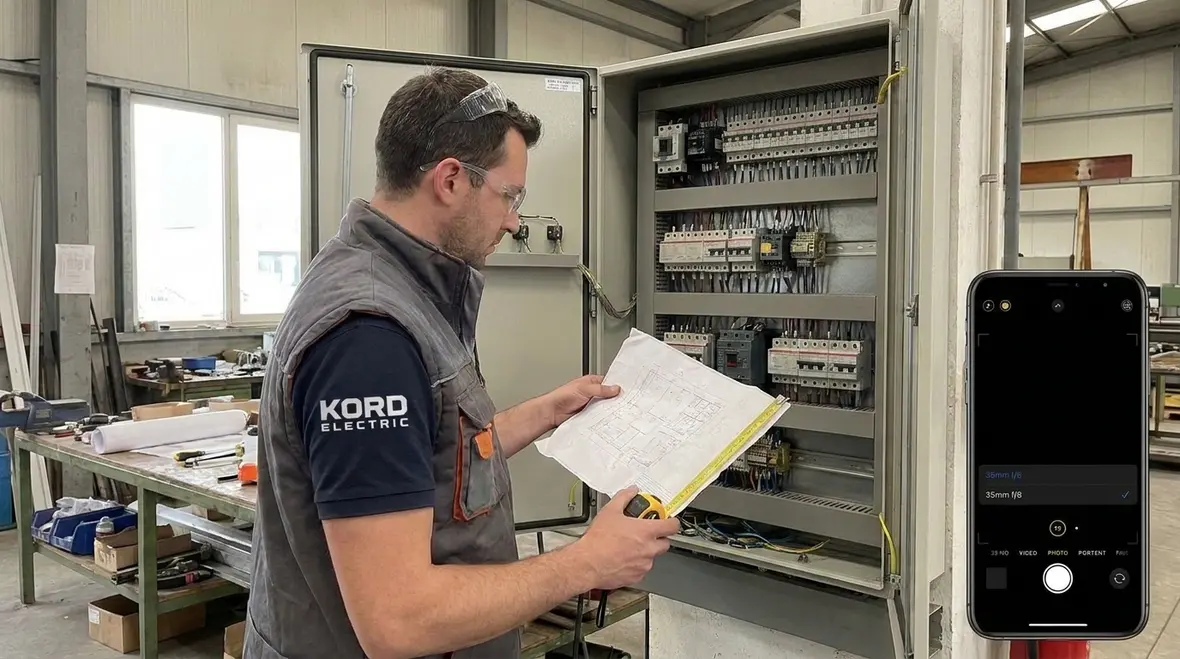
Section 300.16 ties directly to outlets and junctions. Specifically, it concerns how much conductor you leave before the wiring enters devices or enclosure points. This matters in panels, device boxes, pull boxes, and similar locations where a technician may need to land conductors neatly, reterminate them, or troubleshoot without scraping insulation down to the end.
Also, the rule interacts with other NEC requirements such as box fill and conductor support practices. So even if a crew nails free length, they still must meet spacing, securing, and enclosure requirements. In other words, free conductor length outlets help, but they do not cancel the rest of the job. We tell our clients that the NEC is like a team sport: you cannot win with only one star.
Conductor types and installation details that change the outcome
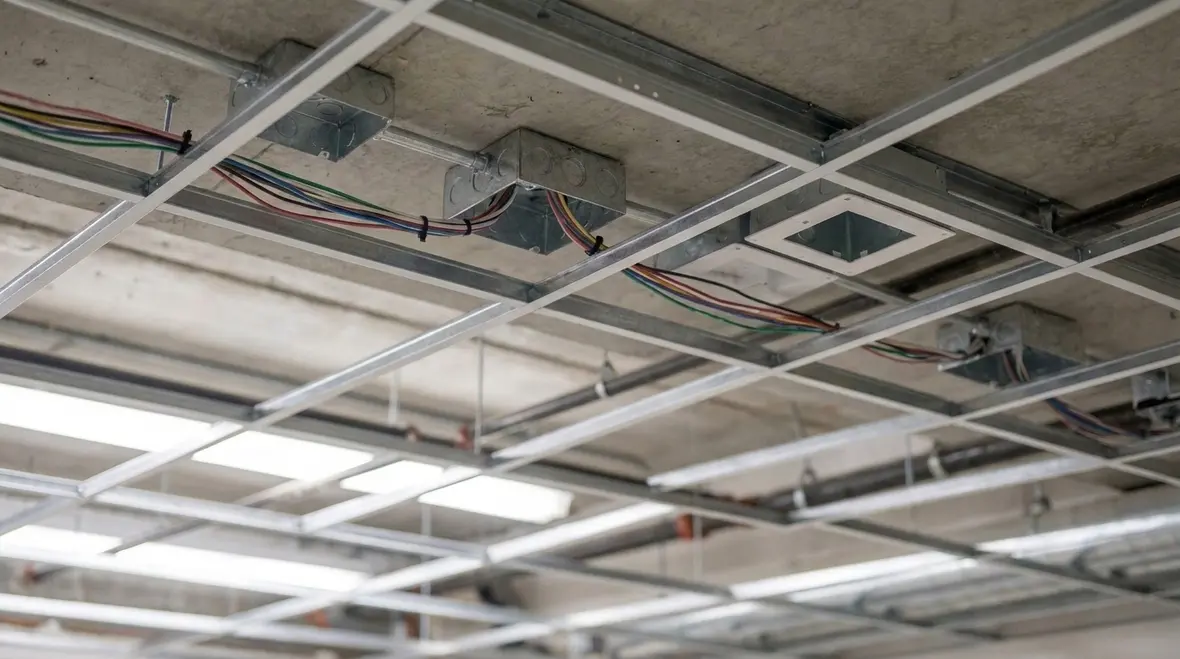
Free conductor length requirements can vary based on the conductor size and the specific situation. Therefore, we treat 300.16 as more than a single line item. Our expert service staff explains that conductors do not all behave the same in the field. Bigger conductors take more bend management. Shorter runs can create tight termination windows. Longer runs can tempt teams to cut too close because it seems “cleaner” during rough in.
So we set expectations early with the contractor team. Then we verify during rough inspection and again during close in. Here is what we commonly watch for in commercial and industrial work:
- Device and junction accessibility: we confirm that enclosures allow future rework without damaging insulation
- Termination points: we plan for the extra length needed to land conductors properly at devices and inside covers
- Conductor routing: we prevent sharp pulls or excessive slack that can conflict with neat box layout and securing requirements
- Use of standardized installation drawings: we align plan sets with the actual device and junction locations
At Kord Electric, our technicians do not just measure at random. They measure to the plan. And when reality changes, they adjust with code compliant logic, not hope.
What happens when the free length is too short
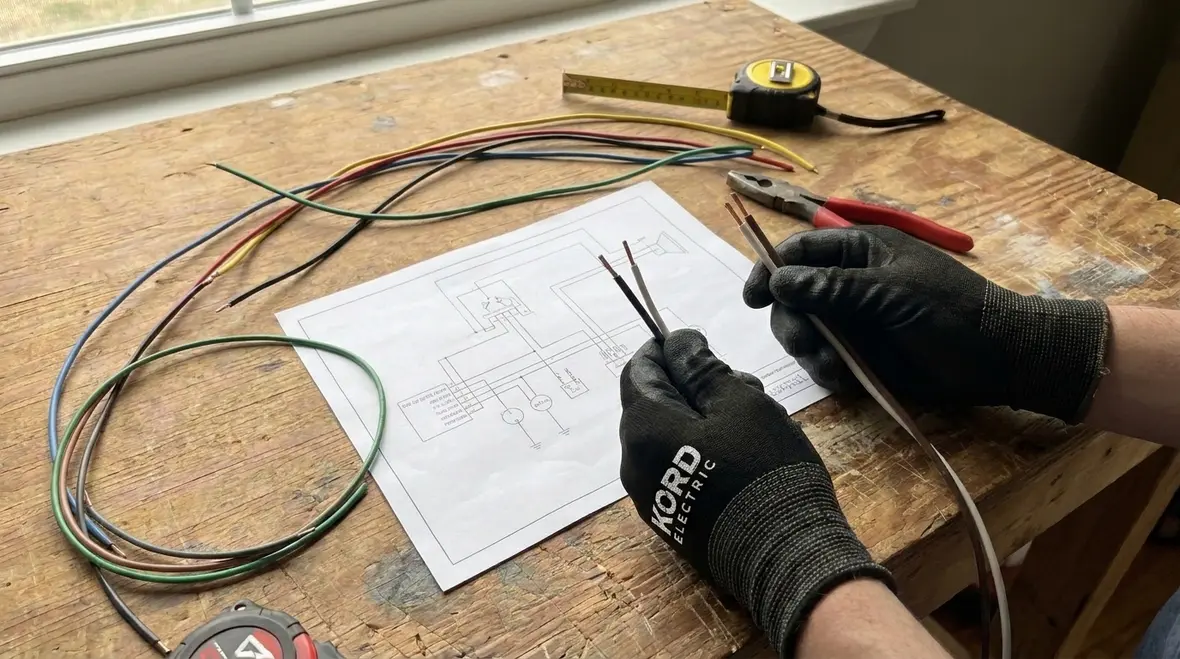
If free conductor length at outlets and junctions is too short, the consequences arrive fast. First, termination quality suffers. The technician may not have enough conductor to achieve proper connections, or they may have to disturb nearby devices to gain working room. Next, troubleshooting becomes slower and more expensive. A minor problem turns into extra labor because the crew needs to redo work that should have been done once.
Then the maintenance issue shows up later. In commercial buildings and major property projects, future service is not optional. Tenants change. Systems get upgraded. Devices wear out. When the original installation left no margin, a future electrician cannot reterminate without removing conductors from upstream boxes, which often increases downtime and cost.
We have seen “short length” problems create chain reactions such as:
- Repeated call backs because connections cannot be corrected without major rework
- Higher risk of loose terminations due to forced conductor bending
- Compromised insulation if retermination requires cutting too close
- Slower commissioning and more on site revisions
And yes, sometimes the crew says, “We can fix it later.” That is the electrical version of saying, “I will eat healthier next Monday.” Next Monday never comes.
Documenting compliance for inspections and long term service
Commercial and industrial inspections require more than good intentions. They require traceable compliance. Therefore, our approach at Kord Electric focuses on documentation and consistency. We support teams by aligning installation practices with NFPA 70 guidance and with the latest NEC interpretation resources that our staff follows. We also make sure the method used on one floor matches the method used on the next floor.
During projects, our expert service staff explains the “why” behind the rule, not just the “how.” That reduces field confusion. It also keeps the electrical contractor team from drifting into shortcuts when timelines get tight.
To help facilities stay ready, we also encourage building owners and facility managers to keep service records. That includes:
- As built notes for outlet and junction locations
- Device schedules that match field installation
- Photos and notes of terminal points when devices get closed up
- Maintenance planning that anticipates future retermination needs
When people can trace work, they can manage risk. And when risk drops, budgets breathe easier.
How our commercial and industrial teams apply these rules
Kord Electric serves commercial and industrial facilities and major property buildings. We do not treat these projects like quick residential installs. Instead, we plan for access, shutdown windows, and the realities of tenant operations. Consequently, we design our field approach around the fact that every termination today becomes someone’s troubleshooting point tomorrow.
In that spirit, our technicians take a disciplined stance on free conductor length outlet practices. They coordinate with electricians, inspectors, and project managers early. Then they verify that crews maintain proper spacing, neat wiring, and code compliant extra conductor at outlets and junctions where future work matters most.
We also share practical education on the NEC and related code guidance through industry oriented resources. You can explore more through our content and code focused pages at kordelectric.com and kordfire.com, including additional NEC explainers on kordfire.com.au. For a deeper dive on the broader National Electrical Code, many facility teams pair this discussion with our article Understanding NFPA 70: The National Electrical Code Explained for 2026, which connects free length expectations to the code’s overall structure.
On the fire and life safety side, Kord Fire’s overview NFPA 70: All About The National Electrical Code (NEC) gives building owners additional context for how electrical practices support fire protection systems, inspection cycles, and long term risk management.
Planning around NEC free conductor length outlets usage in real projects
For commercial facilities, NEC free conductor length outlets usage becomes part of the planning conversation long before anyone pulls wire. Our project teams look at sequence, shutdown windows, and how much time technicians will have inside energized areas during future work. When the free length is planned carefully, you get faster terminations, clearer labeling, and less time poking around in cramped boxes during troubleshooting.
In industrial environments, the stakes climb further. Conductors often serve critical loads, and downtime may ripple across entire production lines. Here, we align free conductor length decisions with other NEC driven choices, such as equipment working spaces and routing limitations. That way, when the system needs an upgrade or a swap, our technicians can work within safe clearances, maintain conductor integrity, and still keep the schedule tight.
Regional expectations matter too. For example, projects that fall under the strict permitting and inspection profiles tied to Los Angeles County electrical services must be designed with long term access and documentation in mind. Free conductor length forms one of those details that either makes a punch list shorter or forces another round of rework. Our expert service staff helps commercial and industrial owners in those jurisdictions align their plans with the NEC, the local authority having jurisdiction, and their operational realities.
FAQ
Need an electrical plan that stays code ready?
If your commercial or industrial project needs reliable NEC compliant wiring for outlets and junctions, we help you get it right the first time. Contact Kord Electric to review your layout, termination points, and field practices with our expert service staff. We explain the rules in a calm, clear way, then we execute with technician led precision. You keep your schedule, your inspectors stay satisfied, and your future maintenance crew does not curse past decisions. Reach out today.
For teams that want to connect free conductor length practices to the bigger NEC picture, you can also explore our related resources on topics like vault equipment work space, arc flash breaker features, and routing limitations. Together, these guides help you move from single code sections to a complete, code ready electrical strategy that supports inspections, future upgrades, and day to day operations.


