
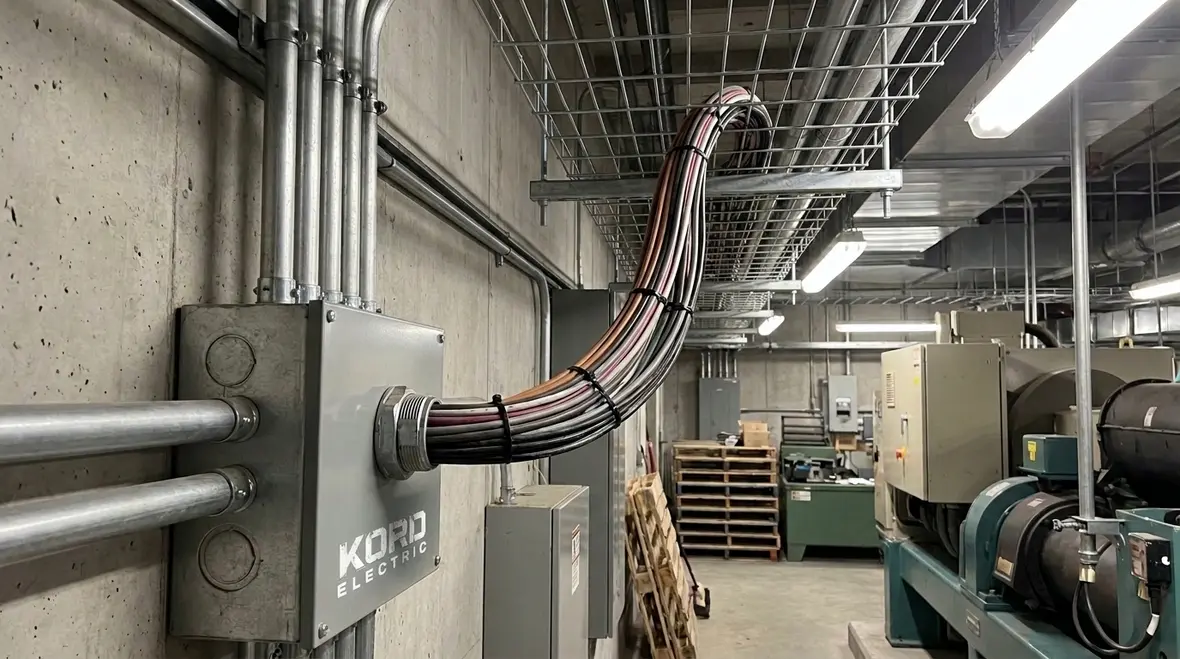
NEC Raceway to Open Wiring NFPA 70 300.18 Guide
Kord Electric helps commercial and industrial facilities handle electrical rules the right way, with clear, careful work. In this guide, we explain NEC raceway to open wiring using NFPA 70 Section 300.18, because the change from enclosed raceways to open runs affects how crews route conductors, protect wiring, and document compliance. Our expert service staff and technicians walk building teams through the “why,” not just the “what.” And yes, we know electrical code can feel like it was written to keep people awake during long meetings. Yet when we slow it down and explain it calmly, it starts to make sense.
What NFPA 70 Section 300.18 really controls
NFPA 70 Section 300.18 covers the conditions under which wiring that starts in a raceway can transition to open wiring, and how the wiring must remain protected and installed correctly after the transition. In practice, we see this in places like mechanical rooms, equipment perimeter zones, and distribution areas where contractors want clean routing but still need safe protection. The key point is this: you do not treat open wiring like an afterthought. Instead, you treat it like a step in a controlled system.
First, the code limits when that transition is allowed. Then it tells the installer what must happen to the wiring and the space it occupies. Finally, it requires that the field installation maintain the protection level the code expects. When facilities ignore those steps, inspection delays and rework often follow. And nobody wants to schedule that rework the same week their plant manager wants to “just keep moving.”
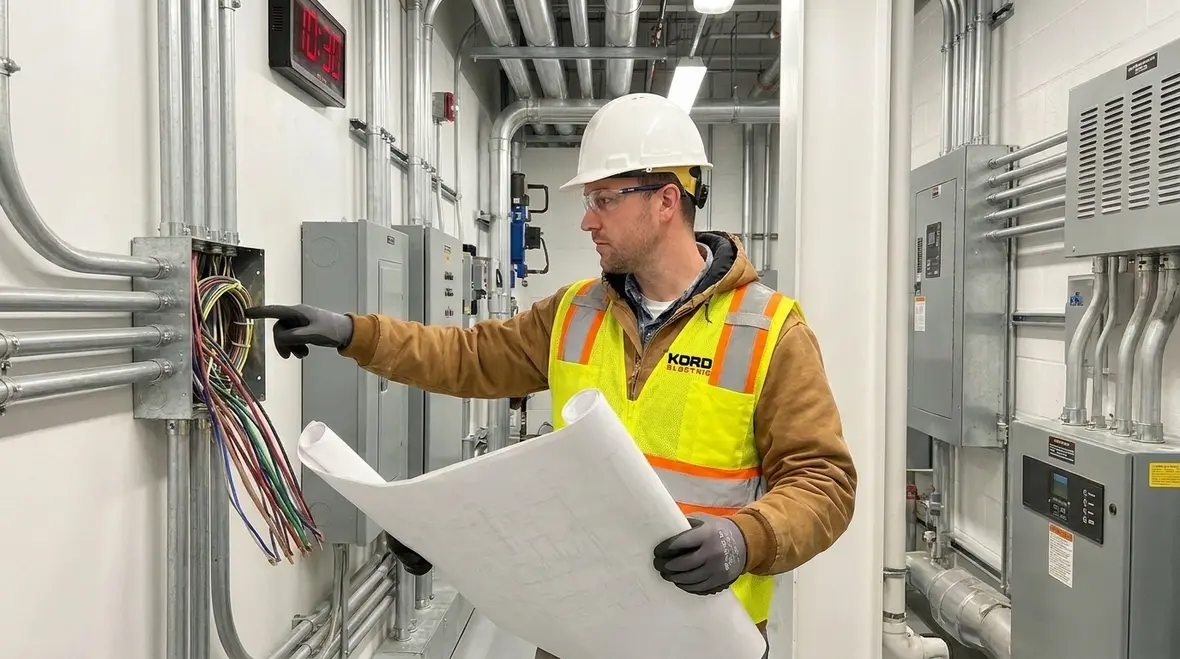
How the transition from raceway to open wiring works in the field
Our technicians typically handle this as a staged plan. To start, we inspect the existing raceway path and identify the point where conductors will leave the raceway. Next, we confirm the wiring type, insulation needs, and the environment around the run. After that, we design the transition so the wiring stays guarded against physical damage and stays compliant with the open wiring rules that apply in that area.
At each transition point, the goal stays consistent. We want a clean, code compliant stop where the raceway system ends, and a clear start where the wiring operates under open wiring requirements. Additionally, we keep track of how the conductors enter and leave components, because mismatched fittings and sloppy terminations often cause both safety issues and inspection problems. In short, we treat the transition as a “line in the sand,” not a “good enough” handoff.
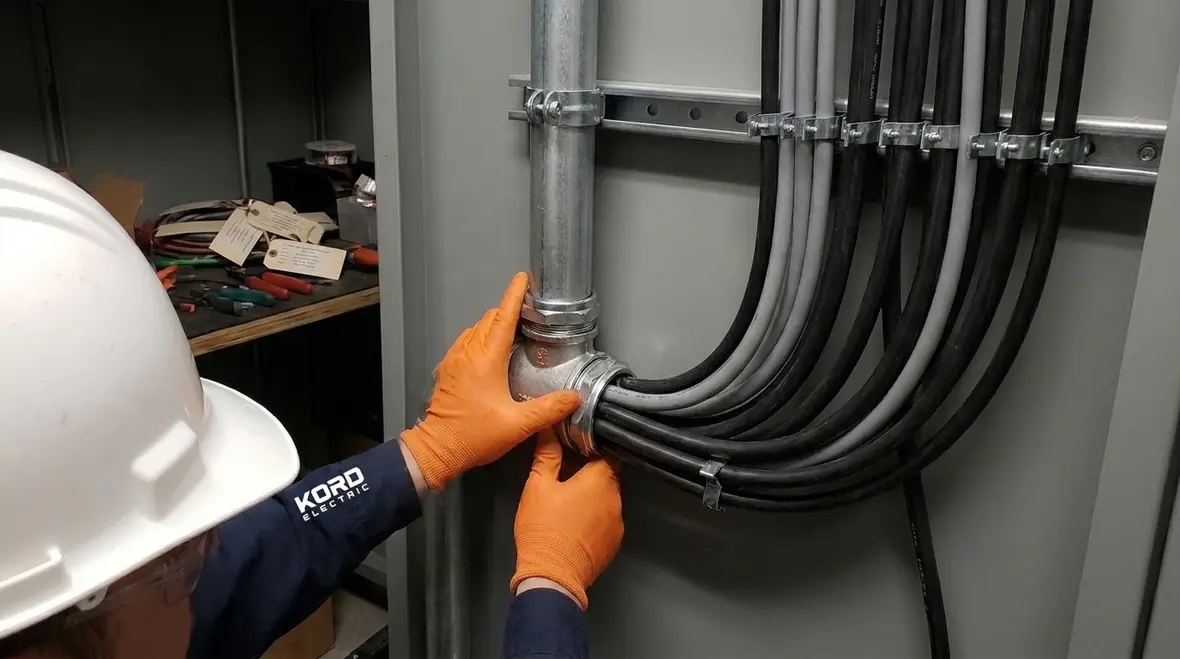
Where these transitions commonly show up in commercial and industrial buildings
Commercial and industrial facilities use this concept more often than most teams expect. For example, distribution rooms may run conductors in raceways, then transition to open wiring for short spans to equipment. Manufacturing sites may route wiring through structural zones and then open it up where it can be supported and protected properly. In warehouses, crews may transition at control panels or along cable management routes where the code permits open wiring under controlled conditions.
Meanwhile, building owners care about three things: safety, uptime, and inspection speed. Therefore, Kord Electric focuses on the practical path to compliance. We coordinate with the electrical contractor team, review the layout before rough in, and document the reasoning behind each transition so it matches the requirements. That documentation reduces confusion later, especially when multiple trades share access during commissioning.
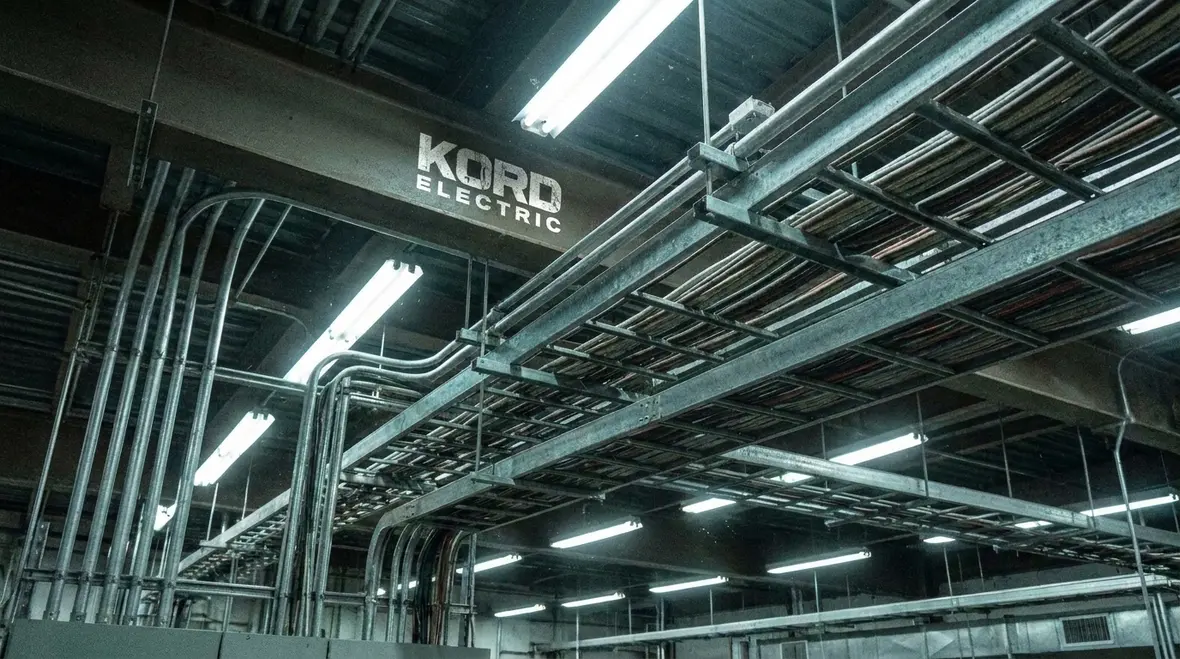
Why protection and physical damage rules matter more than people think
When wiring moves from enclosed raceways to open routing, the risk profile changes. Once the wiring sits in open air, it faces new threats like impact, abrasion, vibration, and accidental contact. NFPA 70 does not treat those risks lightly. Instead, it expects the installer to maintain a level of protection that fits the installation conditions.
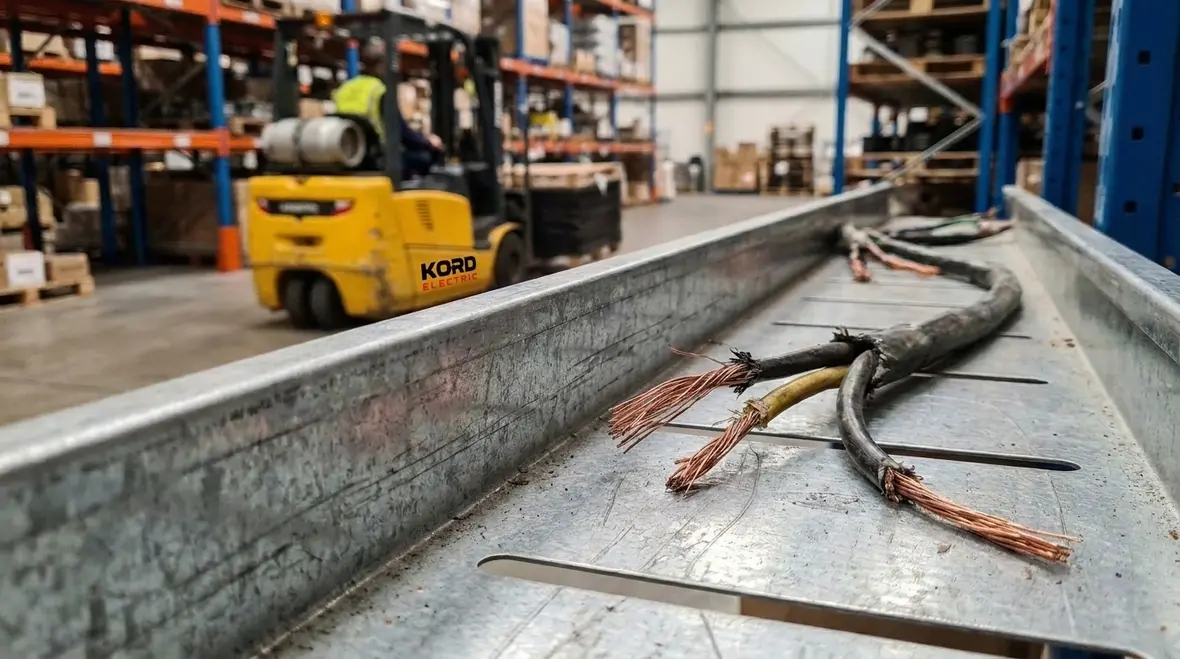
In our expert service work, we often see teams that focus only on routing and ignore how the wiring will get treated after installation. However, in industrial spaces, equipment moves, forklifts roam, and maintenance access creates real contact risk. So, we check clearances, support spacing, and the surrounding environment. We also verify that the installation method allows the wiring to meet the open wiring requirements that apply at that location.
If your facility feels like it runs on chaos, that does not excuse unsafe wiring. It just means you must design the transition with more care. Otherwise, the wiring becomes the world’s most fragile accessory. And the code, thankfully, refuses to let that happen.
Design considerations our technicians document before install
Kord Electric does not show up and improvise. Our process keeps the electrical system consistent from design intent to field execution. First, our technicians review the drawings and the equipment schedule to identify where conductors must change method. Next, we verify conductor sizing, insulation type, and termination needs so the transition does not create weak points.
After that, we map the transition path and decide how we will support the wiring after it leaves the raceway. Then we confirm the fittings and connection methods at the transition point. Finally, we prepare an inspection friendly plan so the field team can install without guesswork.
For many facilities, this step becomes the difference between a smooth inspection and a late scramble. Also, it helps when owners coordinate with authorities having jurisdiction. Clear reasoning makes discussions faster, and faster discussions mean crews return to work instead of living in “correction mode.”
Common mistakes during NEC raceway to open wiring transitions
Even smart teams slip when schedules tighten. To keep projects steady, we point out the most frequent issues we see. First, crews sometimes fail to identify the exact location where the raceway ends and open wiring begins. That sounds small, but inspectors care about exact boundaries.
Second, crews sometimes use support methods that work for raceways but not for open routing. Open wiring still needs proper support and protection in the installation space. Third, some teams skip documentation, then they struggle to explain the install method later. When that happens, everyone wastes time.
Fourth, crews can overlook physical damage exposure. In industrial areas, that oversight usually shows up quickly as scuffs, abrasion marks, or impact points. And finally, teams sometimes mismatch components, which creates connection problems and raises safety concerns.
Here is the soothing truth: these mistakes are preventable. Our technicians slow down at the transition planning stage, and we train the install team on what to watch. So, the electrical system gets built correctly the first time. Or at least the second time, which is still better than the third time. Third times usually involve coffee that tastes like regret.
Compliance planning for C and I facilities with Kord Electric
Commercial and industrial buildings require more than a basic install. Owners need a compliance approach that fits their risk level, their equipment layout, and their inspection timeline. Kord Electric supports major property buildings with service planning that aligns with NFPA 70, local requirements, and the realities of the worksite.
Additionally, we coordinate with facility managers and electrical contractors to keep transitions predictable. We verify installation conditions, confirm support and protection methods, and explain decisions in plain language. Our expert service staff communicates how the transition meets the NEC expectations for open wiring after leaving the raceway. That clear explanation reduces rework and helps keep operations stable.
For facilities that also consider fire and life safety systems, we keep the electrical approach consistent with broader safety planning. You can explore more of our code based education at kordfire.com and kordelectric.com, and you can learn more about our service platform at kordfire.com.au as well. When projects involve complex systems, we also align with guidance from resources like firepumps.org to support safe building design thinking.
If you want to connect this specific NEC raceway to open wiring planning with the bigger story of how the National Electrical Code shapes commercial decisions, Kord Electric’s article Understanding NFPA 70: The National Electrical Code Explained for 2026 walks through the 2026 direction in more detail and shows how these wiring method choices fit into your overall code strategy.
FAQ
Additional NEC raceway to open wiring planning notes
For large facilities, NEC raceway to open wiring planning should tie into broader code reading habits. Many teams find it useful to pair Section 300.18 work with structured guides like the Kord Electric resources on how to read NFPA 70 and how the 2026 cycle updates affect commercial and industrial projects. That way, the transition details sit inside a bigger, calmer picture of code intent.
On sites in regions like Southern California, that planning also connects directly to the day-to-day work of repairs, upgrades, and system expansions. If your facility operates in or around Los Angeles County, Kord Electric’s Los Angeles County electrical services support everything from code minded design reviews to on-site transition checks, so raceway to open wiring work is not left to guesswork or last minute improvisation.
Ready for a clean, code confident transition?
When a facility needs NEC raceway to open wiring handled correctly, we recommend planning early and installing with precision. Kord Electric supports commercial and industrial projects with technician level attention, clear explanations, and inspection friendly work. We help your team reduce rework, protect wiring in real jobsite conditions, and keep your schedule moving. If you want a smart path through NFPA 70 Section 300.18, contact us today and let our expert service staff map the transition step by step.


