
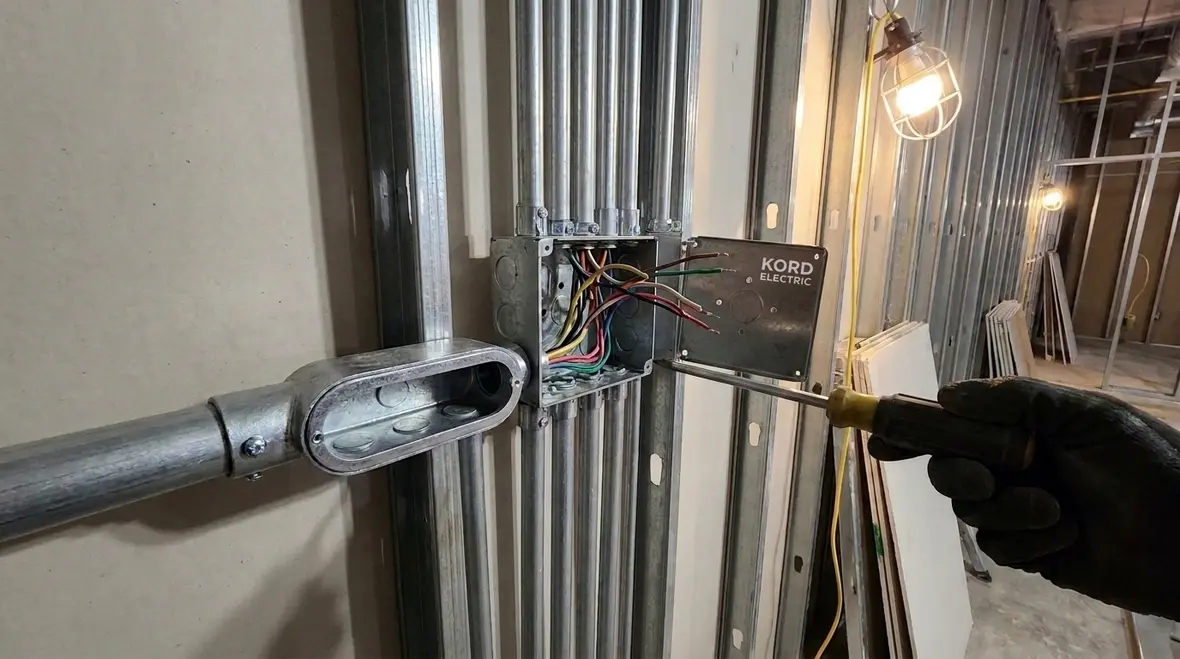
NFPA 70 Section 300.17 NEC Boxes Conduit Bodies Required
NFPA 70 Section 300.17: Where Boxes and Fittings Are Required
At Kord Electric, we see the same problem show up on job after job: someone thinks conduit can do everything, and then reality arrives like a late delivery from UPS. In the first pass of any plan, we make sure the installation follows NEC boxes conduit bodies required rules, because Section 300.17 decides where boxes and fittings must exist, not just where they would be nice. Our technicians and expert service staff explain the “why” in plain terms, so facility teams can approve layouts with confidence. And yes, we know people sometimes call this section “the box rule” like it is a funny nickname. It is not funny when a cover cannot be installed or a raceway cannot be pulled through.
Why Section 300.17 matters on real commercial and industrial sites
Commercial and industrial facilities move fast, and systems must stay reliable for years. Section 300.17 supports that reliability by requiring boxes and approved fittings at specific points. Therefore, it reduces damage risk, improves access for inspection, and keeps pull paths workable for wiring. In other words, it helps the electrical system stay serviceable after construction, upgrades, and tenant changes.
When we review a plan, our team looks at the full route, not just the visible conduit runs. After all, wiring does not care how confident the install team feels. It cares about pull space, access, and code compliance. Our technicians then walk stakeholders through what the rules require, where access must be available, and how the installation supports safe maintenance.
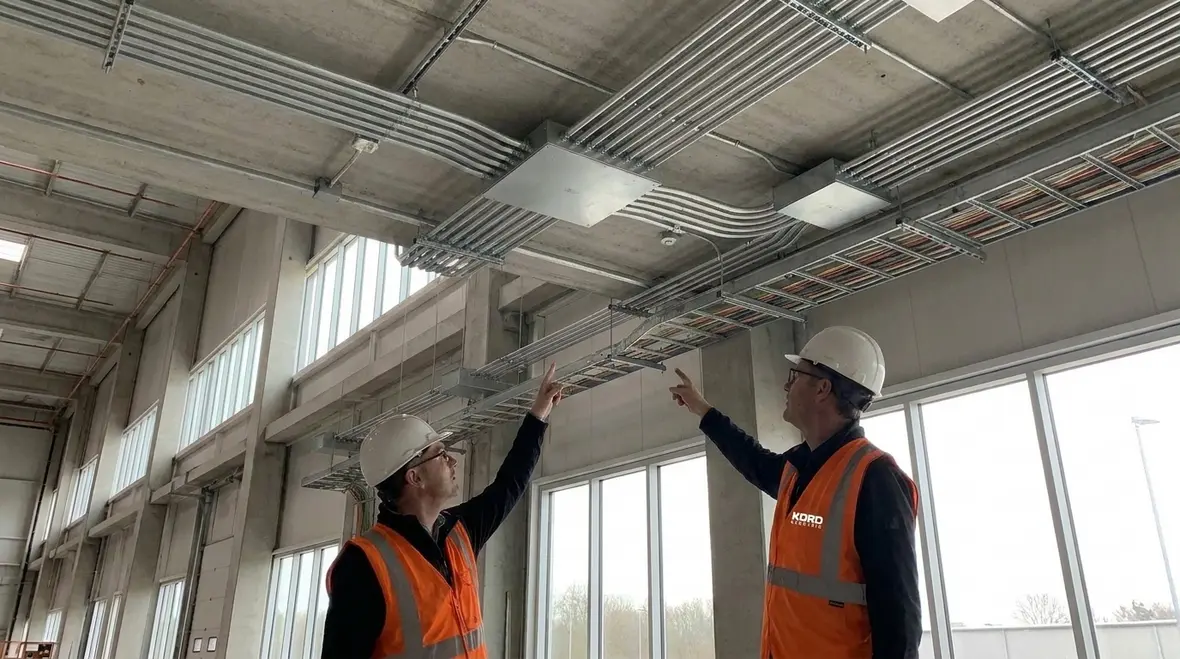
What NEC boxes and conduit bodies must do, and where they fit
Section 300.17 focuses on access. It requires that where conductors need to be connected or where changes in direction, support, or termination require it, the installation must use proper boxes or fittings. We do this work with a goal that matters to facility owners: you should not have to tear apart walls or ceilings just to troubleshoot a circuit.
In practical terms, the rules mean we must plan for locations that allow pulling, splicing, and termination without creating impossible angles or hidden dead ends. We also coordinate with mechanical and civil trades so the required access stays available, even after ductwork, sprinkler mains, and equipment pads occupy the same space. And if anyone jokes that “boxes are just decorative,” our technicians respond calmly that decorative does not pass an inspection.
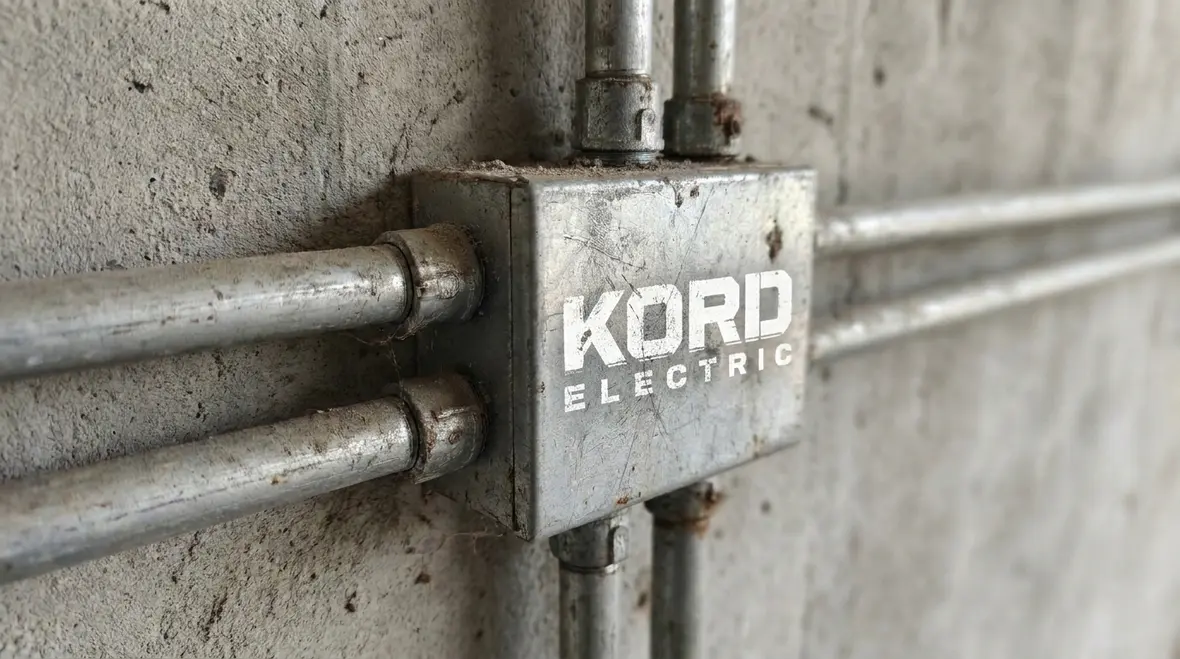
Where the code calls for access points and approved fittings
To apply Section 300.17 correctly, we follow the pathway logic the NEC expects. When the raceway system changes direction or needs to be connected to equipment, boxes and fittings become the access points. So the system can be installed, inspected, and maintained. Transitioning between conduit segments without the required enclosure can lead to unsafe conditions and costly rework later.
In our field work for major property buildings, we also see that access requirements often interact with firestopping, ceiling grids, and security buildouts. Therefore, we document locations early and align them with coordination drawings. Then our expert service staff explains what the inspectors will look for, so the project does not stall during the final walkthrough.
For facility teams who want more context around how the National Electrical Code pulls these ideas together, we often point them to companion resources like Understanding NFPA 70: The National Electrical Code Explained for 2026, which helps link Section 300.17 to the broader NEC story.
Conduit runs, bends, and pull paths that actually work
People often focus on bends as if they are the whole story. However, wiring performance depends on the full pull path, including how the system is segmented. When code requires NEC boxes conduit bodies required locations, it is because the wiring route must remain workable. That means fewer situations where conductors scrape during pulls or fail to pull through smoothly.
We typically plan for practical pulling distance and workable transitions, and we confirm fittings and enclosures match the raceway type. Additionally, we validate that conduit bodies and boxes allow access at planned junction points. This prevents “almost compliant” installs, which are like trying to cut a piece of plywood with a spoon. It looks creative, but it does not work.
In 2026 and beyond, expectations around documentation also keep rising for large projects. Kord Electric supports those expectations by organizing installation details for review, so teams can show what was installed and why.

How inspectors review Section 300.17 in the field
Inspectors do not just look for boxes. They look for the right location, the right type, and the ability to access the wiring work. Because of that, we make sure the installed boxes and fittings align with the NEC intent: accessibility and safe connections.
Our technicians often spot common issues early, such as missing covers, incorrect box sizing, and enclosures placed where access later becomes blocked. Then we correct the routing before the system gets buried under finishes. As a result, the facility avoids downtime, and the contractor avoids change orders.
Where we service major propertie buildings, we also plan for long term maintenance. If access is awkward on day one, it gets worse during renovations or emergency repairs. Our expert service staff helps owners understand how these decisions affect operational continuity.
Trade coordination and fire safety considerations
On commercial and industrial sites, electrical infrastructure lives near other life safety systems. That means Section 300.17 requirements can interact with firestopping and routing through rated assemblies. Therefore, we treat code compliance as a coordinated system, not a series of isolated tasks.
We coordinate with trades so boxes and conduit bodies do not break rated barriers without the proper sealing approach. In addition, we keep conduits supported correctly and routed so that inspection access stays open. When fire systems, utility corridors, and equipment rooms crowd the same area, our planning reduces surprises.
For teams who also consider fire and life safety, it helps to understand how standards connect across disciplines. Kord Electric aligns with the broader safety mindset shared by fire professionals and code educators, including resources from partner organizations like Kord Fire that discuss NFPA and code compliance culture. We do not treat that as extra. We treat it as smart risk management.
And yes, in the real world, coordination meetings feel like a sitcom. Somebody always says, “We thought the other trade handled it.” We keep it friendly, then we handle it by documenting access points and routing decisions early.

Keeping maintenance simple after the building opens
Section 300.17 plays a quiet role in the years after construction. When boxes and fittings exist where the code requires, troubleshooting becomes faster and safer. Facility engineers can isolate a circuit, inspect terminations, and perform upgrades without ripping out finished surfaces.
We also help teams plan for future changes that happen on big properties. Tenant improvements, new control systems, and equipment swaps all create demand for additional wiring pathways. When the original installation includes the required enclosure access, upgrades proceed with fewer surprises.
Our service approach stays practical. We explain what access should look like, where future work can occur, and how to protect the raceway system from damage. That way, the building keeps operating, and the electrical system stays serviceable instead of becoming a mystery box of pain.
FAQ: Quick answers about NEC boxes and conduit bodies under Section 300.17
Partnering with Kord Electric for NEC-ready projects
Section 300.17 is one piece of a much larger safety picture. At Kord Electric, we support that picture by reviewing design intent, verifying installations, and helping facilities connect the dots between conduit pathways, grounding, overcurrent protection, and documentation. Our code-focused blog resources, including articles on multiwire branch circuits, overcurrent protection, wiring integrity, and National Electrical Code fundamentals, help your team see how each requirement reinforces the others across your building.
When projects involve renovations, expansions, or new systems, we also help teams plan upgrades so NEC rules do not become a last-minute surprise. From feeder diagram planning to grounding for nonelectrical equipment, we bring the same mindset we apply to NEC boxes conduit bodies required decisions: plan early, coordinate clearly, and leave the system better than we found it.
If your facility is in a high-demand area like Los Angeles County and you need a partner who understands how Section 300.17 fits into real-world operations, our Los Angeles County electrical services team can help scope, design, and implement solutions that keep your systems ready for inspectors and ready for everyday use.
Ready for a code ready installation?
Kord Electric helps commercial and industrial facilities build electrical systems that stay serviceable, inspectable, and dependable. Our technicians and expert service staff explain Section 300.17 clearly and confirm where the required boxes and conduit bodies belong before finishes hide the work. If you want fewer surprises during inspections and faster maintenance after opening day, we can review your layout and support your project from rough in to closeout. Contact Kord Electric to get started.
For teams who want to connect this work to the broader NEC story, pairing this guide with resources like our overview of the National Electrical Code for 2026 and related Kord Fire explainers can give decision makers a clear view of how all the sections fit together. From there, Section 300.17 stops feeling like a narrow “box rule” and starts looking like what it really is: one of the tools that keeps your electrical system safe, accessible, and ready for the next decade of service.


