NEC Feeder Diagrams Marking Rules NFPA 70 215.13
At Kord Electric, we follow the NEC feeder diagrams marking rules early, because good documentation prevents expensive confusion later. That means we plan feeder diagrams before we pull wire, and we mark them clearly so any trained technician can trace a circuit without guessing. Then, when the system is built, our field team confirms the labeling matches the reality behind the panel doors. And yes, we also admit a little humor here, because nothing kills momentum like a “mystery feeder” that shows up after hours and ruins someone’s Friday plans.
In this guide, we explain NFPA 70 Section 215.13, with a clear focus on commercial and industrial facilities and major property buildings. We write for the people who run these sites, manage electrical rooms, and keep inspections moving. Third person is used here, but the work is done by our technicians and expert service staff, who explain details with patience and precision.
Why Section 215.13 controls feeder clarity on real jobs
NFPA 70 Section 215.13 focuses on how feeders are shown on diagrams and how they are marked. In plain terms, it demands that the electrical system does not rely on memory. Instead, it relies on accurate documents and durable labeling. When facilities teams understand that, they reduce downtime during troubleshooting, expand safer maintenance habits, and make sure power distribution remains readable even years later.
As projects move from design to build, feeders connect panels, disconnects, switchboards, and sometimes multiple levels of distribution. Additionally, feeders often serve critical loads like mechanical systems, life safety interfaces, lighting circuits in large areas, and process equipment. Therefore, if a feeder diagram and its markings are vague, responders and maintenance electricians waste time hunting. And time, as everyone knows, costs money, especially in commercial operations.
NEC feeder diagrams marking rules in the first pass of planning

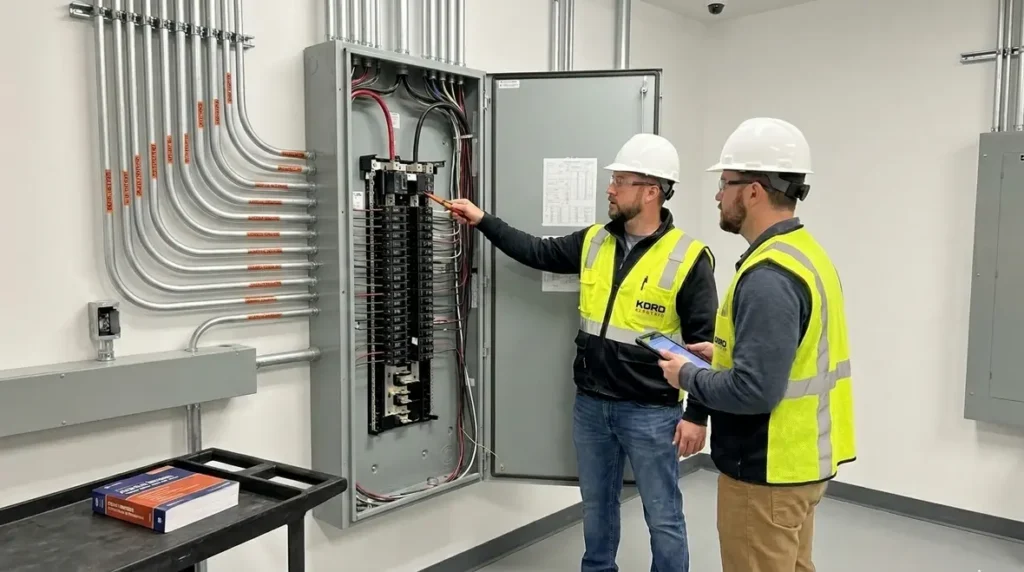
The work starts on paper, but it must end at the equipment. First, Kord Electric ensures feeder diagrams reflect the actual field configuration: source, routing, panel connections, and protective device relationships. Then our technicians verify the marking method supports that diagram. In practice, we use a labeling approach that helps a person trace the circuit from the diagram to the terminal, breaker, or connected load.
Moreover, the labeling should not become “decorative.” It must be readable, persistent, and consistent across the facility. If one building wing uses one style and another wing uses a different one, teams eventually start treating labels like a suggestion, not a requirement. That is where our expert service staff steps in, explains the standard in plain language, and coaches facility electricians on how to keep the system organized as changes happen.

What NFPA 70 Section 215.13 requires for diagrams
Section 215.13 requires feeder diagrams and their marking to enable anyone qualified to identify circuits and their connections. It supports a central goal: the drawings must communicate the feeder relationships in a way that matches the installed wiring.
That requirement does not just mean “show a line.” It means show enough detail to support real work. For example, feeder diagrams should allow a qualified person to understand which feeder feeds which panel or load grouping, and how the protective devices relate to that feeder. Also, the diagrams should align with the marking on equipment so that the field does not contradict the documentation.
In large buildings, feeder paths may cross floors, tie into bus systems, or serve phased renovations. Therefore, Kord Electric emphasizes document control: when modifications happen, the diagrams update, the markings update, and the facility team knows what changed and why. This approach prevents old labels from haunting new panels like a sitcom character who never learns the lesson.
For facility teams that want a deeper code backdrop while they refine their NEC feeder diagrams marking rules, resources like Kord Electric’s guide on understanding NFPA 70 for 2026 and Kord Fire’s overview of NFPA 70: All About the National Electrical Code help connect section-level details like 215.13 to the bigger safety and compliance picture across a building.
How Kord Electric marks feeders so the circuit stays traceable
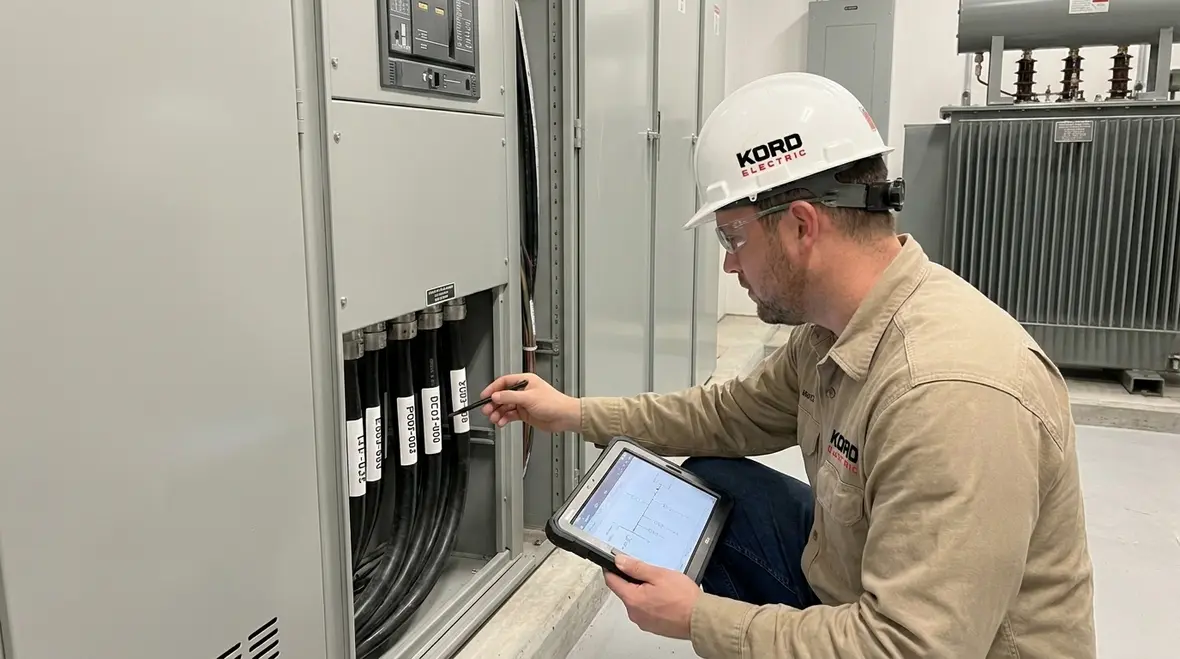
Marking becomes the bridge between the diagram and the live system. When Kord Electric performs electrical work for commercial and industrial clients, we treat feeder markings as part of the installation, not an afterthought. Our technicians place marks where qualified personnel can see them, and our expert service staff confirms each marker matches the diagram.
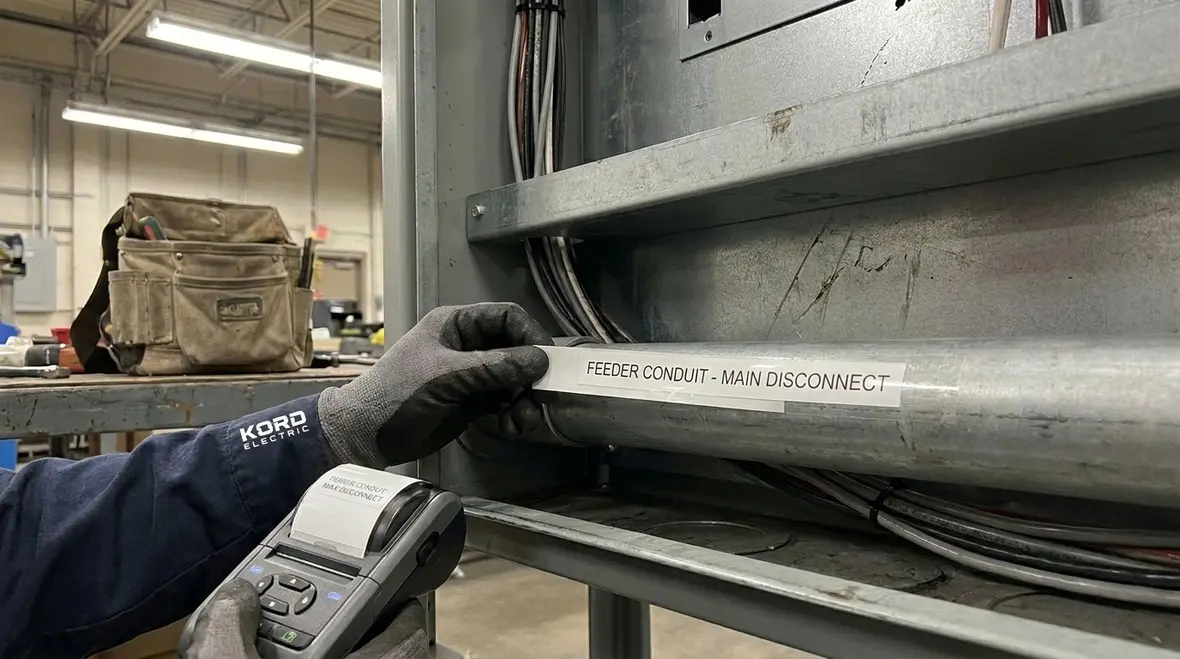
To keep feeder identification stable, the marking method should support the environment. Switchboards and distribution gear face heat, vibration, and frequent maintenance access. Also, labeling needs to remain readable during routine cleaning and inspections. Consequently, our approach favors durable marking systems that professionals can trust.
Furthermore, we help facility teams keep markings correct during changeouts. If a panel schedule changes, feeders do not become optional. If protective devices upgrade, the marking must reflect the updated configuration. In other words, the system should not become a “choose your own adventure” book where each chapter contradicts the last.
Common feeder marking problems that cause delays
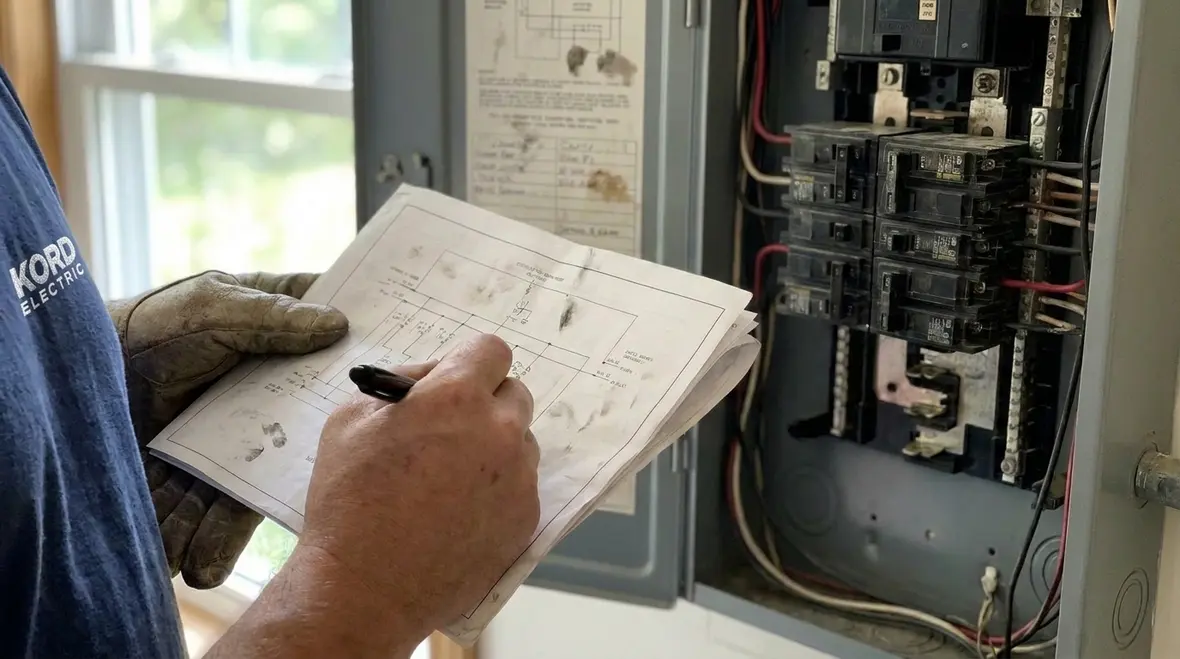
Even strong teams run into marking issues. Often, the root cause is small: a label placed in the wrong location, a diagram that was revised but not reissued, or a feeder identifier that does not match the panel schedule. When the mismatch appears, it shows up during inspections, maintenance calls, or emergency troubleshooting.
In commercial and industrial settings, delays can ripple across many trades. For example, a commissioning team may hold final sign off because it cannot verify feeder labeling. Similarly, a facilities electrician may struggle to confirm which breaker feeds a particular motor control or branch distribution section. Then everyone spends time on the same question, and time becomes the real cost.
Kord Electric often helps teams fix this by cross checking diagrams, panel schedules, and actual markings. Our expert service staff explains the steps clearly, so the facility learns the “how,” not just the “what.” Also, we recommend a simple workflow for updates: when a change happens, the diagram, the markings, and the record set move together as one package.
Keeping NEC diagrams and markings aligned during upgrades
Many major property buildings evolve. They add tenants, renovate mechanical rooms, and expand distribution for new loads. As that happens, feeders may change location, protective devices may swap, and new panels may appear. For that reason, Kord Electric treats feeder documentation as a living part of the electrical system.
During upgrades, the first priority involves confirming existing feeder identification. Next, teams validate the updated pathway and ensure the installed work matches the revised diagram. Then markings update to reflect the final state. Finally, our service staff helps facility teams maintain that alignment by outlining a clear recordkeeping habit.
Additionally, it helps to coordinate with related building systems. If the electrical distribution ties into fire pumps, controls, or life safety components, a labeling mismatch becomes more than an annoyance. For fire pump systems and related equipment, clarity can directly affect testing and verification workflows. Organizations that focus on fire pump performance and system integrity continue to emphasize how much clean documentation matters for reliable operation, which reinforces why this work matters.
In the same spirit, resources that explain the NEC broadly can help teams understand how these rules fit into the larger code picture. Kord Fire’s NFPA 70 overview and Kord Electric’s NEC-focused articles provide helpful context for the national electrical code, and those references support the idea that good labeling habits make inspections calmer and operations safer. Kord Electric aligns that practical approach with the field realities of commercial and industrial facilities, including projects supported by our broader Los Angeles County electrical services for complex properties.
FAQ: NFPA 70 Section 215.13 and feeder marking
Ready for cleaner feeder identification and fewer headaches?
Kord Electric helps commercial and industrial facilities apply NEC feeder documentation and marking practices that stand up in the real world. Our technicians and expert service staff review feeder diagrams, verify field labeling, and update records during renovations or expansions so inspections move without drama. If a building team faces mismatched schedules, unclear feeder tracing, or recurring troubleshooting delays, Kord Electric can bring order quickly. For facilities that also want to see how NEC requirements connect to broader planning, our in-depth National Electrical Code resources and related content on system design, electrical safety training, and downtime prevention make it easier to see how good documentation supports the entire electrical lifecycle.
When your property needs a practical partner to tame “mystery feeders” and turn scattered labels into a coherent story, Kord Electric is ready to help. From planning NEC feeder diagrams marking rules at the design stage to verifying labels during upgrades, we align field work with documentation so your system stays understandable years after the project wraps.
If your facility is in Southern California and you want that same level of clarity applied across panels, feeders, and critical equipment, our dedicated Los Angeles County electrical services team can review your existing installation, recommend documentation updates, and deliver field-proven upgrades that respect your schedule and uptime needs. Contact Kord Electric today to schedule a practical review and get your distribution system labeled for the future.