NEC Feeder Barriers Guarding Code NFPA 70 215.15
At Kord Electric, we treat electrical safety like it treats you: with calm, steady seriousness. In the first place, we follow the NEC feeder barriers guarding code expectations that appear in NFPA 70 Section 215.15. That means we help protect feeder conductors and parts from accidental contact, damage, and unintended access. Then we verify the installation details so the system stays safe through daily operations, maintenance, and the kind of “quick inspection” that turns into a ten minute detour. Our expert service staff walks clients through what we find and why it matters, because nobody should need a decoder ring to understand their own electrical room.
What NFPA 70 Section 215.15 requires for feeder barriers and guarding
In many commercial and industrial facilities, feeders run from service equipment to distribution sections, and they deserve more respect than they often get. Therefore, NFPA 70 Section 215.15 sets practical rules for feeder barriers and guarding. It focuses on preventing exposure to energized parts where people could reasonably reach them. In other words, the code treats “oops access” like a real event, not a fictional character who never shows up.
Generally, the rule requires barriers or guards when exposed live parts are located where they can be contacted. This includes situations where equipment is in walkways, near work areas, or adjacent to places where staff may stand during normal tasks. Moreover, the barrier must provide a physical separation that limits contact and reduces the chance of accidental shorting caused by tools, ladders, or stored items that migrated there over time. We have seen enough electrical rooms that looked clean on day one and chaotic by day thirty, so we plan for reality.

Where feeder protection matters most in commercial and industrial settings
Let’s be direct. In commercial and industrial facilities, electrical rooms and equipment areas tend to get used, not admired. People move through them, technicians open covers, maintenance crews pass by, and contractors sometimes arrive with confidence and no gloves. Because of that, the “where” matters as much as the “what.”
Feeder guarding typically becomes critical when equipment is accessible to qualified personnel and unqualified visitors in the same building, or when public areas come close to electrical spaces. Additionally, facilities with frequent equipment changes, renovations, or expansions face higher risk during temporary work. When work zones overlap, exposed parts can become reachable unless barriers and guarding stay in place and remain properly secured.
Our technicians explain the risk pathways during site walks. For example, if an open area allows a person to reach over a barrier, or if a guard does not stop tools from contacting live parts, then the protection fails its purpose. And yes, we will say the same sentence in the same calm voice whether the issue is caused by a missing panel screw or a “temporary” storage rack that has now lived there for a year. Temporary has a way of becoming permanent, like a sitcom catchphrase that never ends.

How we interpret accessibility and contact risk on the jobsite
In practice, the NEC feeder barriers guarding code concepts do not ask people to guess. Instead, they expect installers to evaluate where someone can reach and what can contact energized surfaces. Therefore, we look at reach heights, clearances, equipment layout, and the paths workers use to do their jobs. Then we consider likely contact objects such as test leads, keys, tools, metal ladders, and even the edge of a dropped clipboard.
Next, we check how the barrier behaves during normal operations. A guard that blocks contact when closed still fails if it can be bypassed or left unsecured during routine maintenance. So we verify fastening methods, hinge conditions where used, and whether access panels open in a controlled way. Also, we inspect for gaps created by uneven mounting, missing standoffs, or damaged enclosures. These details matter because the barrier needs to be continuous enough to stop contact.
Our expert service staff also confirms that labels, documentation, and access control support the physical guarding. In other words, the barrier works best when the facility knows how to approach the equipment safely. We do not just install hardware and walk away like we mailed a letter and now the world will handle itself.

Barrier design choices that reduce risk, not just paperwork
Barriers and guards come in different forms, but the safest installations share common traits: they resist displacement, they prevent direct contact, and they do not invite “creative” workarounds. Thus, our approach balances code requirements with real jobsite use for commercial and industrial environments.
For example, when we plan barrier placement, we consider the equipment enclosure type, the location of energized parts behind doors, and whether personnel will need frequent access. Then we choose guarding that fits the workflow while still limiting reach. We also coordinate with facility operations so protective structures do not block normal shutdown steps, inspection routes, or emergency procedures.
Moreover, we verify that any barrier remains durable in the facility’s conditions. In harsh spaces, corrosion, vibration, moisture, and temperature swings can loosen components over time. So we specify materials and mounting methods that stand up to the environment. Meanwhile, we confirm that guards do not create new pinch points or trip hazards that introduce other safety risks.
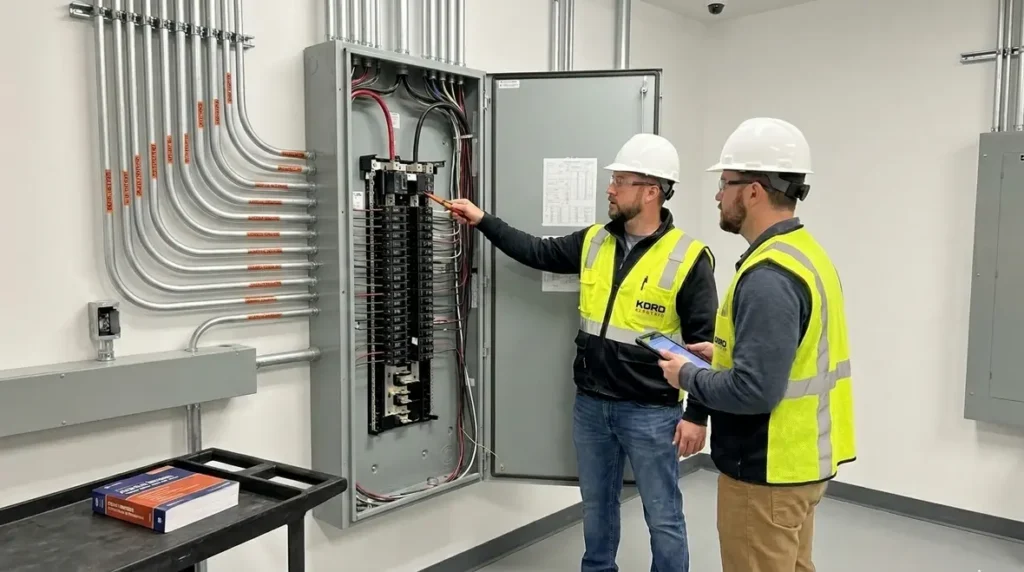
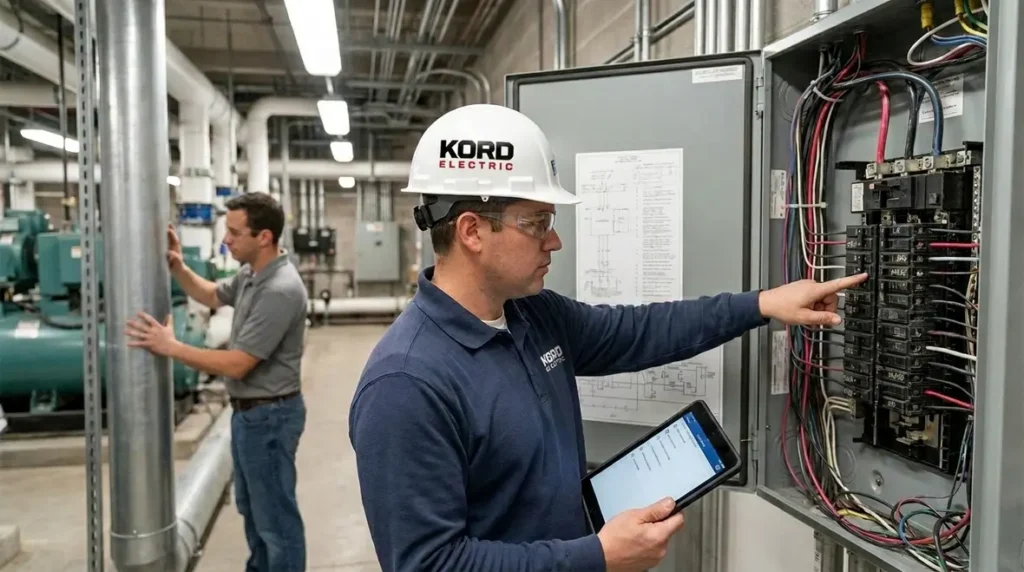
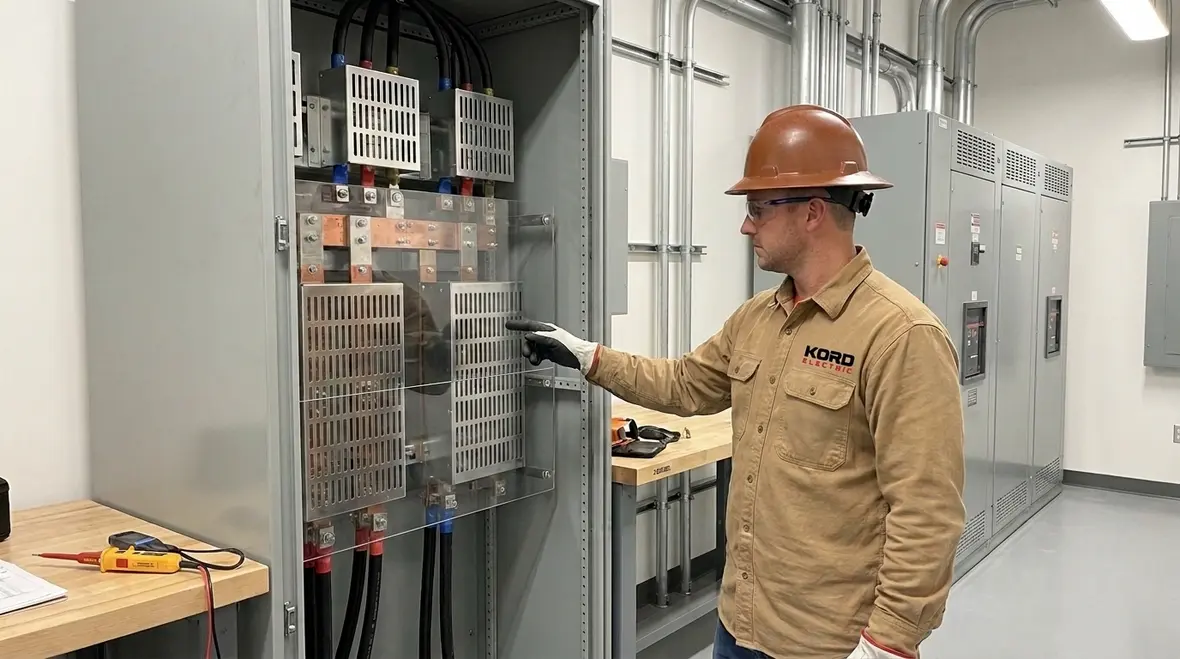
To make it easy for clients to visualize the plan, Kord Electric sometimes reviews the installation approach using a simple two view comparison, so teams see the goal and the method at a glance. We also connect these conversations to broader NFPA 70 guidance, including resources like our dedicated article on Understanding NFPA 70: The National Electrical Code Explained for 2026, so facility leaders can see how feeder guarding fits inside the larger code picture.
| What we evaluate | How it connects to NFPA 70 215.15 |
| Accessible reach zones | Barriers limit contact with energized parts |
| Maintenance access behavior | Guards stay effective when panels open and close |
| Tool and object reach | Guards prevent contact from likely items |
| Mechanical durability | Guards resist damage and remain secure |

Testing, maintenance, and documentation for long term compliance
After installation, the job does not end. In fact, most failures we encounter come from aging, modifications, or “work done fast” during upgrades. Therefore, we build a maintenance mindset into every feeder guarding plan for major property buildings.
First, we recommend routine inspections of barrier integrity. Our technicians check fasteners, hinge movement, alignment, and any signs of deformation. Next, we confirm that access points stay labeled and controlled, so maintenance teams follow the intended paths. Then we review any site changes, such as panel replacements, new feeder runs, or relocated equipment, which can alter accessibility and reach zones.
Our expert service staff also supports clients with clear documentation. We explain what we installed, where it sits, and what to watch for. That way, when a new team member arrives or a contractor replaces equipment, they do not reinvent the wheel. They build on the original safety plan, instead of stepping over it like it is a speed bump no one remembers.
Common mistakes we prevent during electrical upgrades
In commercial and industrial work, mistakes do not always look like mistakes. They look like “good enough” fixes. And “good enough” is how energized parts end up meeting reach zones they were never meant to. So we actively prevent the most common issues we see.
One mistake is treating barriers as optional accessories rather than safety functions. Another is installing guards that block direct contact but leave enough space for tools to reach energized parts. Also, some crews mount guards in a way that allows shifting over time, especially if vibration or uneven surfaces exist. Additionally, renovations often move storage, reroute pathways, or change traffic patterns, and suddenly the original accessibility assumptions stop being accurate.
We address these issues during pre planning and during commissioning. As a matter of process, we review the layout before work begins, then we confirm the final guarding after installation. Finally, we make sure facility staff understands the guard’s purpose and how to keep it effective. It is hard to maintain what nobody understands, and we have no interest in running an electrical safety program that depends on luck. Luck is great for lotteries, not for feeder protection.
For facilities that want to align feeder upgrades with broader reliability planning, we often connect guarding reviews to services highlighted in resources like our guides on emergency power, surge protection, and data driven electrical design. And when you are ready to move from planning into field work, our Los Angeles County electrical services overview shows how we manage permitting, installation, and inspection support for commercial and industrial projects across the region.
Frequently asked questions about feeder barriers and guarding
Conclusion: Get expert guidance before your next electrical change
Safety does not come from hope. It comes from correct guarding, correct placement, and steady follow through. Kord Electric supports commercial and industrial facilities with field focused checks aligned with NFPA 70 Section 215.15, so feeders stay protected and your team stays confident. If your facility is planning an upgrade, a renovation, or a new feeder install, we can inspect, explain, and build a guarding plan that holds up in real life. Call Kord Electric today and let’s handle this the right way.