
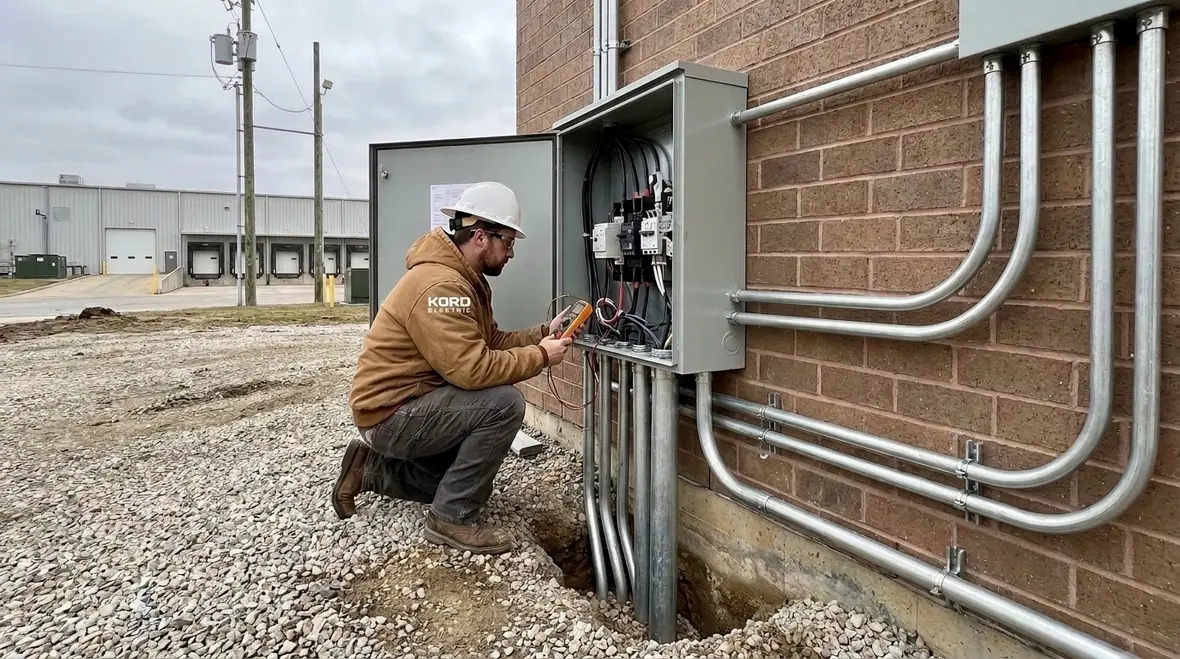
Kord Electric Explains NEC 225.1 in Plain Language
In commercial and industrial work, the details in NFPA 70 Section 225.1 matter, because they define what falls into NEC outside branch circuits scope and what does not. We see this every day on real sites, from distribution areas to building perimeters. Once the rules are clear, electricians stop guessing, inspectors stop playing “interpretive dance,” and facilities keep running. That is the goal.
In the sections ahead, our technicians and expert service staff explain how 225.1 shapes wiring outside a building, how it connects to the rest of the NEC, and what changes when a job crosses property lines or uses special equipment. In other words, we cover the scope, not the fluff.
NFPA 70 225.1: what the outside wiring rules actually cover
NFPA 70 Section 225.1 sets the starting boundary for rules that apply to the wiring that serves premises or structures from a source, especially when that wiring runs outside. In practice, it tells the job team where the “branch circuit world” starts and where other NEC articles take over.
So, rather than treating every cable run like it is the same, the NEC requires you to sort the system into the right category. Then it tells you which installation requirements apply. This is where many people trip up, because “outside” sounds simple until you face a real layout: pads, conduit stubs, meter sets, service drops, and underground paths that twist like a plot in a long running TV drama.
Our team approach stays steady. First, we identify the power source and how it feeds the building systems. Next, we confirm which portion is considered outside branch circuit wiring under the NEC structure. Finally, we match that portion to the correct requirements so the design stays compliant. Our expert service staff walks facilities through this logic so the team understands the why, not just the what.
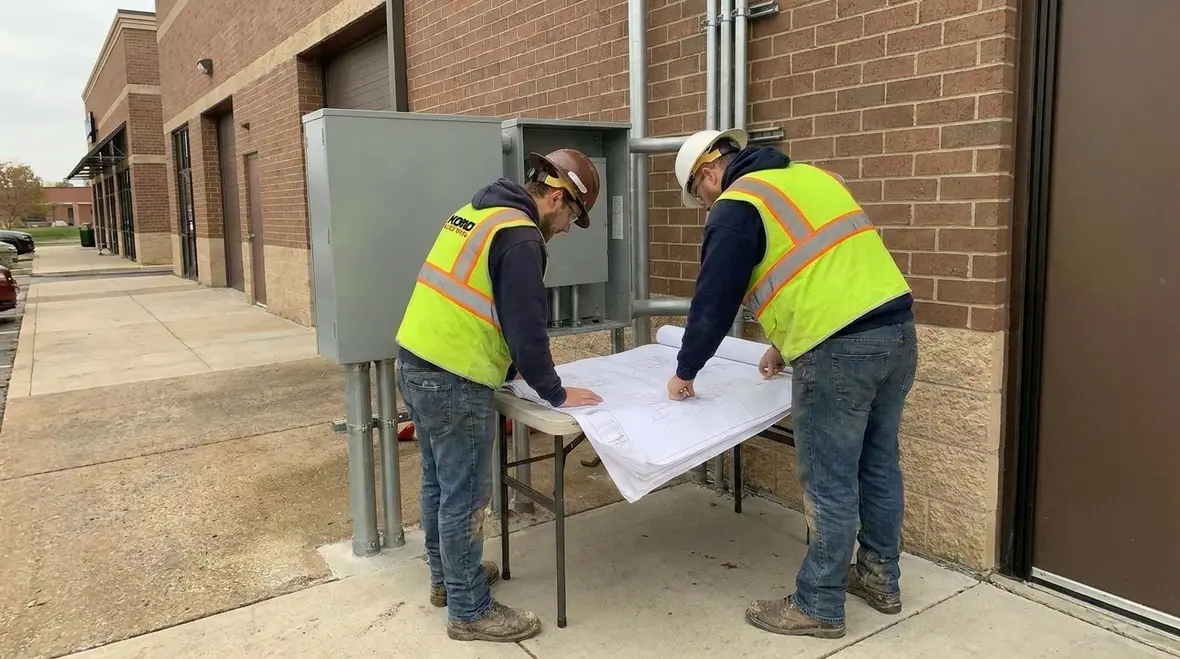
NEC outside branch circuits scope in real commercial sites
At commercial and industrial facilities, wiring outside often serves more than lighting. It powers HVAC disconnects, outdoor receptacles, site equipment, and sometimes auxiliary loads that support operations. Therefore, the outside portion must meet rules that protect conductors from physical damage, moisture, corrosion, and heat in the places where conditions change fast.
When contractors rush, they often assume outdoor cable just needs “good conduit.” However, 225.1 and related NEC sections require proper system classification and installation methods for the outside portion of the distribution. As a result, a compliant design depends on how the wiring is run, how it is protected, and how it connects back indoors.
We see the benefits of doing this early during planning and during electrical upgrades. When engineers, electricians, and facility managers align on the outside circuit scope, it reduces rework during rough ins and helps avoid late surprises during inspection. Nobody enjoys spending an afternoon unburying conduits like it is a treasure hunt for the wrong prize.
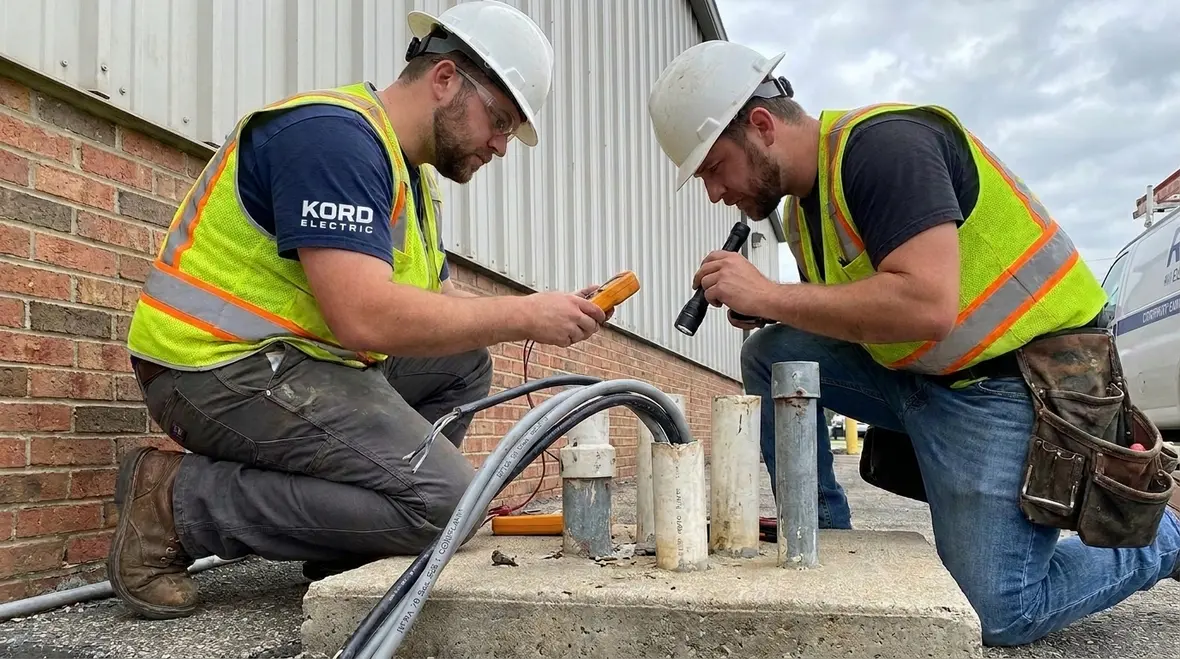
If your team wants a deeper foundation in how the broader National Electrical Code shapes decisions in these areas, you can pair this article with Kord Electric’s guide to the 2026 NEC, Understanding NFPA 70: The National Electrical Code Explained for 2026, and with practical primers such as their article on how to read NFPA 70 in commercial buildings.
How teams decide what counts as “outside” for branch circuits
Determining the right scope for outside branch circuits scope involves more than looking at a line on a drawing. Teams must evaluate the path, the transition points, and the equipment the wiring serves. For example, a run that begins outdoors and transitions to the interior must follow the correct code rules at each segment.
Meanwhile, jobs often involve multiple feeding arrangements and equipment locations. Therefore, a facility can have outdoor wiring that falls under different rules depending on the source type and how the wiring system functions. If a team treats all outside conductors as a single category, compliance can slip.
Our technicians handle this by using a structured review process. They map the conductor path, identify connection points, and confirm where each segment belongs in the NEC framework. Then they document the rationale so the facility can maintain the system later, without losing the logic that supports it.
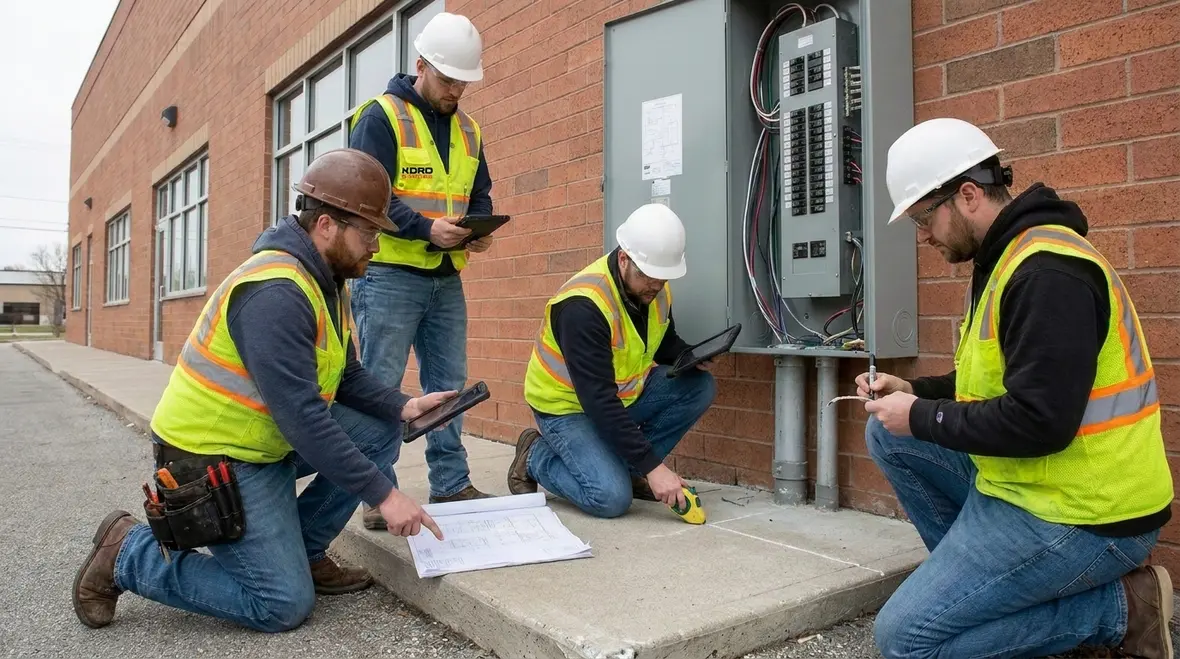
Common compliance mistakes we prevent during design and service
Most problems do not start with bad intentions. They start with assumptions, shortcuts, and the fear of looking closely at a spec. In commercial and industrial settings, even small mistakes can create big downtime risks.
Here are frequent issues our team helps prevent when dealing with the outside wiring rules tied to NFPA 70:
- Misclassification of circuit type that causes the wrong installation rules to apply
- Improper protection of conductors against physical damage in areas where equipment traffic happens
- Conduit and routing choices that ignore moisture, corrosion, or burial conditions
- Unclear transition details between outside runs and indoor connections that complicate inspections
- Missing documentation that makes later service work slower for the facility team
To keep it calm, we explain the decision path step by step. Our expert service staff does not just “mark up drawings.” We walk through how the NEC sections connect, and we show what evidence supports the classification. It is less like magic and more like math, except the math keeps people safe.
NEC 225.1 ties into the rest of the code, not just one section
Section 225.1 acts like a map legend. It helps define the scope so the job team can apply the correct rules elsewhere in the NEC. Therefore, a compliant system uses multiple code concepts together: wiring methods, equipment location, protection strategies, and the way conductors connect to terminations and loads.
For major property buildings, especially those tied into critical infrastructure or high operating schedules, the consequences of missing one rule can include nuisance failures, worn equipment, or a costly correction at a bad time. That is why we coordinate across design intent and on site installation. We keep the facility’s needs front and center: reliability, safe maintenance, and a system that inspectors can verify.
And yes, we keep the process practical. If a building runs on a tight schedule, we plan service windows and coordinate work to avoid interrupting operations. We do not treat compliance like a paper exercise. We treat it like a real world operating system for the power side of the facility.

For facility leaders planning larger projects that go beyond a single outside run, it can help to zoom out and review how electrical system design, upgrades, and fire prevention fit together. Kord Electric’s articles on topics like building electrical system design for commercial facilities, modern electrical systems for commercial buildings, and data-driven electrical design for commercial and industrial projects show how NFPA 70 scope decisions align with long term reliability goals.
Two column guidance for planning outside wiring scope reviews
What we verify before install
- Power source and feeding arrangement
- Outside run length, routing, and environment
- Transition points to indoor systems
- Equipment served by the outside wiring
- Conductor protection needs
What we document for the facility
- Scope classification logic tied to NEC structure
- Installation method details for inspection
- As built routing notes for future service
- Recommended maintenance checks
- Clear points of responsibility
FAQ about NFPA 70 and outside branch circuit scope
Why outside branch circuit scope and broader system planning go together
Outside branch circuits do not live in isolation. They connect to feeders, panels, overcurrent devices, and equipment that all have their own rules and operating expectations. When a facility team treats NEC outside branch circuits scope as part of a complete power strategy, it gets easier to plan upgrades, coordinate shutdowns, and link work on site to long term reliability goals.
For example, when Kord Electric plans a renovation or system refresh, we often pair the scope review for outside runs with a broader look at electrical infrastructure upgrades and fire prevention practices. That might include reviewing panel condition, grounding and bonding behavior, arc flash risk, and how distribution paths support new loads or automation systems. Instead of treating outside conduits as a minor detail, we treat them as part of the building’s electrical backbone.
This mindset pays off when projects move fast. If a tenant improvement or process upgrade requires new exterior equipment, the outside wiring scope can be updated alongside panel schedules, protective device settings, and labeling. The result is a cleaner story for inspectors and a more predictable operating environment for the facility team.
Owners and operators who want to see how this approach plays out across an entire property can explore Kord Electric’s broader resources on commercial electrical systems, electrical infrastructure upgrade planning, and fire prevention in commercial electrical systems, which translate NEC and related standards into everyday decisions about routing, protection, and maintenance.
When to bring in Kord Electric for NEC 225.1 and outside wiring decisions
Some teams call for help only when a project is already under construction and an inspector raises questions about outside branch circuits. We prefer to step in earlier. When we join during planning or early design, our technicians and expert service staff can map the NEC outside branch circuits scope, confirm the right wiring methods, and help select routing options that respect both the code and the site’s real conditions.
We also support facilities during change driven events: adding new exterior equipment, relocating services, reworking site lighting, or upgrading distribution to support modern systems. In each case, we start by asking how the power reaches the load, where it travels outdoors, and which NEC sections control that path. Then we document the logic so that the next project, or the next inspection, can build on a clear foundation instead of guesswork.
For properties across the region that need both code conscious planning and field proven implementation, Kord Electric’s dedicated Los Angeles County electrical services bring together design, installation, and maintenance support. That way, the same team that explains NEC 225.1 in plain language can also pull conduit, terminate conductors, and stand beside you when it is time for inspection.
Conclusion: call Kord Electric before the next outdoor run gets complicated
When a facility team understands NFPA 70 Section 225.1, outside wiring stops being a mystery and becomes a controlled, verifiable system. Kord Electric works with commercial and industrial buildings to classify outside wiring correctly, plan safe installations, and support inspections with clear documentation. If you are upgrading power feeds, adding site equipment, or fixing an outdoor wiring issue, call us now. We will send our technicians and expert service staff to review your scope, then build a compliant plan you can trust.
Pairing a clear NEC outside branch circuits scope with smart system planning today helps prevent rushed fixes, unplanned shutdowns, and confusing inspections tomorrow. A short conversation with our team can turn a complex set of outside runs into a straightforward, code aligned design that keeps your facility operating the way it should.
If you want to learn more before your next project, we also recommend exploring Kord Electric’s broader NEC resources on their blog, including in depth coverage of NEC branch circuit rules, remote control and signaling requirements, and practical guides to reading NFPA 70 in fast moving commercial environments.


