NEC Feeder GFCI Personnel Protection for Section 215.9
When a commercial or industrial facility needs safer power on feeders, we focus on NEC feeder GFCI personnel protection as part of a bigger plan, not a last minute patch. In the real world, that plan starts with understanding NFPA 70 Section 215.9 and then translating it into field ready steps. Our technicians at Kord Electric do that work with care, and our expert service staff explains the “why” in plain terms, so people do not feel like they are reading a mystery novel written in code. After all, nobody wants to learn electrical rules the hard way, and nobody needs that plot twist mid shift.
What NFPA 70 Section 215.9 requires for GFCI on feeders
NFPA 70 Section 215.9 addresses GFCI protection for feeders. The goal is simple: when certain conditions happen, the system should reduce the risk of shock. Specifically, it calls for GFCI protection where the NEC places that duty on feeder circuits. However, the practical impact matters more than the words on paper. In commercial and industrial settings, feeders often serve groups of loads across long distances. That means a fault can travel farther, and it can do more damage before anyone notices.
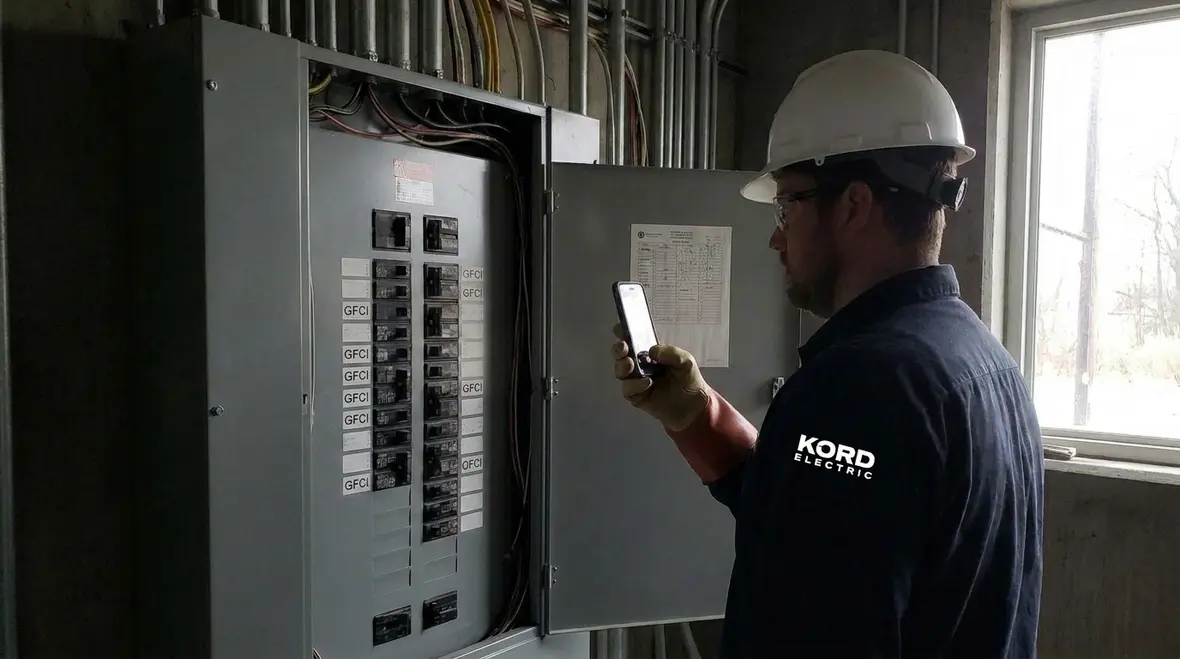
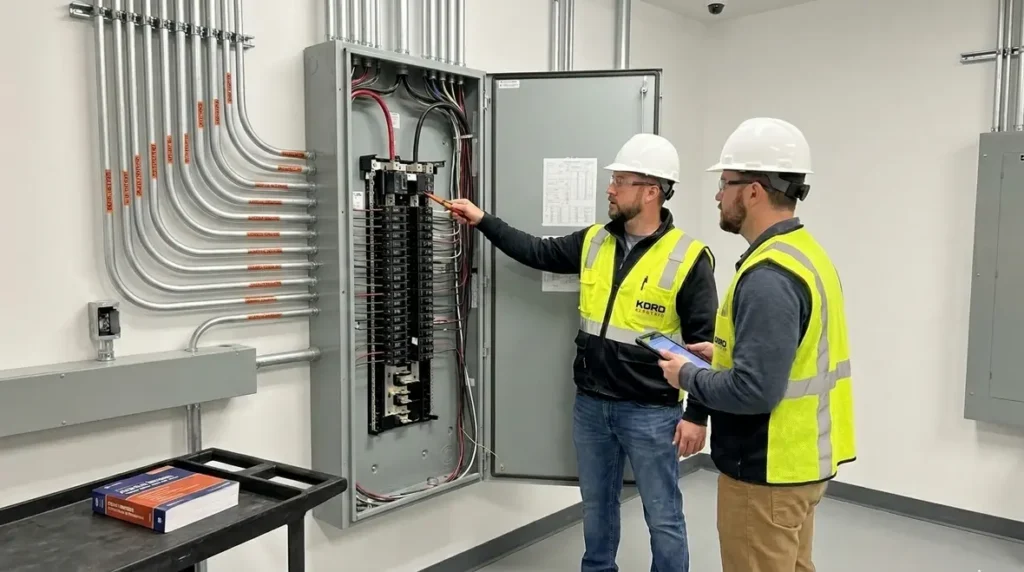
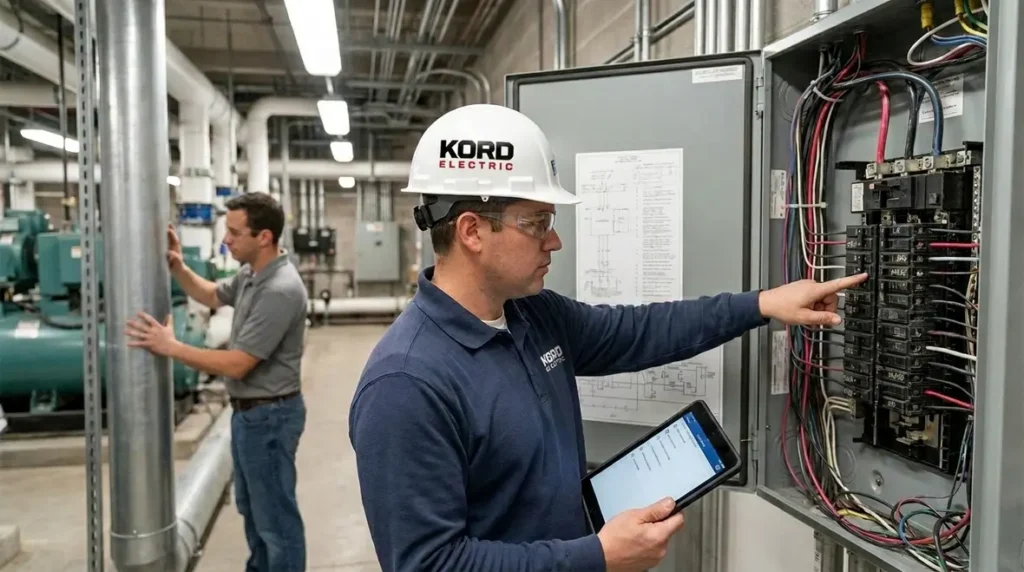
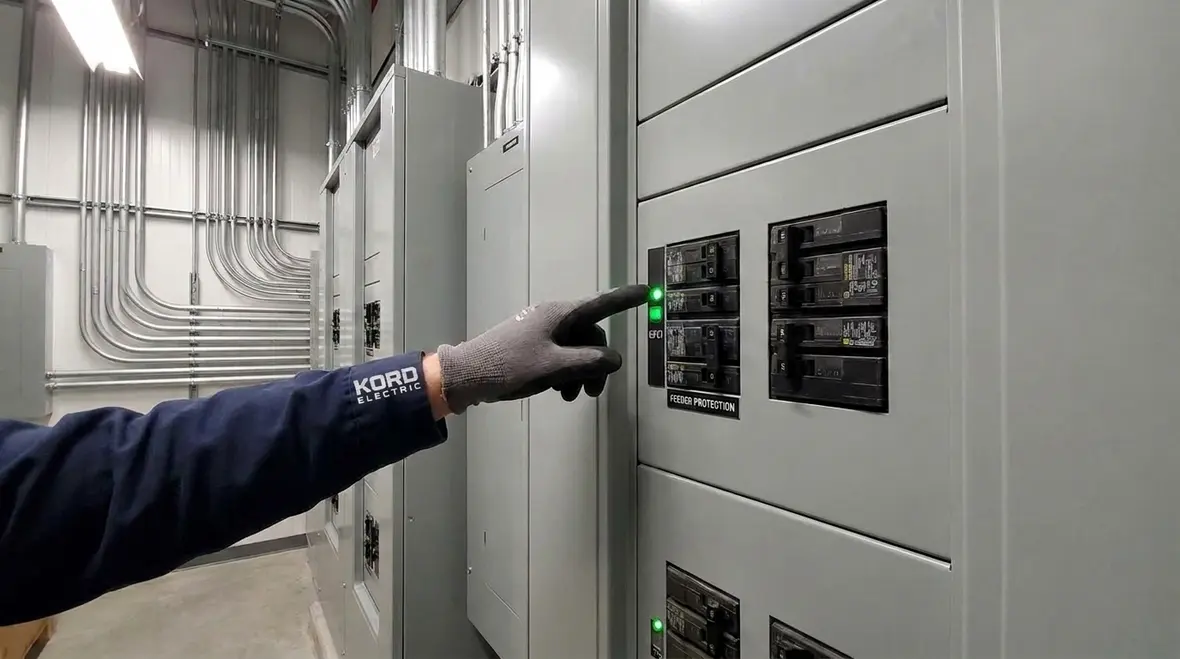
Therefore, engineers and electrical contractors typically design these systems with fault detection and fast action in mind. Additionally, when the facility has wet locations, construction zones, or areas where workers could be exposed, the value of NEC feeder GFCI personnel protection becomes obvious. Our team in the Kord Electric service network looks at the facility layout, the load types, and the operating routine, then we help align the design with what Section 215.9 expects.
And yes, sometimes this requirement feels like it exists just to keep electricians humble. But that humility usually pays off when a real fault occurs and the protection acts like it was meant to.
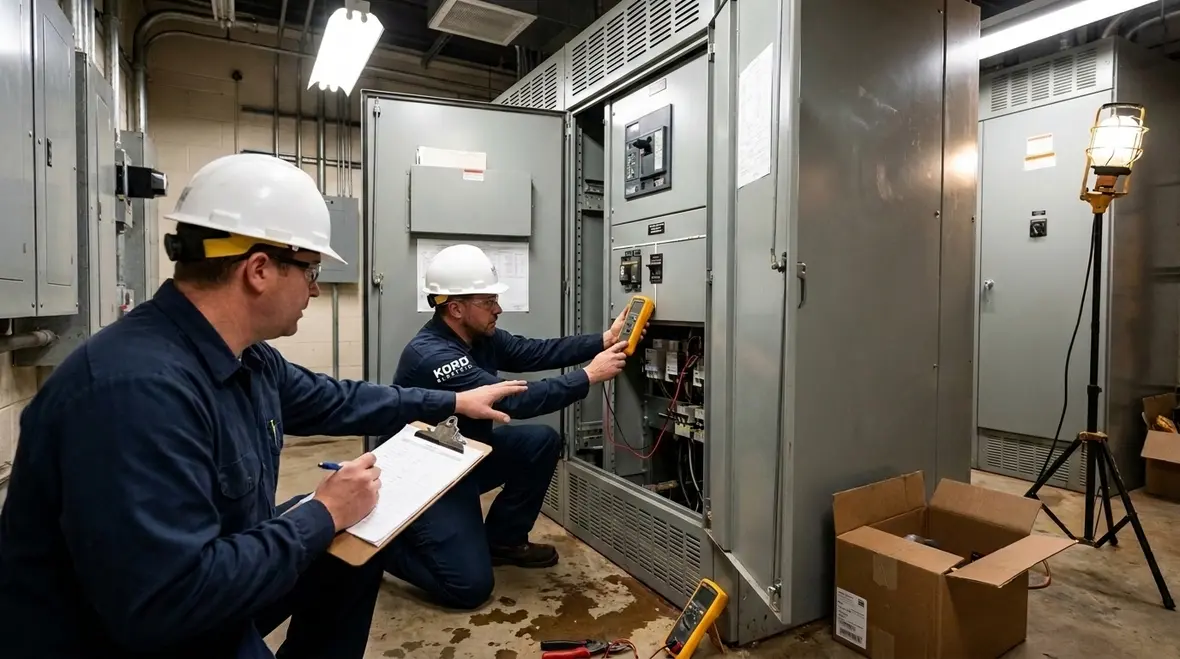
Why feeder GFCI matters more than people think
Many teams focus on protection at the outlet or equipment level. That approach helps, and it can be correct in many cases. Still, a feeder is the path that feeds multiple circuits and loads, often across multiple rooms, yards, or zones. As a result, protection needs to work at the right level, and it needs to act quickly.
Furthermore, in bigger facilities, you often deal with changing work patterns. One day a crew is using temporary equipment. The next day maintenance connects new loads. Meanwhile, water exposure can come from weather, cleaning, process leaks, or condensation. When conditions shift, the design should not become guesswork. That is where NEC feeder GFCI personnel protection plays a key role in reducing shock hazards across feeder circuits.
Our technicians also explain a point that surprises some people. GFCI protection is not just about “meeting code.” It also supports safer troubleshooting. When someone calls for help, the service staff can isolate issues more confidently. That saves time, and time is money in major property buildings.

How we plan GFCI protection without disrupting operations
Commercial and industrial facilities run on schedules. So when electrical upgrades happen, we plan them to protect both workers and production. Kord Electric builds the path forward around real constraints, including power downtime limits, access to switchgear, and coordination with facility operations.
To keep the process smooth, our expert service staff typically starts with an assessment. Then we map the feeder circuits, review the loads served, and identify where shock risk changes throughout the day. Next, we coordinate with the existing protective device lineup. After that, we confirm the wiring method, grounding path, and the expected behavior during fault conditions.
At this stage, we also address practical details that matter in the field. For example, where the facility uses multiple work zones, crews might connect or disconnect equipment. In those cases, the protection strategy needs to match how the feeders operate, not just how they look on a one page diagram.
In short, we treat GFCI design as a living system. It gets verified, documented, and put into service in a way that keeps the facility running.

Where the risk shows up: wet areas, work zones, and changing conditions
NFPA 70 does not talk in vague terms, but in the field, the “why” can be hard to spot until someone walks the site. That is why our technicians use a walk through approach, especially for buildings with multiple occupancy areas, outdoor equipment, or process spaces. Then we connect what we see to the protection approach required under Section 215.9.
Wet locations are an obvious factor. However, exposure can also show up as splashing, condensation, humidity near process equipment, or cleaning activities. Moreover, construction or maintenance work often changes risk fast. An area that feels safe today might become a temporary setup zone tomorrow, with hoses, cords, and portable tools.
In these settings, NEC feeder GFCI personnel protection helps the system respond to conditions that could put people in danger. It does not replace safe work practices, and it does not let teams ignore procedures. Instead, it adds an important layer of shock risk control.
And if you are thinking, “We have never had an incident,” that is great. Still, incidents have a way of scheduling themselves without asking permission.
Commissioning and verification: making sure it works when it counts
Even when a design looks right, verification matters. That is why we do not treat testing as paperwork. We treat it as proof. Our service staff confirms that the installed GFCI protection performs as expected under the conditions the system will face.
First, we check device compatibility and correct installation. Next, we verify wiring and grounding connections. Then we confirm proper operation through the facility’s expected workflow, not just a bare bench test. When needed, we also coordinate with the facility team to ensure the testing plan stays safe and controlled.
Additionally, we document results and provide clear guidance on how operators should handle routine checks. This step matters in commercial and industrial facilities because the person responsible for day to day operations might not be the same person who performed the install.
Just like in a good movie, the best scenes happen when the audience does not notice the hard work behind the curtain. Verification is that behind the curtain work, and it helps protection do its job.
How Kord Electric supports compliance for major property buildings
Kord Electric focuses on commercial and industrial facilities and major property buildings. So our approach avoids one size fits all thinking. We understand that each site has its own feeder layout, its own equipment mix, and its own risk profile. And we know that compliance affects more than the electrical room. It affects the people who work the site and the teams who operate the building.
To support compliance, we also connect electrical code understanding to real service capability. For example, our team supports electrical design conversations, installation support, and ongoing service. Meanwhile, our broader Kord Electric and Kord Fire resources support the bigger picture of safety and code alignment, including understanding the NEC framework used across years and editions. For facility teams who want a deeper background on how the National Electrical Code shapes today’s projects, we often recommend pairing this article with the related Kord Electric resource on understanding NFPA 70 for 2026, which walks through how the code connects to real designs and upgrades.
As the National Electrical Code evolves, so does the need for steady, reliable field support. In that spirit, our technicians help facility leaders keep their electrical safety program organized and current, with a clear focus on what matters most.
If your building is planning broader code aligned upgrades beyond feeder protection, our team also supports electrical code upgrade consulting for renovations and ongoing NFPA 70 based maintenance programs. That way, feeder GFCI work does not sit alone. It becomes part of a coordinated approach to power distribution, inspection readiness, and long term safety.
FAQ: NFPA 70 Section 215.9 and feeder GFCI
FAQ: short answers for featured snippets
Is Section 215.9 required for all feeders?
No. It applies where the NEC calls for GFCI protection based on the circuit and location conditions. Some feeders will not require GFCI protection, while others serving higher risk areas or specific loads must meet Section 215.9 expectations.
What is the purpose of feeder GFCI protection?
It helps reduce shock hazards by triggering protection when certain fault conditions occur. By acting at the feeder level, it can protect multiple downstream circuits and work areas from dangerous leakage currents that might not be obvious until someone is already at risk.
Can our team rely on outlet GFCI instead?
Sometimes outlet protection helps, but Section 215.9 focuses on feeder circuits where the NEC requires feeder level protection. Outlet level devices cannot always see or clear the same fault patterns as a feeder device that watches a broader portion of the system.
How long does commissioning take?
It depends on the facility size, access, and circuit count, but we plan it to minimize operational disruption. For major property buildings, commissioning is scheduled around production windows so testing feels like a controlled exercise, not a surprise outage.
CTA: get a clear plan for your facility
If your commercial or industrial building needs feeder GFCI protection planning, Kord Electric can help you move from code language to safe, working protection. Our technicians and expert service staff explain the details, coordinate a practical plan, and verify performance so your team gets real value, not just a checklist. Contact Kord Electric today and let us review your feeder circuits, site conditions, and compliance needs with the calm confidence you deserve. Then you can get back to running your facility, not fighting electrical surprises.
For facility leaders in Southern California, our Los Angeles County commercial and industrial electrical services team can integrate NEC feeder GFCI personnel protection into broader projects like panel upgrades, distribution changes, and code driven renovations, so each step of the electrical system moves forward together.
If your team wants to connect this work to a wider NEC strategy, you can also review related Kord Electric guidance on how to read NFPA 70 and the 2026 NEC application requirements. Together, those resources and a focused field plan help you keep protection, documentation, and inspections aligned instead of scattered across separate conversations.