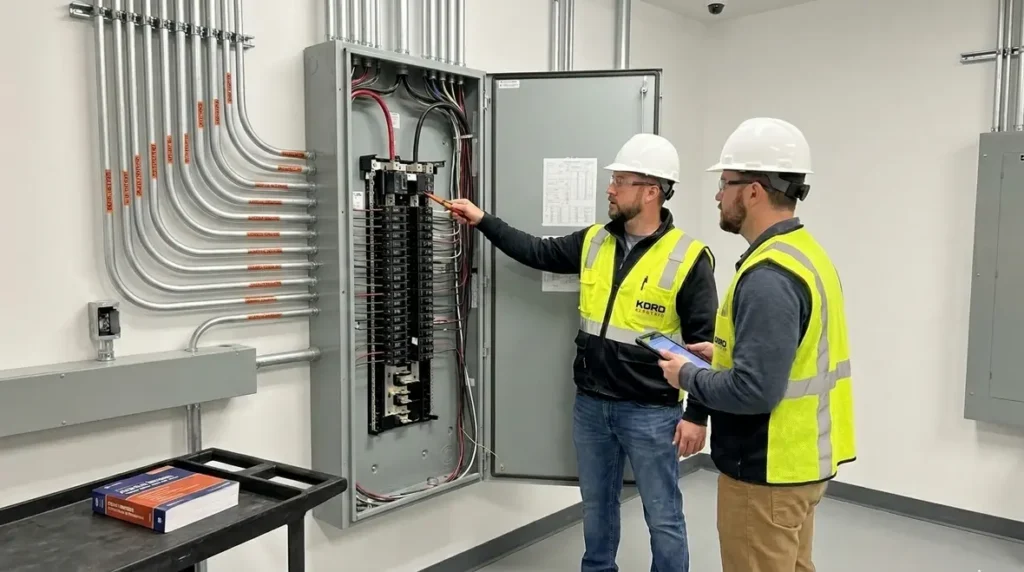
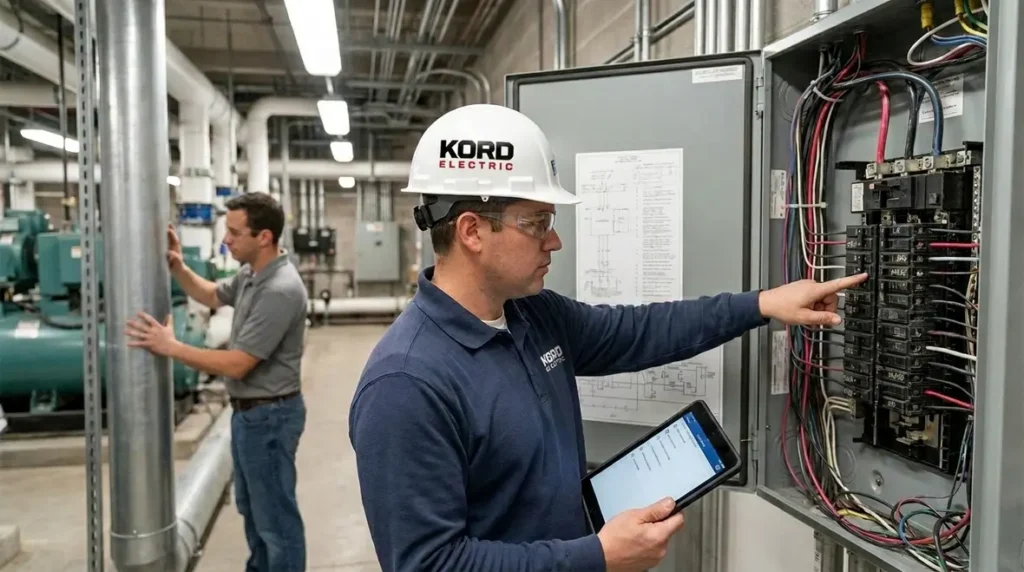
NFPA 70 Section 215.6 NEC Feeder Equipment Grounding Conductor
Kord Electric helps commercial and industrial facilities keep power systems safe, reliable, and code aligned. In our work, we often see questions about the NEC feeder equipment grounding conductor, especially when feeders feed switchgear, panels, and other grounded equipment. In this article, a Kord Electric expert service team explains how NFPA 70 Section 215.6 shapes the way facilities handle the grounding path for feeder equipment. Because when grounding is done right, the whole system behaves better. And when it is done wrong, the only thing that behaves is panic. As we walk through the rules, we will keep it practical, focused on real job sites, and geared to major property buildings and commercial electrical rooms.
NFPA 70 Section 215.6 in plain terms for commercial electrical rooms
NFPA 70, also called the NEC, sets electrical safety rules that govern how equipment gets wired and protected. Section 215.6 addresses the grounding conductor for feeder equipment. In simple terms, we treat the feeder equipment grounding connection as a key part of the fault current path. When a fault occurs, the system needs a dependable route for current to travel back to the source so protective devices can operate quickly.
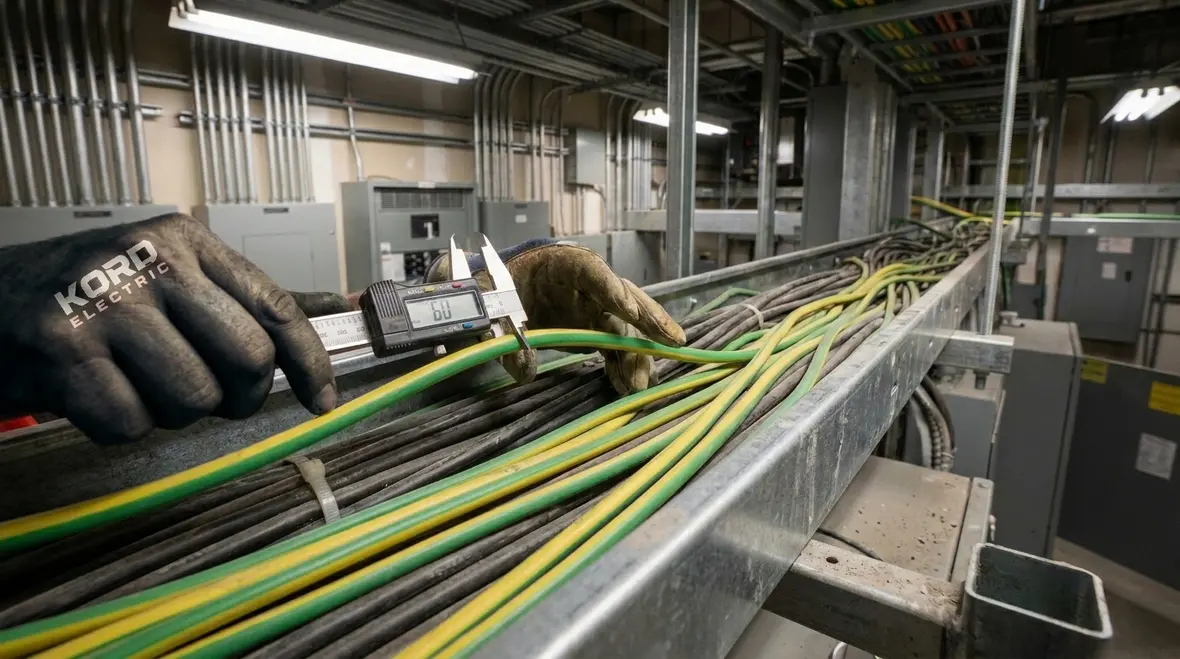
Now, here is the calm part. We do not just “add a ground and call it good.” Instead, we make sure the feeder equipment grounding conductor meets the requirements for size, continuity, connection points, and routing. Therefore, the grounding conductor is not an afterthought. It is part of how code demands the electrical system respond during abnormal conditions.
And yes, lightning does not care if the conduit is pretty. It cares if the grounding path exists and performs.
What the NEC feeder equipment grounding conductor actually does during a fault
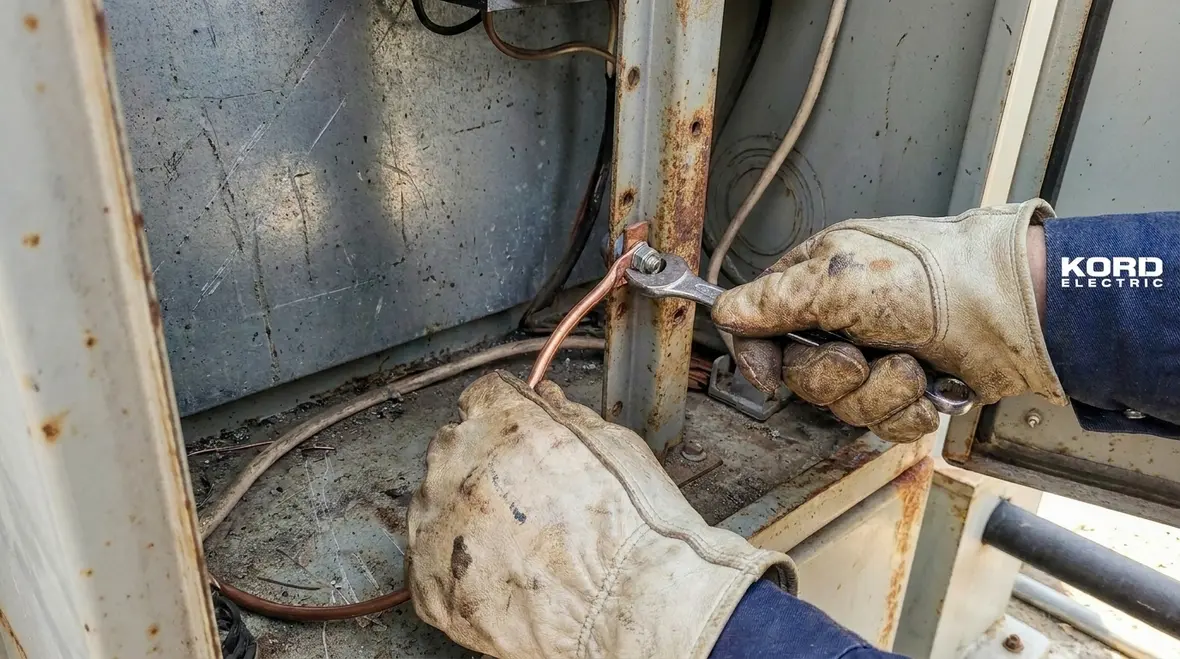
Think of the feeder equipment grounding conductor as the system’s emergency exit for electrical faults. When insulation fails, conductors short, or an equipment case becomes energized, a fault current needs a low impedance path. Consequently, protective devices like breakers and fuses trip, and the energized surface does not stay energized long enough to injure a person or damage a facility asset.
Meanwhile, grounding also supports stable system voltage under normal operation. It helps limit the rise in voltage on metal parts that can be touched. Additionally, a properly grounded system makes bonding and grounding effective across enclosures, raceways, and equipment frames. As a result, the facility reduces risks tied to stray voltage and unsafe touch potential.
Kord Electric technicians, and our seasoned expert service staff, explain it this way for our customers: the grounding conductor does not “work” when everything is fine. It works when something goes wrong. And because we test and document our work, we help ensure it works when you need it most.
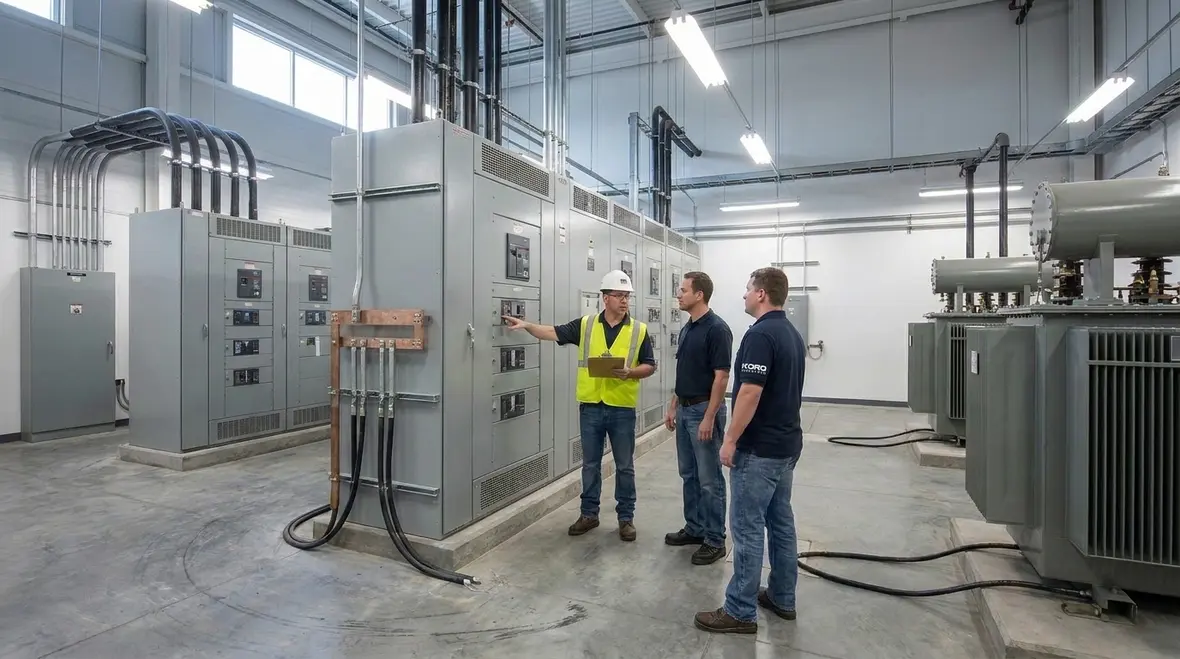
How Section 215.6 guides bonding and grounding for feeder equipment
Section 215.6 focuses on the feeder equipment grounding conductor, but it also ties into how bonding and grounding operate together throughout the installation. First, we identify what the feeder supplies, such as switchboards, panelboards, motor control centers, and other major equipment. Then we determine where the grounding system connects so the equipment metal parts stay at the proper reference.
Next, we follow the installation rules for the grounding conductor. That includes making sure the conductor is correctly sized, properly installed, and securely connected. Moreover, we treat terminations with care. A loose lug can act like a bad handshake. It looks fine until it suddenly is not.
Finally, we coordinate with other grounding elements already in the project. For example, metallic raceways, bonding jumpers, and equipment grounding conductors must align with the system design. Therefore, we avoid mixing methods that create unreliable contact points or discontinuities.
Sizing and conductor path: where jobs usually go sideways
Many commercial and industrial electrical projects fail compliance not because someone ignored grounding on purpose, but because of practical mistakes made under schedule pressure. In our experience, the most common trouble spots involve sizing, conductor routing, and connection quality.
First, we verify the grounding conductor size based on the NEC direction for feeder equipment grounding conductors. If the size does not match the requirement, then the fault current path can be less capable than intended. Then protective devices may take longer to clear faults, and that is when heat, damage, and hazards become bigger problems.
Second, we check the conductor path for continuity and physical protection. In many buildings, we route through crowded electrical rooms, cable trays, and tight conduit runs. If the conductor gets cut, pinched, or terminated over paint or corrosion, continuity suffers. Consequently, we clean contact surfaces, apply proper connection practices, and confirm secure torque on terminations.
Third, we look for discontinuities created by modifications. Construction changes happen. Equipment gets added. A conduit gets rerouted. A cable tray gets expanded. As soon as people start “just making it fit,” grounding can drift out of alignment unless someone reviews the whole grounding approach.
Kord Electric stays methodical. We document, we inspect, and we make sure the grounding conductor you install today still connects the same way tomorrow.
Coordination with commercial equipment and property scale systems
Major property buildings and large commercial facilities rarely have simple power layouts. They often include multiple feeders, transformers, switchboards, and distributed panelboards that serve life safety loads, mechanical systems, tenant spaces, and critical operations. Therefore, the feeder equipment grounding conductor requirements become part of a bigger plan.
In practice, we coordinate grounding across equipment types so the facility keeps consistent bonding practices. We also align with how the facility manages main service grounding, separately derived systems, and grounding electrode connections. When we design or upgrade, we make sure feeder equipment grounding conductors integrate cleanly with the existing grounding system.
Now, if you are thinking, “We can wing it, because the building is already old,” let us pause there. Old does not mean safe. Old means tested by time, sure, but also tested by risk. Our expert service staff treats existing systems with respect and careful assessment, then updates what the code and safety require.
For those who need broader context on the NEC and how it affects real installations, Kord Electric points crews to NEC explanations and code guidance written for professionals. Our blog on how to read NFPA 70 and understand the National Electrical Code helps teams see how individual requirements like Section 215.6 fit into the wider code structure. And for fire and life safety impacts around electrical systems, Kord Fire’s NEC overview also helps frame why NEC compliance matters for more than just passing inspections.
Installation checklist for compliance-minded teams
When our technicians work on commercial and industrial facilities, we use a focused set of checks that helps teams install the right feeder equipment grounding conductor the first time.
We identify the feeder equipment and confirm where the grounding connection must land for reliable fault clearing.
We confirm conductor sizing based on the NEC feeder equipment grounding conductor requirements for the feeder system.
We verify continuity from the equipment grounding point back to the system grounding connection path.
We route and protect the grounding conductor so it cannot be damaged by sharp edges, physical impact, or construction work.
We prep terminations properly by removing barriers like paint, scale, or corrosion that block good contact.
We tighten lugs and terminations to proper standards and we verify identification so future maintenance stays safe.
We inspect and document the work for each feeder equipment assembly, especially in switchgear and switchboard areas.
Then, after installation, we confirm the system behaves as intended through our commissioning checks and final safety reviews. In other words, we do not stop at “it is connected.” We keep going until it is installed correctly, documented, and ready for operation.
How NEC feeder equipment grounding conductor usage ties to broader facility planning
In many facilities, NEC feeder equipment grounding conductor usage sits at the intersection of design intent, construction realities, and long term maintenance. When grounding decisions stay isolated from the big picture, facilities end up with mismatched methods, undocumented changes, and grounding paths that only make sense to the person who installed them years ago.
Kord Electric treats grounding as part of the facility’s electrical strategy, not a checkbox at the end of a drawing set. That means we align Section 215.6 requirements with feeder layouts, overcurrent protection, and fault studies, and we keep documentation readable so future upgrades do not undo today’s good work.
On projects where we support building electrical system design and long range planning, we connect these grounding decisions to panel schedules, equipment labeling, and operational procedures. That way, when a technician walks into a commercial electrical room during a long night shift, they can see where the grounding path runs, how feeders are arranged, and what must stay untouched when the system is under load.
Because many of these projects take place across large property portfolios, our team often coordinates grounding practices with regional standards, including our dedicated Los Angeles County electrical services team. That keeps grounding and bonding consistent from site to site, even when different crews and schedules are involved.
FAQ about NFPA 70 Section 215.6 and feeder grounding
Call Kord Electric for feeder grounding support in your facility
If your commercial or industrial facility needs feeder equipment grounding work that holds up under real inspection and real operation, Kord Electric is ready. Our technicians and expert service staff verify conductor sizing, routing, continuity, and terminations, and we document our findings so your team can move with confidence.
For facilities that want more than a one-off repair, our broader service approach connects grounding and bonding with system design, preventive maintenance, and reliability planning. Whether you are mapping out a new project or reviewing existing electrical rooms, our team can tie NEC feeder equipment grounding conductor requirements to practical decisions about routing, labeling, and testing.
If you operate across Southern California and want a partner who understands both code language and real field conditions, we also support facilities through our regional Los Angeles County electrical services team. We bring the same focus on grounding, bonding, and documentation to everything from upgrades and expansions to complex, zero-downtime work in critical environments.
Reach out to us for an assessment, an upgrade plan, or installation support. Let us help your power system behave like it should, not like it is on a sitcom.