NFPA 70 Section 215.4 NEC Feeder Minimum Rating Size
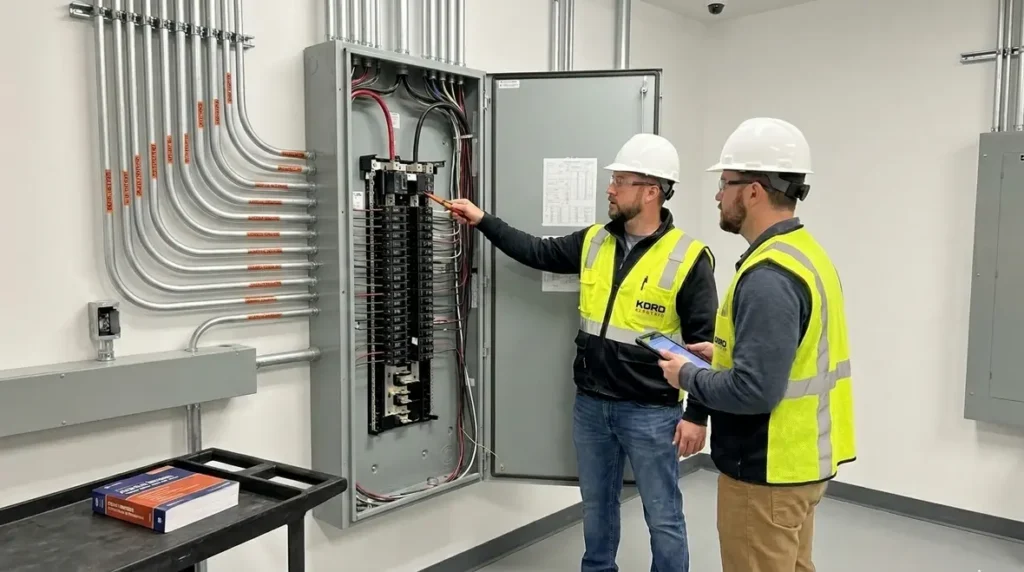
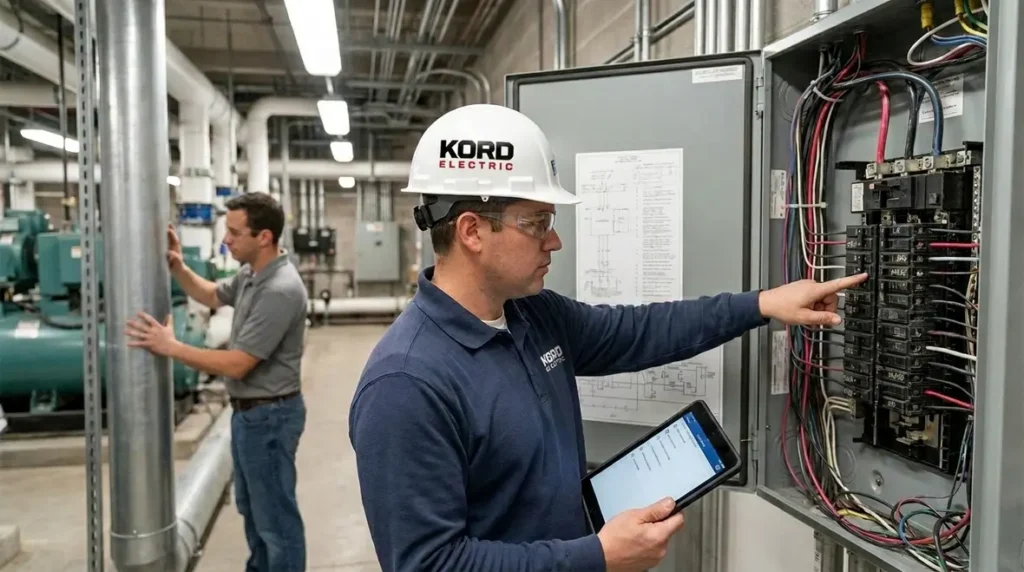
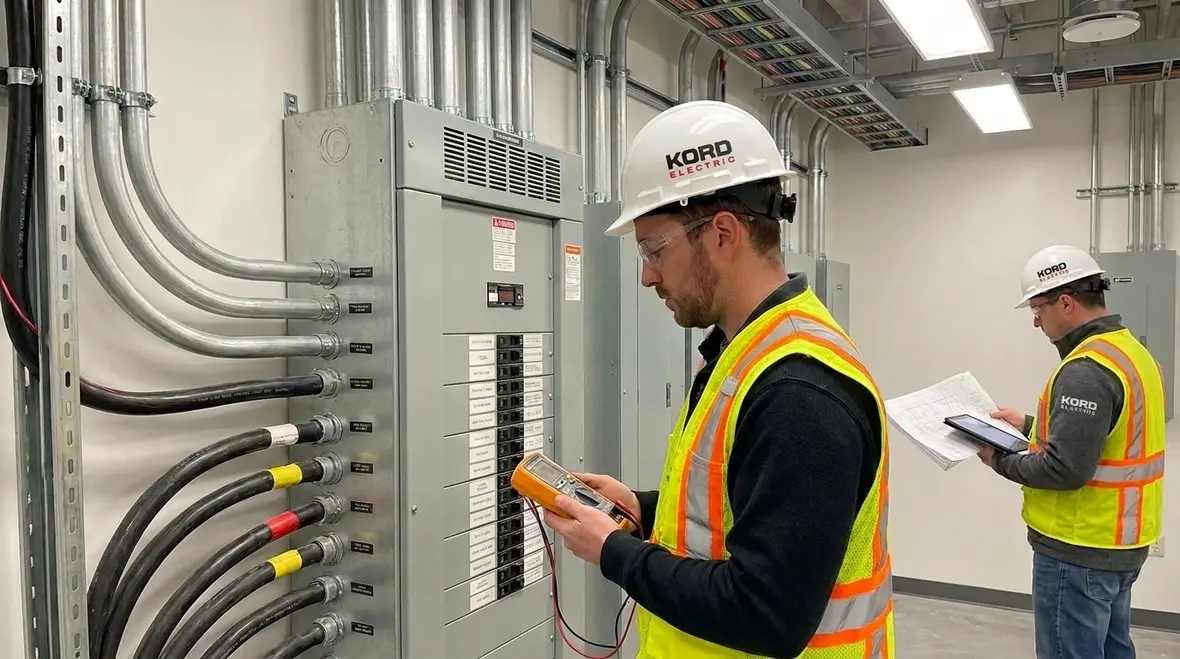
In commercial and industrial facilities, electrical feeders must meet strict rules so equipment runs safely and reliably. At Kord Electric, we pay close attention to NFPA 70 Section 215.4 — NEC feeder minimum rating and size, because this section sets a baseline that many designs depend on. Then, when we confirm calculations in the field, we do not rely on guesswork, we rely on code-backed sizing. If a feeder is undersized, the results can range from nuisance trips to real risk, and nobody wants to find out that their power plan was “good enough” the way a vending machine is “good enough” during a meeting. Our expert service staff explains the why behind each requirement, so owners and site managers understand what we do and why we do it.
NFPA 70 Section 215.4 Explained for Commercial Power Feeds
NFPA 70 Section 215.4 addresses how electrical feeders get their minimum rating and size once conductors and protective devices enter the conversation. In simple terms, we treat this section like the floor of the building’s electrical performance. You can build higher, add margin, or choose components with better ratings, but you cannot go below the minimum values the code requires.
Because we work with commercial and industrial facilities and major property buildings, we often see projects where loads move, equipment gets upgraded later, or operating hours change. As a result, we do not just aim for “compliance on paper.” Instead, we verify that the minimum sizing rules match the duty of the installation and the way the system will be used in real life. Transitioning from design to actual power flow is where many teams get surprised, so our technicians walk through the logic before final installation.

If your facility team wants a bigger-picture orientation to where Section 215.4 sits in the rest of the rulebook, you can pair this discussion with Kord Electric’s guide Understanding NFPA 70: The National Electrical Code Explained for 2026, which walks through how the code updates shape real project planning.
NEC feeder minimum rating and size: what it means in practice
When people hear “feeder minimum rating and size,” they sometimes think it is only about conductor diameter. However, that is only part of the story. Section 215.4 connects the minimum conductor ampacity and the expected load path with the rating of the feeder equipment and overcurrent protection arrangement.
So, we handle it like a chain with multiple links. If one link fails, the chain fails. For instance, even if conductors look large enough at a glance, the feeder rating and protective device coordination must support that conductor’s minimum ampacity under the conditions of the installation. Moreover, the installation conditions matter. Ambient temperature, number of current carrying conductors, conductor insulation type, and raceway fill can change what “minimum” truly means.
In other words, this section stops teams from choosing the smallest conductor that technically fits a simplified calculation and calling it a day. In commercial settings, that shortcut behaves like a TV remote with missing batteries. It might look fine, but the moment you need it, it does not work.
How we size feeders correctly before anyone flips a breaker
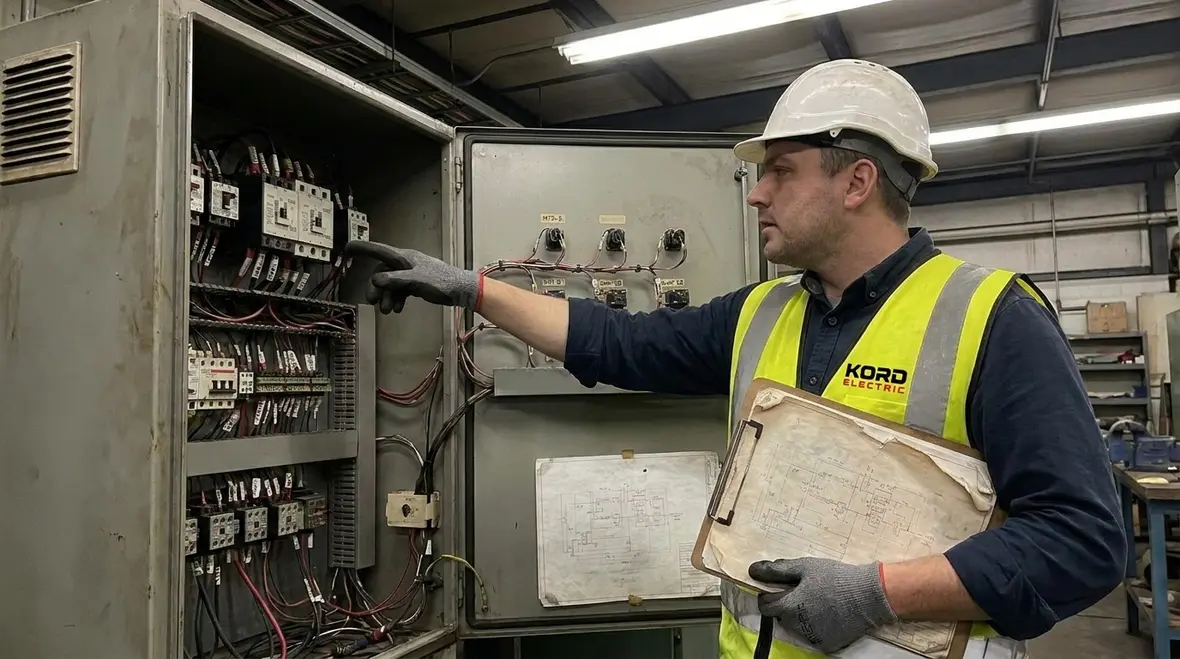
We start with the load picture and work forward. First, our team confirms the intended loads and their operating profiles. Then, we reconcile the equipment requirements with the feeder arrangement. After that, we apply Section 215.4 rules to ensure the feeder conductors and associated equipment meet the NEC feeder minimum rating and size intent.
Next, we verify that the design matches field reality. We ask for information like conduit routes, estimated raceway fill, equipment location, and environmental conditions. From there, we apply the adjustment and correction factors that many projects forget to revisit once plans change.
Finally, we coordinate protection. We confirm the overcurrent device ratings, because feeder sizing and device selection should agree. Our technicians and expert service staff explain coordination in plain language, so stakeholders know that a breaker is not only a switch, it is also a safety system that has to match the conductor and load.
We also connect these feeder decisions to broader NEC planning, using resources like our article on how to read NFPA 70 National Electrical Code so facility managers can see how single sections fit into the full rulebook, not just one project drawing.
Common sizing mistakes we see in commercial and industrial sites
We have toured enough facilities to know where trouble begins. Most mistakes do not come from bad intent. They come from rushed assumptions, old drawings, and the belief that “we did it this way last time.” Then the facility grows, equipment gets added, or a phase gets rebalanced, and the electrical system pays the price.
Here are the most frequent issues our team spots:
- Using minimum ampacity without checking installation conditions, such as conductor grouping and temperature
- Confusing equipment nameplate ratings with feeder minimum requirements, which leads to under sizing in real operation
- Skipping overcurrent coordination checks, so protection does not properly match the conductor and feeder rating
- Reusing feeder sizes across expansions without updating calculations for new loads
- Ignoring record drawing gaps, where the field changes no longer match the design intent
And yes, we have seen the “it passed inspection once” argument. Inspectors judge a specific condition at a specific time. A commercial site is rarely static. We treat each project as its own case, because the code does not run on nostalgia, it runs on safety.
For facilities planning broader electrical changes, articles like our 2026 NEC application requirements guide and NFPA 70 scope show how these “small” sizing decisions tie into the larger picture of code application, inspections, and long-term system behavior.
Why feeder minimum sizing affects safety and reliability long after installation
In major property buildings and industrial plants, the feeder system operates every day, not just on inspection day. When feeder sizing fails the minimum requirements, you can see problems that build over time. For example, a feeder that runs hot can accelerate insulation aging. Heat also increases the likelihood of nuisance alarms and trips, which disrupt production and tenant operations.
From a reliability standpoint, undersizing can cause voltage drops that affect sensitive equipment. That leads to equipment malfunction, shortened component life, and unexpected service calls. From a safety standpoint, the overcurrent system can become less predictable, especially when coordination does not support the conductor and load profile.
To keep this from turning into a long troubleshooting saga, our technicians document the reasoning and the calculations behind the final feeder plan. Then, when changes happen later, we help property managers and electrical contractors update feeder sizing and protection with the same code grounded approach.
This is also where NEC-focused resources like our coverage of industrial power surge protection for facilities and data center NEC planning help facility teams understand how properly sized feeders support protection devices, surge strategies, and critical loads over the life of the system, not just on installation day.
Collaboration between design teams and our expert field staff
We do not treat compliance as a handoff that ends at a drawing set. In commercial and industrial work, coordination across teams saves time and money. So, we stay involved through review, installation, and testing.
When we meet with engineers, electrical contractors, and facility managers, we explain how Section 215.4 ties into the overall feeder plan. We also share what we notice in the field, like where bend radii, conduit fill, and routing details shift the correction factors that impact minimum conductor sizing.
In addition, our expert service staff explains how NFPA 70 and the broader National Electrical Code concepts guide safe installation for new work and upgrades. We keep the discussion grounded, so people do not need a decoder ring to understand it. If someone wants the deep technical details, we can go there, and if they just want the practical answer, we can get there too.
If you want to understand more about how the NEC is organized and why it matters, we point teams to resources on our sites, including Kord Electric and Kordfire content that summarizes NEC concepts for real projects. You can also explore supporting fire and electrical education materials through organizations like firepumps.org, and our colleagues at Kord Fire have published NFPA 70: All About The National Electrical Code (NEC) 2026, which pairs well with this feeder-focused discussion.
FAQ: NFPA 70 Section 215.4 and NEC feeder minimum sizing
Need a feeder sizing review that holds up in the field
If your facility faces a panel upgrade, new production loads, tenant improvements, or a major building expansion, do not gamble with feeder minimum compliance. At Kord Electric, we support commercial and industrial facilities with code grounded design checks, careful installation oversight, and clear explanations from our technicians and expert service staff. We help you avoid the slow burn of reliability issues by confirming feeder sizing and protection before power becomes a problem. Call us today, and let’s size it right the first time.
For organizations planning wider electrical improvements, our dedicated Los Angeles County electrical services overview shows how we combine field proven crews with NEC-focused planning so feeder sizing, branch circuit decisions, and protection strategies all align from the first estimate through final inspection.
When you are ready to connect this NEC feeder minimum rating size discussion with the rest of your code strategy, you can also review Kord Electric’s resources on NFPA 70 scope, branch circuits, and application requirements, and pair them with Kord Fire’s coverage of NFPA 70 so your electrical and fire protection plans move in the same direction from day one.