2026 NEC Application Requirements Guide and NFPA 70 Scope
In the first 100 to 150 words, here is what the 2026 NEC application requirements guide says we should focus on: NFPA 70 sets rules for installations of electrical systems, and Section 90.2 explains what the code covers and when it applies. For commercial and industrial facilities, and for major property buildings, that means your design, install, and inspection decisions should follow the NEC unless a governing authority adopts a different standard. At Kord Electric, we use this guidance as the starting point, so our teams and our expert service staff can translate the code into practical work plans before anyone picks up a screwdriver. And yes, we keep it human, because “code language” can feel like it was written by a robot that never watched a TV show.
NFPA 70 Section 90.2 and how it shapes real projects
NFPA 70 Section 90.2 lays down the scope and limits of the National Electrical Code. It does not try to describe every part of every electrical system in a single sitting. Instead, it tells you what the NEC covers, what situations the code applies to, and how the rules relate to other referenced standards. In other words, Section 90.2 functions like the map legend on a construction site. Without it, you can still build, but you will build with more confusion than confidence.
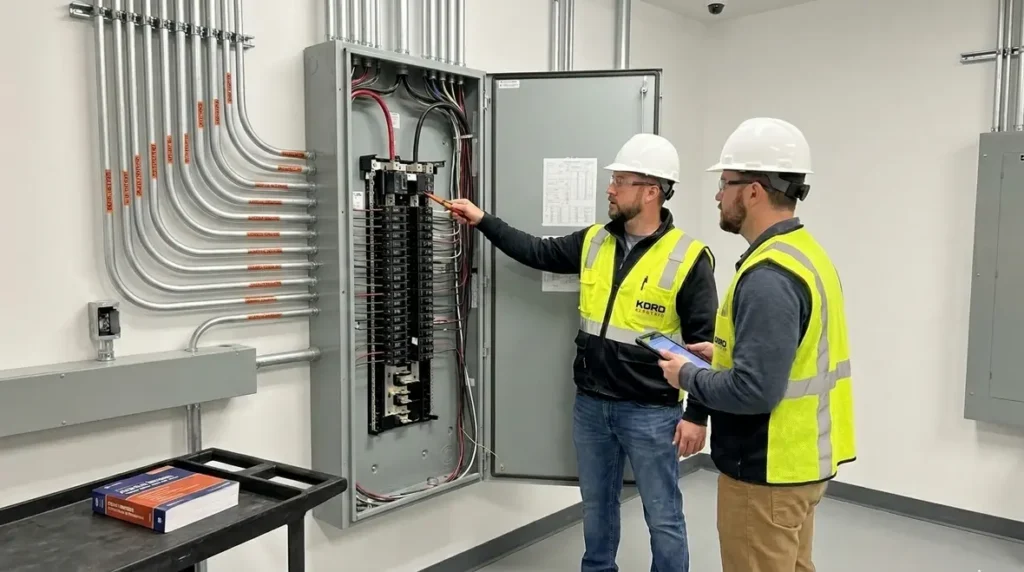
When Kord Electric supports a commercial or industrial project, we start by aligning the plan set with the scope rules first. Then we apply the specific section requirements that match the equipment, wiring methods, and operating conditions. Meanwhile, our technicians explain what the code means for the actual field conditions. So rather than just quoting text, we connect it to what inspectors and owners care about: safe performance, reliable operation, and fewer surprises during turnover.
And if you have ever seen a project go sideways because someone assumed “the code will handle it,” you know the punchline. Codes do not manage your schedules. People do. That is why our service staff stays close to the design and commissioning path.

What the 2026 NEC covers under Section 90.2
Section 90.2 addresses what the NEC applies to and what it does not. It covers electrical design and installation practices for a wide set of premises and systems. However, it also makes clear that some topics may be limited by other rules, jurisdictional adoption, or by the nature of the installation. Therefore, a good approach starts with reading the scope language as a boundary, not as a suggestion.
For commercial and industrial facilities, we look at how the NEC scope interacts with power distribution, emergency systems, service equipment, grounding and bonding expectations, and the way conductors and raceways get installed. Additionally, we consider how a building’s use class changes the risk profile and the inspection expectations. Since major property buildings often include mixed-use zones, we help teams avoid “one-size-fits-all” assumptions.
At Kord Electric, our technicians explain the scope in plain business language. First, we identify the installation elements. Next, we map which NEC parts govern those elements. Finally, we coordinate with the authority having jurisdiction so the requirements guide and the inspection reality stay aligned. That sequence cuts rework and keeps close to the 2026 NEC application requirements guide approach that we use at project start.
If you want a deeper dive into how the National Electrical Code operates across different building types, you can also review our related resource on Understanding NFPA 70: The National Electrical Code Explained for 2026, which pairs well with the scope view in this guide.

Where the NEC applies: buildings, occupancies, and jurisdiction rules
Section 90.2 emphasizes that NEC rules apply where the code has been adopted by a jurisdiction, and that the enforcement details often come through local amendments. In practice, this means the 2026 NEC may apply differently depending on where the project sits and which authority reviews it. So when teams ask, “Does this code section apply to our facility,” we do not answer with guesswork. We check the adoption and the local rules that come with it.
Kord Electric focuses only on commercial and industrial facilities and major property buildings. That focus matters because those projects tend to have complex electrical loads, multiple tenants or operations, and strict uptime needs. As a result, the “where it applies” question becomes a planning issue. For example, a warehouse power distribution plan differs from a hospital-like risk profile, and a major property building with life safety systems needs careful alignment between design intent and inspection expectations.
To support our clients, our expert service staff reviews the scope and then helps draft internal requirements for submittals, installation documentation, and commissioning steps. Moreover, we help the project team anticipate inspection focus areas so the electrical work does not get treated like a surprise guest at the last minute.
And yes, inspection checklists can feel like pop quizzes. However, when teams follow scope guidance early, the quiz turns into a study guide. We prefer that version.

Section 90.2 boundaries: what it covers versus what it references
Section 90.2 also helps explain how the NEC handles referenced standards and other rules. This matters because electrical compliance does not live in one document. It lives in a stack. The NEC references other safety documents, equipment standards, and installation rules that may affect how components perform in the field.
So when Kord Electric works on a commercial or industrial project, we treat Section 90.2 as the starting framework that tells us how to interpret referenced material. Then we build a consistent compliance strategy across design, procurement, installation, and acceptance testing. This keeps the requirements clear for everyone: engineers, contractors, commissioning agents, and inspectors.
Our technicians explain the boundaries during coordination meetings. Instead of arguing about “what we think,” we compare the referenced requirements to the proposed equipment and methods. In addition, we confirm that the wiring method, termination approach, and system labeling support inspection and operational needs.
Think of it like movie continuity. If a referenced standard conflicts with a design detail, you will see it later in the plot. Our goal is to resolve those continuity errors before the story reaches the final scene.
How we apply the 2026 NEC application requirements guide to planning and field work
The practical part comes after the scope discussion. The 2026 NEC application requirements guide we use helps teams translate Section 90.2 scope into a work plan that supports commercial and industrial facilities. In other words, we do not just read the code. We turn it into steps you can schedule.
Here is how our approach typically flows with our clients
- Early scope check: We confirm the installation types and system boundaries the code covers for the project’s facility use and building type.
- Jurisdiction alignment: We review the adoption and any local amendments that affect enforcement.
- Submittal clarity: We help ensure equipment cut sheets, wiring method descriptions, and system labeling match what inspectors expect under the NEC scope.
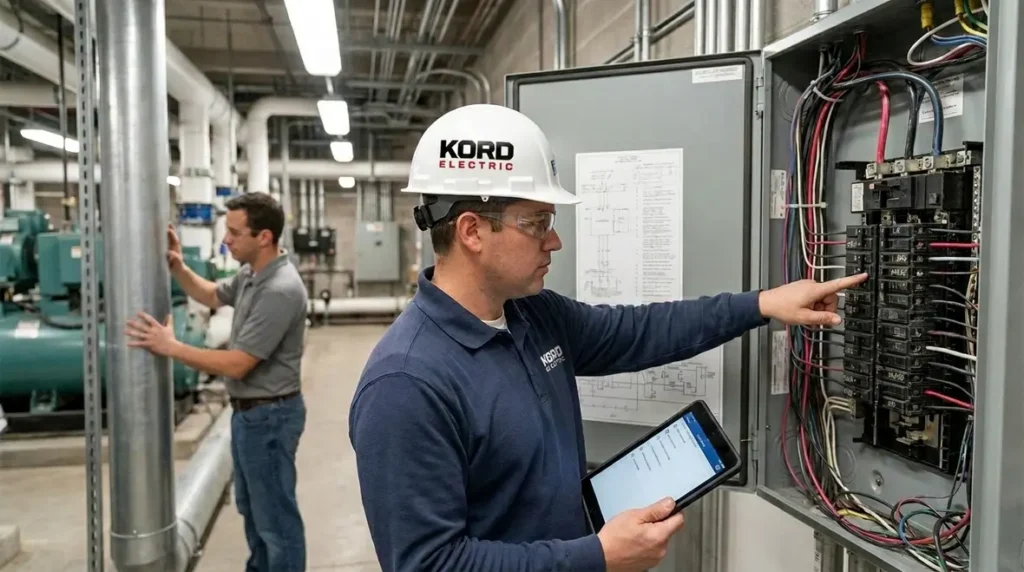
- Field install verification: Our technicians verify that methods match the design intent and referenced requirements.
- Turnover readiness: We support documentation and acceptance steps so operations can start without guesswork.
Because Kord Electric serves major property buildings, we also plan for coordination across trades. Electrical work does not happen in isolation. Therefore, we schedule close collaboration with mechanical, fire protection, and controls teams so pathway allocation, penetration details, and system interfaces stay consistent. When we do this well, the facility team gets fewer interruptions and less downtime.
And if someone says, “We will figure it out during install,” we smile calmly. Then we show them the scope-based plan. We have learned that calm is not just a personality trait. It is also a project management tool.
Aligning NEC planning with reliability and uptime goals
Scope-based planning also lets us connect NEC compliance with system reliability. For clients who are building or upgrading mission-critical spaces, we regularly pair this application requirements work with strategies like those in our data center and emergency power resources. The outcome is straightforward: code-aligned decisions that also support uptime, maintainability, and safe operation.
Common compliance mistakes we help clients avoid
Even with good intentions, projects sometimes miss key scope assumptions. Section 90.2 helps prevent those misses by making scope and limits explicit. Still, we see repeated patterns in commercial and industrial work.
One common mistake involves treating NEC scope as universal across jurisdictions. However, adoption and amendments change enforcement. Another mistake involves rushing equipment selection without checking how the referenced standards connect to the proposed installation. Then, teams install first and verify later, which increases cost and compresses timelines.
Kord Electric addresses these issues by keeping our technicians and expert service staff involved early. We also ask the right clarifying questions about building use, system boundaries, and documentation expectations. Additionally, we help teams avoid “minimum only” thinking. Minimum compliance can still fail if the documentation, labeling, and installation method do not support inspection.
In business terms, scope mistakes create hidden costs. They extend lead times, trigger rework, and delay commissioning. In human terms, they create stress. Nobody needs that extra plot twist. We prefer steady pacing, like a good episode that does not try to be three different genres at once.
Connecting NEC scope to broader electrical service planning
Because NEC scope touches nearly every piece of electrical work in a facility, we also help clients treat it as part of a broader service plan. That can include preventive maintenance, power quality improvements, and targeted upgrades that bring older infrastructure in line with current expectations, instead of waiting for a failure to force rushed decisions.
For facilities in Southern California and nearby regions, this is often where our Los Angeles County electrical services for commercial and industrial properties come into play, combining code-focused planning with field-tested project execution.
FAQs about NFPA 70 Section 90.2 and the 2026 NEC scope
Next steps: align your 2026 NEC scope with Kord Electric
If your project targets the 2026 NEC, do not wait until the inspection day to discover scope gaps. Kord Electric helps commercial and industrial facilities and major property buildings translate Section 90.2 requirements into clear planning, submittals, and field checks. Our technicians and expert service staff explain what the rules mean for your site, then we help you execute with confidence. Contact Kord Electric to review your project scope and build a compliance path that keeps work moving, schedules intact, and turnover smooth.
Whether you are designing a new facility, upgrading existing infrastructure, or preparing for a code-driven modernization effort, our team can integrate the 2026 NEC application requirements guide approach with your operational goals. That way, every panel schedule, conduit run, and protection device decision is grounded in both code language and real-world reliability.
From early scope alignment through commissioning and turnover, we stay involved so the story of your project stays calm, predictable, and grounded in the standards that keep people and property safe.