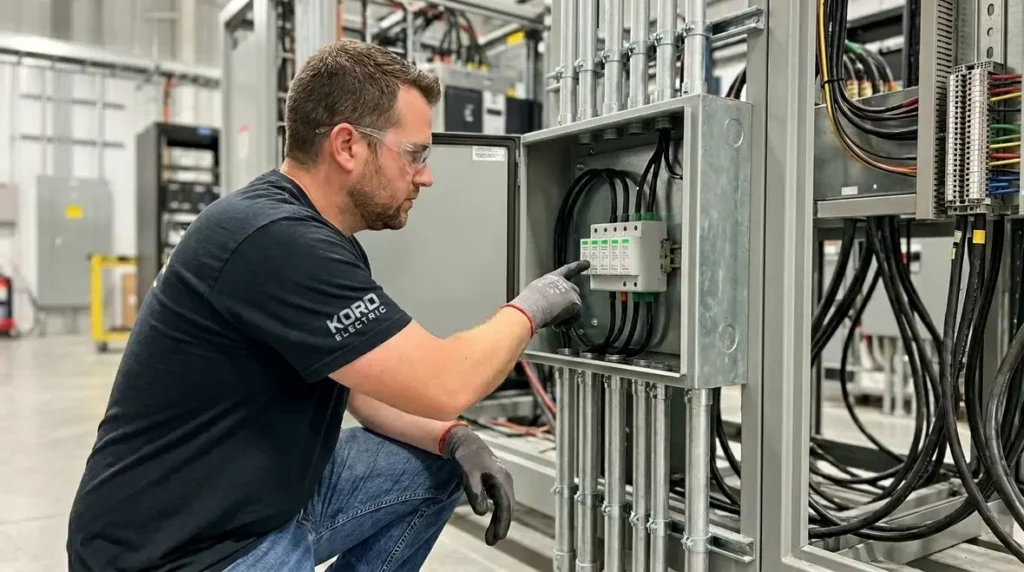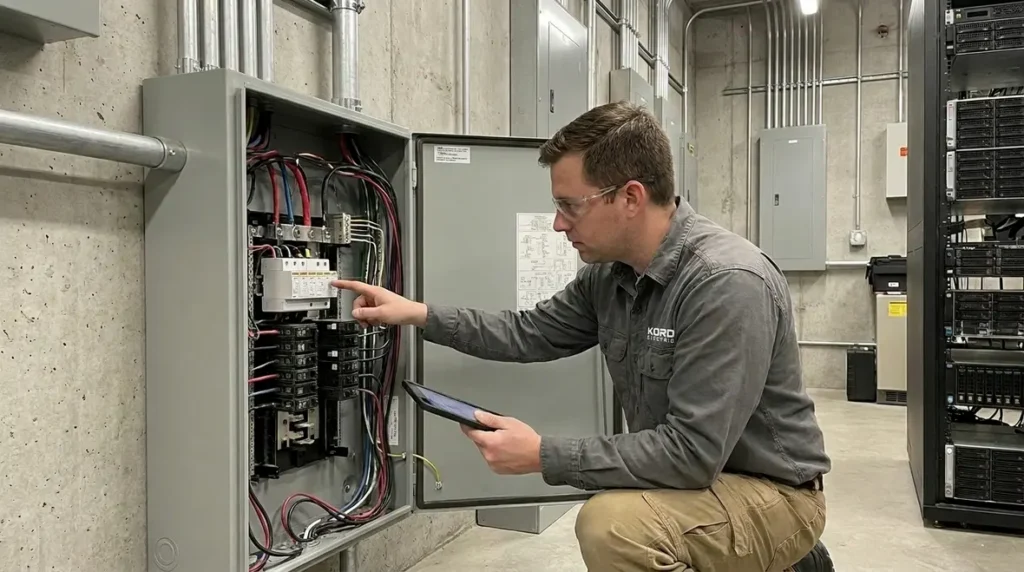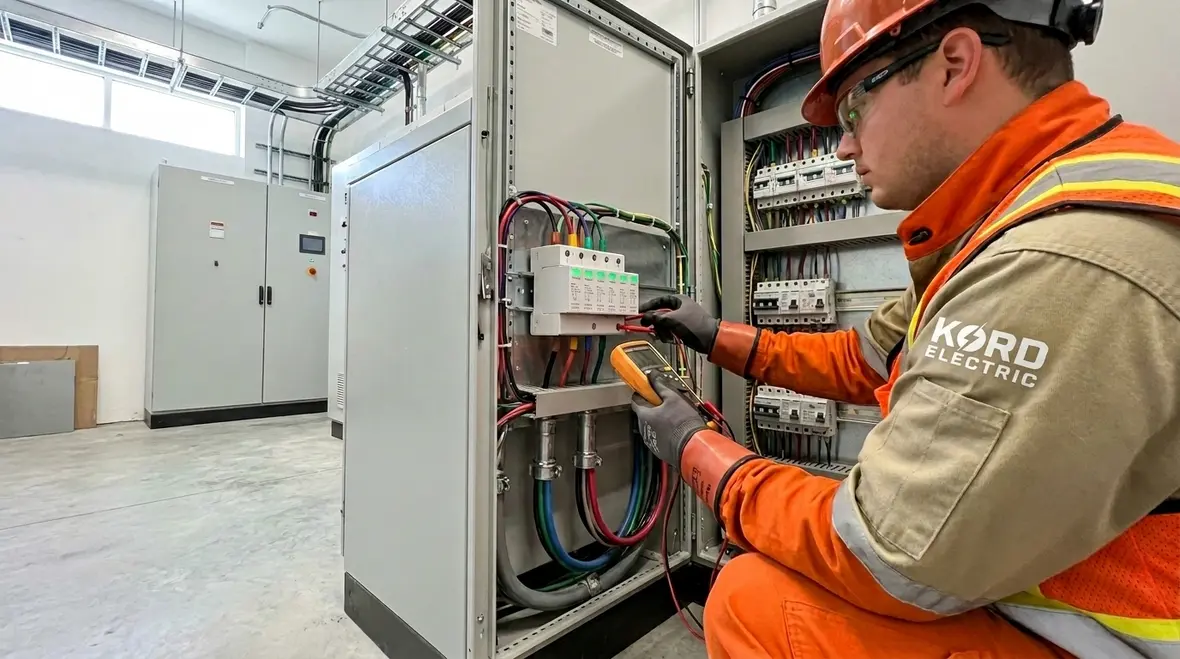
Industrial Power Surge Protection for Facilities
Shielding Your Facility with Industrial Power Surge Protection
At Kord Electric, we install industrial power surge protection designed to protect the systems commercial and industrial buildings rely on every day. Power surges do not announce themselves. They can ride in on utility lines, hitchhike through switching devices, and sneak into sensitive controls the moment something upstream changes. And while some people treat surges like an occasional inconvenience, we treat them like a real threat to production, safety, and uptime.
In this guide, our expert service staff walks through what matters, how we protect critical infrastructure, and how we align practical electrical decisions with the National Electrical Code. Along the way, you will see clear steps, not vague promises. Besides, if your equipment could talk, it would not say “thanks for the surprise.” It would say “why me?”
Why critical infrastructure suffers from electrical power surges
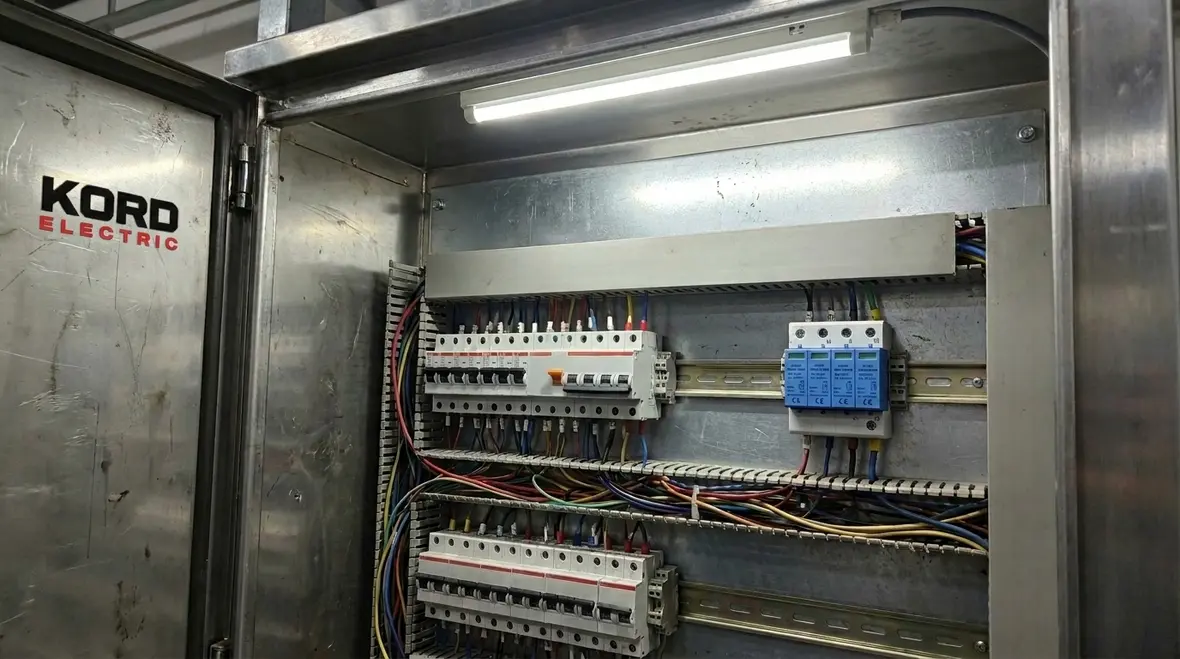
In commercial and industrial facilities, critical infrastructure means more than a few lights and receptacles. It includes process controls, variable frequency drives, HVAC controls, fire alarm panels, building automation, communications gear, and everything tied to uptime. When a surge happens, it does not simply raise voltage for a moment. Instead, it pushes energy into conductors and equipment beyond what insulation and protection devices expect.
Therefore, even brief events can cause hidden damage. Some faults appear immediately, such as a tripped control circuit. Others reveal themselves later, as intermittent sensor errors or premature failure of surge sensitive components. Meanwhile, modern systems often rely on electronics that operate at low signal levels, which makes them vulnerable to higher frequency energy.
At Kord Electric, our technicians evaluate the facility as a whole. We look at where surges enter, how power is distributed, and which loads sit closest to the risk. Then we help our customers understand the difference between a power event that shuts you down and one that slowly breaks your operations like a tiny leak in a big tank.
How surge energy moves through power systems and controls
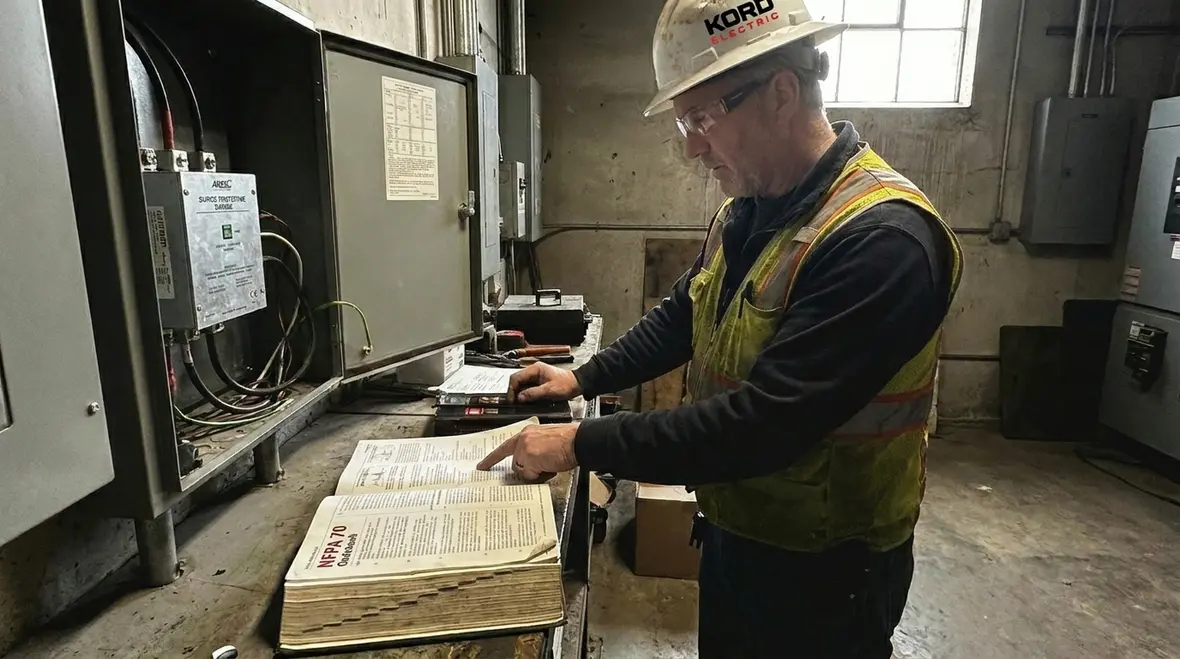
Surge energy travels through conductors and returns through grounded paths. As a result, voltage can rise between phase and neutral, phase and ground, or even within control circuits. Additionally, surges can couple across power and signal wiring when they run near each other, especially in trays and conduits packed tightly.
Moreover, switching events inside your own facility can create surges. For example, starting large motors, transferring loads, or switching capacitor banks can generate transients. If your building also experiences lightning activity nearby, the risk increases. Lightning does not need to strike your structure directly to stress your electrical system.
Our expert service staff explains this simply during site visits. They show that protection must cover both what enters the building and what your equipment generates. Otherwise, you can install industrial surge devices at the service entrance and still leave vulnerable paths inside branch circuits and control panels. It is like putting a door on the front of the house and leaving a window wide open in the back. Sure, you can sleep, but you should not.
NFPA 70 guidance we use to plan surge protection
Surge protection planning works best when it follows electrical code requirements and good engineering practice. If you have read our discussion on Understanding NFPA 70, the National Electrical Code explained for 2026, you know code intent focuses on safety, equipment protection, and proper coordination. We apply that same mindset to surge devices and the wiring around them.
In practice, our technicians consider where surge protective devices belong, how they connect to system components, and how the equipment upstream interacts with the protection devices downstream. Then we evaluate grounding and bonding so the surge has a defined path. When bonding is weak or grounding is inconsistent, the protection device cannot do its job reliably.
Furthermore, we account for coordination between levels of protection. The goal is not only to clamp a surge but also to control the remaining voltage stresses that still travel through distribution. As a result, we target a system approach, not a single “install and forget” step. Code compliance and good coordination go hand in hand, and our team keeps it practical for facility owners who care about uptime and inspection readiness.
If you are also reviewing how electrical maintenance fits into your surge strategy, resources such as Kord Electric’s coverage of NFPA 70A vs NEC for commercial electrical compliance and NFPA 70B electrical panels and switchgear maintenance give additional context on how codes, maintenance, and industrial power surge protection work together across an entire facility.
Designing a layered protection plan for commercial and industrial buildings
We recommend layered protection because surges do not travel like polite guests. They show up in multiple forms, at multiple locations, and with different energy levels. Therefore, a well designed plan uses industrial power surge protection at key points and coordinates it with distribution layout and equipment sensitivity.
At the service entrance, we typically protect the overall system. Then we add protection closer to equipment that carries sensitive loads. This approach reduces stress where it matters most, because the farther the energy travels, the more it can couple into wiring and controls.
In addition, we verify conductor routing and cable management. We separate power and signal paths when possible and we reduce loop area where surge current flows. Also, we look at the panel board layout and how surge protective devices tie into the bonding network.
Our technicians also pay attention to maintenance needs. Surge protective devices include indicators and require inspection and testing at intervals that make sense for the environment. If a unit spent its life clamping surges, it might eventually need replacement. Yes, that device earned its keep. No, it should not be treated like a disposable coffee lid.
Testing, maintenance, and proof for owners and facility managers
After installation, we do not just walk away and hope for the best. We help our customers build a maintenance routine that supports reliability. First, we test surge protective devices where the design allows it. Then we document results so you can track performance over time.
Next, we check termination integrity, conductor condition, and grounding and bonding connections. Over the years, corrosion, vibration, thermal cycling, and panel modifications can change how well connections stay solid. Therefore, a periodic inspection can catch issues before they create higher resistance paths or inconsistent behavior.
Finally, we help facility teams understand what to watch for. If a building experiences frequent switching events, heavy motor cycling, or repeated lightning proximity risks, surge stress increases. And if an indicator shows that a device reached its end of life, waiting is not a strategy. It is a bet against your equipment.
Our expert service staff explains each step in clear language and keeps records that align with what businesses need for internal audits and external reviews. We respect that your time matters, and we keep the process straightforward.
Frequently asked questions about surge protection
Key steps we take to protect your critical systems
When our team works with commercial and industrial facilities, we follow a practical sequence that keeps the work grounded in real risk. First, we map your distribution and identify sensitive loads that should receive closer surge protection. Then we verify grounding and bonding so the protection devices connect into a stable electrical reference.
Next, we select device ratings and configurations that match the electrical system, not just the brochure. We also plan for coordination so protection levels work together instead of competing with each other.
After that, we install with attention to routing, terminations, and labeling so the system stays maintainable. Finally, we test, document, and help your team understand next steps. In other words, we protect your operation with a method, not a guess.
And yes, we try to keep the process smooth. Nobody wants an electrical project that feels like a surprise season finale. We build and coordinate so you get clarity and control.
For organizations building a broader reliability strategy, Kord Electric’s electrical preventive maintenance services and voltage fluctuation support for commercial and industrial facilities can be aligned with your industrial power surge protection plan so inspections, testing, and system tuning work together instead of in separate silos.
Ready for a stronger surge protection program
If you operate a commercial or industrial facility, protecting critical infrastructure deserves more than a quick fix. Kord Electric helps you plan and install industrial power surge protection with a coordinated, code minded approach, then backs it with testing and maintenance guidance. Our technicians explain each decision clearly so facility managers can act with confidence. Contact us to schedule an evaluation and strengthen your electrical system before the next surge finds the weak link.
We service commercial and industrial facilities throughout Southern California and can integrate surge protection planning with broader electrical preventive maintenance, voltage fluctuation mitigation, and commercial electrical services so your distribution, controls, and life safety systems share the same level of protection.
To see how surge protection fits into your code strategy, you can also explore related topics such as understanding NFPA 70 for 2026 and how NFPA 70A and NFPA 70B influence everyday electrical maintenance, inspections, and upgrade decisions across commercial and industrial properties.
When you are ready to connect surge protection with a proactive electrical maintenance path, our dedicated electrical preventive maintenance services help keep panels, switchgear, and protective devices performing the way your operations demand.