
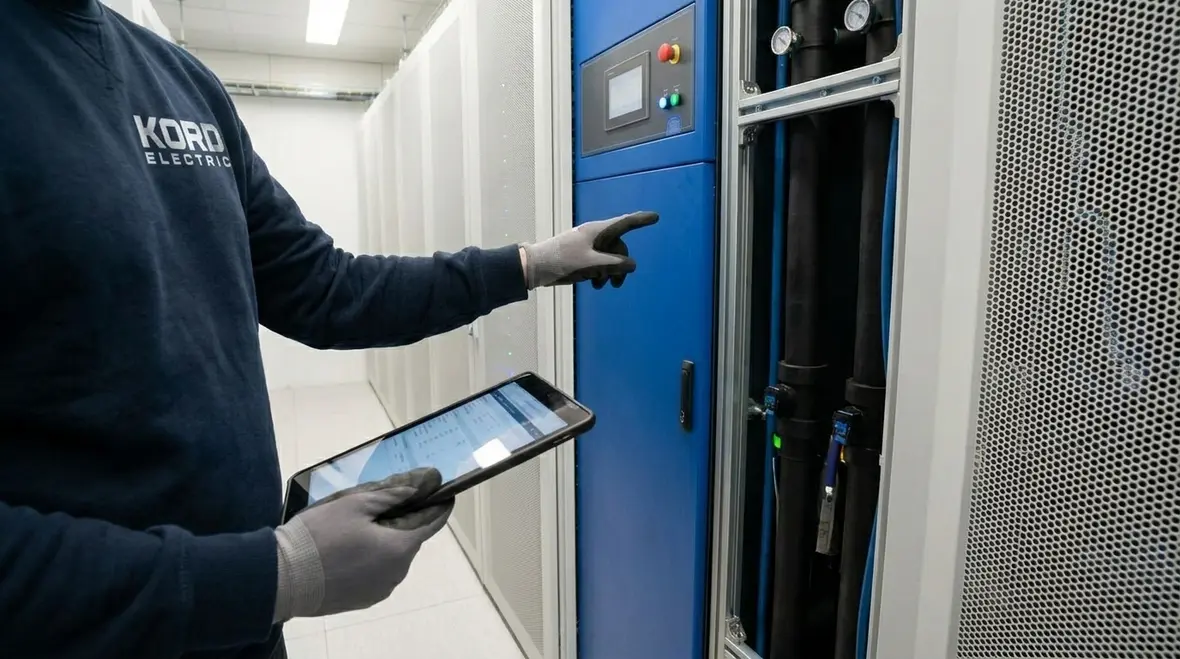
Balancing Data Center Cooling Power and Distribution
At Kord Electric, we see a simple truth every day: if the data center cooling power is wrong, the whole building starts to act like a stressed out office worker on a Monday. It is not just comfort. It is heat, airflow, and electrical delivery all fighting for control. When commercial and industrial facilities and major property buildings run servers, chillers, pumps, and switchgear side by side, our teams balance the load so power and cooling work together instead of at cross purposes. And yes, we have all seen the moment when someone says, “It should be fine,” right before alarms begin to sing. We stay calm, check the numbers, and make the system behave.
How do we balance cooling load with power distribution in one plan?
In practice, balancing cooling and power starts with one question we ask early, and then revisit often as conditions change. What load will your facility face under normal operations, partial load, and peak load? From there, Kord Electric aligns the cooling plant and the electrical distribution plan so both are sized for the same reality, not two different spreadsheets that refuse to agree.
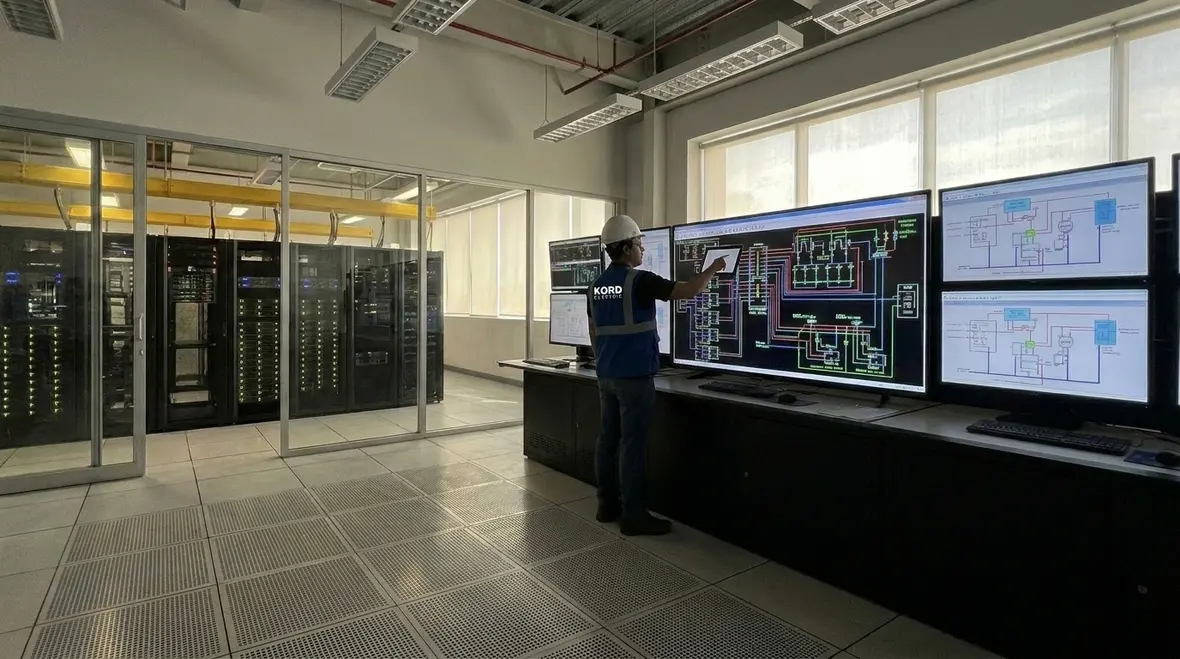
Our expert service staff approaches it like this. First, they map the heat and the electrical demand across the same time horizon. Then they connect the dots between the cooling equipment and the power system, including feeders, transformers, switchboards, UPS systems, and any generator logic. Because if cooling draws more than expected, the electrical side needs to provide it without voltage dips or nuisance trips. And if power distribution carries unexpected harmonics, heat rises in places nobody intended.
To keep it steady, we also look at how cooling moves air and water. We evaluate chilled water temperatures, pump curves, fan control strategies, and airflow containment. After that, we confirm that the electrical network can handle motor starting, variable speed drive behavior, and transient conditions. In short, our technicians do not treat cooling and electrical work as separate projects. We treat them as one working system, and that reduces surprises later.
For data center environments, we extend this thinking into how power flows from upstream distribution, through panels and busways, and into server racks that depend on stable temperatures. Balancing data center cooling power with distribution design helps prevent the kind of cascading issues described in our work on data center electrical distribution design for reliability, where power quality, heat, and uptime are all connected long before the first rack goes live.
Why do cooling and power systems fight each other?
Cooling is not just “making things cold.” It is an energy loop, and it has consequences. When electrical distribution and cooling controls do not communicate through design, the facility ends up with feedback problems. For example, a cooling controller may chase temperatures aggressively, and the electrical system then faces sharper motor load swings. Or a power system might support the load but creates higher losses due to poor cable sizing or inefficient distribution layout. Then those losses turn into more heat, which makes cooling work harder, which makes power demand rise again. That is the loop. It is real. It is also the reason some sites feel like they are running a treadmill while the rest of the building wonders why.
We often see another issue: mismatched baselines. One contractor sizes for worst case, another sizes for “typical,” and nobody reconciles the two. Then the site hits a maintenance window or a partial outage scenario, and suddenly the cooling plant runs in a mode it was not truly tested for. Meanwhile, the distribution system may hit limits when switching, reconfiguring, or compensating for backup operation.
In these cases, our technicians bring structure. We review equipment schedules and control sequences, then validate how the facility behaves under switching and ramp conditions. We also check that the cooling plant and power protections coordinate as intended. Because if protections operate too early or too late, operations become chaos in a suit and tie.
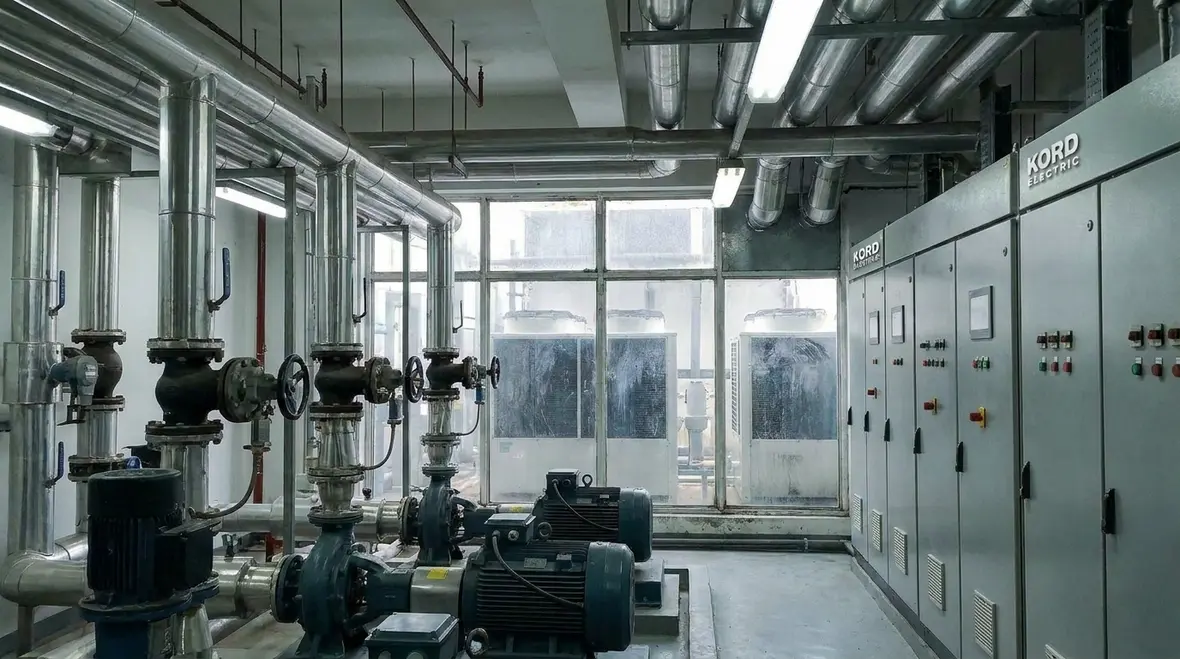
The same friction shows up whenever voltage stability and temperature control are treated as separate conversations. In our work troubleshooting voltage fluctuations in commercial and industrial facilities, we frequently find that unstable cooling behavior and poor distribution design share the same root causes. Addressing both sides together calms the loop instead of chasing symptoms room by room.
Where does the real data center cooling power come from?
When people talk about data center cooling power, they often mean “the electricity that cools servers.” However, the number is not only chillers and CRAC units. It includes pumps, cooling tower fans, condenser water systems, air handling blowers, and controls that keep everything stable. It also includes the electrical losses along the way. That means distribution efficiency matters, not as a buzzword but as a math problem that shows up in heat load and operating cost.
Kord Electric looks at the cooling power picture from the inside out. First, we identify the cooling stages and the equipment states. Then we connect those states to the power distribution plan. For instance, if chillers run at part load with variable speed drives, the electrical behavior changes. If you stack redundancy in a way that causes frequent start events, starting current and coordination become part of the cooling energy story.
Next, we verify the site electrical path for performance. We review voltage regulation, conductor sizing, transformer loading, and distribution losses. We also evaluate harmonic risk from drives and power electronics. When harmonics and losses rise, heat rises, which then changes cooling demand. So the “cooling load” is not a one-time number. It is a moving target based on how the site actually runs.
Our expert service staff also checks how the facility aims to maintain stability. If the cooling strategy uses quick swings, it can spike power draw. If it uses smoother control, it can reduce peak demand. Either way, we make sure the electrical plan supports the control behavior you choose.
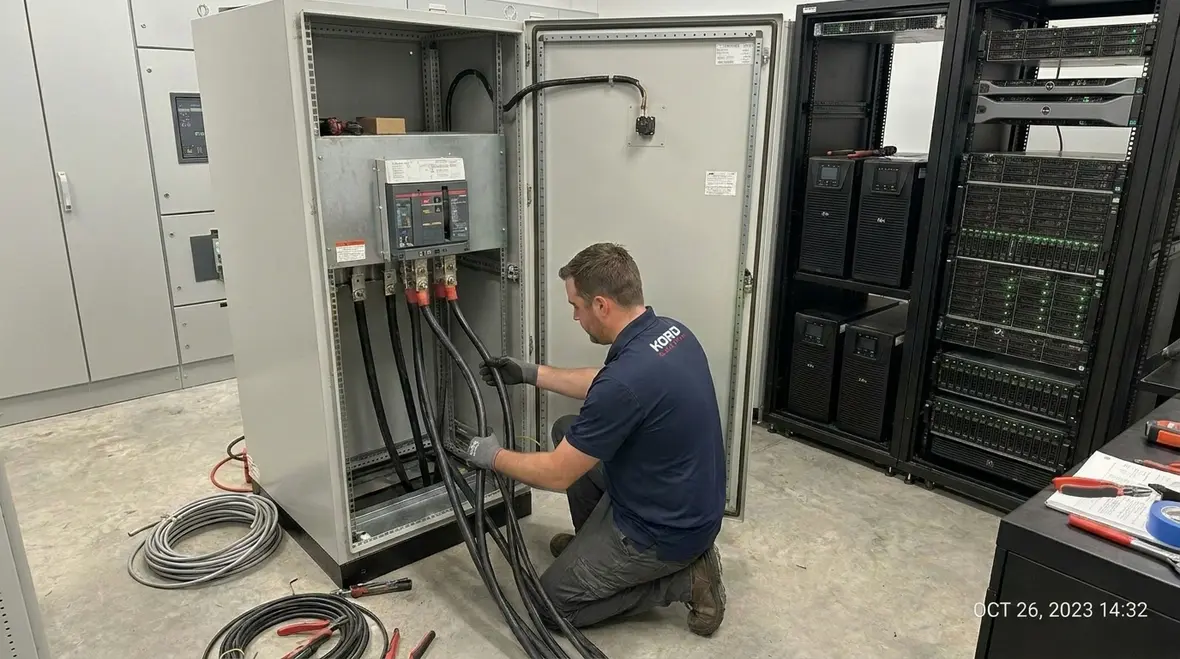
When we work on data center electrical distribution, we often pair these cooling power reviews with the kind of planning outlined in our article on data center electrical distribution design for reliability. Understanding both the cooling stages and the electrical path they rely on makes it easier to control total data center cooling power usage while still protecting uptime.
What electrical distribution upgrades help cooling stay stable?
Many commercial and industrial facilities need upgrades that support both reliability and control performance. We focus on distribution details that reduce risk during normal operations and during switching events. Because stability during transitions is where most problems hide, like a villain in a superhero movie who insists on monologuing while the lights flicker.
Common upgrades we consider include better feeder capacity, improved voltage regulation, and careful coordination of protective devices. If the cooling plant relies on motor loads, we verify starting and ramp conditions against the distribution system’s limits. We also review how UPS systems interact with the site load, especially when a facility transfers from utility to backup power.
We also help teams address distribution layout. In major property buildings, long runs, uneven loading, or poor segregation can add losses and heat in unexpected areas. That affects cooling performance and creates extra work for the mechanical side. So we may recommend changes that improve efficiency and reduce thermal stress in equipment rooms.
Where variable speed drives and controls play a role, we evaluate filters and grounding design as needed. We verify that the electrical environment stays clean enough for reliable drive operation. And we coordinate with the cooling design so that the plant does not fight the power system during transients.
Throughout, we keep communication open. Our technicians explain the why behind the recommendation, not just the what. Clients do not need a graduate degree in electrical theory to make good decisions, they just need clear, direct reasoning.
Many of the same upgrades that calm voltage swings and harmonics in cooling-heavy facilities also appear in our projects addressing voltage fluctuations in commercial and industrial facilities. When distribution is designed for clean, stable operation, cooling equipment can run on a steadier foundation instead of reacting to every blip on the line.
How can we plan redundancy without wasting energy?
Redundancy saves uptime, but it can also add complexity. The goal is to balance reliability with efficient operation. Kord Electric helps facilities design redundancy that supports cooling performance instead of creating extra peak loads that stress distribution.
Cooling reliability approach |
Power reliability approach |
We align chiller and pump strategies with realistic part load and maintenance states. |
We verify feeder and protective coordination so switching does not create harmful voltage dips. |
We support stable airflow and water control so the plant does not chase temperatures. |
We check UPS transfer behavior and generator sequencing to avoid load shocks. |
We ensure controls sequences consider failover, so the cooling plant stays predictable. |
We review harmonic and drive interactions so electrical performance stays steady. |
Because redundancy can be expensive in both energy and capital, we guide clients through tradeoffs. We do not chase “the biggest number.” We chase the right behavior under real conditions. And when someone tells us, “We just need more capacity,” we smile professionally and ask what operating mode that capacity truly supports.
How do we verify performance after installation?
Design is only half the story. Verification is where we earn trust. Kord Electric schedules commissioning and performance checks that confirm the cooling and power systems act as one. We verify that electrical protections coordinate properly, that motor starting behaves as expected, and that voltage and power quality stay within targets.
On the cooling side, we validate control sequences, setpoints, and response timing. Then we watch how the system behaves when conditions shift. We simulate or observe partial load operation, maintenance scenarios, and transitions between operating modes. If something acts too aggressively, we adjust the strategy so cooling demand stays smooth and power draw stays within plan.
Our technicians also check heat removal in the real world, not just in models. We verify airflow paths, containment effectiveness, and equipment room conditions. If a layout causes hot spots, the cooling system tries to compensate. Then electrical demand creeps up, and losses climb. That is the chain reaction we prevent by checking the site as it actually operates.
Lastly, we document what we find in plain language. Our expert service staff explains the results clearly, including what to monitor and what to adjust over time. Then facility teams can run the site with confidence, instead of crossing fingers and hoping the next peak day behaves.
For facilities that want ongoing structure after commissioning, programs like electrical preventive maintenance help keep both power distribution and cooling-related equipment performing the way they were designed to run, instead of slowly drifting toward the next surprise alarm.
FAQ
Ready to align cooling and power for real uptime?
When cooling and electrical distribution do not match, your facility pays the price in alarms, inefficiency, and stress. Kord Electric helps commercial and industrial facilities and major property buildings plan, upgrade, and verify systems so power distribution and cooling control operate as one dependable team. Our expert service staff explains each step clearly, then we back it with commissioning and performance checks. If your site is scaling, retrofitting, or seeing unstable operation, contact Kord Electric today for a focused assessment.
If your operation depends on continuous uptime, pairing a thoughtful cooling and distribution plan with structured services like electrical preventive maintenance and fast-response emergency electrical services gives your team a clearer playbook for both everyday reliability and the rare moments when things do not go according to plan.


