Scaling Commercial EV Charging Without Downtime
Scaling EV Charging Without Surprise Downtime: A Manager’s Starting Point
Commercial leaders need a clear plan before they plug in fleets and public customers. That is exactly what the Commercial EV charging infrastructure guide helps with, and it sets the tone for electrical readiness, load thinking, and smarter rollout. In this article, Kord Electric focuses on commercial and industrial facilities and major property buildings, because that is where electrical systems actually get tested. We also know managers do not have time for guesswork, and our technicians and expert service staff do not hide behind vague answers. Yes, we will keep it practical. And no, this will not read like a manual written by a robot that hates weekends.
Electrical Readiness Checklist for Site Scaling

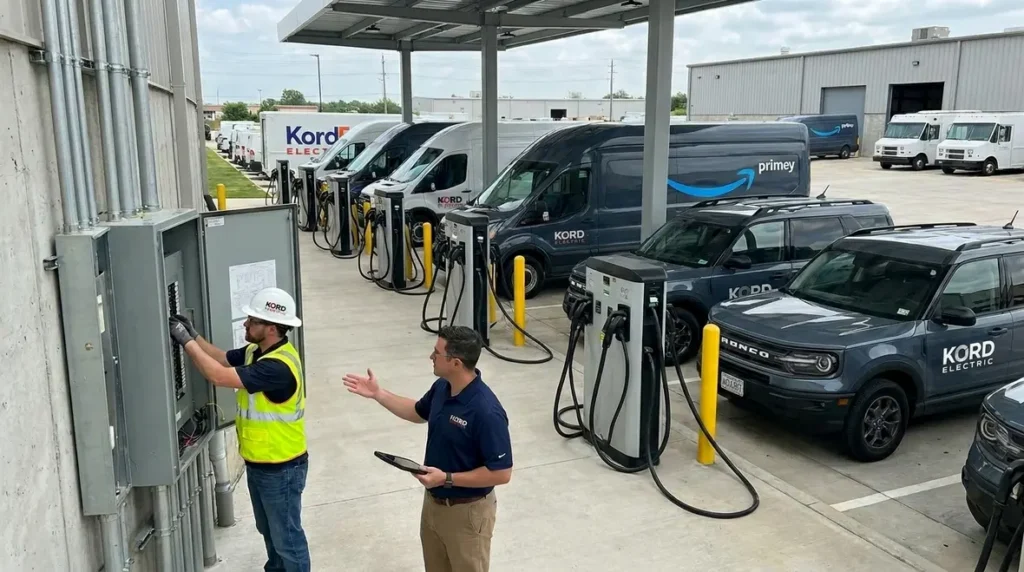
To scale charging fast, managers should treat readiness like a project with measurable steps. First, confirm the facility utility service size and the distribution pathway feeding the charging area. Next, validate panel capacity, conductor sizing, and grounding and bonding in the relevant sections of the electrical system. Then, verify switchgear ratings, protective device coordination, and whether the existing load profile creates risk during peak demand.
After that groundwork, Kord Electric recommends a simple, disciplined method: map the site like a blueprint and then mark every point where power could become a bottleneck. Meanwhile, our expert service staff walks managers through what the electrical system can do today and what it will do tomorrow when more chargers come online. Because the goal is not just to install hardware, it is to keep the building stable while the charging network grows.

Load Planning and Demand Forecasting That Actually Holds Up
Most scaling problems start with a load forecast that feels optimistic, like believing a gym membership will magically change your life. In reality, managers must plan for charging patterns, vehicle mix, and time windows. So instead of assuming every stall draws the same power, they should model realistic behavior: arrivals, dwell time, and whether charging uses managed schedules.
In addition, you should account for other site loads that share the same electrical path. For example, HVAC demand, lighting upgrades, process equipment, elevators, and tenant buildouts can all shift peak load. Therefore, Kord Electric treats EV charging as part of a bigger power picture for commercial and industrial sites.
Our approach supports the Commercial EV charging infrastructure guide mindset: build a plan that managers can explain to finance, facilities, and operations. Then, when new vehicles arrive or utilization rises, the electrical system does not become a surprise villain.

Designing for Future Expansion Without Replacing Everything
When managers want expansion, they usually mean one of two things: more chargers soon, or more chargers later that still need to work seamlessly. To avoid frequent rewiring and unnecessary panel upgrades, Kord Electric focuses on design decisions that preserve growth.
For example, we prioritize spare capacity where it matters, and we select equipment ratings that handle future load without forcing full replacement. At the same time, we consider routing, conduit fill, and cable management so the next phase is not a last minute cable spaghetti situation.
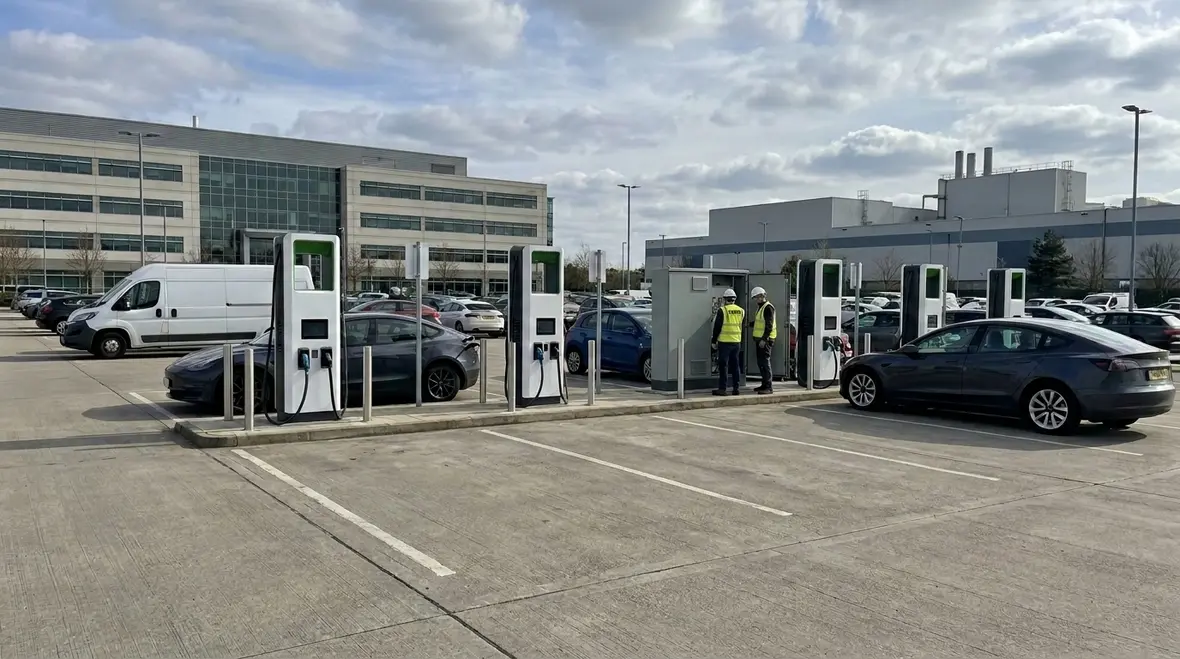
Additionally, we coordinate charger placement with electrical distribution layout. Because sometimes the “best location” from a driver standpoint is not the best location from a power standpoint. We help managers balance usability with electrical efficiency, and we do it with clear reasoning rather than buzzwords. Our technicians explain the tradeoffs step by step, so decision makers feel confident instead of cornered.

Commissioning, Testing, and Documentation for Commercial Sites
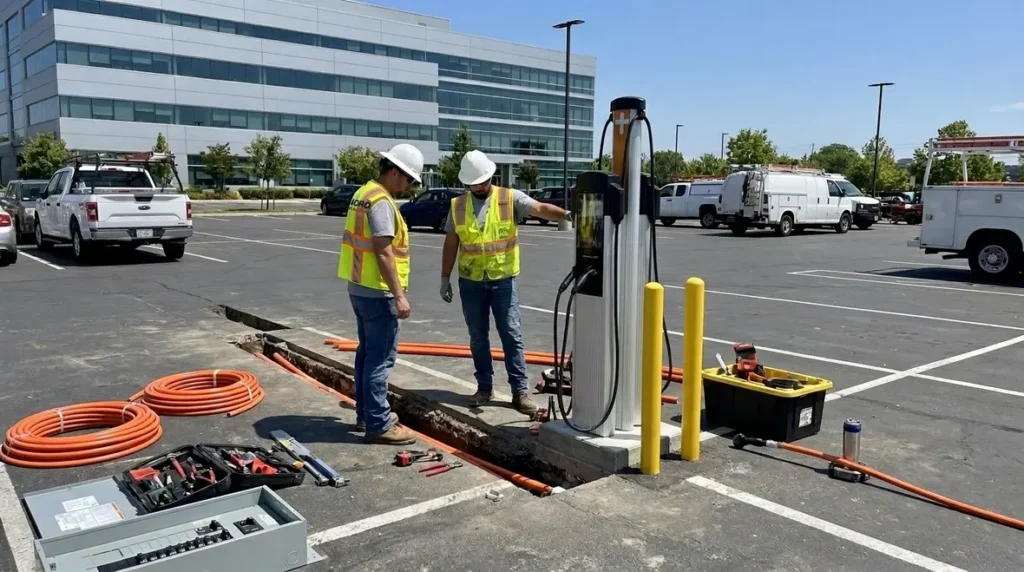
Once the charging infrastructure is installed, managers should not just flip a switch and hope. They should commission and test the system like professionals, especially in commercial and industrial environments with strict uptime expectations. That means verifying voltage, phase balance, load behavior, and protective device operation. It also means confirming labeling, wiring identification, and that all components match the intended design.
Documentation matters too, because it speeds up future troubleshooting and maintenance. Therefore, Kord Electric ensures managers receive organized records for equipment, panels, and circuits. Then, when operations staff ask “what changed and when,” the answer does not take a day of detective work.
Our expert service staff also supports ongoing checks so the electrical readiness plan stays current. In other words, the system should not “pass commissioning” and then drift into problems months later.
Using Maintenance Plans to Keep Charging Reliable
EV chargers operate in the real world, with heat, vibration, constant use, and changing site loads. That is why commercial facilities benefit from maintenance planning instead of reactive repairs. Kord Electric maintains that long term success comes from scheduled inspection, clear performance criteria, and fast corrective action when issues appear.
Our technicians reference our commercial and industrial electrical maintenance plans because they are built for how facilities actually run. Then, managers get a structure that reduces guesswork. For example, routine checks can identify wear, loose connections, abnormal thermal patterns, and protective device concerns before they become downtime events.
Even more importantly, a maintenance plan supports scaling. When new chargers get added, the electrical system’s health and historical readings help confirm capacity assumptions. As a result, managers protect both uptime and budgets. And if you are thinking, “maintenance is expensive,” keep in mind that unscheduled downtime usually costs more, especially when customers wait and operations get blamed.
For properties dealing with voltage instability or past nuisance trips, integrating EV charging maintenance with broader preventive service and voltage diagnostics helps keep the entire system stable, not just the chargers themselves. That keeps fleet schedules, tenants, and public users on track instead of staring at offline stations in the middle of a busy day.
How Teams and Tenants Should Prepare During Rollout
Scaling charging affects more than the electrical room. It changes traffic flow, customer expectations, billing processes, and tenant coordination in major property buildings. Therefore, managers should set communication expectations early. Kord Electric recommends a rollout plan that covers scheduling, site access, signage, and what staff should do if something looks off.
Next, facilities and operations teams should know who owns what. Our expert service staff helps define roles for inspections, reporting, and escalation so problems get handled quickly. This also reduces friction when multiple contractors show up, because coordination matters and chaos costs time.
Meanwhile, property managers should plan for tenant questions about availability, charging behavior, and any managed power schedules. When teams align, the infrastructure rollout feels like progress, not like a pop quiz.
For large commercial portfolios, this preparation often sits alongside broader electrical strategies such as reducing hidden electrical risks in commercial buildings or formalizing structured maintenance programs. When those pieces work together, scaling EV charging becomes one more step in a much stronger reliability story instead of an isolated project that strains the rest of the system.
FAQ: Commercial EV Charging Infrastructure Readiness
Why Kord Electric Helps Commercial Teams Scale With Confidence
When managers plan charging growth, they deserve a partner who treats electrical readiness as a real business asset. Kord Electric supports commercial and industrial facilities and major property buildings with structured planning, clear testing, and maintenance that protects uptime. Our technicians and expert service staff explain the details in plain language, so you can act with confidence instead of luck.
Beyond the immediate installation, our team connects EV charging projects with broader preventive strategies so your infrastructure stays reliable as usage grows. For organizations that want a deeper, program-level view, resources like our commercial and industrial electrical maintenance plans and related insights on electrical preventive maintenance help tie everyday decisions back to long term reliability and compliance.
If your next step is moving from infrastructure planning into real-world deployment, Kord Electric’s dedicated commercial and industrial EV charger installation services bring that plan to life. From load analysis and layout decisions to commissioning and long-term maintenance, we help ensure your charging network grows without becoming the source of surprise downtime.
If you are ready to scale charging the right way, contact Kord Electric today and we will help map your next phase from power capacity to reliable operation.