Electrical Safety Training Requirements for Facilities
Electrical safety training requirements for commercial facility staff: the real starting point
Commercial and industrial workplaces run on power every minute of every day, and yet many teams treat electrical safety training like an optional extra, like a “maybe later” software update. In this article, we explain the Electrical safety training requirements that commercial facility staff need, then we show how training connects to real hazards in real buildings. We also make it clear that our technicians and expert service staff do more than “switch things on and off.” They teach, verify, and document work so the site stays safe.
And yes, we will include a few jokes, because even a serious subject can’t survive on dry dust alone. Still, when electricity shows up, comedy has to take a seat behind safety.
Why commercial electrical risks need training, not hope
Electrical accidents do not usually happen because people “don’t know.” They happen because conditions change, equipment ages, and work shifts across trades. For example, a facility team might move a panel location, add a new circuit, or renovate a room without updating the training approach for how the area is energized and controlled. Then, a technician or contractor arrives and everyone assumes the other person handled the details. That assumption is where risk hides.
So we train to close the gap between what people think they know and what the job site actually contains. Even when a company uses a strict maintenance schedule, electrical safety fails when the staff does not understand basic hazard categories, safe work practices, and how to follow procedures when something goes wrong. That is exactly why the Electrical safety training requirements matter more in commercial and industrial buildings than in smaller spaces. These facilities have higher loads, more complex distribution, and more people working around energized equipment.
In other words, you do not get safer by hoping the old habits will hold. You get safer when every person who walks into an electrical room understands what they may touch, what they must never touch, and how fast things change once equipment starts failing under load.
Commercial facilities also face pressures that smaller spaces rarely see. Production schedules, tenant expectations, and uptime commitments push teams to “get it back online” quickly. Without strong training, that pressure can nudge people toward shortcuts. Proper Electrical safety training requirements keep the boundaries clear so the schedule never wins an argument against safety.
NFPA 70 and the code reality we manage for major properties
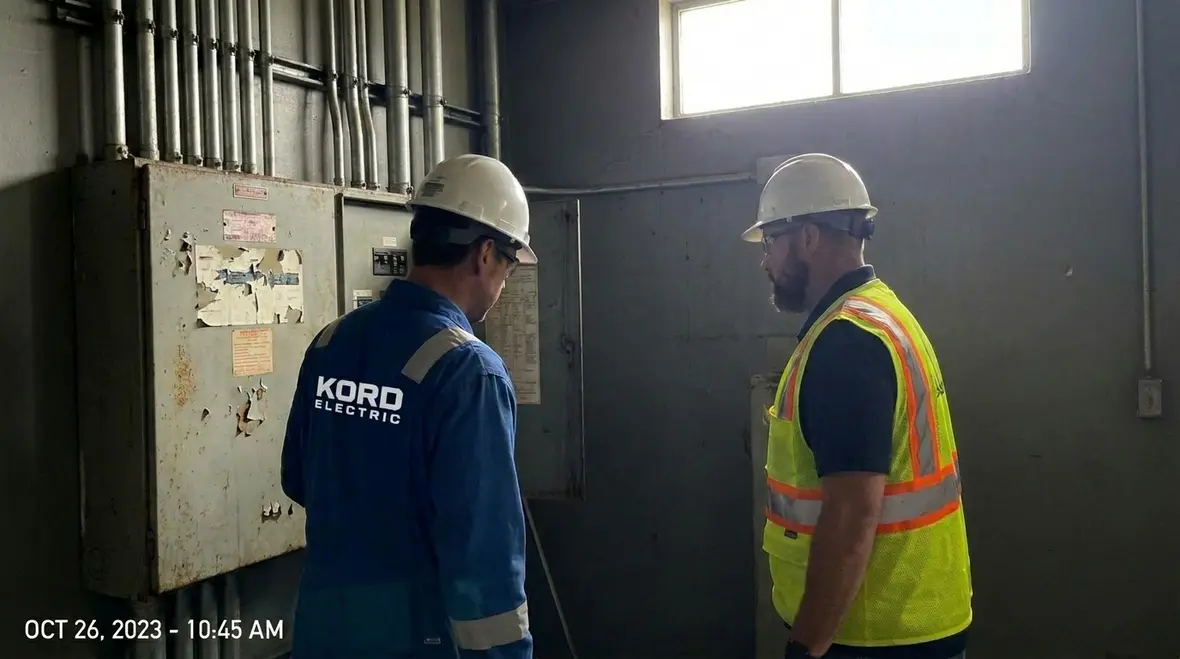
Many facility leaders ask how training ties to standards. To answer that, we reference the national electrical code and related guidance, including the ideas outlined in our Kord Electric blog post on Understanding NFPA 70, the National Electrical Code, Explained for 2026. The key point is simple. Code language guides design and installation, and training guides the safe decisions people make during operations, troubleshooting, and maintenance.
Therefore, when others read code and think only electricians apply it, we shift that view for commercial facilities. Our expert service staff explains how code impacts day to day work: labeling, access control, inspection habits, and the way staff respond to abnormal conditions. In addition, we help property managers align training with the building’s actual electrical layout, not a generic checklist printed on the back of a clipboard.
Because in a major property building, the difference between “a good process” and “the right process” shows up during emergencies, temporary shutdowns, and ongoing modifications. When a surprise outage hits a data room or production line, you do not want people arguing over what the code probably meant. You want people who have already walked through the scenario in training and know exactly who does what.
Training also connects code requirements to neighboring practices like electrical preventive maintenance. When staff understand why NFPA 70 and related maintenance guidance expect certain clearances, testing intervals, or labeling details, they stop viewing inspections as paperwork and start viewing them as part of the facility’s life safety system.
What we teach in Electrical Safety Training: roles, boundaries, and procedures

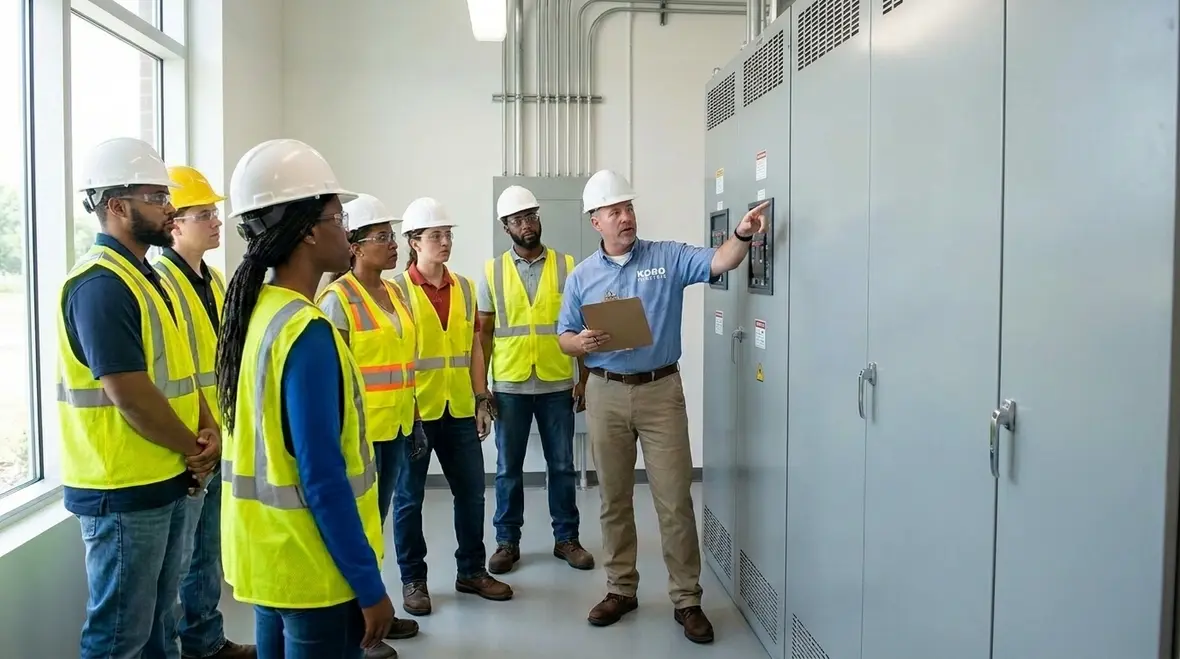
Electrical safety training does not mean everyone does the same job. Instead, it sets clear boundaries based on job function. For commercial and industrial facilities, we help organizations separate training into layers so the right people follow the right steps.
First, we cover role based expectations. Then, we teach how to recognize hazards tied to energized parts, exposed conductors, and stored energy. Finally, we build habits around safe work practices before anyone touches equipment. Below is the training flow our team often uses when we support facility staff and major property buildings.
- Awareness and hazard recognition: staff learn how to spot risks around panels, switchgear, disconnects, grounding systems, and temporary power
- Safe access and working distances: staff practice how to maintain safe clearances and avoid accidental contact during routine tasks
- Lockout and tagout coordination: staff learn how to verify de energization and how control of equipment prevents surprises
- Documentation and labeling: staff learn what labels mean, why they matter, and how missing or wrong labels increase risk
- Emergency response basics: staff learn what to do first, what not to do, and how to report incidents clearly
And here is the part people forget. Training also teaches the “stop work” moment. In other words, we show staff how to pause when conditions do not match the plan. That is how teams avoid becoming the main character in a safety training story nobody wants to read.
When we build Electrical safety training requirements for a specific site, we also map which tasks belong only to qualified electrical workers and which tasks can be handled by trained operations staff. Changing a lamp in a properly designed, de-energized fixture is one thing. Opening live gear with no PPE or testing equipment is another. Training draws that line in thick, bright ink.
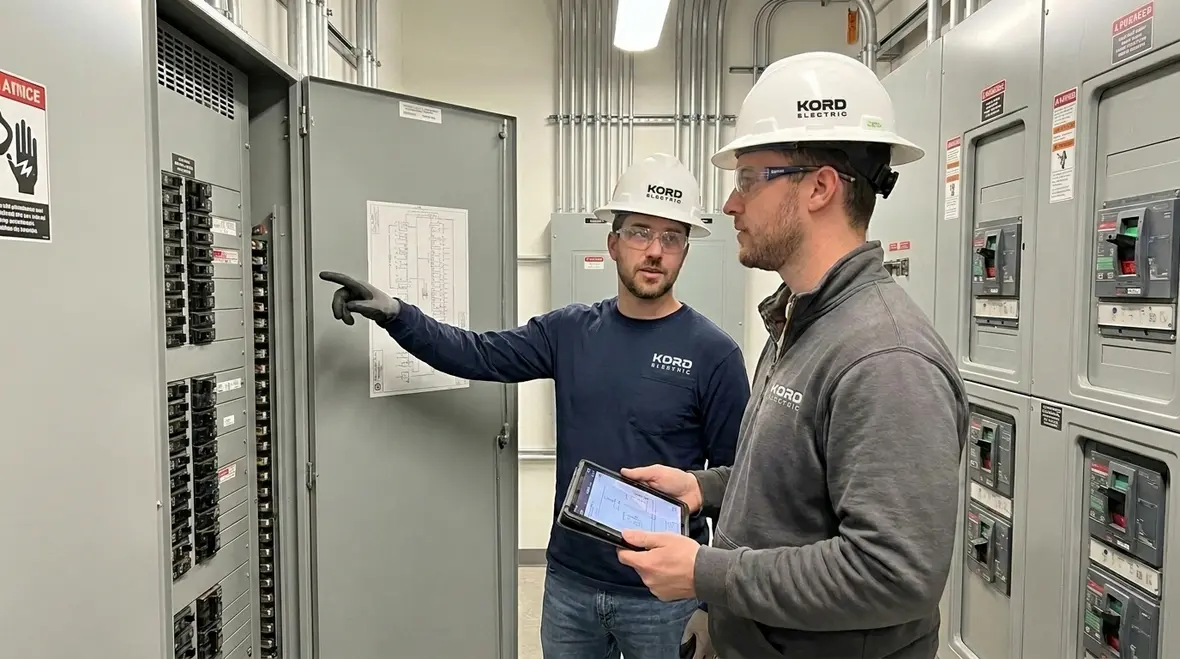
Finally, we encourage supervisors to use training as a two way conversation. The best insights about unsafe layouts, awkward access, or confusing labels usually come from the staff who walk the site every day. When they are encouraged to speak up during training, the facility discovers practical fixes that make the Electrical safety training requirements feel grounded, not theoretical.
How we turn Electrical Safety Training into measurable results
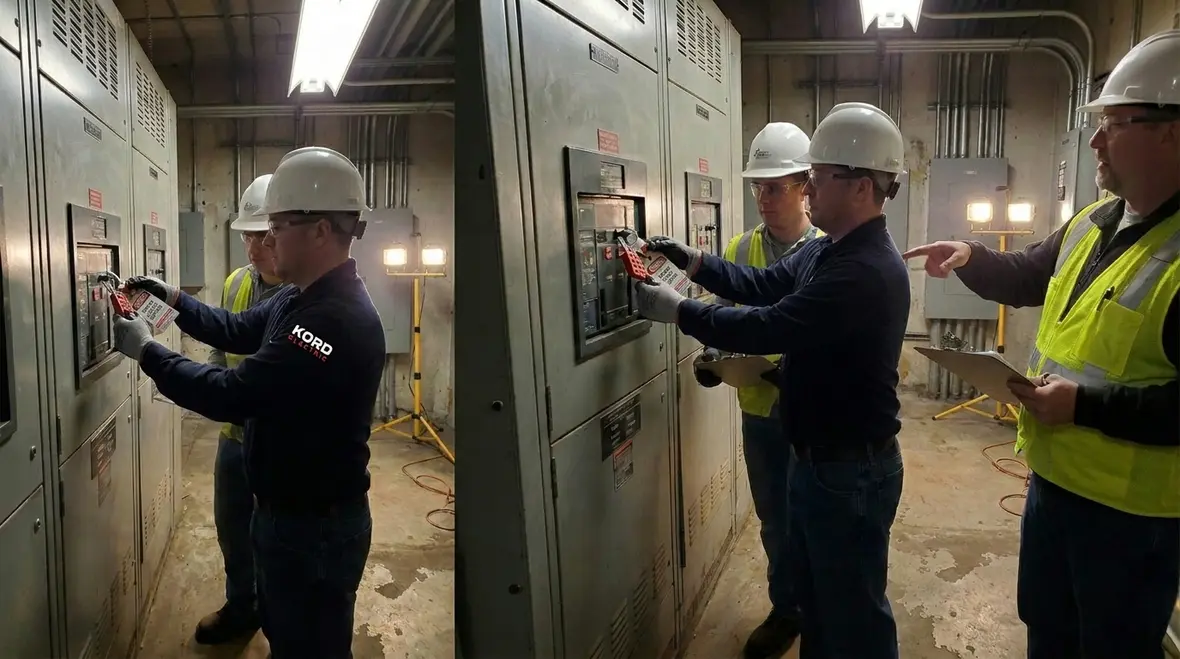
Training stays useful only when it changes behavior. So we help commercial facilities convert training into measurable practices that work under real schedules. While some companies treat training as a yearly event, we treat it as a living system that supports daily decisions.
To do that, our technicians and expert service staff focus on three practical steps. First, we verify that procedures match the equipment and layout. Second, we confirm that staff can explain and follow the process, not just repeat it. Third, we connect training to inspection records and maintenance history so the team can see trends.
For example, if a facility experiences frequent issues with breakers tripping or recurring insulation faults, training must address what staff should look for, how they report abnormal conditions, and how they coordinate with the electrical service team before troubleshooting begins. In that scenario, training becomes a prevention tool, not a compliance paper chase.
Also, when renovations happen, our team encourages updated training. A new tenant, new lighting system, or modified distribution changes the risk picture. Therefore, the building should not rely on last year’s training assumptions.
We often tie refreshed training to significant upgrades. If your facility just completed a major rewiring effort, insights from our rewiring cost guide for commercial electrical systems can shape what staff need to know about new panels, feeder routes, and shutdown procedures. When people understand what changed, they handle the new system with confidence instead of guesswork.
On the maintenance side, pairing Electrical safety training requirements with a structured electrical preventive maintenance program gives facilities a feedback loop. Findings from inspections influence the next training session, and training themes inform where inspectors and technicians look more closely. Over time, the building’s safety culture stops relying on luck and starts relying on shared, documented practice.
Dual column guidance for supervisors and facility teams
Supervisor and safety lead
- Set training schedules tied to work scope and changes in equipment
- Verify procedures for access control and work permits
- Review incident reports and near misses with the team
- Confirm documentation stays current, including labels and one line drawings
Maintenance and operations staff
- Follow safe work practices before entering electrical areas
- Use proper coordination for de energization steps
- Report unusual smells, heat, noise, and breaker behavior early
- Ask questions when the job does not match the procedure
This dual column view gives supervisors and staff a shared language. Instead of vague reminders like “be careful in the electrical room,” Electrical safety training requirements translate into specific habits on both sides. Supervisors commit to clear procedures and timely updates; staff commit to following those procedures and speaking up when they see a mismatch.
We also encourage leaders to connect this guidance to real projects. When planning a lighting retrofit, for example, insights from our lighting installation code compliance guide can help supervisors build checklists that align with inspectors’ expectations. Training then covers how the in house team supports those expectations before, during, and after the project.
Common training gaps in commercial and industrial buildings
Even when a company invests in safety, gaps still appear. They often show up in predictable spots. For one, training sometimes covers theory but misses the building specific details. Staff may learn how to work safely in general, while the facility’s panel arrangement, labeling quality, and access restrictions do not match what they expect.
Second, training frequently fails to include contractor coordination. Major property buildings often rely on outside crews for upgrades and emergency repairs. Therefore, supervisors need clear processes for how contractors enter, what permits they use, and how facility staff verify conditions before work begins.
Third, some teams train staff once and then stop reinforcing habits. Over time, new hires join, procedures drift, and people normalize risky behaviors. We help facilities keep training active by pairing it with inspections and service visits. Then, the staff sees the connection between safe practices and what our technicians find in the field.
And yes, we have seen the classic “the panel was labeled last year” excuse. Electricity does not care about last year’s label. It cares about how current and accurate the information is today.
Another common gap shows up when organizations expand into specialized spaces without adjusting Electrical safety training requirements. Commercial kitchens, labs, and coastal properties all introduce extra stress on electrical systems. Articles like our guide on commercial kitchen electrical upgrades and wiring or our coastal property safety insights help facilities see where humidity, corrosive environments, or high heat demand more than a generic safety talk.
Finally, documentation often lags behind reality. A building may complete a redesign, add new switchgear, or change feeder routing, yet the single line diagrams and training materials still show the “old world.” We encourage facility leaders to treat documentation updates as part of the project closeout, not an optional task. If people learn from outdated diagrams, they will make outdated decisions in critical moments.
FAQ: Electrical safety training requirements for commercial facilities
Commercial property teams ask many of the same questions when they start building or updating Electrical safety training requirements. The answers below focus on practical timing, responsibilities, and limitations so decision makers can set expectations with clarity.
Ready to strengthen electrical safety across your commercial property?
Kord Electric helps commercial and industrial facilities build real electrical safety training requirements into the way the site runs, not just the way it gets recorded. Our technicians and expert service staff explain risks in plain language, then they support procedures, documentation, and practical habits that protect people during everyday work and during emergencies. If your facility wants training that matches your equipment and your schedule, reach out to Kord Electric today for an assessment and an action plan you can run with.
When you are ready to connect Electrical safety training requirements with a wider reliability strategy, our team can integrate training alongside services like electrical preventive maintenance so your staff, systems, and schedules all pull in the same direction. That way, every inspection, upgrade, and troubleshooting call reinforces the same safety standards your team learned in the classroom and practiced on the floor.
Whether you operate a single major property or an entire portfolio, Kord Electric’s commercial and industrial services are built to support the training, maintenance, and project work that keep your electrical infrastructure ready for what comes next.