

NEC FMC Access Panels and NFPA 70 305.33 Compliance
Kord Electric helps commercial and industrial teams stay code ready, and we do it with clear field guidance. When our clients ask about NEC FMC access panels, we often start at the source: NFPA 70 Section 305.33. In plain terms, that rule explains how flexible metal conduit should get protected as it enters and exits equipment. We also show how to plan for access so technicians can inspect, maintain, and repair without tearing up half the building. And yes, our expert service staff explains it slowly and patiently, like a calm voice over a loud intercom that never seems to work on the first try.
To help you move from confusion to confidence, this article walks through what Section 305.33 requires at access points, how to choose proper fittings, and how good installation habits prevent failures later. Our focus stays on commercial and industrial facilities and major property buildings, because that is where access and reliability matter the most.
What NFPA 70 305.33 requires for FMC at access points
NFPA 70 Section 305.33 addresses flexible metal conduit at locations where the cable path meets an access point. In practice, it aims to protect the conduit and keep the wiring system workable over time. This matters because access panels and openings are where wear begins: someone bumps a cover, a gasket ages, vibration loosens parts, and moisture decides it would like a new home.
To comply, teams must treat access like a safety and reliability checkpoint, not an afterthought. Therefore, installers must plan how FMC ends connect to equipment and how openings are constructed so the conduit system stays supported and protected. As we explain to our clients, the goal is simple: you want a neat, inspectable, and serviceable path that does not invite damage.
In the real world, our technicians often see a common pattern. People install FMC carefully, then later they “improve” the layout by forcing a connector through a rough opening or skipping proper support. Next, inspections become a guessing game. Meanwhile, the building keeps running, because machines do not care about bad planning. Humans, however, do.
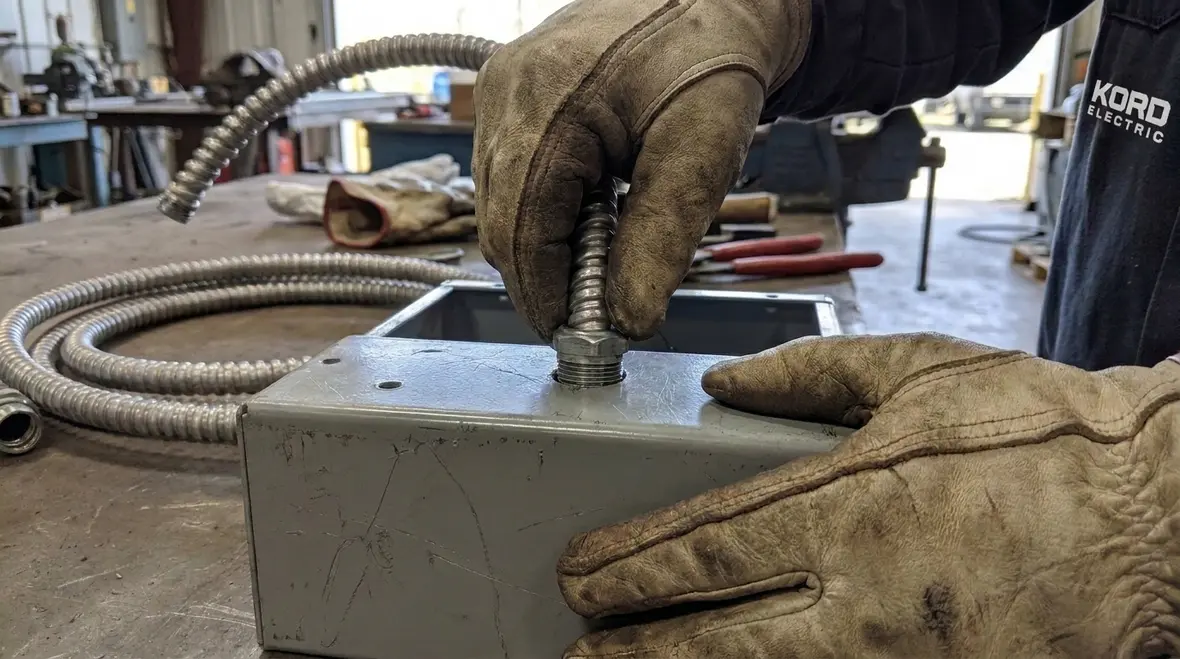
Why access panels matter more than most teams expect
When an electrical system sits inside a wall, ceiling, or service corridor, access panels become the bridge between daily operation and future maintenance. Over time, crews need to check terminations, look for corrosion, verify grounding continuity, and trace conductors if a fault occurs. If a system hides behind an access point that is poorly built or poorly sized, maintenance turns into a long detour through other trades.
That is where NEC FMC access panels come in. They support the conduit termination area, protect the connection point, and enable inspections. Also, a well designed access panel keeps the conduit route from being stressed. In other words, the conduit should not act like a rope holding up a loose cover.
Our expert service staff explains that correct planning reduces downtime. It also prevents the “we will fix it later” moment, which is how small issues grow up into expensive problems. For commercial and industrial facilities, that is not a vibe. It is a risk.
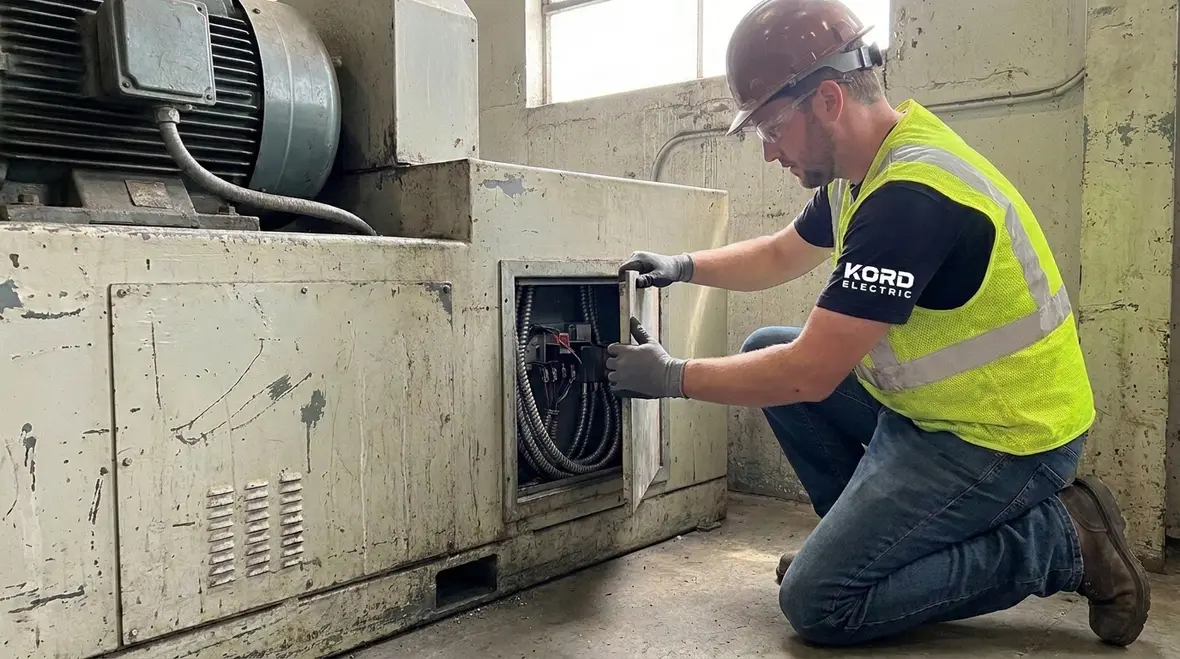
How we interpret FMC support, protection, and service readiness
Compliance is not just a checklist. It is how the system behaves when someone touches it, cleans it, inspects it, or troubleshoots it. Under Section 305.33, the conduit setup should support safe service access and keep the flexible metal conduit properly managed at entry points.
In field terms, our technicians look at three things in sequence. First, they check the connection method at the equipment or enclosure where FMC terminates. Second, they verify that the routing does not create strain at the flexible sections. Third, they confirm that the access opening and its hardware allow technicians to work without bending or pulling on conductors.
Then we connect the dots to the rest of the NEC approach. Earlier code thinking aims at long term reliability and safe maintenance. If the access area blocks a tool path, you get shortcuts during maintenance, and shortcuts create hazards. We see that cycle on major property buildings where multiple tenants come and go. Every change increases the chance that an access panel gets treated like a temporary solution.
To keep things stable, we help teams plan access locations during design and confirm details during rough in. That way, the conduit system stays aligned, the fittings stay seated, and the access cover becomes a routine step rather than a battle.
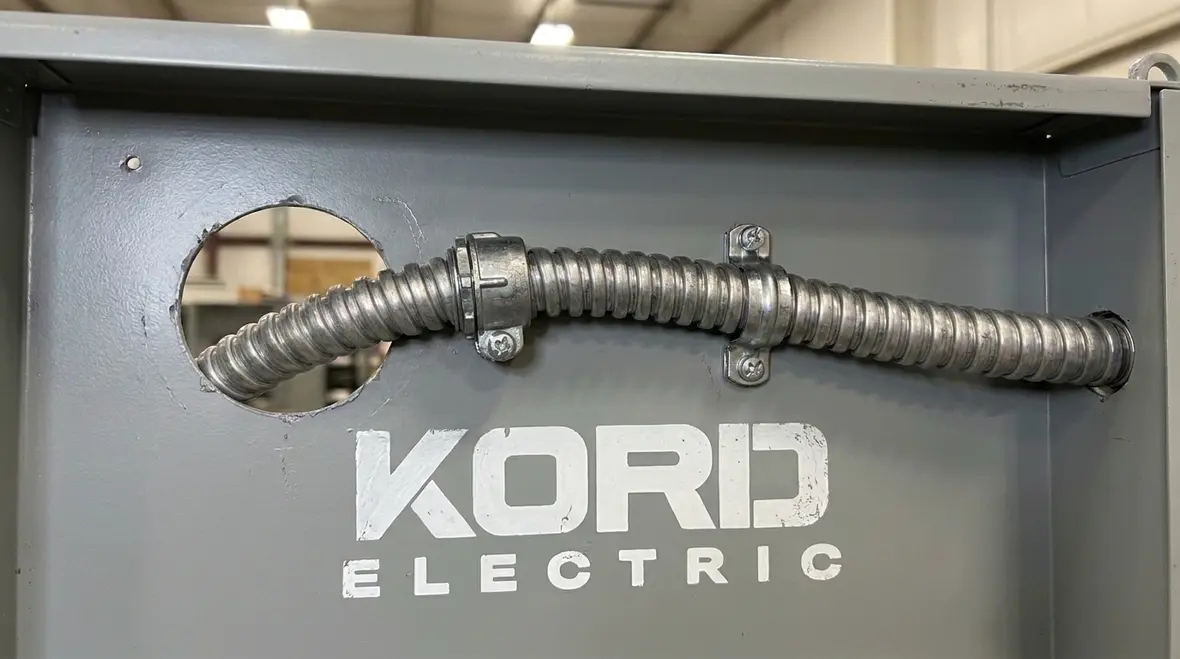
Real installation scenarios our technicians see on commercial sites
In commercial and industrial work, the details show up in everyday layouts. For example, we regularly encounter access panels behind electrical switchgear, distribution cabinets, and motor control centers. These areas need service clearance, and the conduit route must remain protected when covers open and close.
Here is how problems typically start, and how we help prevent them. First, some teams use an access opening that is too small. Then, during maintenance, someone forces a cover, which stresses the FMC termination. Next, the conduit support point loosens slightly, and over time vibration makes the situation worse.
Another scenario involves enclosure edges that lack the right protection. If the opening has sharp edges, the FMC connection area can face abrasion risks. Also, if the access panel hardware fails to keep gaskets and covers aligned, moisture can enter and create corrosion at the connection point. That is not a movie villain, but it behaves like one.
Our technicians handle these issues by verifying that conduit ends connect with fittings that match the equipment and by confirming that the access panel supports proper cable bend radius and strain relief. We also coordinate with facility managers and other trades so maintenance access stays consistent across tenant fit outs.

Choosing NEC FMC access panels that fit the job, not the drawing
A code compliant plan still needs a practical build. When clients ask about access panel selection, we steer the discussion toward performance. That means material choice, installation method, and service access, not just appearance.
In our experience with major property buildings, the right approach includes these practical steps. First, confirm the panel location so a technician can reach the enclosure without removing unrelated parts. Second, ensure the panel size supports inspection and safe tool use. Third, verify that the FMC route remains protected where it passes through or terminates near the opening.
At this stage, we also talk about future service. If a building expects upgrades, additional branch circuits, or equipment replacements, the access panel strategy should anticipate that change. Otherwise, the facility ends up with a patchwork of openings that all look different and none of them work as well as the first one.
Think of it like a coffee order. If you always ask for the same thing, you do not end up with a surprise decaf at 3 a.m. Access planning works the same way: consistent details prevent surprise failures.
How we verify compliance on site before inspections
Compliance lives in details, so we verify before the inspector arrives. Our process focuses on documentation and physical checks, and it stays focused on commercial and industrial facilities and major property buildings.
First, we confirm the conduit layout matches the plans, including access panel placement and the FMC termination location. Next, we check fitting types and ensure the conduit end treatment does not rely on improvisation. Then we verify that the access panel hardware allows technicians to open the enclosure without disturbing the conduit route or stressing connectors.
Finally, we look at labeling and clarity. Technicians service equipment faster when access points are obvious and consistent. Even the best FMC access panels fail to help if crews cannot identify where they belong.
If our clients want a deeper look, we also provide education. When we explain NFPA 70 and NEC requirements, our expert service staff ties the rule to how it prevents failures. That approach saves time, because the team understands why the details matter, not only what the rule states.
Safety and maintenance outcomes for facility teams
Once FMC access panels follow Section 305.33 expectations, facility teams get measurable benefits. Maintenance becomes faster because technicians can inspect and test without risky contortions. Inspections become smoother because the electrical system presents clean terminations and safe access.
Moreover, proper access planning supports safer troubleshooting. If a fault occurs, staff need to trace connections, verify grounding, and examine terminations. When access panels function correctly, they reduce the temptation to “temporarily” bypass safety steps.
And here is the part people often forget. Commercial and industrial buildings run on schedules. If electrical maintenance creates long delays, production and tenant operations suffer. By keeping access ready, teams protect uptime. That is not just code compliance. That is business continuity.
We also keep our work aligned with the broader guidance you find in reputable NEC resources and code explainers, including material published by Kord Electric and partners focused on the National Electrical Code. For teams that want to read more in their own time, we point them to our NEC related education and fire-focused code information at KordFire and KordFire Australia, because electrical safety and fire safety should not live in separate worlds.
If you are building a wider strategy around NFPA 70, you can also explore Kord Fire’s guide, “NFPA 70: All About the National Electrical Code (NEC) 2026,” along with Kord Electric resources like “How to Read NFPA 70 National Electrical Code” and other NEC field explainers that connect installation details to real-world reliability.
As you plan upgrades, it often helps to see NEC topics in context with other reliability work. Posts on commercial electrical infrastructure modernization, industrial power surge protection, and fire prevention in commercial electrical systems show how code compliance, maintenance, and system design all reinforce one another across commercial and industrial facilities and major property buildings.
For facilities in Los Angeles County and across Southern California, our NEC FMC access panel work fits into a broader service strategy. Kord Electric’s Los Angeles County electrical services support code ready installations, targeted upgrades, and ongoing maintenance so your access panels, conduit systems, and distribution equipment all follow the same reliable playbook.
Conclusion: let us make access panels part of a reliable plan
If your facility needs FMC installed and serviced without surprises, Kord Electric can help you plan the access points so technicians work efficiently and safely. We treat NFPA 70 Section 305.33 details as practical building reliability, not trivia. Our team verifies conduit support, termination protection, and access readiness before inspections, so code compliance becomes routine. Reach out to us to discuss your project. Then your next electrical service call can feel less like a mystery and more like a checklist done right.
For commercial and industrial facilities across Southern California, our NEC FMC access panel work can also be combined with broader electrical upgrades, preventive maintenance, and code focused consulting so your entire system — from raceways and access panels to switchgear and life safety circuits — follows the same reliable plan. When access is designed correctly from the start, NFPA 70 compliance becomes one more part of a stable, predictable electrical system instead of a last minute scramble.


