
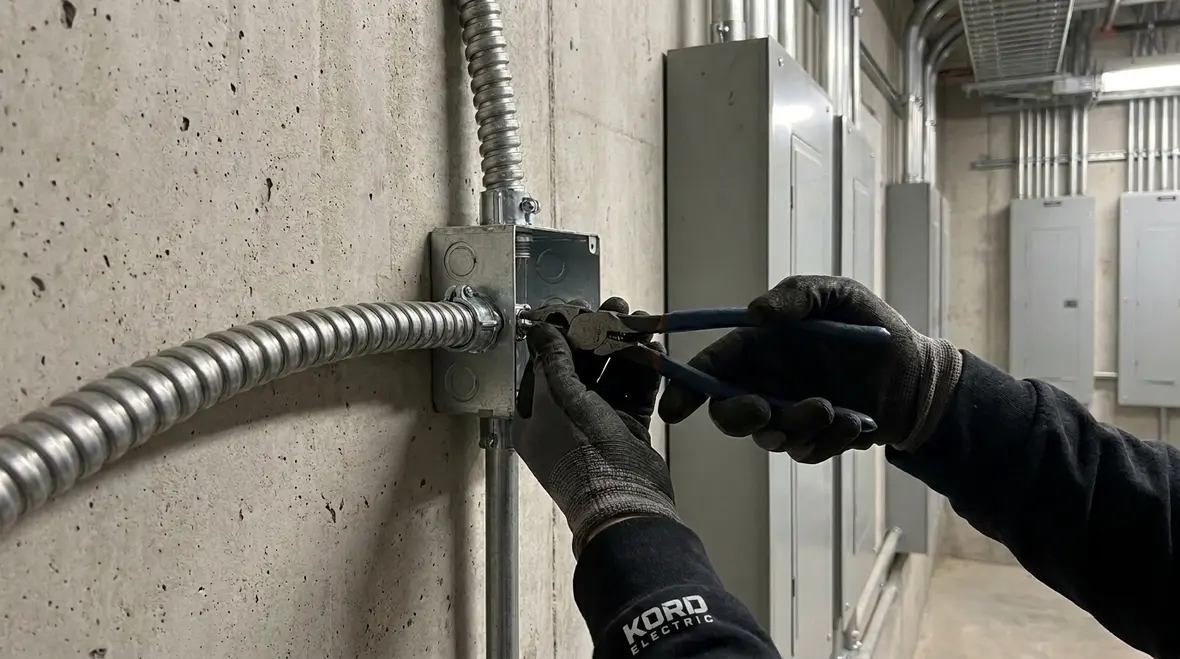
NEC FMC Electrical Continuity: How It Matters on Real Jobs
At Kord Electric, we take NEC FMC electrical continuity seriously because Section 305.20 requires electrical continuity for FMC and enclosures, especially where metal surfaces, connections, and protection meet. In plain terms, we make sure the electrical path stays dependable from the conduit system into the device or equipment enclosure. And when that continuity is right, we help reduce the chance of shock hazards, bad fault current paths, and nuisance problems that turn into long nights.
Because we work on commercial and industrial facilities and major property buildings, we see how small details become big compliance issues. So yes, we will talk about the code, and yes, we will also help you understand what field teams must do. No drama, just steady work. (Well, steady until someone tries to reuse an old fitting from a different site. That is where the comedy starts.)
What NEC Section 305.20 actually requires
Section 305.20 focuses on Electrical Continuity of FMC and Enclosures. It drives one core idea: when you install flexible metal conduit, and you connect that conduit to enclosures, you must maintain an effective electrical connection. This matters for the grounding and fault protection system, not just for “holding wires in place.”
First, FMC must connect to the enclosure in a way that preserves continuity. Then, the connection must stay reliable under normal conditions like vibration, thermal cycles, and routine building operations. In the field, that means we cannot treat FMC terminations like casual plumbing. Electrical continuity needs solid contact and a proper method that matches the code intent.
Our technicians explain it like this: if a fault happens, protective devices depend on the path back to ground. If the path is weak, the system can fail when it matters most. So we build continuity from the start and verify it during installation, not after the inspection clock starts yelling.
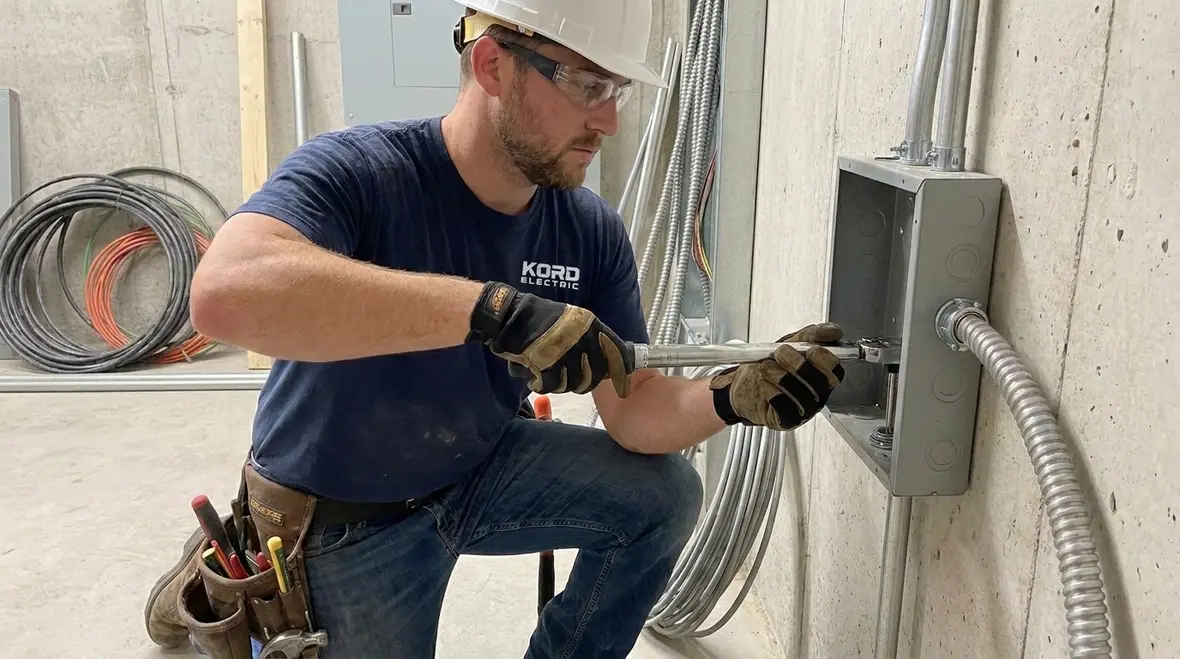
Where continuity failures happen in commercial and industrial installs
Even strong project teams can miss continuity details when schedules get tight. However, we notice the same failure patterns across many commercial and industrial sites and major property buildings. And once you spot the pattern, you can prevent it.
Here are the common trouble spots where our expert service staff focuses during walkthroughs:
- Loose or improperly seated fittings that do not bite into the conduit correctly
- Missing bonding jumpers or bonding methods that do not match the enclosure requirements
- Incorrect termination hardware used for the specific enclosure type
- Damaged conduit ends or burrs that interfere with metal-to-metal contact
- Paint, coatings, or contamination that block effective electrical contact on enclosures
At Kord Electric, we also see the “it looked fine” problem. People sometimes assume that because the wires pull smoothly and the cover fits, the metal pathway must be conductive. Instead, we treat continuity as a measurable requirement. We align conduit, choose the right fittings, and handle the enclosure connection so the code purpose holds up in real faults, not in theory.
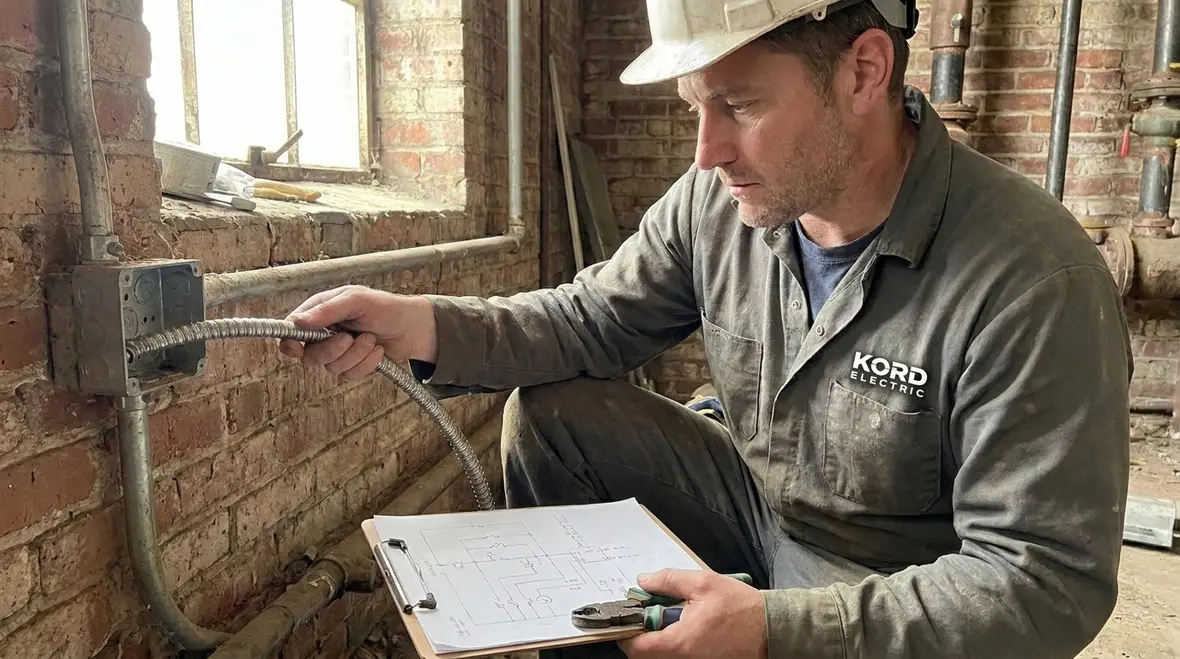
How our electricians build a dependable FMC to enclosure connection
To meet the intent of NEC 305.20, we plan the installation steps in a sequence that supports continuity. First, we confirm the conduit routing and termination points. Then we select hardware that supports bond and stability. After that, we install the conduit and terminate it with methods designed for lasting electrical contact.
Our team uses practical field checks and clear documentation. Moreover, we explain what we are doing as we do it, so facility teams understand the why, not just the what. When our technicians walk a property manager or maintenance lead through the process, they usually say the same thing afterward: “Oh. So it is not just wiring. It is the connection that carries the fault energy path.”
And yes, we keep it professional. But we also keep it human. If you have ever watched someone tighten a fitting like they are trying to open a stubborn pickle jar, you know why we train for correct torque and proper seating. We do not guess. We install to the requirement and the equipment design, because commercial and industrial systems deserve that level of respect.
Bonding, grounding, and fault protection: the job behind the requirement
Continuity is not a standalone goal. It connects directly to how grounding and fault protection work throughout the electrical system. When we install FMC correctly, we support the enclosure bonding network that helps protective devices operate during faults.
Consider the chain of events during an abnormal condition. A fault occurs at or near equipment. Current must return through an effective path. Then protective devices should trip based on available fault current. Therefore, continuity between the FMC and enclosures supports that effective path.
In practical terms, we also help teams avoid two common traps. First, we avoid “floating” metal parts that should belong to the bonding system. Second, we avoid assuming that equipment bonding exists automatically just because the enclosure is metal. Instead, we connect the conduit system correctly so the building’s grounding scheme stays intact across the installation.
For further code context and a broader NEC overview, we reference guidance from our own learning resources, including our NEC articles that explain the national electrical code approach for 2026 updates and how it impacts field decisions at major properties. In particular, facility teams looking for a deeper primer on how the rulebook shapes design, upgrades, and inspections often review Understanding NFPA 70: The National Electrical Code Explained for 2026, then connect those concepts back to day-to-day installation choices like NEC FMC electrical continuity.
We also keep a close eye on related fire and pump system considerations through trusted industry resources. When you handle both electrical and fire life safety systems in the same building, continuity matters even more because those systems rely on predictable fault paths, stable grounding, and dependable equipment bonding from end to end.
Planning for inspections and coordination on major properties
Our experience on commercial and industrial facilities has taught us something simple: if we plan continuity details early, inspections feel calmer. And calm is good, because everyone has better things to do than rush paperwork after hours.
When our technicians plan an FMC installation, we also coordinate with the enclosure design, device layout, and routing constraints. We then confirm the installation method works with the hardware and surfaces used on site. If an enclosure has a coating or an issue with contact surfaces, we address it before it becomes a failed point on the inspection line.
Additionally, we coordinate with other trades where needed. That includes making sure conduit runs stay clear of structural obstacles and that enclosure covers remain compatible with the termination method. Because in big buildings, small coordination issues create big rework. We reduce that by building a continuity-first mindset into the workflow.
When facilities in jurisdictions with detailed enforcement, such as Los Angeles County, plan upgrades and new installs, they also benefit from aligning NEC FMC electrical continuity with broader system decisions. Articles like Kord Electric’s guides to modern electrical systems and electrical code upgrade consulting help teams connect these details to bigger-picture reliability, especially when navigating Los Angeles County electrical services requirements and inspection expectations.
NEC FMC electrical continuity in real scenarios, explained
Let us talk through scenarios that match what we see on major property buildings. In each case, we focus on the connection between FMC and enclosures because that is where continuity either holds or breaks.
Scenario 1: Motor control equipment with multiple enclosures
When motor control devices sit behind multiple metal covers, technicians must terminate FMC into each enclosure correctly. If the metal-to-metal contact does not form properly, the fault return path weakens. Therefore, we ensure the fittings seat correctly and the enclosure connection maintains continuity.
Scenario 2: Flexible conduit in vibration-prone areas
Some commercial facilities include mechanical rooms with vibration. Because vibration can loosen poorly made terminations, continuity can degrade over time. As a result, we use secure installation practices and stable terminations that protect the continuity link long after initial commissioning.
Scenario 3: Enclosures with surface coatings
On some projects, enclosures ship with coatings or site conditions leave residue on contact points. If a coating blocks electrical contact, continuity fails even if the fitting “feels tight.” Then protective systems may not behave as expected. Therefore, we handle contact surfaces properly so the electrical path remains effective.
FAQ for NEC 305.20 and FMC enclosure continuity
Frequently asked questions, quick answers
Is this guidance only for new construction?
No. We also support upgrades and retrofits in commercial and industrial facilities when teams modify conduit runs, enclosures, or equipment layouts. Any time a project touches the FMC-to-enclosure interface, we treat NEC FMC electrical continuity as a current requirement, not a historical detail.
Do we support coordination with fire life safety systems?
We focus on electrical work for commercial and industrial buildings, and we coordinate with other system needs so continuity and code requirements work together on-site. That includes making sure the electrical infrastructure that supports fire alarm, emergency lighting, and other life safety systems respects the same grounding and bonding expectations that NEC 305.20 reinforces.
Can Kord Electric explain code requirements to facility teams?
Yes. Our technicians explain the “why” behind each termination so maintenance teams and property managers understand how the system protects people and equipment. We walk through real examples, reference Kord Electric’s broader NEC resources, and connect the dots between the text in the code book and the fittings, connectors, and enclosures your team sees on the job every day.
CTA: call Kord Electric for continuity-first electrical work
If you manage a commercial or industrial facility or a major property building, do not leave NEC 305.20 to chance. We install FMC and enclosure connections with continuity in mind, and we explain what we do as we do it, so your team understands the path that fault protection depends on. Call Kord Electric today to review your project details, plan inspection-ready terminations, and keep electrical systems reliable. Because in the end, continuity is not magic, it is craftsmanship, backed by responsible expertise.
When you are ready to pair NEC FMC electrical continuity with broader system upgrades, we also help facilities modernize their infrastructure, plan code-driven renovations, and align projects with NFPA 70 and local enforcement. Whether you are troubleshooting existing runs or planning new equipment, a continuity-first approach turns last-minute corrections into planned, documented workmanship.


