
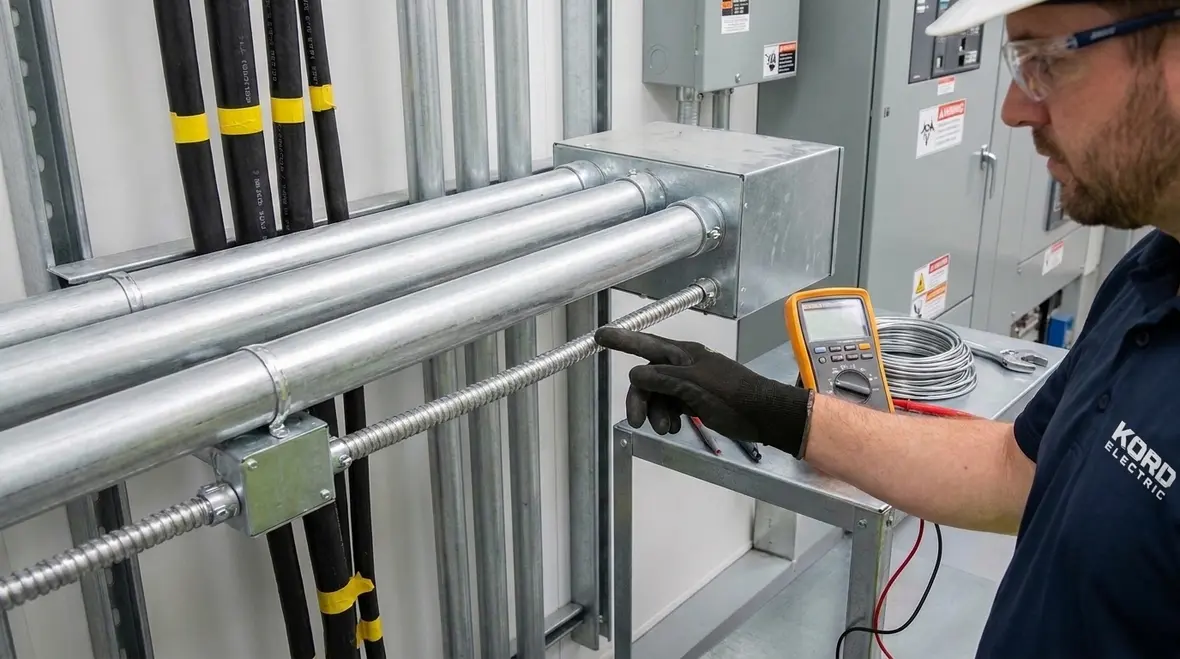
NEC FMC Induced Currents and NFPA 70 Section 305.30
At Kord Electric, we help commercial and industrial teams handle NEC FMC induced currents with clarity and control. In NFPA 70 Section 305.30, the code addresses how FMC metal raceways can create induced effects when nearby current-carrying conductors energize. In other words, the raceway is not just a pipe for wires, it can also act like part of the electrical story. And once you understand that story, you stop guessing, you start planning. Our expert service staff walks facility managers through the “why,” then we help you meet the “how,” with work that stays practical for real buildings. Because nobody wants surprises, not even if the surprise is a good one.
NFPA 70 Section 305.30 and why FMC induced effects matter
NFPA 70 is the National Electrical Code, and it sets rules that reduce shock and fire risk. Section 305.30 focuses on what happens when FMC runs near conductors that generate strong magnetic fields. As those currents change, they can cause NEC FMC induced currents to appear in the metal sheath or raceway. Then, those currents can lead to heating, nuisance behavior, or interference that complicates safe system operation.
So, when our technicians review design drawings and field conditions, we do not treat the raceway as passive. Instead, we treat it as a metal element that can carry energy where it should not. And yes, that is as exciting as it sounds in an electrical meeting.
Even so, the goal is not to panic. It is to understand the conditions that increase risk and then use correct installation practices, conductor routing, and grounding methods. When teams coordinate these steps early, they reduce rework and keep inspection outcomes smoother.
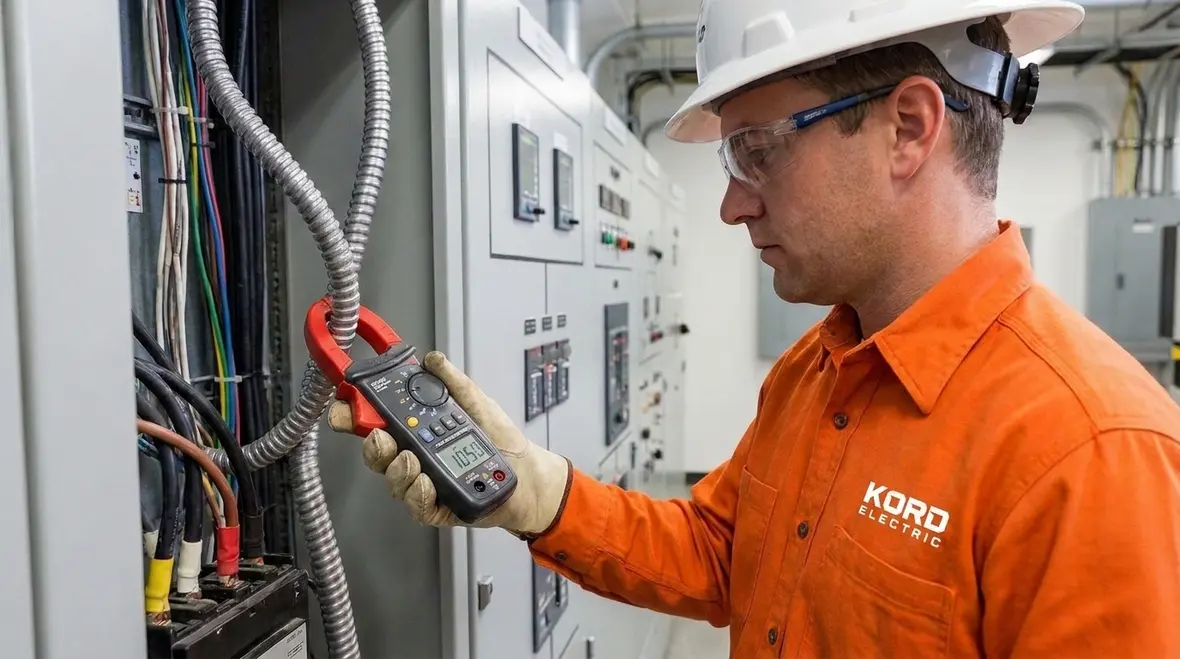
In parallel with Section 305.30, many facility teams also want a wider NEC view so they can see how temporary wiring, raceway methods, grounding, and protection all fit together. For that broader context, Kord Electric’s educational resources on the National Electrical Code for 2026 help connect the dots between section-by-section rules and the full system design, so induced current risks do not get treated like an isolated topic.
Where induced currents show up in real commercial and industrial sites
In major property buildings, industrial parks, and commercial facilities, the electrical layout rarely stays neat for long. Equipment moves, circuits get added, and systems get upgraded. As a result, NEC FMC induced currents become more likely when metal raceways run near sources like feeders, large motors, variable frequency drives, or other heavy loads.
Moreover, induced effects increase when conductors in the same area carry high current, when magnetic fields overlap, or when circuit timing makes current vary quickly. For example, if a facility upgrades HVAC drives, welding equipment, or production machinery, old raceway paths can suddenly sit closer to new sources. Then the installation may behave differently than expected.
Our expert service staff often sees this during retrofit projects. First, the drawings show one spacing. Then field conditions show another. After that, cables route around new equipment and the raceway ends up “too close for comfort.” We help teams verify routing plans, inspect existing pathways, and correct issues before they become a hot spot during operation.
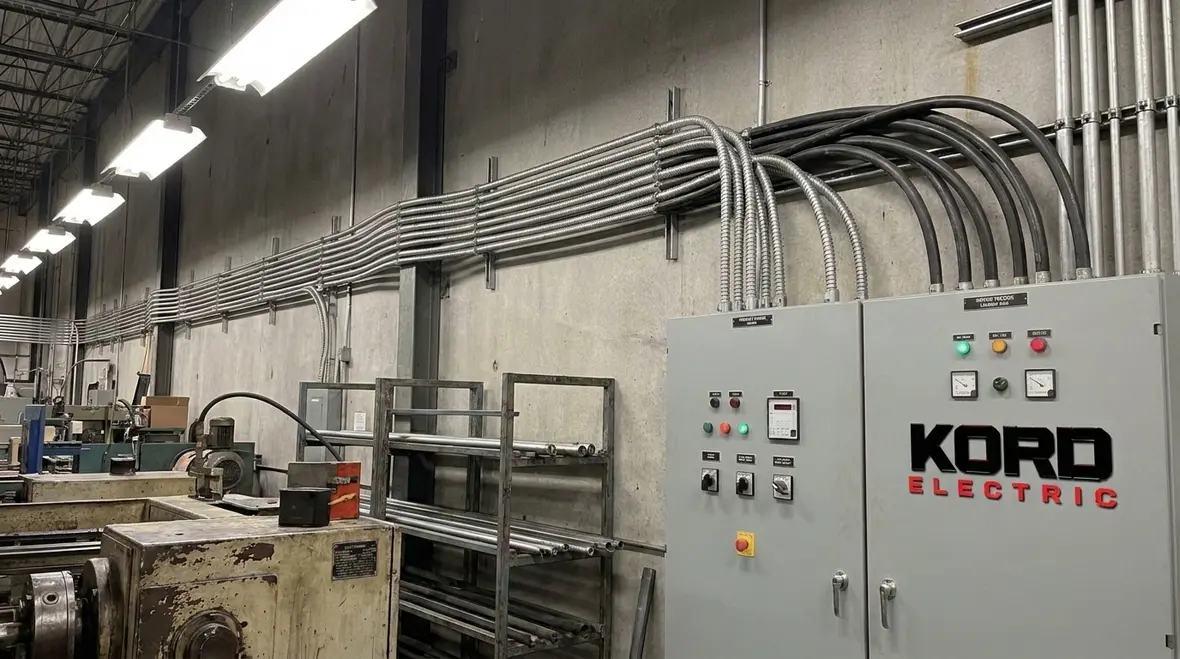
In facilities that already lean on Kord Electric for code-driven upgrades, our technicians often combine induced current reviews with broader electrical connection quality checks, grounding verification, and working space clearances. This keeps Section 305.30 decisions aligned with other NEC topics that influence heat, reliability, and maintenance safety in the same rooms where those FMC runs live.
How our technicians explain induced currents without the jargon fog
We explain the mechanism in plain terms, because most teams need a practical picture, not a textbook performance. In simple terms, current in nearby conductors creates a changing magnetic field. When that field intersects with a metal raceway like FMC, it can produce a voltage along the raceway. If the raceway provides a closed path, that voltage can drive current within the metal. That current can then add heat or increase stress in the installation.
Next, we show how installation choices influence the path. Good bonding and correct terminations reduce unsafe voltage and help control electrical paths. Proper spacing and routing can reduce the strength of the magnetic coupling. In addition, correct conductor separation can limit how much field overlap occurs.
We also connect the concept to safety outcomes. When we plan for NEC FMC induced currents in the design stage, we help teams avoid unreliable performance and reduce the risk of overheating at raceway connections. In facilities with inspectors on a strict timeline, this planning saves time and protects budgets.
And if that explanation sounds like a magic trick, we assure you it is not. We only use real tools, real measurements, and real field experience. The only “magic” is when the system passes inspection without a late night scramble.
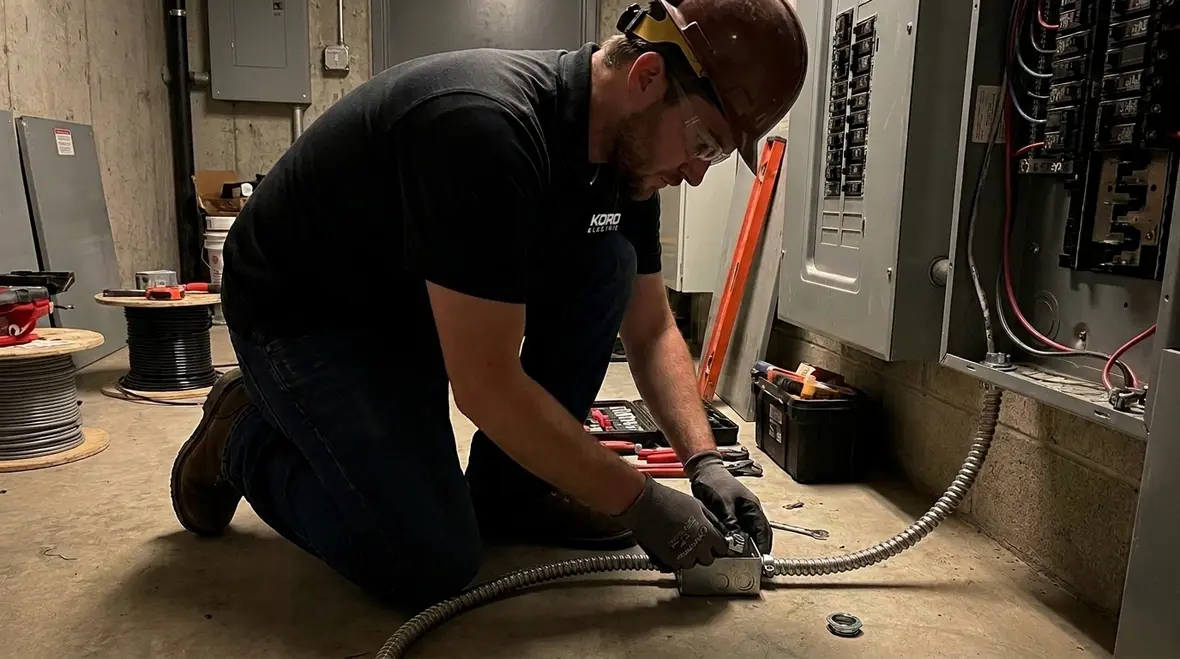
For facility leaders and engineers who want to pair this explanation with a bigger NEC roadmap, Kord Electric’s guide to understanding NFPA 70 for 2026 makes it easier to see how Section 305.30 fits alongside working clearances, grounding rules, and equipment connection quality, instead of treating induced currents like a one-off detail.
Design and installation steps that reduce induced effects
Code language matters, but execution matters more. Therefore, our approach for commercial and industrial facilities focuses on the steps that directly influence induced effects. While each project differs, these practices consistently improve safety and reliability.
- Review spacing and routing early: We help teams coordinate FMC runs relative to feeders, motor leads, and high current equipment.
- Use correct bonding and termination: Our technicians confirm raceway continuity and secure bonding at terminations to manage electrical paths.
- Check support and physical layout: Loose or misaligned raceways can shift over time, changing separation and coupling.
- Plan for upgrades: When electrical loads grow, the risk changes. We encourage a design that anticipates future equipment changes.
- Coordinate with the rest of the system: Grounding, conductor routing, and device placement should align, not conflict.
Then, we document what we find and what we change. This helps operators and maintenance teams understand the system without hunting through files later. Additionally, it supports smoother reviews during commissioning and electrical inspection.
If your facility uses Kord Fire solutions for life safety equipment planning, we help keep your electrical and life safety goals coordinated. That coordination matters in high occupancy spaces where timelines are tight and downtime costs real money. For major property buildings, a stable electrical environment also protects the reliability of detection and control systems, especially when power for those systems must follow the same NFPA 70 framework as the rest of your distribution.
For projects that combine electrical upgrades with fire and life safety changes, teams often review Kord Fire’s NEC-focused resources in parallel with Kord Electric’s own blog coverage, so induced current decisions in FMC raceways stay consistent with systemwide fire protection planning and emergency power behavior.
Inspection readiness for NFPA 70 compliance in FMC installations
When teams aim for compliance, they need clear evidence that the installation matches the intended design. Our expert service staff supports that goal with a field-first mindset. We verify installation details that most issues trace back to: bonding quality, raceway continuity, connection hardware, and routing discipline.
Furthermore, many induced current problems do not show up until the system operates under load. So we help teams think in operating terms. We review whether the FMC routes near conductors that create strong magnetic fields. Then we verify whether the installation maintains required separation and handles bonding correctly.
Also, we assist in bringing documentation into alignment with the field. That means closeout updates, labeling, and notes that make sense to the next person on site. In commercial and industrial settings, the “next person” might be your facility engineer, your contractor, or the inspector. Either way, clarity reduces friction.
And yes, we have seen plans get “creatively interpreted” by the field. We prefer a different outcome. We prefer clean installs, clear reasons, and code-aligned results. When Authorities Having Jurisdiction review Section 305.30 applications in your project, this preparation makes it easier for them to see that FMC routing, bonding, and separation choices all follow the same NEC intent they expect elsewhere in the building.
Related NEC topics teams confuse, and how we keep your project on track
Facility teams often blend topics in their heads, especially during fast-paced upgrades. They may remember a section about grounding, then mix it with separation concepts, then connect it to conductor sizing. While those ideas can relate, they solve different problems. When that confusion happens, induced effects can be treated like a “later issue,” when it should be addressed up front.
To avoid that, we connect the dots. Induced effects in FMC tie to how metal pathways respond to changing magnetic fields. Grounding and bonding manage electrical paths and safety outcomes. Conductor spacing and routing manage coupling strength. When you plan them together, you reduce risk rather than trading one problem for another.
In practical terms, our technicians treat the raceway system as part of the overall electrical design, not a last-minute install detail. Then, we align our work with the current NEC framework for commercial and industrial installations. For readers who want broader NEC context, Kord Electric shares code explainers and planning guidance through our blog resources, including our coverage of the National Electrical Code for 2026 updates. And for those focused on fire and life safety coordination, Kord Fire resources help teams integrate electrical design decisions with life safety needs.
We also encourage teams to use credible references, including guidance from organizations and technical communities that publish practical insights. For example, Fire Pumps resources can support planning teams as they evaluate system reliability and electrical dependencies for fire protection setups. Pairing that kind of technical guidance with NEC-focused explainers from Kord Fire and Kord Electric helps make sure your FMC raceway decisions match both electrical rules and life safety expectations.
If your facility leadership is mapping out a multi-year electrical strategy, you can also connect induced current planning with larger modernization topics such as working space clearances, surge protection, and infrastructure upgrades. Kord Electric’s blog on modern electrical systems for commercial buildings, for example, shows how code-aligned distribution, protection, and controls all interact with the same NEC backbone that governs FMC usage and raceway behavior.
FAQ: NEC FMC induced currents and NFPA 70 Section 305.30
Schedule expert help with Kord Electric
If your commercial or industrial facility uses FMC and includes high current equipment, do not treat NFPA 70 Section 305.30 like a checkbox. Kord Electric brings experienced technicians and expert service staff who explain the risks, verify the field conditions, and help you install and document electrical systems for smooth compliance. We support planning, retrofits, inspections, and coordination with related life safety goals. Reach out today and let us help you build with confidence, not guesswork.
For facilities across Southern California, that support can scale from focused consulting to full-scope electrical work. When your project extends beyond a single room or raceway run, our broader Los Angeles County electrical services help align NEC compliance, modernization goals, and day-to-day reliability under one coordinated plan.
If you are also revisiting your overall NEC strategy, pairing this article with Kord Electric’s explainer on understanding NFPA 70 for 2026 gives you a straightforward path from raceway-level questions to full-building planning. That way, NEC FMC induced currents become one more risk you manage on purpose, not a surprise waiting behind the next panel door.


