
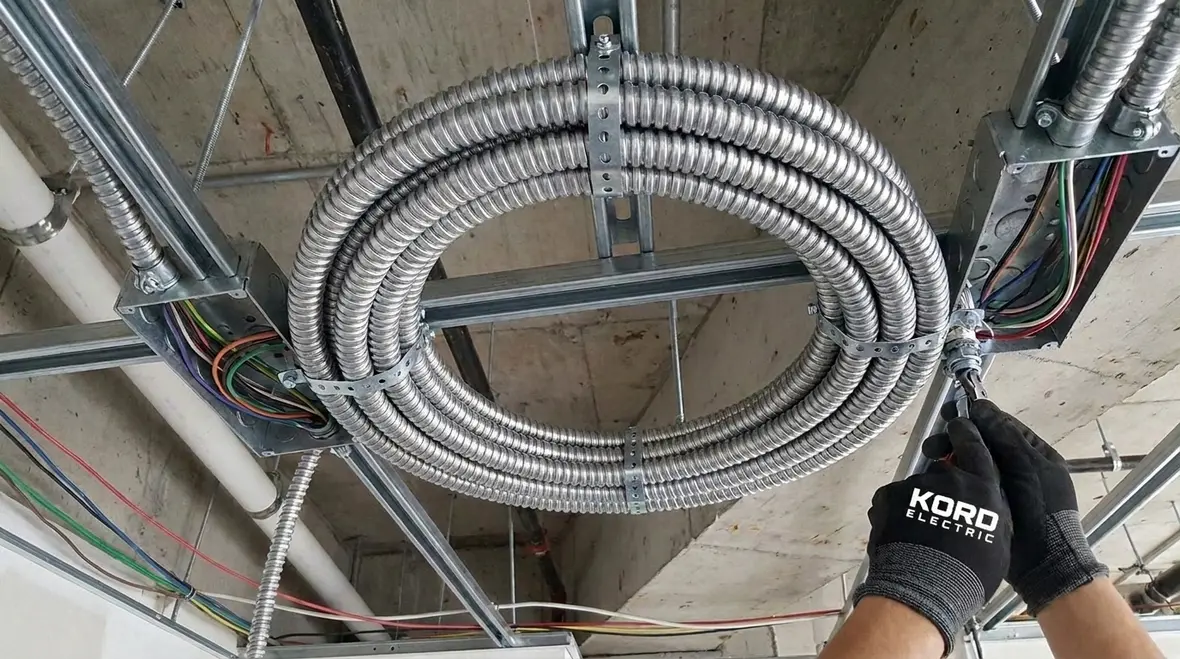
NFPA 70 305.28 Guide for NEC FMC Installation Best Practices
At Kord Electric, we follow NEC FMC installation best practices for flexible metal conduit because a good plan beats a rushed install every time. Our technicians and expert service staff take a careful path, starting with the right conduit type, then checking routing, support spacing, bend radius, and grounding details before a single fitting is tightened. In this article, third person readers will learn how NFPA 70 Section 305.28 guides flexible metal conduit in real commercial and industrial settings, including major property buildings where reliability matters and downtime costs real money. And yes, we promise to keep it calm, even if electrical work can sometimes feel like a sitcom plot where the wire always ends up in the wrong place.
NFPA 70 Section 305.28 and what it means on site
NFPA 70 Section 305.28 addresses how flexible metal conduit gets installed and supported. It focuses on physical setup that helps the system last, stay safe, and work as intended. In commercial and industrial facilities, these rules matter more than people expect. A small mistake can lead to worn insulation, loose connections, or a conduit path that behaves differently over time as equipment vibrates, floors expand, or building use changes.
According to our internal guidance and the NEC explanations we share in our materials, the key idea is simple: flexible metal conduit does not get treated like a casual accessory. Instead, it becomes part of the system. Therefore, the installer must plan the route and install it in a way that resists strain and supports the conduit along its length. Meanwhile, our expert staff explains these points in plain language so field teams can apply them, not just memorize them.
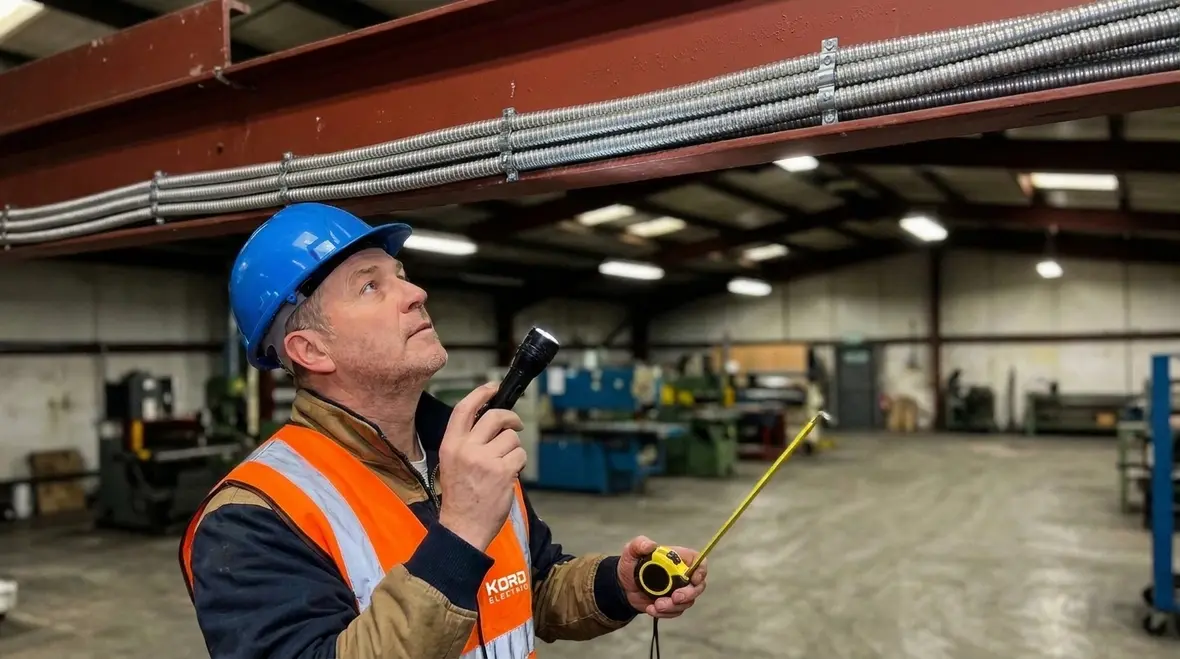
Choosing flexible metal conduit that fits the job
Before the team reaches the ceiling grid or the mechanical room, we begin with the right conduit selection. In large propertie buildings, the environment drives the choice. For example, moisture, corrosive exposure, heat, and physical damage risk all influence the best conduit approach. Thus, we make sure the flexible metal conduit is suited to the conditions and that the fittings match the conduit and the cable type.
When others skip this step, they often end up with a conduit path that looks fine during the walkdown and then fails during a maintenance event. For that reason, our technicians confirm compatibility and document assumptions for the site. We also verify that the conduit and fittings meet the required construction needs so the system stays tight and durable, not just “installed.”
This selection step also links directly to broader NEC expectations. Our team regularly references educational resources like Understanding NFPA 70: The National Electrical Code Explained For 2026 so that flexible metal conduit choices align with the overall wiring method strategy for the building, not just a single run above a ceiling.
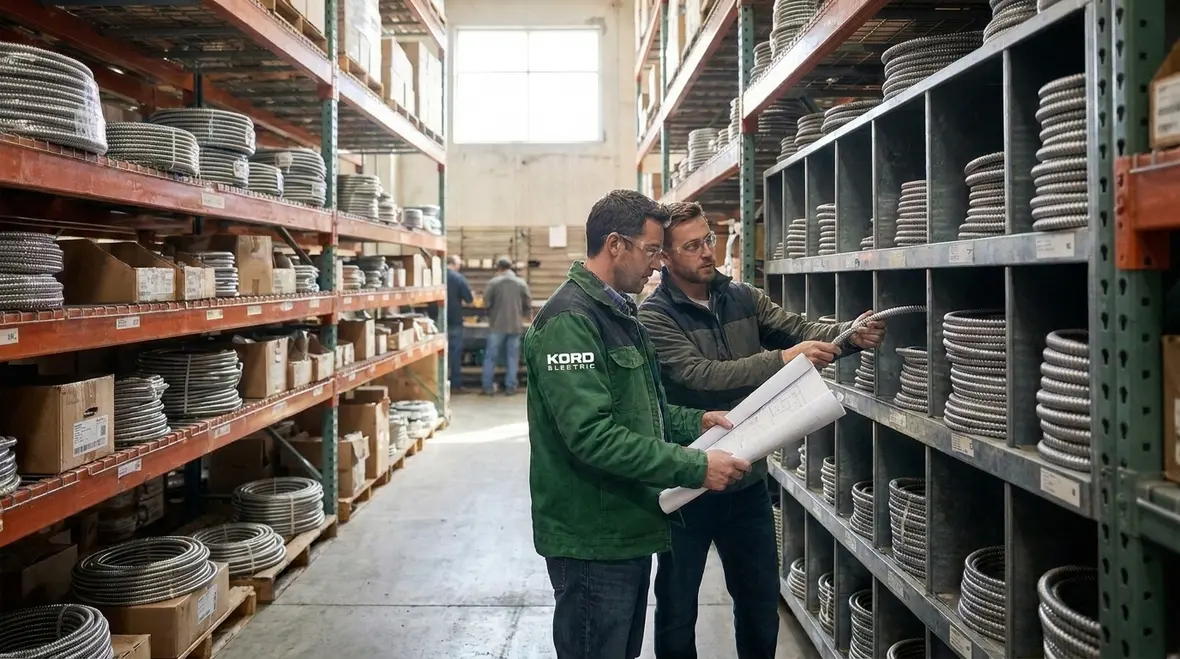
Routing and protection: keeping the conduit from getting beat up
After conduit selection, the next step is routing. Here, we guide crews to keep paths direct and avoid unnecessary tension. Flexible metal conduit handles some movement, but it still needs a stable plan. Consequently, the conduit should follow the intended route and not become a trampoline for strain.
In commercial and industrial installations, field changes happen. Someone adds a cable tray. A duct reroutes. A new piece of equipment lands where the old plan was. Therefore, we build routing checks into the process. We also confirm that the conduit does not cross areas where it will take impact or where materials will later get installed directly on top of it.
If the conduit must pass through zones that create rubbing, bending stress, or repeated pressure, we address the protection. Our service staff explains why this matters, using real site examples from major property buildings. They point out that the conduit can survive weeks of normal operation and still get damaged during a later renovation phase. That is the kind of surprise nobody wants, unless the surprise is that the project finishes early.
Support spacing and bend handling for reliable performance
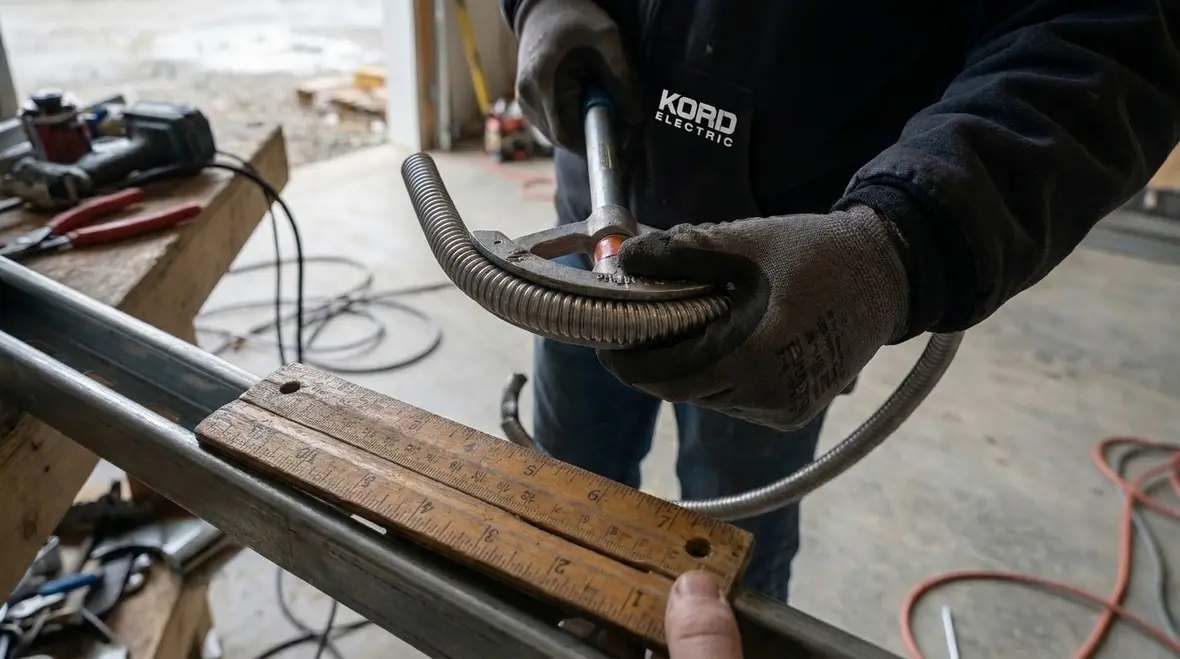
Flexible metal conduit needs proper support and careful bends. NFPA 70 Section 305.28 connects the dots between mechanical stability and safe operation. When the conduit does not get supported correctly, it can sag or stress the cable, especially at turns and near fittings. Over time, that stress can cause wear.
To prevent that, our technicians follow support spacing guidance and install supports that hold the conduit firmly. Then they check the bend radius. A tight bend can stress the cable and can also create strain at the connection points. Therefore, we plan bend locations and we use the right technique to shape the route without kinks or unnecessary tight turns.
And for the crews who think, “We can bend it a little more, it will be fine,” we calmly remind them that electricity does not accept jokes as engineering. The conduit must be installed so the system can handle the life cycle of the building and the work inside it.
Fittings, connections, and grounding details that matter
Where conduit meets fittings, the quality of the connection becomes the difference between a clean system and a messy one. Our expert service staff focuses on tightening, alignment, and correct use of fittings made for the conduit type. We avoid forcing parts to fit when the proper choice is to use the correct fitting.
Grounding and bonding also deserve attention. Flexible metal conduit can support electrical bonding requirements when installed correctly, but that only happens when the components integrate as intended. Therefore, crews verify continuity and ensure the conduit system ties into the grounding path per the NEC approach for the overall circuit design.
In a major property building, different trades work in the same spaces, and small gaps can appear after maintenance visits. So we perform checks at key connection points. We also train technicians to explain what they verified and why, because future troubleshooting becomes easier when records and logic exist.
Connecting NEC FMC installation best practices to real-world systems
These fitting and grounding checks do not happen in isolation. They tie directly into how breakers, panels, and other equipment behave during faults. By combining NEC FMC installation best practices with the broader code guidance we use across projects, our teams keep flexible metal conduit runs aligned with the same high standards that apply to busways, cable tray, and rigid conduit in major property buildings.
Inspection, testing, and documentation for commercial facilities
Once the conduit is in place, inspection and documentation finish the job. However, “inspection” should not feel like a paperwork hurdle. It should confirm that the installation matches NEC requirements and that the conduit system looks and performs as it should.
For commercial and industrial work, we also coordinate with facility teams and general contractors to confirm the conduit route and support layout. Then our technicians document key details such as route changes, support placement, fitting types, and any constraints encountered during installation. This practice helps reduce conflict later, especially in facilities where multiple systems share the same ceilings and walls.
As a bonus, good documentation turns future repairs from a guessing game into a fast, confident task. In the end, that keeps operations stable, which is the real goal.
How inspections connect to broader NEC compliance
When our team reviews flexible metal conduit work during inspection and testing, we also consider how it fits into the building’s overall NEC picture. That might include coordination with code upgrade efforts, AHJ expectations, or parallel work on panels and distribution. For facility teams planning larger improvements, resources like Kord Electric’s code-focused consulting articles help link individual conduit runs to long-term compliance and modernization strategies.
Common mistakes and how our team prevents them
Even strong teams can slip when schedules tighten. Yet flexible metal conduit failures often trace back to predictable errors. First, crews sometimes neglect the correct support plan, which leads to sagging and stress at fittings. Second, they may push bends tighter than allowed or plan routes without checking how the cable will behave. Third, some sites skip verification of fitting compatibility, then rely on “it should work.” Fourth, grounding details may get treated as an afterthought.
To prevent these issues, our technicians run a step by step checklist before close up. They examine routing, confirm support locations, verify bend behavior, and check connection quality. Meanwhile, our expert service staff offers calm, direct explanations that help field crews understand the “why,” not just the “what.” That way, the installation stays correct after the inspector leaves and the building team continues the work.
And if you are wondering whether this sounds like overkill, consider this: the electrical system does not care how busy the schedule felt. It only cares how the conduit sits, bends, and bonds.
Using NEC FMC installation best practices as a project checklist
On major projects, we treat NEC FMC installation best practices as a living checklist, not a one-time reminder. That checklist follows the job from preconstruction through closeout, so every flexible metal conduit run gets the same disciplined review. The result is fewer callbacks, smoother inspections, and a conduit system that supports the building instead of surprising it.
FAQ: Flexible metal conduit and NFPA 70 guidance
Call Kord Electric for dependable conduit installs
Kord Electric supports commercial and industrial facilities and major property buildings with skilled technicians and an expert service approach that stays focused on safe installs. If a project needs flexible metal conduit installed with strong NEC FMC installation best practices, we help reduce rework and protect your schedule. Contact us to discuss your building, your routing constraints, and your compliance needs. We will explain the plan clearly, then install it with the care that keeps systems running long after the temporary lights are gone.
For facilities in Southern California and beyond, our teams handle everything from localized conduit upgrades to full commercial system work. If you are planning broader electrical improvements, explore our Los Angeles County electrical services to see how flexible metal conduit work fits into a complete, code-aligned project strategy.
Whether you are preparing for an AHJ review, coordinating renovations, or simply want flexible metal conduit that behaves the way the drawings promised, Kord Electric brings planning discipline and calm, code-informed execution to every run.


