
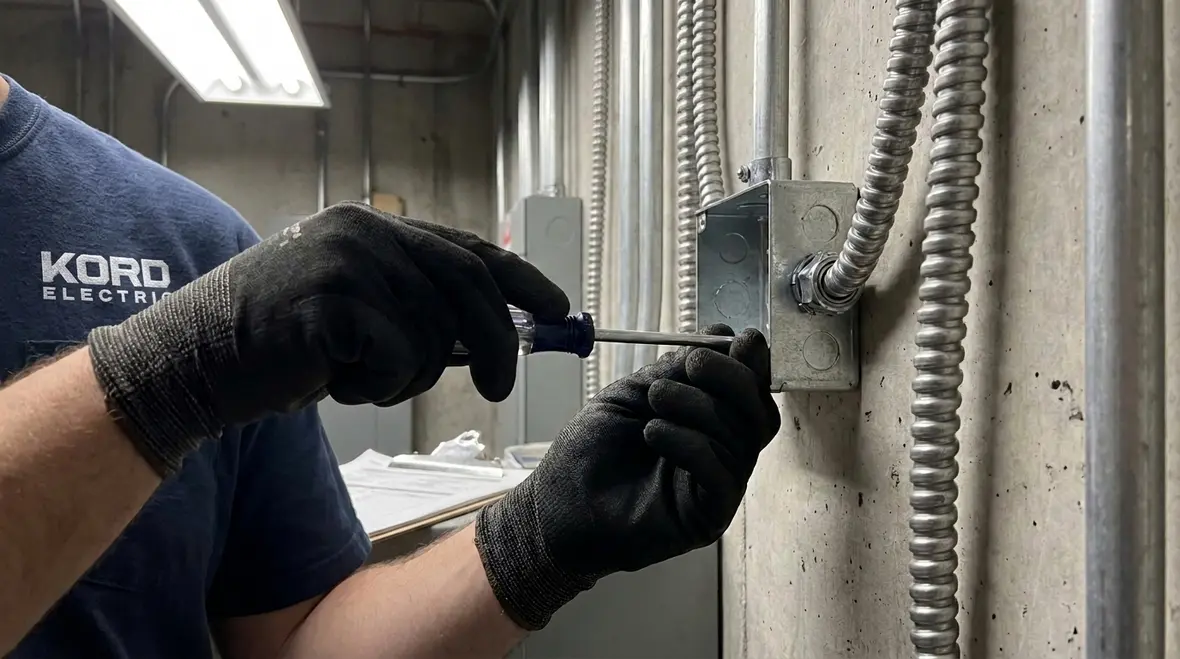
NEC FMC Boxes Fittings Required in NFPA 70 305.25
Kord Electric helps commercial and industrial facilities follow the rules that keep power systems safe and reliable. In this guide, we focus on NFPA 70 Section 305.25, specifically the requirements for NEC FMC boxes fittings required for FMC. To get it right, our technicians and expert service staff explain what the code wants, why it matters, and how to apply it on real jobs. We do it with calm confidence, because electricity does not care about your deadlines, your budget, or your favorite action movie. It will still run exactly where physics tells it to.
NFPA 70 Section 305.25 and FMC in plain terms
NFPA 70 Section 305.25 sets expectations for how electrical conduits using FMC connect to boxes and fittings. FMC stands for flexible metal conduit, and it is often used where the design requires flexibility, vibration resistance, or easier routing through complex building layouts. However, flexibility does not mean “anything goes.” The code limits how FMC must terminate, and it also defines what boxes and fittings must do at those terminations.
When a facility installs FMC, Kord Electric expects compliance at every connection point. Therefore, we treat Section 305.25 as a system requirement, not a single detail. First, we verify the conduit type and installation method. Then, we confirm the box types and fittings that accept that conduit. Finally, we review the entire run so the termination makes sense mechanically and electrically. That sequence prevents the “we will fix it later” situation that always shows up later, like a villain in the third act.
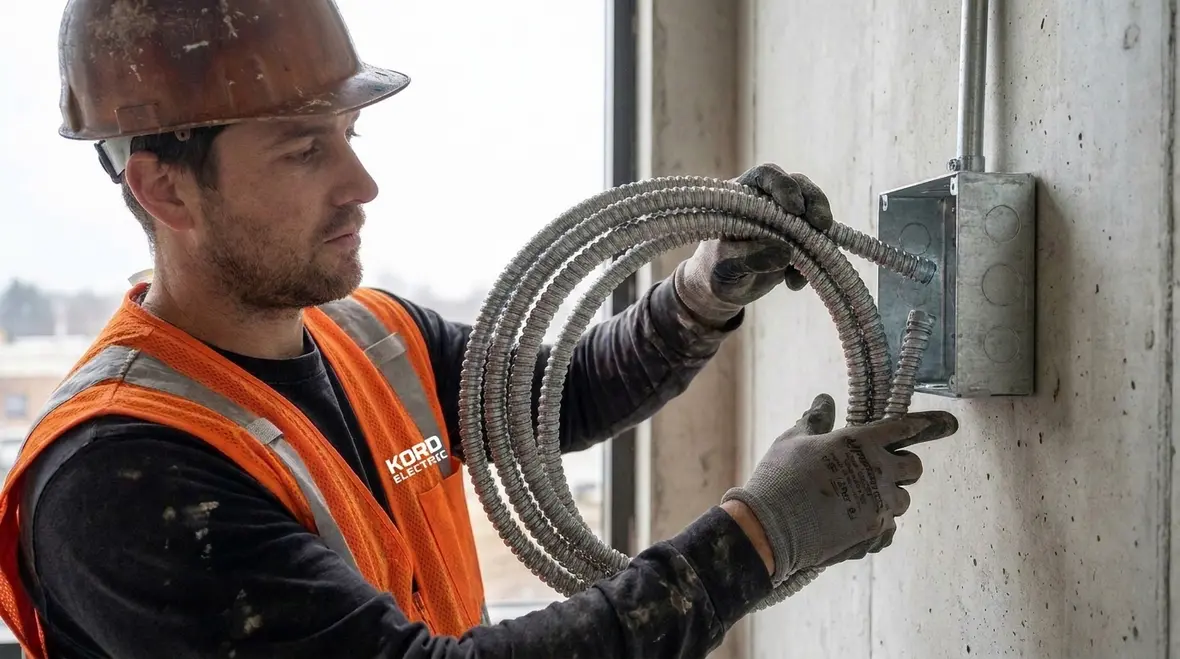
What the code requires for boxes and fittings on commercial runs
Under Section 305.25, the core idea is simple: the box and fitting used with FMC must provide a secure and code compliant termination. In commercial and industrial work, this matters because systems must survive installation stress, building movement, and long term service. Even if a connection looks fine to the eye, it can fail later if it does not meet the mechanical intent of the NEC.
To stay compliant, we guide our clients to confirm two things during design and installation.
- Box suitability for the termination method used with FMC
- Fitting compatibility to ensure the conduit can connect properly and remain secure
Moreover, we emphasize that the box does not exist in isolation. It must match how the conduit enters it. If the fitting cannot grip or transition correctly, the run becomes more likely to loosen or expose hazards. Consequently, Kord Electric often reviews rough in drawings and installation plans before crews lock in anything that would be difficult to correct later.
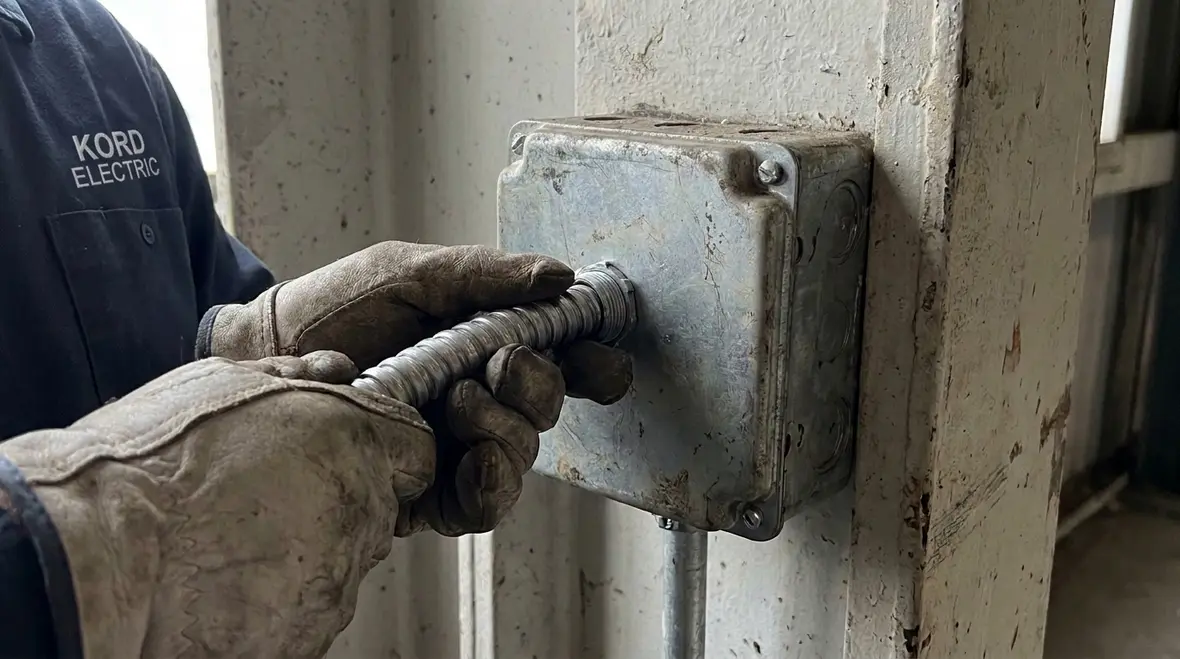
How FMC transitions into boxes without inviting trouble
FMC transitions into boxes through a fitting, and that fitting needs to do several jobs at once. It must provide a proper connection, maintain stability, and support safe wiring practices. If the fitting setup is wrong, the system can develop points where the conduit moves independently of the termination, or where the connection fails to maintain a secure path.
In practice, we see problems fall into predictable categories. First, crews may use fittings not intended for the specific conduit type or the box construction. Then, they may install the conduit in a way that does not fully seat within the fitting. After that, they may skip final checks because the run “looks straight.” Unfortunately, the code cares about more than appearance.
Our expert service staff explains the “why” behind each step. For example, they remind teams that FMC relies on its termination details to behave correctly. In other words, the conduit can be perfect, but if the termination is careless, the whole connection becomes unreliable. It is like building a great stage set, then forgetting to bolt the floor. The show may start, but the audience will feel it when things move.
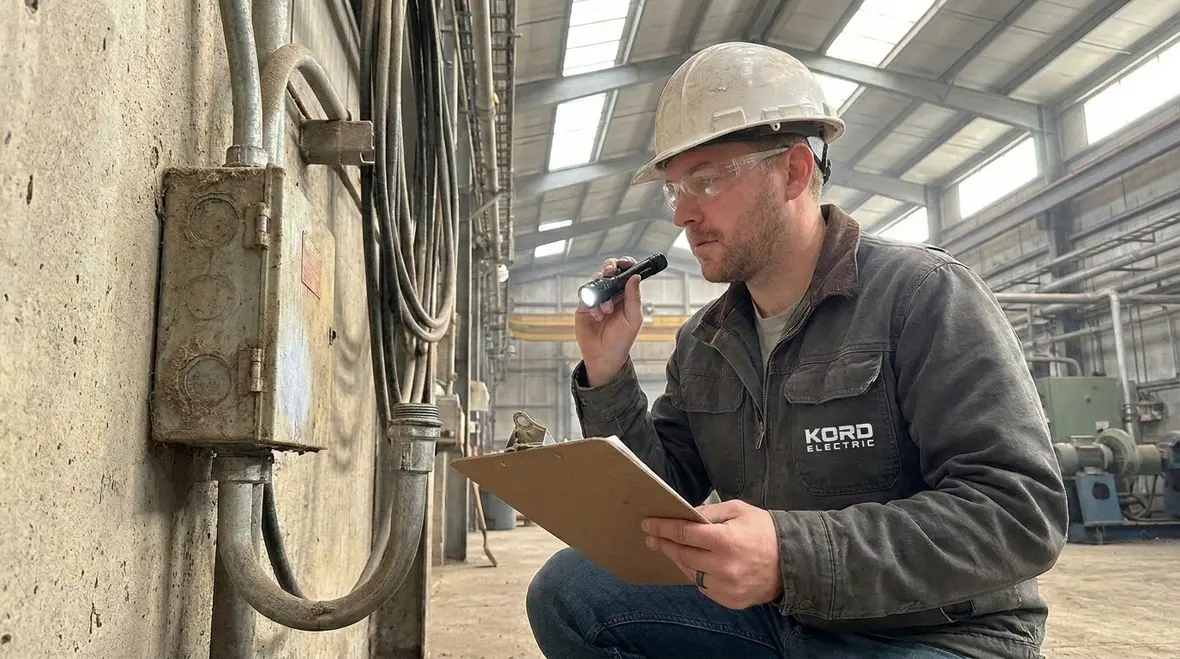
NEC FMC boxes fittings required: inspection focus that avoids rework
On large commercial and industrial facilities, inspection readiness saves money. It also protects your schedule. Therefore, Kord Electric plans our installs and our documentation to match how inspectors verify compliance. For many projects, the inspection focus lands on whether FMC terminations to boxes meet the NEC expectations in Section 305.25.
To support that goal, we apply a practical checklist approach. We confirm the conduit type, the fitting type, the box type, and the installation method. Then, we document it in a way that ties to the code intent. This reduces back and forth and prevents unnecessary rework.
Here is how we approach typical verification steps.
- We verify the box and fitting selection aligns with FMC termination
- We confirm that the conduit ends are prepared correctly for the fitting
- We check that the installed connection remains secure and properly aligned
- We ensure the wiring work inside the box supports safe conductors and complete installation practices
Next, we train on the details. Our technicians show field teams how to recognize a proper seated connection. They also explain how to avoid shortcuts that lead to loose terminations. And yes, sometimes we use a light joke to keep people engaged, because even professionals deserve a smile while they work. Electricity still wins, but at least everyone laughs before the meter does its job.

Common field mistakes we prevent for major property buildings
Commercial and industrial environments often involve high loads, dense cabling, and tight coordination with mechanical and architectural scopes. So, when FMC runs are placed, the site reality can pressure teams to “move fast.” Kord Electric counters that pressure with clear guidance and on site supervision.
We regularly prevent mistakes that can jeopardize compliance and reliability.
- Using mismatched fittings that do not provide the correct termination behavior
- Failing to seat conduit fully in the correct coupling or connector arrangement
- Allowing misalignment so the conduit binds at the termination point
- Skipping final checks that confirm the box and fitting assembly holds securely
In addition, we consider how the building interacts with the electrical system. Vibration, movement from structure changes, and long term service all influence performance. As a result, our technicians review the route and termination location so the installation can handle real world conditions, not just the first day after inspection.
When our clients work with us, they also benefit from calm communication. We explain requirements clearly and we keep the tone professional and business casual, because the goal is progress, not confusion. If someone wants a deeper dive, our team supports it, including references and code context as needed.
Supporting code compliance with Kord Electric and trusted resources
Kord Electric supports major propertie buildings and commercial and industrial facilities through careful planning, strong installation practices, and an inspection minded approach. We also educate teams so the compliance mindset sticks beyond the scope of a single project.
We often connect our practical guidance to broader NEC education materials published by our partners, including helpful explainers on the National Electrical Code and related topics from Kord Electric blog resources and Kord Fire resources. For teams that want a wider picture, we encourage them to review current NEC related guidance from code education sources and fire and electrical safety organizations, including resources from sites like Kord Fire’s NFPA 70 overview and related NFPA 70 explainers. When people understand the bigger framework, they apply the details with more confidence.
Meanwhile, our local expertise matters. Even when two facilities look similar on paper, details like conduit routing, box location, and coordination with other trades change the outcome. Therefore, our technicians bring field experience that turns code language into correct jobsite decisions. For teams that want a stronger foundation before they dive into Section 305.25 details, we often suggest reviewing our internal resource “Understanding NFPA 70: The National Electrical Code Explained for 2026” so everyone starts from the same playbook.
And when facilities in Southern California want help applying that playbook on real projects, they use our Los Angeles County commercial and industrial electrical services to plan, install, and verify systems that meet both NEC and local expectations.
FAQ: NEC FMC boxes fittings required
Call Kord Electric for code confident FMC terminations
If your project involves commercial or industrial power systems, Kord Electric helps you handle NEC details with precision. We send our technicians and expert service staff to guide box and fitting selections for FMC terminations, so your installation aligns with NFPA 70 Section 305.25. Then we support your teams with clear explanations and inspection ready checks, because rework is never a fun surprise. Contact us to review your scope, confirm your plan, and keep your facility compliant from first conduit to final inspection.
For facilities that want to connect these FMC details to broader electrical reliability, our team often pairs this work with services like system assessments, emergency power planning, and data driven electrical design so your NEC compliance also supports uptime, safety, and long term maintenance.


