
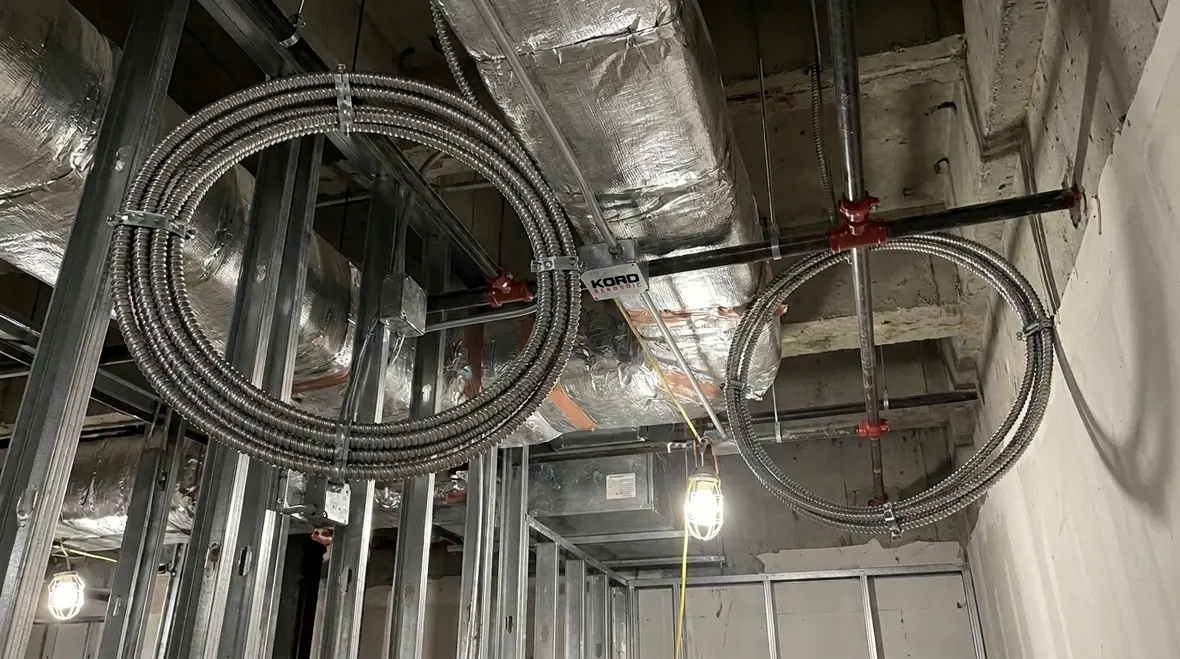
NEC FMC in Ducts and Plenums Requirements and Safety
NEC FMC in Ducts and Plenums: what NFPA 70 requires for safer wiring
At Kord Electric, we regularly support commercial and industrial facilities with NEC FMC plenum duct wiring that meets the rules laid out in NFPA 70. In fact, NFPA 70 Section 305.32 focuses on how FMC in Ducts and Plenums gets installed, because smoke and heat do not care about your schedule. We explain this in plain terms because our expert service staff knows that code talk can feel like a pop quiz from a textbook that never smiled back.
In the sections ahead, we cover what Section 305.32 demands, why it matters for real buildings, and how our technicians verify the details on site. We also connect the dots to broader NEC safety goals for commercial and major property buildings.
Why duct and plenum wiring has to follow tighter rules
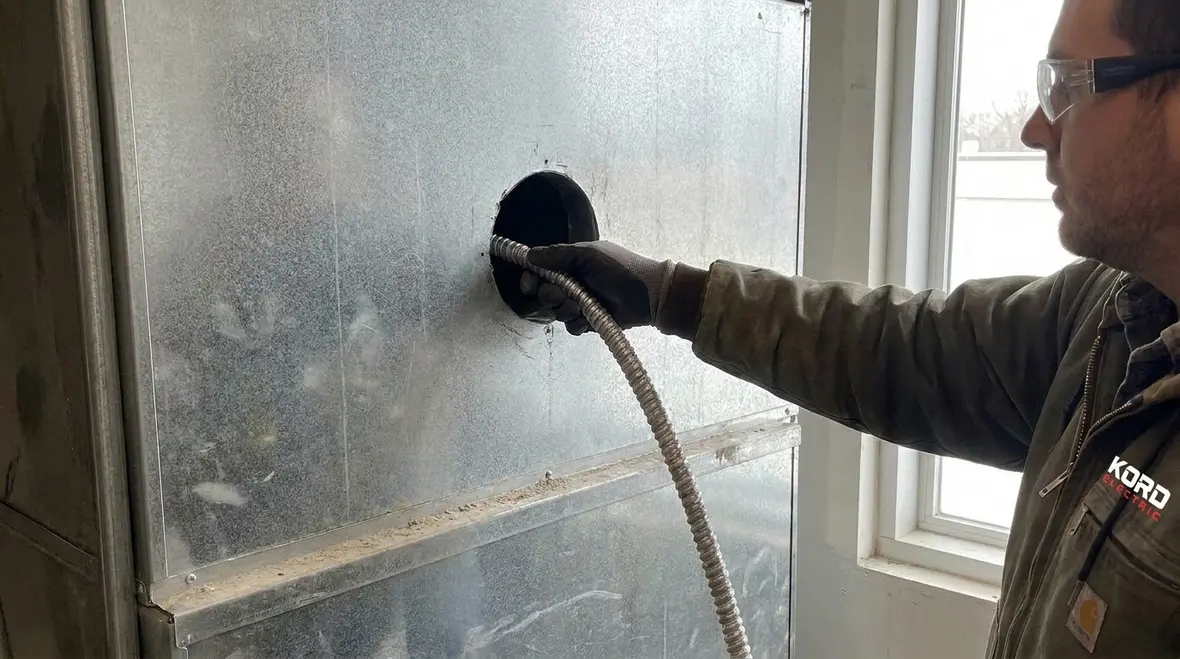
Ducts and plenums move air, and air moves fire. Therefore, wiring paths inside these spaces can impact how flames and smoke spread. When a facility has life safety systems, HVAC routing, and smoke management strategies, electrical installations must not undermine that plan. Additionally, inspections often zoom in on these areas because they create unique risk, especially where heat buildup and ventilation effects can stress cables and raceways.
FMC, or flexible metal conduit, seems simple on paper. However, when it enters a duct or a plenum space, it faces conditions that are different from standard wall or ceiling cavity runs. Because of that, NFPA 70 Section 305.32 sets expectations for construction, placement, and compliance, rather than letting installers use a one size fits all approach.
Our team at Kord Electric treats this as a systems topic. We do not just ask, “Is it installed?” We ask, “Is it installed in a way that still protects the building when the environment gets ugly?” And yes, we have heard the joke, “Nothing ever happens until it does.” In electrical work, that joke gets retired fast.
NFPA 70 Section 305.32: the core requirements in plain language
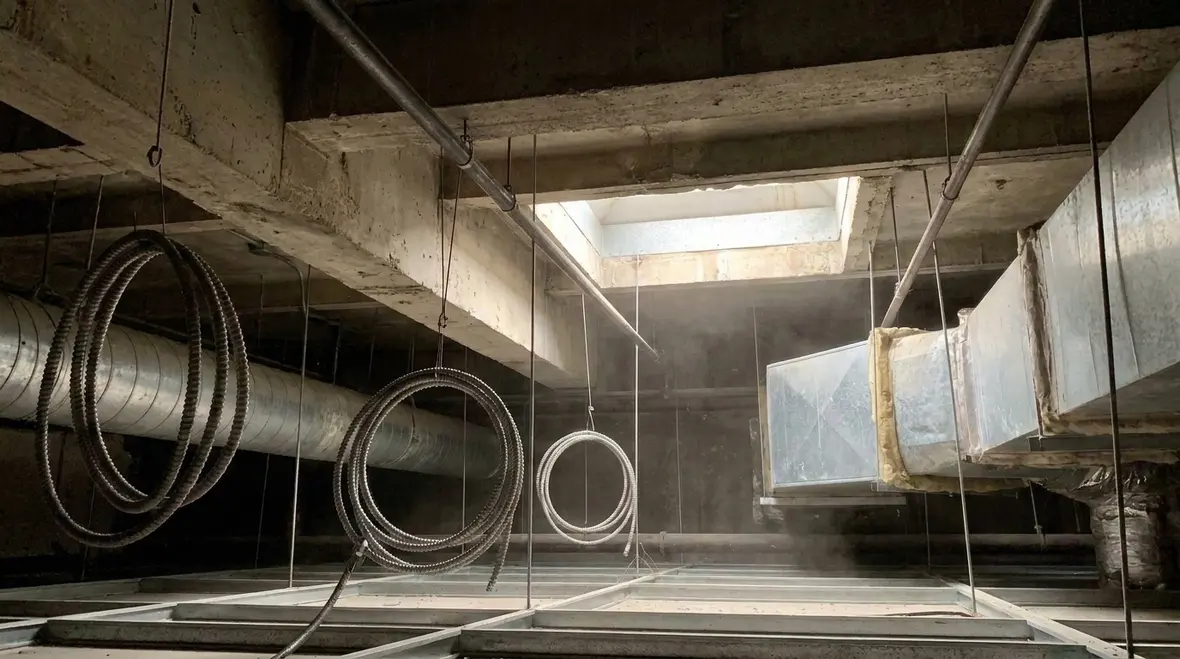
NFPA 70 Section 305.32 addresses FMC in ducts and plenums per NEC, and it focuses on how flexible metal conduit gets routed and installed in these spaces. The rules matter because conduit routing in a duct system can affect mechanical integrity and can also complicate the safe behavior of the electrical system during abnormal conditions.
As a baseline, electricians and contractors need to follow the NEC requirements that apply to both the raceway and the wiring method. Then, they must match the installation to the limitations that govern use of FMC within duct and plenum spaces. Put simply, the NEC does not “ban” the concept outright in every case, but it does restrict the method through careful installation rules.
What does that mean for a real commercial job? It means our technicians verify key details before and during installation. For example, we confirm that conduit routing stays within the intended space and does not create sharp stress points or unsupported spans. We also confirm the conduit termination approach so the system does not become a weak link when the building heats up.
And because field conditions change, we keep the process flexible while staying strict. We coordinate with facility teams, mechanical contractors, and project managers so the electrical layout respects duct geometry and fire rated concepts, rather than fighting them like two teams trying to use the same parking spot.
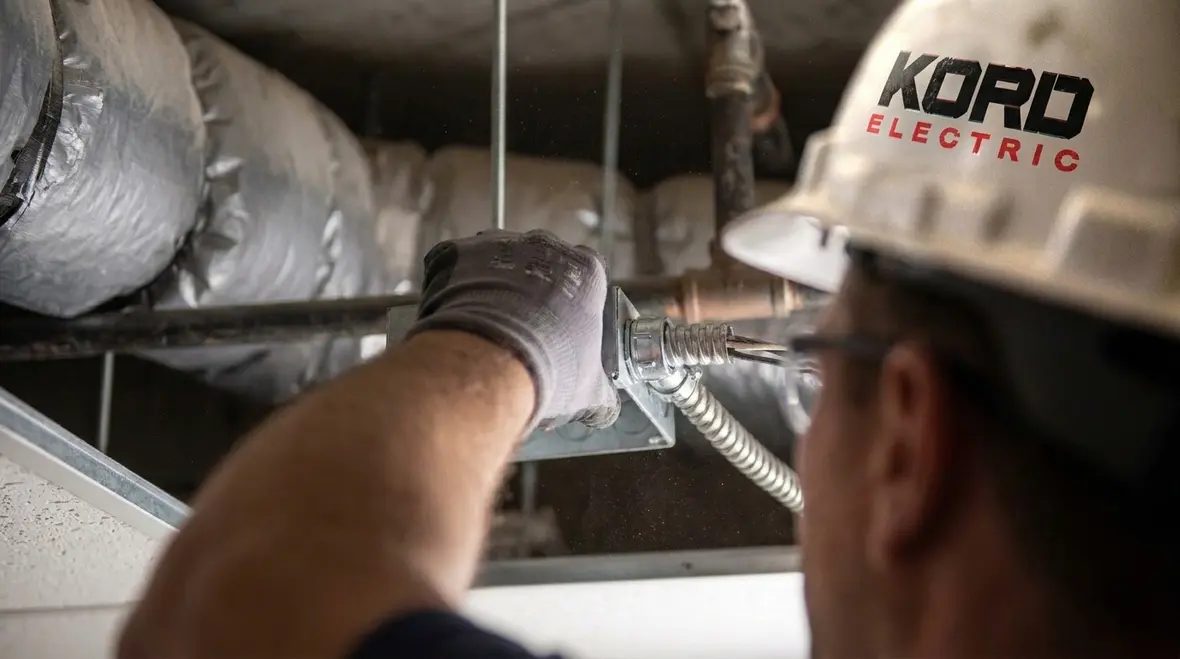
How our technicians verify FMC installation in plenum and duct spaces
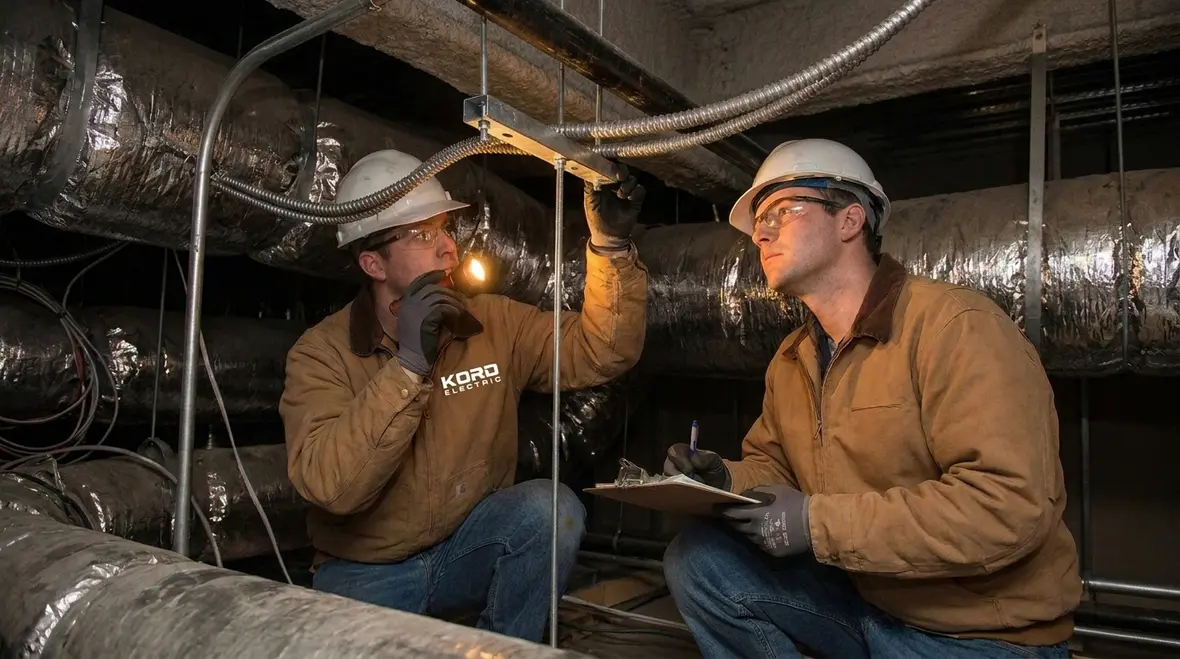
Even when the theory looks clear, real life adds details: crowded ceilings, changing duct routes, and schedule pressure. That is why Kord Electric trains and uses experienced technicians to do verification the same day the work happens, not after the inspector leaves. Our expert service staff walks the route, checks the surroundings, and makes sure the method aligns with the NEC intent.
Typically, we focus on the practical compliance items that prevent failures later. Below are examples of what we look for during commercial and industrial installations.
- Routing control: We confirm the conduit path follows the permitted conditions for placement and does not interfere with duct function or create unnecessary exposure.
- Support and spacing: We ensure the conduit remains supported and stable so it stays aligned and does not sag or stress fittings.
- Termination quality: We check fittings and terminations for secure connections and proper handling so the raceway system remains intact.
- Coordination with mechanical work: We coordinate with HVAC teams to prevent duct changes from forcing electrical methods into non compliant positions.
- Documentation for review: We keep project records tidy so the facility team can show the “why” behind the install during turnover.
At this point, a contractor might say, “We installed it and it works.” That is like saying a seatbelt works because it is still attached. We make sure it works within code boundaries, and we explain those boundaries to our clients so they understand what they are paying for.
Common mistakes we help facilities avoid
We see certain issues show up again and again in commercial and major property buildings. Therefore, it is worth spelling them out, so teams can prevent rework and reduce inspection headaches.
First, some installers treat duct and plenum spaces like ordinary ceiling cavities. However, these spaces behave differently during fire and airflow events. As a result, normal shortcuts can become serious safety gaps.
Second, some projects rush coordination between electrical and mechanical scopes. Then the duct layout changes, and the conduit ends up relocated under pressure. Even a small shift can cause the conduit to sit where it should not, or it can compromise support needs.
Third, some teams ignore termination details. Yet termination and fitting quality determine whether the conduit system holds up as intended. If a connection fails, the entire raceway approach can fall apart.
Fourth, facilities sometimes rely on “we’ve always done it this way.” Meanwhile, code updates, enforcement patterns, and project requirements evolve. Kord Electric stays current by reading the code context carefully and by applying field based checks that match the NEC goals.
And yes, we have heard the classic line from the field: “It is fine, the inspector will understand.” Inspectors usually understand. They also have deadlines. So we avoid the drama early.
Working with Kord Electric in major property and industrial builds
Commercial and industrial facilities need dependable electrical work that stands up to turnover, testing, and long term operation. At Kord Electric, we help owners, developers, and facility managers by supporting the install process with trained technicians and clear communication. In other words, we do not just build; we explain.
To connect this to broader NEC awareness, many teams also review the overall National Electrical Code framework so they can see how one installation rule supports others. For a deeper dive into that big picture, facility teams often reference our resource Understanding NFPA 70: The National Electrical Code Explained for 2026 so everyone can align on why NEC requirements read the way they do.
Then, when a project involves duct and plenum spaces, our approach becomes more deliberate. We help make sure the electrical method, the raceway path, and the surrounding construction work together instead of against each other. If you want a steady partner for commercial and industrial builds, we show up, we verify, and we keep it calm.
For teams looking for additional code context, resources like Kord Electric’s NEC focused blog content and related fire safety code discussions can help build shared understanding across trades. We also encourage owners and property teams to review guidance from organizations like firepumps.org when fire system coordination plays a role, because electrical safety does not live in a vacuum.
And if your facility is planning wider upgrades, our commercial service offerings support everything from tenant improvements to heavy industrial work. For example, building operators across Southern California rely on our Los Angeles County electrical services when they need code aligned installations that keep projects on schedule and aligned with NEC, NFPA, and OSHA expectations.
FAQ: NFPA 70 Section 305.32 and FMC in duct and plenum spaces
Need compliant duct and plenum electrical work? Call Kord Electric
If your project includes ducts, plenums, or other high attention areas in a commercial or industrial facility, do not leave compliance to chance. Kord Electric brings trained technicians, clear explanations, and code aligned installation checks that help protect people and reduce costly rework. We coordinate with your team, we verify details on site, and we keep the process steady from rough in to closeout. Contact us today to discuss your scope and get a compliant plan you can stand behind.
Whether you are working through NEC FMC plenum duct wiring on a single project or planning a portfolio of upgrades, our commercial and industrial services team can help you build a wiring approach that respects duct geometry, life safety strategy, and the realities of your schedule. When the code language feels dense, we translate it. When the field conditions get messy, we organize them. The goal is simple: safer installs, smoother inspections, and buildings that behave the way the design team intended when it matters most.


