
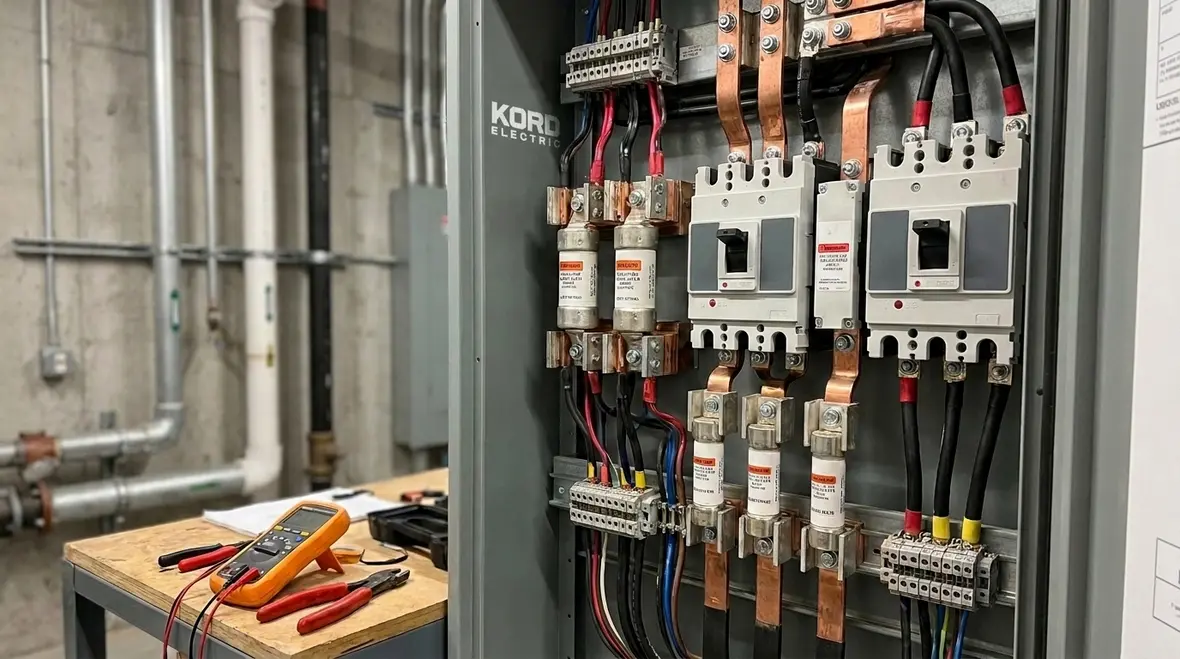
NEC fuses breakers in parallel: Section 240.8 Guide
NEC fuses breakers in parallel: what Section 240.8 really means for commercial and industrial power
At Kord Electric, we see a lot of electrical designs that want the same goal: keep power reliable when demand rises and equipment ages. So when our clients ask about NEC fuses breakers in parallel, we explain it plainly, using NFPA 70 Section 240.8 as the backbone. In practice, we help teams choose setups where fuses and circuit breakers coordinate safely, and where the system protects people and equipment instead of playing “surprise roulette” with faults. And yes, we get it. Faults always show up uninvited. That is why our expert service staff makes the rules feel understandable, not mysterious.
In this article, our third person guide walks through what Section 240.8 allows, what it restricts, and what field teams must verify in commercial and industrial facilities. Then, it ties those rules to real coordination work our technicians perform on major property buildings, so the design stays compliant and the operation stays calm.
NFPA 70 Section 240.8 and the purpose of parallel overcurrent protection
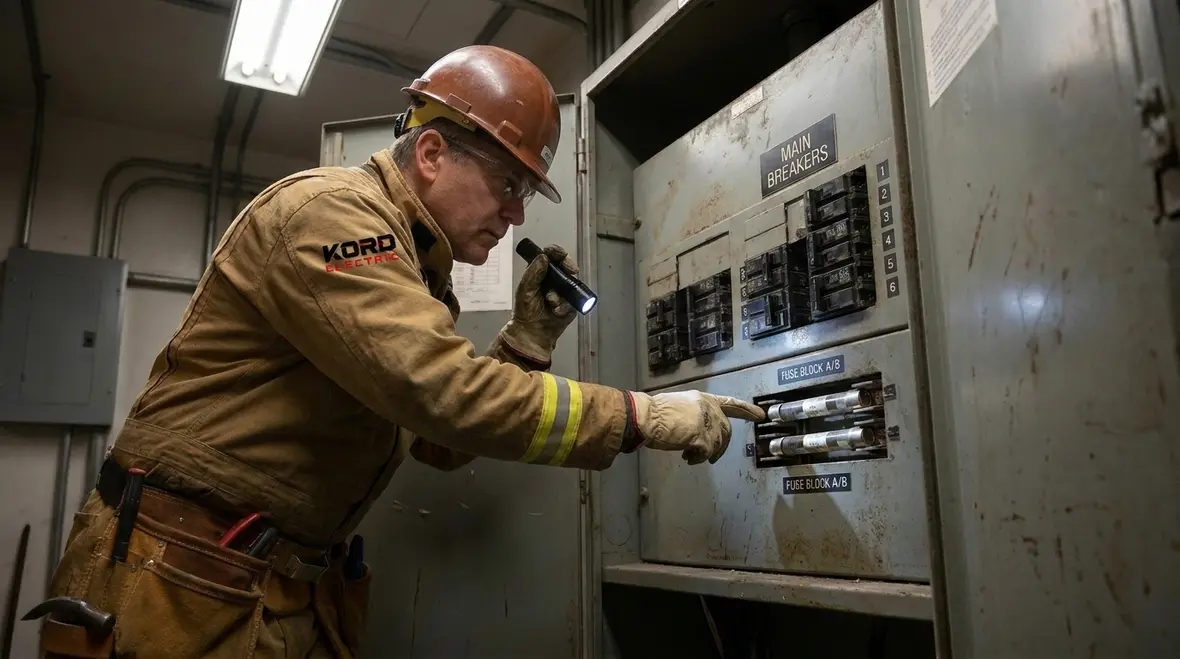
NFPA 70 Section 240.8 exists for one main reason: when protection devices work in parallel, they can either cooperate or fight. If they fight, the wrong device may clear at the wrong time, leaving parts of a circuit unprotected or causing nuisance interruptions. Therefore, Section 240.8 sets rules so the overcurrent devices coordinate properly.
To explain it, our technicians use a simple model. When current rises beyond safe levels, the protective device should respond in a predictable way. However, in a parallel arrangement, differences in fuse characteristics, breaker trip curves, and installation conditions can create timing and current sharing issues. As a result, the system may not disconnect as intended.
Additionally, Section 240.8 emphasizes that parallel devices must be used with matching intent and proper listing or rating. In other words, it is not enough to “put two protectors in place and hope.” The design must show that the devices will work together as a coordinated system.
And if anyone treats that like optional homework, our expert service staff politely reminds them that code language does not care about confidence. It cares about evidence.
What counts as a safe coordination strategy in real projects
Commercial and industrial facilities usually demand more than generic answers. They often have feeders, distribution boards, and motor loads that change behavior during startup, switching, and partial outages. So our approach focuses on how parallel overcurrent protection should behave under different fault scenarios.
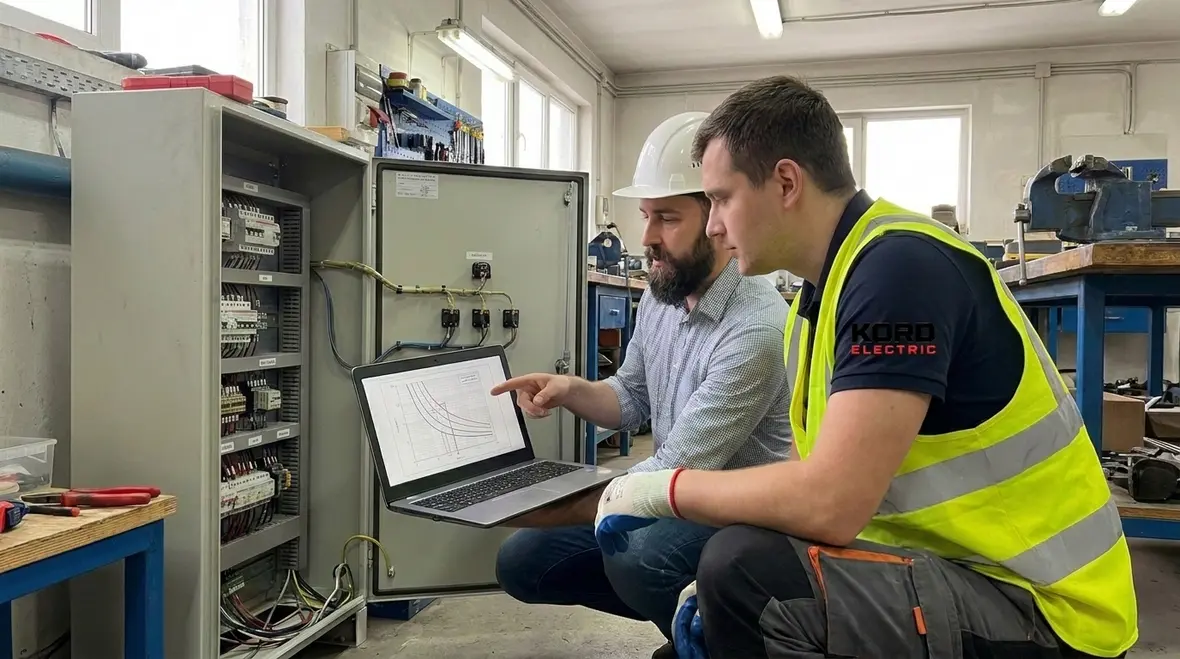
First, the design team must identify the available fault current and the likely current levels during normal operation. Then, the protection devices must be selected so their curves and ratings allow the right device to operate first. This is where coordination study work matters. Without it, the installed system might clear upstream devices, leaving downstream equipment stressed and exposed.
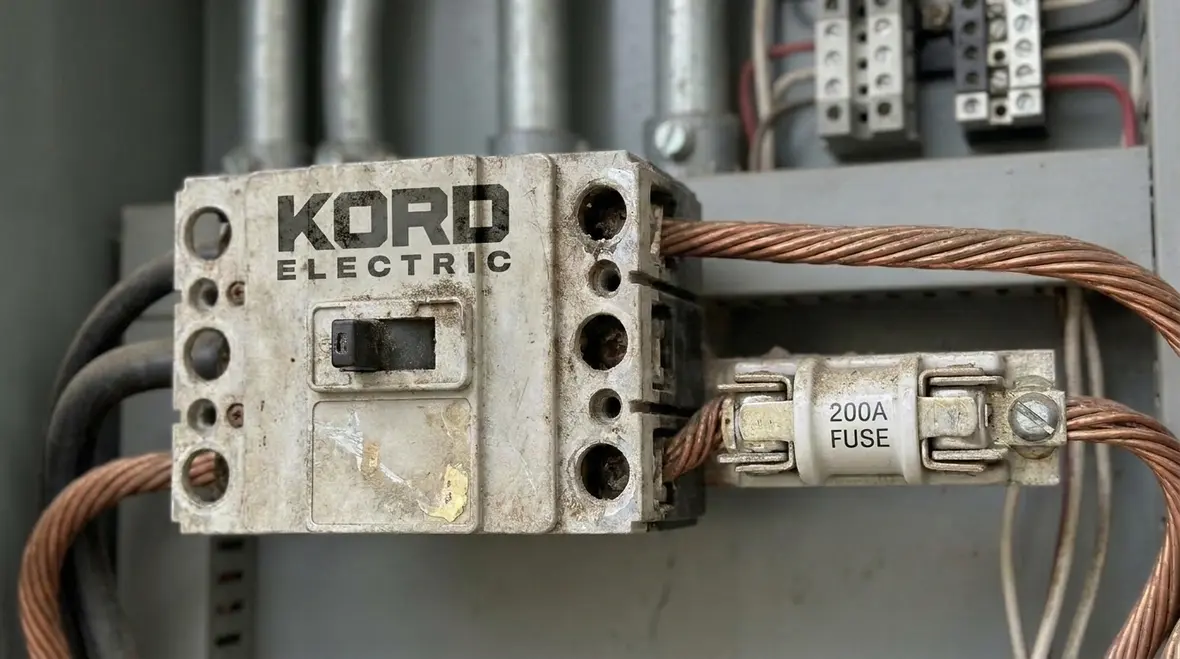
Second, the arrangement must reflect the device types and ratings that the code and listings permit. If a fuse and breaker combination appears similar on a nameplate but does not coordinate in the ways required, the system can trip at odd times. Thus, our technicians verify the specific device characteristics, not just their labels.
Third, installation details can influence behavior. For example, conductor sizing, temperature effects, and terminal conditions change how devices perform in the field. Therefore, we insist on good workmanship and clean documentation so the real installation matches the study assumptions.
In short, when Kord Electric teams handle a project, we do not treat Section 240.8 like a checkbox. We treat it like a promise: the equipment will protect the building, not surprise the operators.
Rules, listings, and limitations: how Section 240.8 guides selection
Section 240.8 generally addresses situations where two overcurrent devices protect the same circuit and are intended to share overcurrent conditions. Therefore, it does not encourage random mixing. Instead, it drives selection toward setups that are permitted and supported by manufacturer requirements and proper ratings.
Our expert service staff typically highlights three practical checkpoints when teams plan NEC fuses breakers in parallel arrangements for major property buildings.
- Device compatibility and coordination: The fuses and breakers must coordinate so that the system clears faults appropriately.
- Proper sizing and rating: Ratings must match the application so the devices protect conductors and equipment within safe limits.
- Documentation and compliance path: Project records must show why the design satisfies the code intent, including any required listing or manufacturer guidance.
Moreover, the limitations can affect how designers approach redundancy. Some systems want load sharing for continuity, while others want selective tripping for fast fault clearing. Section 240.8 steers the design toward the outcome that reduces risk. As a result, many teams end up refining the scheme, rather than forcing parallel protection where it does not fit.
Here is a field-friendly analogy: parallel protection without coordination is like putting two chefs side by side and telling them to cook the same dish with no recipe. Sure, they might both be “doing something,” but the dinner still ends up in the trash.
How our technicians verify the design before the building goes live
Design rules matter, but what really protects a facility is what happens after installation. So at Kord Electric, our technicians focus on verification steps that support compliance and reduce operational headaches. We work with commercial and industrial facilities, including major property buildings, where downtime and unexpected trips cost real money and real trust.
First, we review coordination needs and confirm that the selection supports the intended parallel behavior. Then, we examine the system details that can affect performance. For instance, we verify conductor sizing, breaker settings, and fuse types, and we check that the installed components match what the drawings and submittals promised.
Second, we confirm the operational intent. Facilities often have normal load patterns plus scheduled switching and unusual duty cycles. Therefore, our technicians check that the protection devices tolerate normal currents without nuisance operation, while still clearing faults reliably.
Third, we verify labeling, documentation, and maintenance readiness. A code-compliant design still fails if operators cannot understand it. So we help facilities keep clear records and practical service instructions, which reduces confusion during troubleshooting.
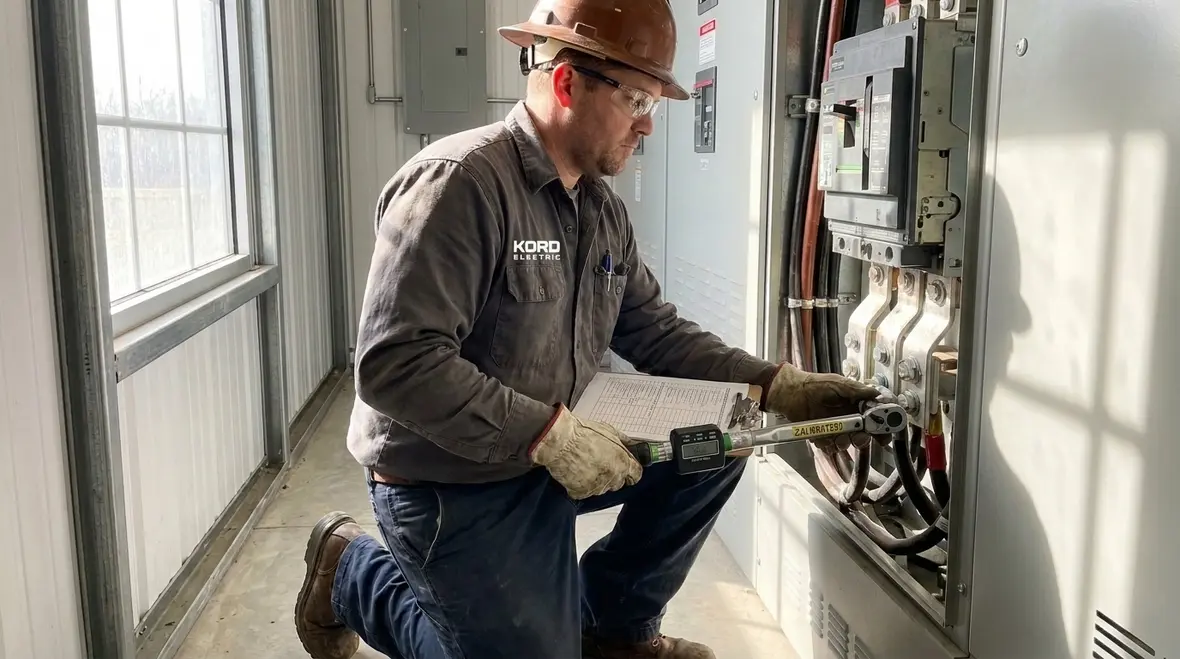
Finally, we test and inspect to confirm workmanship. That part sounds basic, yet it often saves the day. Bad terminations and incorrect torque do not care about theory. They care about heat and time. And heat and time always win.
Common mistakes that cause trouble with parallel breakers and fuses
Even experienced teams can stumble when they handle overcurrent protection in parallel. Below are the issues we most often see during field reviews. And while each site differs, the patterns repeat because human optimism repeats. People see two devices and assume redundancy equals safety. Sometimes it does. Sometimes it just creates more places for things to go wrong.
- Assuming compatibility without coordination evidence: Similar ratings do not guarantee proper timing and clearing behavior.
- Ignoring fault current changes: Utility conditions and system configuration can shift available fault current, especially after upgrades.
- Using device types that do not match the intended coordination plan: Breaker trip characteristics and fuse curves must work together.
- Skipping installation verification: Torque, connections, and terminations affect real performance.
- Neglecting documentation for future service: If maintenance teams cannot trace the design logic, troubleshooting becomes slow and costly.
When our expert service staff spots these risks, we do not just warn. We help teams adjust selection, update settings, and document the rationale so the facility can operate with confidence.
FAQ: NEC fuses breakers in parallel and Section 240.8
Need code-ready parallel protection support for a major building?
Kord Electric helps commercial and industrial facilities plan and verify overcurrent protection that aligns with NFPA 70 Section 240.8. Our technicians and expert service staff walk teams through selection, coordination logic, and field verification, so the system clears faults predictably and keeps operations steady. If your project involves parallel fuses and circuit breakers, or you need a compliance review before energizing, contact us. We will bring calm documentation and practical workmanship, not guesswork. Let us handle the heavy lifting.
For a deeper dive into how the broader National Electrical Code shapes these decisions, many facility teams also review Kord Electric’s resource Understanding NFPA 70: The National Electrical Code Explained for 2026, which connects high-level NEC requirements to everyday project planning.
And when your facility in Southern California needs help turning those NEC fuses breakers in parallel requirements into a real, tested installation, Kord Electric’s Los Angeles County electrical services team can step in with design support, field verification, and long-term maintenance planning.
Note: For additional background on NEC concepts and how they apply to modern projects, Kord Electric encourages teams to review relevant NEC explainers published by qualified sources such as Kord Electric, Kord Fire, and related educational references.
When your design involves NEC fuses breakers in parallel, you are not just choosing hardware. You are shaping how faults behave, how inspections go, and how calmly your operations team sleeps on the night before energizing. Section 240.8 gives the rulebook. Kord Electric helps you turn that rulebook into a clear, buildable plan.


