
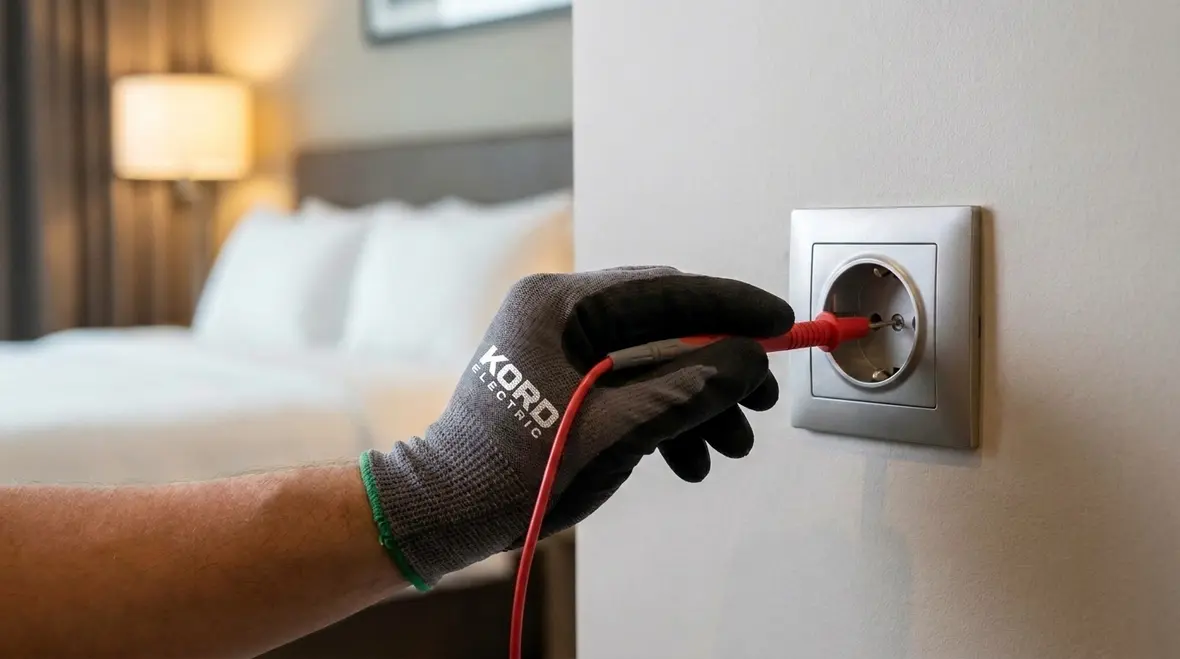
NEC Guest Room Branch Circuit Rules NFPA 70 210.17
In commercial and major property buildings, the NEC guest room branch circuit rules in NFPA 70 Section 210.17 set a clear baseline for how power gets to outlets and loads inside guest rooms. Early on, we explain the big idea simply: each room needs dependable circuits, and those circuits must match the purpose of the space. Then, as crews install, test, and commission, the rules help prevent nuisance trips, unsafe wiring, and call-back visits that eat profit like a flat screen demo on move in day.
Because Kord Electric supports hotels, dorm style facilities, and other large commercial and industrial properties, our focus stays practical. We also make sure our expert service staff walks building managers through what matters, how it gets verified, and what to document for inspection season.
NEC guest room branch circuit rules everyone in commercial buildings should know
In commercial and major property buildings, the NEC guest room branch circuit rules in NFPA 70 Section 210.17 set a clear baseline for how power gets to outlets and loads inside guest rooms. Early on, we explain the big idea simply: each room needs dependable circuits, and those circuits must match the purpose of the space. Then, as crews install, test, and commission, the rules help prevent nuisance trips, unsafe wiring, and call-back visits that eat profit like a flat screen demo on move in day.
Because Kord Electric supports hotels, dorm style facilities, and other large commercial and industrial properties, our focus stays practical. We also make sure our expert service staff walks building managers through what matters, how it gets verified, and what to document for inspection season.
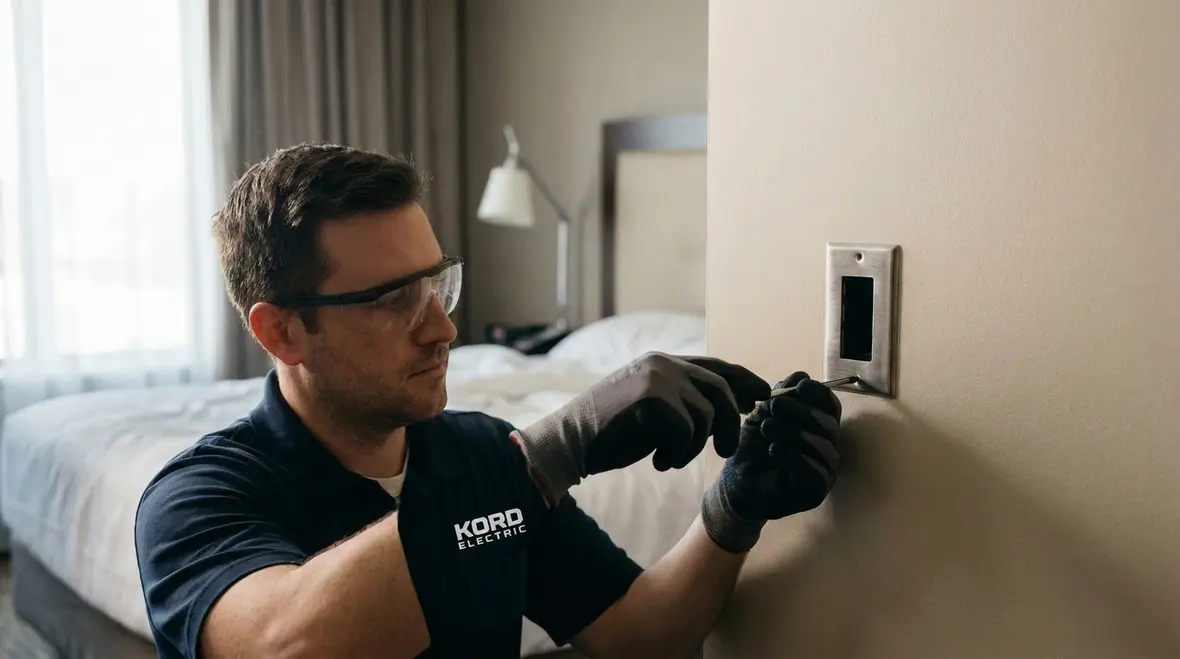
For facility teams who want a broader code backdrop while they look at guest room rules, Kord Electric’s article Understanding NFPA 70: The National Electrical Code Explained for 2026 helps connect high level NEC structure to real-world branch circuit decisions in commercial buildings.
What NFPA 70 Section 210.17 actually controls
NFPA 70 Section 210.17 does not exist to make life harder for electricians. Instead, it controls how branch circuits feed the guest room load and how those loads stay separated and protected. As a result, the wiring design supports normal guest use while reducing the risk that a single fault shuts down everything in the room.
In most pro property contexts, the guest room includes receptacles that serve everyday devices, lighting that creates a safe and comfortable environment, and equipment tied to the building’s systems. Therefore, designers and installers treat these loads like a system, not like a random set of outlets.
Our technicians break it down like this: the code wants predictable separation, proper protection, and safe routing. Additionally, the requirements connect to labeling and verification steps that make inspections smoother.
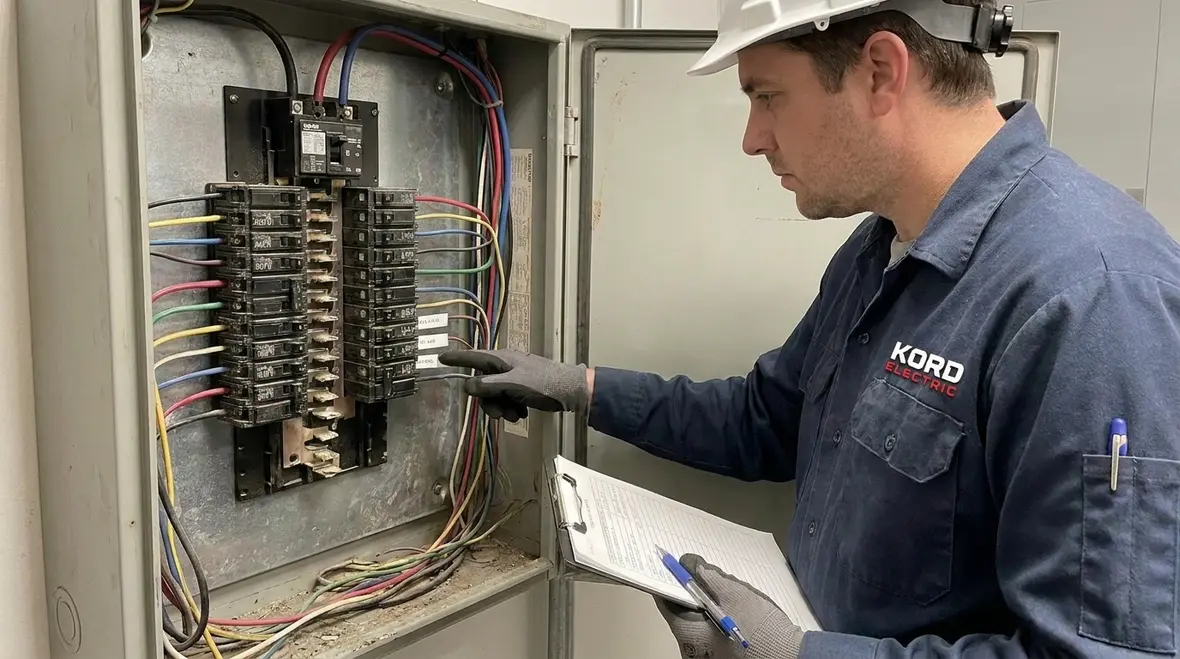
In many commercial and industrial facilities, these guest room circuits also interact with life safety systems, building management platforms, and fire protection infrastructure. When our team reviews branch circuit decisions, we often pair Section 210.17 with related NEC guidance on scope and voltage behavior so the guest room design fits inside the bigger building picture.
How 210.17 fits into the wider NEC structure
Guest room rules do not stand alone. They connect to branch circuit scope language in Section 210.1, voltage expectations, identification requirements, and the overall NEC application boundaries. That is why Kord Electric helps facility leaders read 210.17 alongside those related sections and the latest 2026 NEC direction, instead of treating each rule like an isolated sentence.
Branch circuit separation and what it changes for operations
Once the guest room circuits follow 210.17, the building benefits in ways that go beyond compliance. First, maintenance teams can troubleshoot faster. Second, a problem in one room less often turns into a whole wing shutdown. Third, the property can keep service calls under control, which helps when budgets are tight and leadership wants solutions, not long explanations.
When others skip proper separation, faults can cascade. However, when installers plan correctly from the start, the room stays functional even when a circuit trips. Then, after reset, the staff can restore service and move on with the day.
Kord Electric’s expert service staff often shows facility teams an easy point: better circuit organization reduces guesswork during diagnostics. In commercial environments, time equals money, and “I’ll check it later” becomes “We fixed it now.”
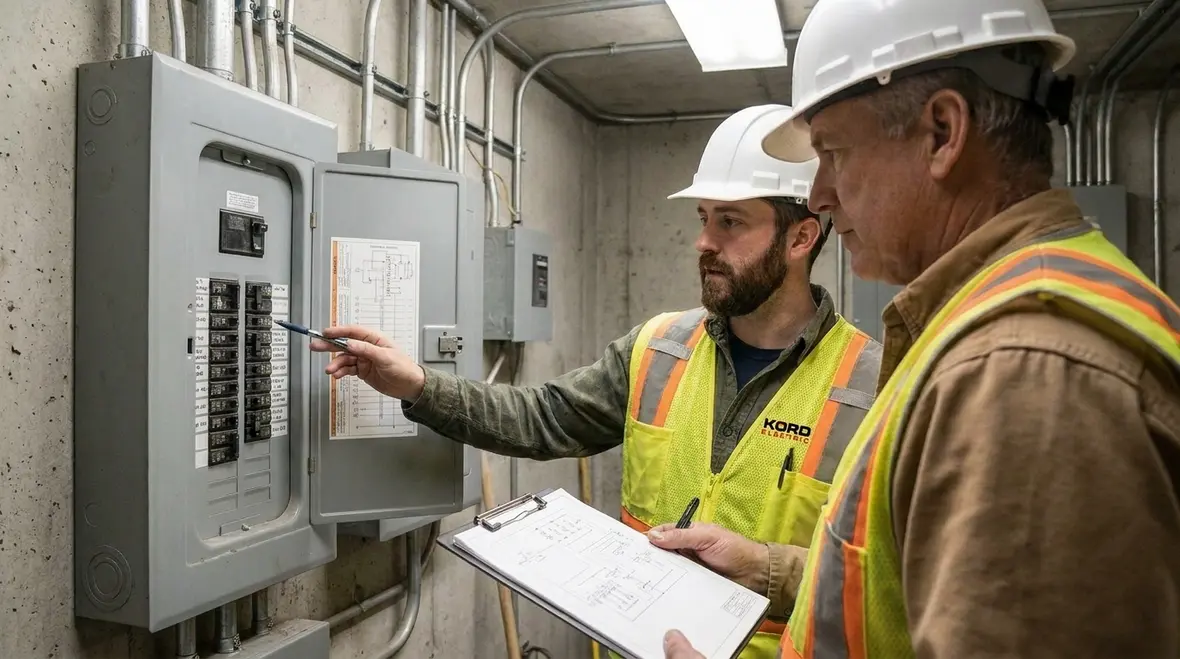
Why separation supports long term reliability
When guest room loads tie into clearly defined branch circuits, the building runs steadier under real-world conditions. Housekeeping plugs in vacuums, guests charge laptops, and facility teams run equipment tests without constantly wondering which outlet might knock out half a corridor. Over time, that predictable behavior reduces complaints, protects revenue nights, and keeps reviews focused on service quality instead of “lights went out during my stay.”
Outlet and receptacle requirements that protect guest comfort and safety
Guest rooms need receptacles that support modern life: charging phones, powering small appliances, and running devices that guests bring in. Therefore, NEC requirements around how circuits supply receptacles become a safety issue, not just a convenience issue. When we help a property, we focus on layout, proper device ratings, and correct protection devices so the wiring does not run hot or age faster than expected.
Moreover, receptacle placement affects how guests use power. If the design leaves gaps, occupants use extension cords in ways the system never intended. And yes, extension cords can be useful, but in large properties they can also become the reason someone slips, trips, or trips a breaker while also blaming the building. Nobody wants that drama.
Our technicians treat receptacle circuits like the backbone of the room. They install the right devices, verify continuity and polarity, and then document results. That documentation becomes a gift when the next inspection comes around.

Receptacle planning and NEC guest room branch circuit rules
In real projects, NEC guest room branch circuit rules push the team to think about how each receptacle ties into the branch circuit strategy, not just where to put a faceplate. We match device types to load expectations, coordinate with lighting controls, and keep an eye on how these choices line up with the broader National Electrical Code structure covered in Kord Electric’s NEC guides. The result is a layout that feels natural to guests and logical to technicians.
How protection devices and wiring method choices should align
After circuit separation, the next priority becomes protection. Branch circuits must include proper overcurrent protection and follow safe wiring methods. Consequently, installers pick wiring types and conduit routes that match the environment of the property, including any physical hazards found in corridors, closets, and mechanical zones near the rooms.
In commercial and major property buildings, walls get closed, ceilings get finished, and access becomes limited. So we plan wiring pathways early, then we verify before we close anything up. In practice, that means careful installation, clean terminations, and tests that confirm the circuit behaves as intended.
Kord Electric follows a stepwise process with our expert service staff explaining outcomes in plain terms. We do not just say, “It passed.” Instead, we explain what the readings mean, why the circuit trip behavior stays within expected patterns, and how to respond when a circuit fault occurs.
Coordinating guest room protection with broader NEC guidance
Protection devices in guest rooms do not live in a vacuum. They tie back to branch circuit voltage limitations, identification requirements, and the way overcurrent protection supports stable operation in commercial systems. Our technicians cross-check those details so that 210.17 guest room circuits behave correctly when equipment starts, stops, and cycles throughout the day, instead of only when the building is half empty during commissioning.
Design and planning steps Kord Electric uses for major projects
Proper compliance starts before a tool touches a panel. Therefore, our team supports the full workflow for commercial and industrial facilities, especially large property builds and remodels. First, we review the project plan against NFPA 70 requirements so the design matches the real intent of 210.17. Then we coordinate with the architect and electrical engineer so circuit groups align with room use.
Next, we help teams define labeling and documentation needs. After that, technicians verify the layout during rough-in so corrections happen while access still exists. Finally, we conduct finish tests and closeout steps so building staff receive clear records.
At times, facility leaders worry that strict electrical rules will slow the schedule. Yet, in most cases, planning prevents rework. And rework in a hotel tower feels like finding out the elevator needs to be rewired on move-in week. Nobody wants that, even if the movie theaters sold out.
To keep momentum, we also educate the people who will run the building after handoff. That is where our expert service staff shines, because we translate the code language into what operations can act on.
For facility managers who want to connect this planning work to a broader electrical strategy, Kord Electric’s Los Angeles County electrical services overview shows how we support everything from early scope review to inspection support for complex guest room projects.
From NEC theory to guest room punch lists
On paper, NFPA 70 Section 210.17 looks like a set of requirements. On site, it becomes a punch list for guest room reliability: which circuits serve which loads, how they are labeled, how they are protected, and how building staff can operate and maintain them without needing a code book at every shift change. Kord Electric bridges that gap with design reviews, field verification, and documentation that matches real equipment tags and panel directories.
Common field mistakes and how to prevent them
In the field, a few patterns show up again and again. First, installers sometimes combine room loads in ways that blur circuit separation. Second, teams may use inconsistent protection ratings. Third, labeling gets missed, so maintenance crews spend time hunting for the right circuit when a breaker trips. Finally, some properties rely on assumption instead of measurement.
To prevent these issues, Kord Electric pushes for clear circuit mapping and verified test results. Additionally, we encourage a walkthrough with maintenance staff before the final signoff. When the people who will maintain the building understand the system, the building runs calmer and the team stays focused.
Our technicians also look for signs of installation shortcuts like loose terminations, damaged insulation, and improper conductor routing. Then, during inspection, we help show what was verified and how it supports safe operation.
In short, good electrical work does not just meet the minimum. It supports the daily reality of a major property: guests arrive, equipment changes, and staff need reliable power.
NEC guest room branch circuit rules as a quality checklist
Instead of treating NEC guest room branch circuit rules as a hurdle, we use them as a quality checklist. If a guest room circuit plan cannot pass a basic review of separation, protection, labeling, and documentation, it will not hold up under a busy season either. That mindset keeps our teams focused on long term performance instead of short term shortcuts.
Featured snippet FAQ
Conclusion and next step with Kord Electric
If your team manages a commercial or major property building, you already know that electrical surprises ruin schedules. NFPA 70 Section 210.17 gives a solid framework, and Kord Electric helps you apply it correctly across design, installation, testing, and handoff. Our technicians and expert service staff explain the requirements in plain language so maintenance teams can run the system with confidence. If you want a code-aligned guest room circuit plan or an audit of an existing install, contact Kord Electric and we will help you get it right the first time.
For facility leaders planning broader upgrades beyond guest rooms, the Los Angeles County electrical services overview shows how Kord Electric coordinates NEC-compliant work across distribution, branch circuits, and long term maintenance support for complex properties.


