
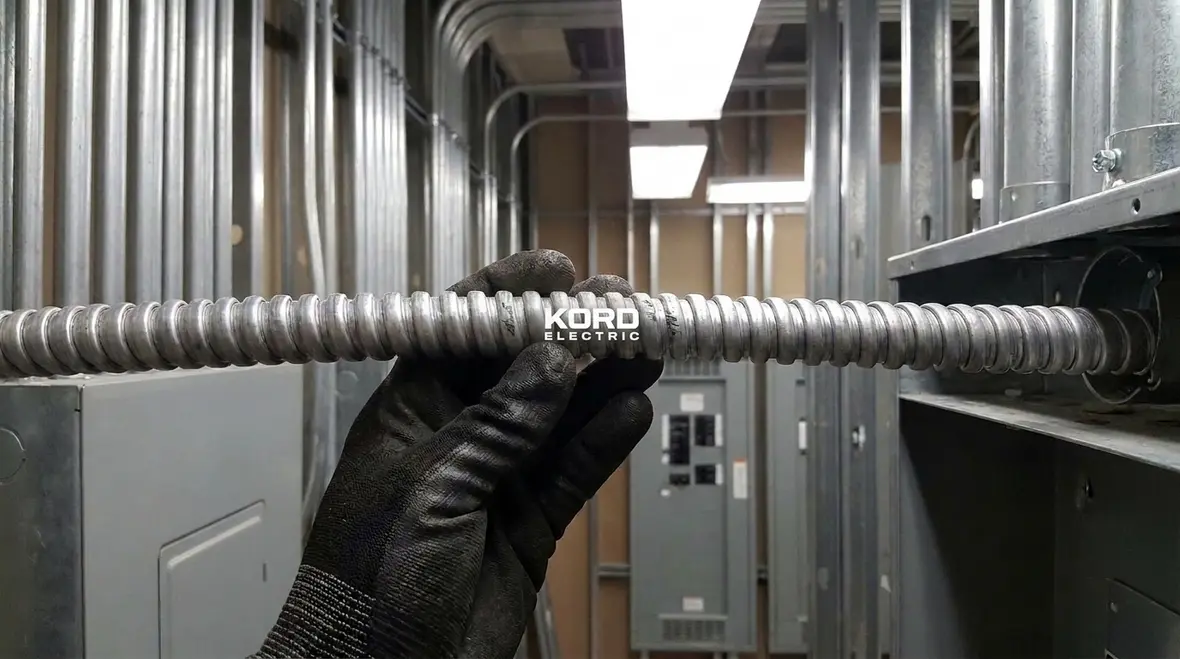
NEC MC Cable Listing Requirements and NFPA 70 Section 322.2
When we help commercial and industrial facilities, we do it with one goal: fewer surprises and safer systems. That is why we ground our work in the NEC MC cable listing requirements, including NFPA 70 Section 322.2, which addresses how multi conductor cable must meet listing and labeling rules before it gets used. In plain terms, we do not treat “it looks right” as a code strategy. Instead, our teams verify the cable is listed for the correct use, then we install it the right way. And yes, we have seen cables fail in the field because someone assumed a label was decorative. It is not. It is basically the cable’s resume.
Our approach stays calm, deliberate, and thorough. Then our expert service staff explains what we check, why we check it, and what it means for your facility operations. In other words, you get clarity, not mystery.
What NFPA 70 Section 322.2 requires for listed MC cable
NFPA 70 Section 322.2 focuses on how MC cable must be listed and labeled for the purpose it will serve. To start, the NEC requires that equipment and materials used within wiring systems follow recognized testing and evaluation. Further, listing generally ties the product to specific conditions, such as installation type, environment, and intended use.
Next, our technicians look for listing evidence on the cable jacket or related product marking. Because many MC cable runs get handled quickly during construction, it is easy for those markings to get ignored. However, markings help verify that the product complies with the evaluated construction and performance. And when the facility is commercial, industrial, or a major property building, code compliance must hold up under inspection and real load conditions.
At Kord Electric, we treat listing as the front door check. Once the door opens, we still verify the rest of the installation, because listing alone does not fix poor routing, improper terminations, or wrong support methods.
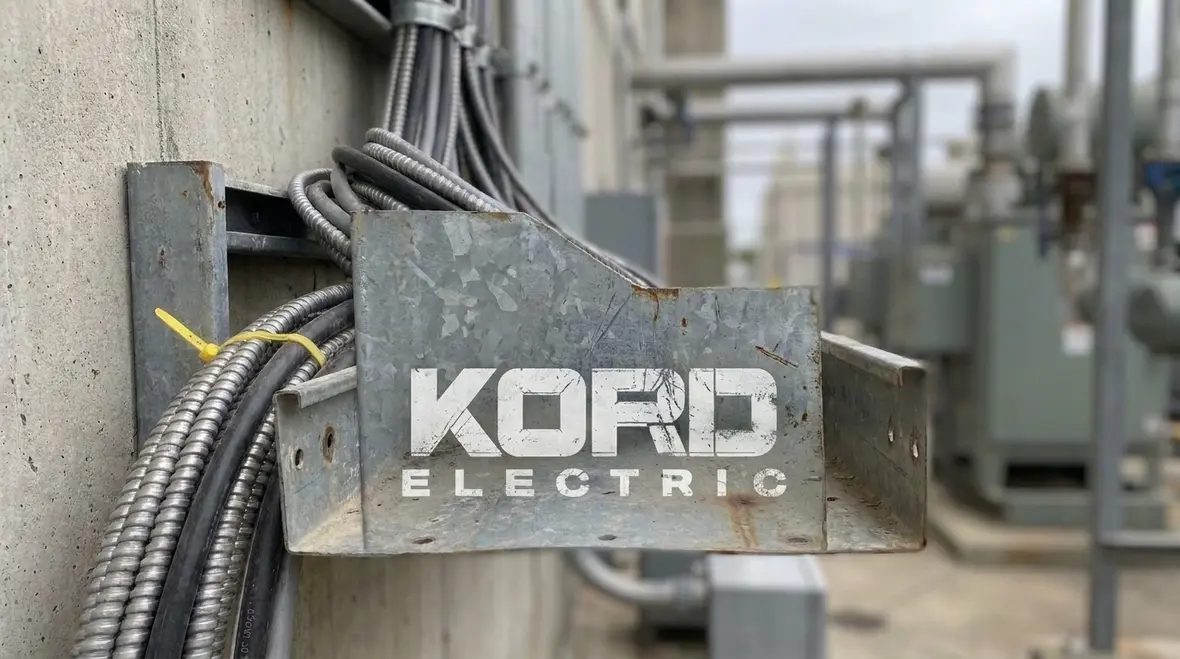
For readers who want a deeper code primer while they review MC cable decisions, our team also walks through the broader rulebook in Understanding NFPA 70: The National Electrical Code Explained for 2026, which connects NEC sections to real-world commercial and industrial projects.
How listing affects wiring safety in commercial and industrial buildings
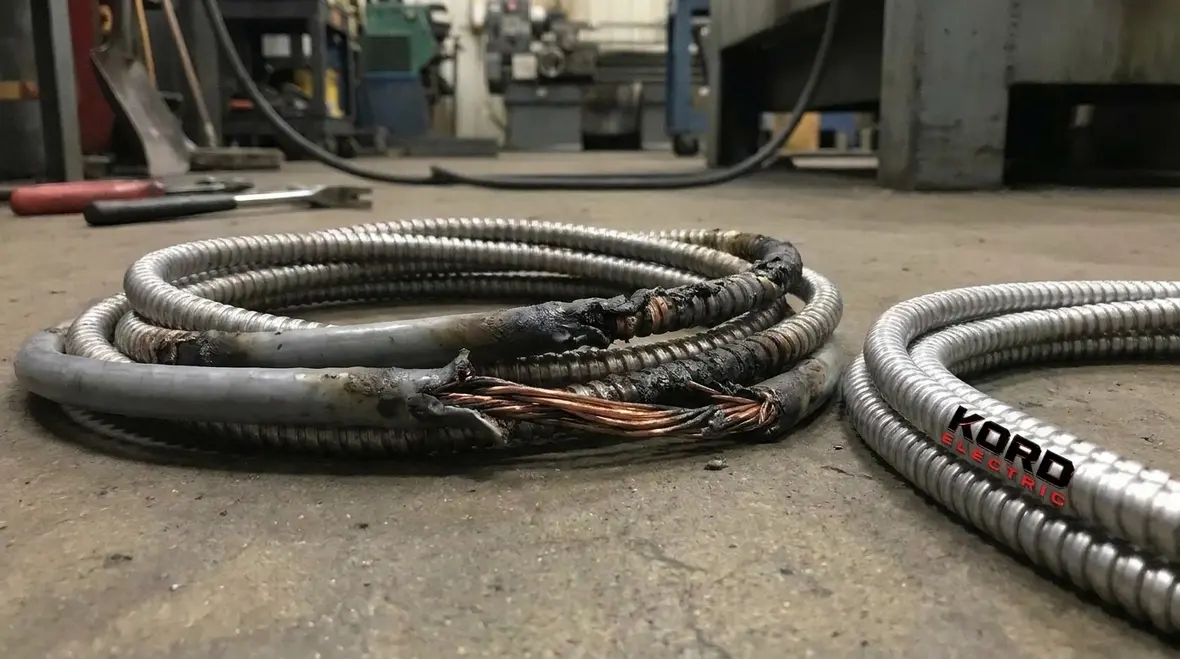
In a business setting, electrical systems run the show. They power HVAC controls, production lines, security systems, elevators, lighting, and more. Therefore, when MC cable is not properly listed for its use, the risk does not stay theoretical. It can show up as excessive heat, insulation stress, or premature aging under load.
Moreover, listing impacts how the cable performs in the installation environment. For example, a cable that meets one condition may not meet another. As a result, facilities that mix building zones, different mounting methods, or unusual pathways must select cable that matches the listed intent.
We often explain this to facility managers with a simple thought experiment. If you buy a tool built for metal work and you use it on concrete, the tool might survive for a while. But eventually, the mismatch catches up. In the same way, wrong cable selection can work temporarily, then fail when demand increases.
Our expert service staff then helps teams connect the dots between code language and everyday outcomes, like uptime, reduced troubleshooting, and fewer shutdowns.
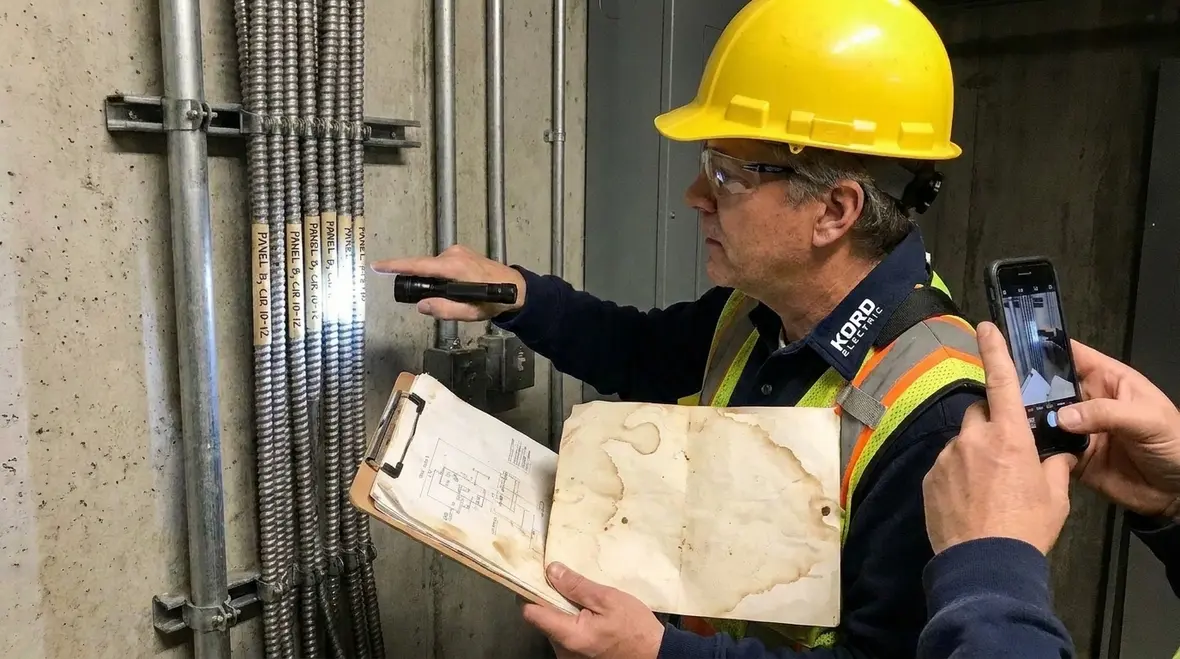
Why NEC MC cable listing requirements matter for busy facilities
Busy commercial and industrial sites rarely run at half speed. Loads ramp up, equipment cycles on and off, and systems handle real stress day after day. In that environment, the NEC MC cable listing requirements act like a safety filter. They ensure the cable you select has already been tested and evaluated for the environment and use you have in mind, instead of leaving performance to chance.
What “listed” usually means during inspections and plan reviews
When inspectors review electrical submittals, they often look for clear proof that materials match the approved design. Consequently, MC cable listing requirements support that process by establishing that the product has been evaluated for safe use. In practical terms, this means the cable manufacturer submits product construction details for testing, and the resulting listing indicates how the cable should be installed and used.
At our service level, we do not only rely on documentation we receive on paper. Instead, we also check the cable in the field, because substitutions happen. Someone swaps a material “because it was available,” and suddenly your compliance plan has holes in it. To avoid that, our team documents what is installed and what the labels show.
If you have ever watched a logistics chain try to outrun a deadline, you know why this matters. Time pressure can create shortcuts. Still, we keep compliance steady, because commercial and industrial facilities cannot afford guesswork.
How “listed and labeled” plays out in real reviews
During plan reviews, design teams call out wiring methods, cable types, and installation conditions. During inspections, AHJs expect to see that same story in the field. When MC cable matches the listing and labeling they anticipate, the process moves smoothly. When listings do not match, or labels cannot be confirmed, questions multiply and schedules slow down.
Common failures we see when NEC MC cable listing requirements are ignored
Even in well managed projects, mistakes happen. However, when NFPA 70 listing rules get treated like paperwork trivia, the outcomes can be expensive. Here are the patterns we most often see during commissioning and service calls.
- Wrong cable type for the environment. Teams install MC cable that lacks the intended listing characteristics for the location or conditions.
- Missing or unclear markings. Labels get damaged during handling, or crews rely on memory instead of verifying product info on site.
- Improper termination assumptions. Some installers assume the listing covers everything. It does not. Terminations must still match the cable and application.
- Routing and support shortcuts. Cable support spacing and bend handling matter. Listing does not cancel bad installation practices.
- Substitution without review. When a project swaps materials, the electrical package may no longer match code intent.
To keep it professional and a little funny, we tell teams this: code compliance is not like a streaming service where you can resume later. If you skip the listing checks now, you will pay the bill during inspection or in the field. And the field rarely offers refunds.
Transitioning from theory to action, our technicians explain these risks during site walkdowns, so the crew understands what to verify before cable leaves the reel.

Connecting listing rules to everyday maintenance
Once a project passes inspection, the story is not over. Maintenance teams still have to trace circuits, verify cable types, and support future changes. When MC cable was originally selected and installed with listing in mind, those later decisions get easier. Labels make sense, documentation lines up with reality, and replacements can be chosen with confidence instead of guesswork.
Installation steps that pair with listing for dependable performance
Listing sets the baseline, but the installation determines how well the system performs over time. Therefore, we pair compliance with practical workmanship. First, we confirm the MC cable matches the approved design and that the labels support the intended application.
Then we focus on installation details that influence long term performance. That includes correct cable support, careful routing, and proper handling around bends and transitions. Further, we coordinate with other trades so cable does not get crushed by moving equipment or trapped behind later modifications.
Finally, we verify terminations and connections. In commercial and industrial buildings, connections take on real stress from vibration, thermal cycling, and ongoing use. Our technicians follow a disciplined process and do not rush the last few steps, because that is usually where issues hide.
At Kord Electric, we also think about how facilities operate after handoff. When maintenance teams can identify materials and understand the installation approach, troubleshooting becomes faster and safer. So we document clearly and train where it helps.
Pairing workmanship with NEC expectations
Good workmanship turns listing requirements into durable systems. Our crews align routing, support, terminations, and labeling with NEC direction so that MC cable runs look intentional, not improvised. That attention shows up years later when someone opens a panel and can immediately tell what belongs where.
How our team supports NEC compliance for major properties
Kord Electric serves commercial and industrial facilities and major property buildings. That means our process respects the realities of those projects: strict schedules, complex systems, and safety expectations that cannot slip. We support compliance at multiple stages, from planning support to installation verification and ongoing service.
Our expert service staff explains the “why” behind NFPA 70 rules so your team can make informed decisions. We also help contractors and owners keep selections aligned with listing and labels, so the electrical package stays consistent from submittal to installation.
To put it simply, we do not just install wiring. We help protect your operational reliability. And if anyone tries to treat code as a suggestion, our team remains calm. Then we walk through the listing requirements and help everyone get aligned. The goal is zero drama and maximum uptime.
For readers who want more context on the NEC and how it gets applied, our related resources explain code fundamentals and real-world wiring considerations. Articles like our NEC connection quality standards overview, working space and clearance guides, and NFPA 70A comparisons show how listing, labeling, and workmanship all fit into one safety picture.
What our technicians focus on
- Verifying listing and labeling for MC cable
- Confirming cable matches the intended environment
- Checking routing, support, and bend handling
- Coordinating terminations and connection quality
- Documenting installed materials for inspection
How we communicate to facility teams
- Explaining code intent in plain language
- Highlighting failure points that matter locally
- Answering maintenance and upgrade questions
- Providing clear next steps for compliance
- Supporting safe, repeatable installation practices
Where NEC MC cable listing requirements fit into your overall code plan
Listing rules for MC cable sit alongside many other NEC expectations for wiring methods, working space, grounding, bonding, and connection quality. When we help a facility plan upgrades or renovations, we treat MC cable choices as part of a full code strategy, not an isolated line item. That way, your distribution, protection, and life safety systems all follow the same logic.
FAQ about NFPA 70 Section 322.2 and MC cable listings
Call Kord Electric for code grounded wiring support
When your facility needs electrical work that stays compliant, we help you build with confidence. Kord Electric teams verify MC cable listing and labeling aligned with NFPA 70 Section 322.2, then we install with the details that keep systems reliable long after the inspection stamp. If you are planning a build, upgrading a major property, or troubleshooting existing wiring, contact us. We will explain what matters, document what we find, and move you toward safer, smoother operations. Let us handle the code, so you can run the business.
If your facility is in Southern California and you need help applying NEC MC cable listing requirements within a broader project, our Los Angeles County commercial and industrial electrical services team is ready to support design reviews, installations, and upgrades with code grounded, inspection ready work.
For facility teams who want to pair MC cable decisions with a wider code roadmap, we also recommend reviewing our National Electrical Code resources on the Kord Electric blog and Kord Fire’s NFPA 70 overview. Together, they help you see how listing, labeling, and installation quality all work together to protect people, property, and uptime.


