
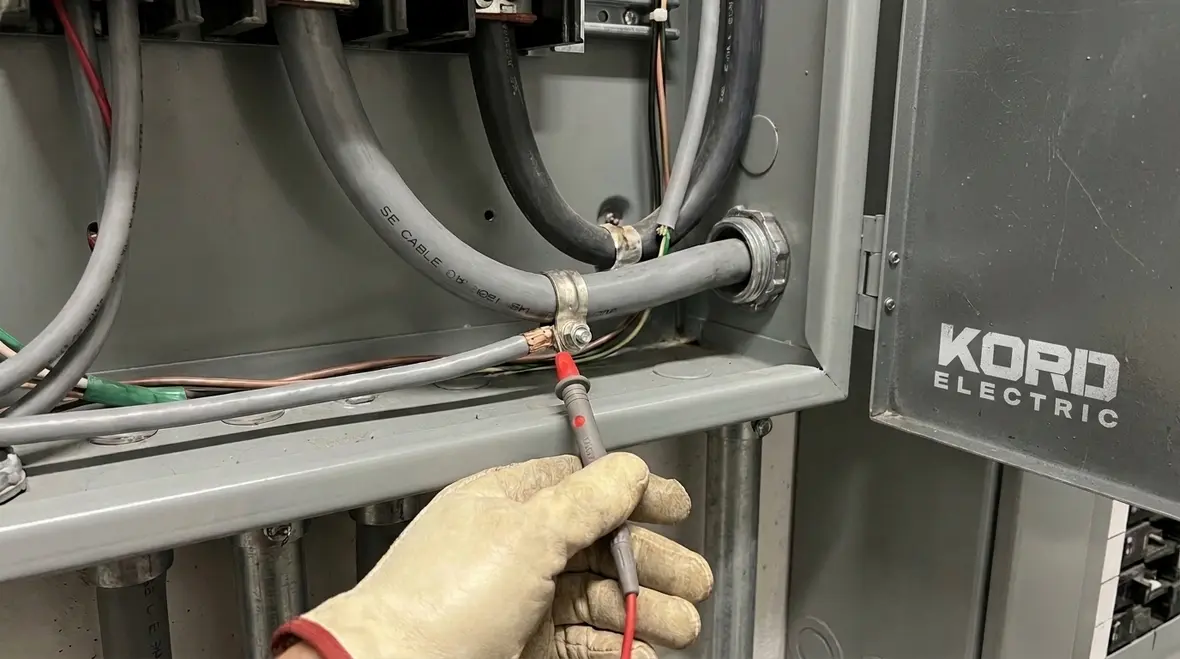
NEC SE Grounding Conductor and NFPA 70 330.108
Kord Electric helps commercial and industrial facilities stay safe by taking grounding seriously, and we start right at NFPA 70 Section 330.108 for SE cable installations. In plain terms, the NEC SE grounding conductor is the path that helps send fault current where it belongs, so equipment shells and exposed parts do not become the unintended “hot spot” for your crews. That matters in real buildings, not theory land. And yes, we have heard the joke from a site lead: “My panel is grounded, right?” After our technicians check the actual install, the answer is usually, “We can get you grounded correctly, before this becomes a late night call.”
What 330.108 is really asking for in SE installations
When people read NFPA 70 Section 330.108, they often focus on one line and miss the intent. This section tells us how the equipment grounding conductor must be installed for SE cable systems. It does not exist to make inspectors feel busy. It exists because when insulation fails, conductors can energize metal parts. That is when the grounding system must act fast and reliably.
In most commercial and industrial facilities, the goal stays the same. We want the fault to clear quickly by enabling the proper overcurrent device operation. At the same time, we prevent dangerous touch potential on noncurrent carrying metal parts.
So, rather than treating 330.108 like a checklist item, our team treats it like a safety system. First, we look at how the SE cable enters and leaves the equipment space. Then we confirm the grounding path connects correctly, stays continuous where required, and matches the system rules that the NEC expects.
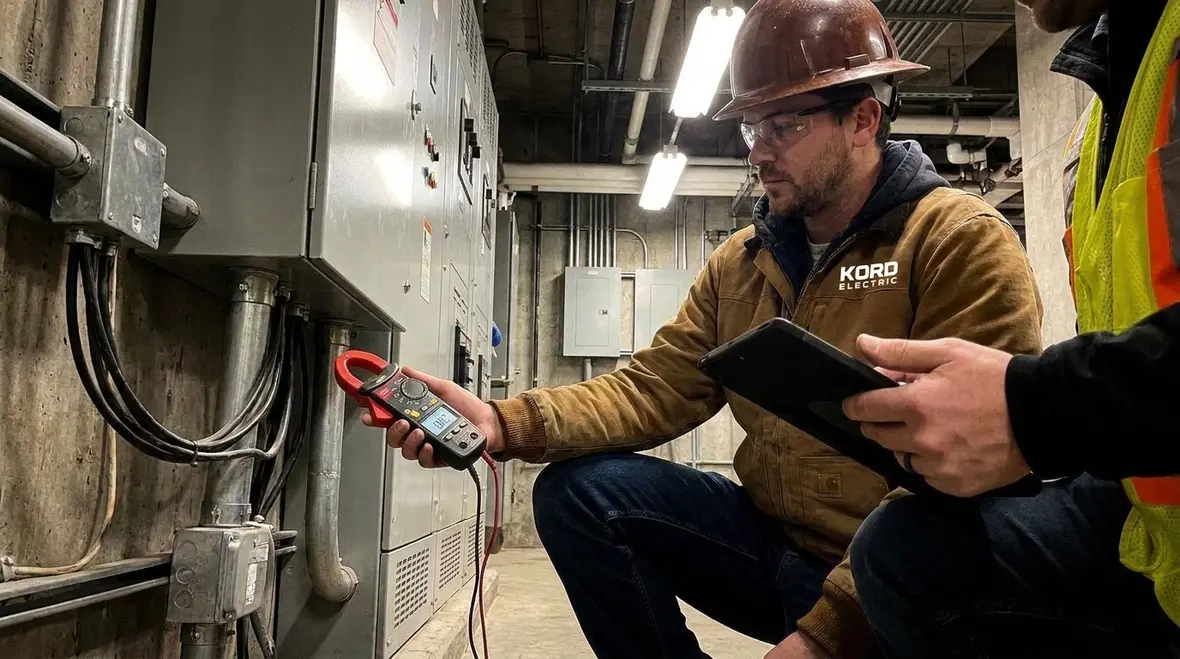
For teams who want to zoom out and see how these rules sit inside the bigger NEC picture, Kord Electric also points facility leaders to resources like Understanding NFPA 70: The National Electrical Code Explained for 2026, which connects section numbers back to everyday decisions in real buildings.
Why the NEC SE grounding conductor matters when faults happen
When a fault happens, physics does not care about brand names, project deadlines, or who last “swapped the breaker.” Current finds the path of least resistance. If the equipment frame is not bonded correctly, the frame can rise toward dangerous voltage. This can put electricians, maintenance staff, and tenants at risk. It can also damage equipment in ways that cost more than a careful install.
Next, grounding gives a dependable return path. That return path helps breakers, fuses, or other protective devices do their job. Therefore, the right grounding conductors reduce how long energized conditions last.
Our expert service staff explains it this way on site. “Grounding is the difference between a problem that trips and a problem that lingers.” In a major property building, lingering faults create ripple effects: nuisance trips, damaged drives, and outages that never feel planned.
How we confirm the equipment grounding conductor in the field
Kord Electric does this the way we would want it done for our own facility. We start with verification, because a diagram can look perfect and still miss the install details that matter.
Our technicians typically check these items before they sign off:
- Conductor presence: We confirm the equipment grounding conductor exists where it must for the SE run.
- Connection quality: We verify tight, correct terminations at enclosures, junction points, and equipment frames. Loose bonds turn into heat, heat turns into failure.
- Routing and protection: We confirm the conductor route avoids physical damage and stays within the allowed install practices for the system.
- Continuity: We check for breaks or improper separations, especially at transitions.
Then, we document what we find. After all, commercial and industrial teams need traceability. When the next electrical event happens, you want answers you can hand to a facilities manager, an AHJ, or an insurance reviewer.
Common mistakes we see in SE bonding and grounding
Even good teams sometimes step on the same rake. And no, the rake is not magical. It is usually a human shortcut.
Here are issues we often catch during field reviews at commercial sites and major property buildings:
- Assuming bonding happens “somewhere”: People think the rack, conduit, or a single clamp covers the whole path. In reality, the grounding conductor must follow the required bonding logic for the installation.
- Skipping required connections: A bond is not optional just because the metal looks well connected. If the rule calls for an equipment grounding conductor, we install and connect it correctly.
- Using the wrong conductor role: A conductor that seems similar can fail the NEC intent for fault return. We separate the “looks right” from the “is right.”
- Overlooking transitions: Where cable types, enclosures, or routing paths change, grounding can weaken. We focus attention at those points first.
Moreover, we do not just point out flaws. Our technicians explain why the problem matters, then we propose a clean fix that fits the project schedule. In other words, we keep it calm and practical, because nobody wants a grounding lesson right before a shift change.
How NEC rules connect to power systems in real buildings
Grounding rules do not live alone. They connect to how the whole electrical system behaves under fault conditions. Therefore, once the NEC SE grounding conductor requirement is met, the next question becomes: does the rest of the installation support safe clearing?
At many commercial and industrial facilities, SE cable feeds play a key role for service equipment, building entrances, and distribution transitions. Consequently, the bonding approach must align with the protective device strategy and the metalwork layout. When these pieces do not match, the system may clear faults slower than expected, or create inconsistent fault paths.
Our service team helps coordinate these details with the broader electrical design and commissioning approach. In addition, when we reference NEC guidance during the planning phase, we focus on how the rule supports safe operations, not how it reads on paper.
For customers who want a deeper read, we point teams to NEC explanations published through our resources at Kord Electric, and also the broader NEC overviews available at Kord Fire and Kordfire.com. We share the goal: clarity for facility teams, not confusion for project managers.
Keeping compliance steady as projects expand
Facilities evolve. New tenants arrive, floors get renovated, and equipment gets added. That is normal, and it is also where grounding issues can creep in if the original work was not built with expansion in mind.
So we build a compliance habit, not a one-time moment. First, we confirm grounding paths remain correct at additions. Then, we check that new equipment frames bond into the right locations. After that, we review how routing changes affect the equipment grounding conductor and its continuity.
Also, we keep the language simple for non electrical stakeholders. When our technicians talk to operations staff, we translate the NEC logic into outcomes: safer touch potential, reliable fault clearing, and fewer repeat problems.
And yes, we still hear the occasional pop culture line. Someone will say, “Just like in the movies, it will probably work.” Then we smile, because real electrical work does not run on “probably.” It runs on correct installation and verified grounding.
FAQ
Plan SE grounding with your broader electrical strategy
SE cable does not operate by itself. It feeds real distribution equipment, supports life safety loads, and ties into grounding and bonding strategies that must be aligned from service entrance to final equipment. When our technicians walk a site, they connect NEC SE grounding conductor checks with panel schedules, protective device settings, and the way your building actually runs day and night.
For facility teams in Los Angeles County, SE grounding reviews often become part of a larger reliability plan that includes panel maintenance, breaker upgrades, and coordination with power quality or life safety work. If you are planning that kind of broader upgrade, you can explore how we support complex commercial and industrial properties through our Los Angeles County electrical services, which outline code-minded installation, verification, and long-term support options.
Conclusion: Let Kord Electric ground it the right way
If your facility uses SE cable systems, we recommend you do not treat NFPA 70 Section 330.108 like “someone else’s problem.” Kord Electric serves commercial and industrial facilities and major property buildings, and our technicians verify the equipment grounding conductor so faults clear safely and metal parts stay protected. We explain the why in plain language, then we install and document the fix. Contact us for a field review or service support, and we will bring calm, correct grounding to your next project.


