
NEC Section 300.1 Scope for Commercial Wiring Safety
Why NEC Section 300.1 matters for commercial wiring
NFPA 70 Section 300.1 sets the scope for the NEC general wiring requirements, which means it explains how the rest of Article 300 should be applied. In our world at Kord Electric, we do not treat that scope like trivia. We treat it like a rulebook for keeping commercial and industrial electrical systems safe, consistent, and built to last. And yes, it matters even when the deadline is chasing you like a horror movie sequel.
In the pages ahead, others will learn what that scope does, how it impacts planning, and what our technicians explain on-site when teams ask, “What does this really mean for our facility?”
What NEC general requirements scope actually covers
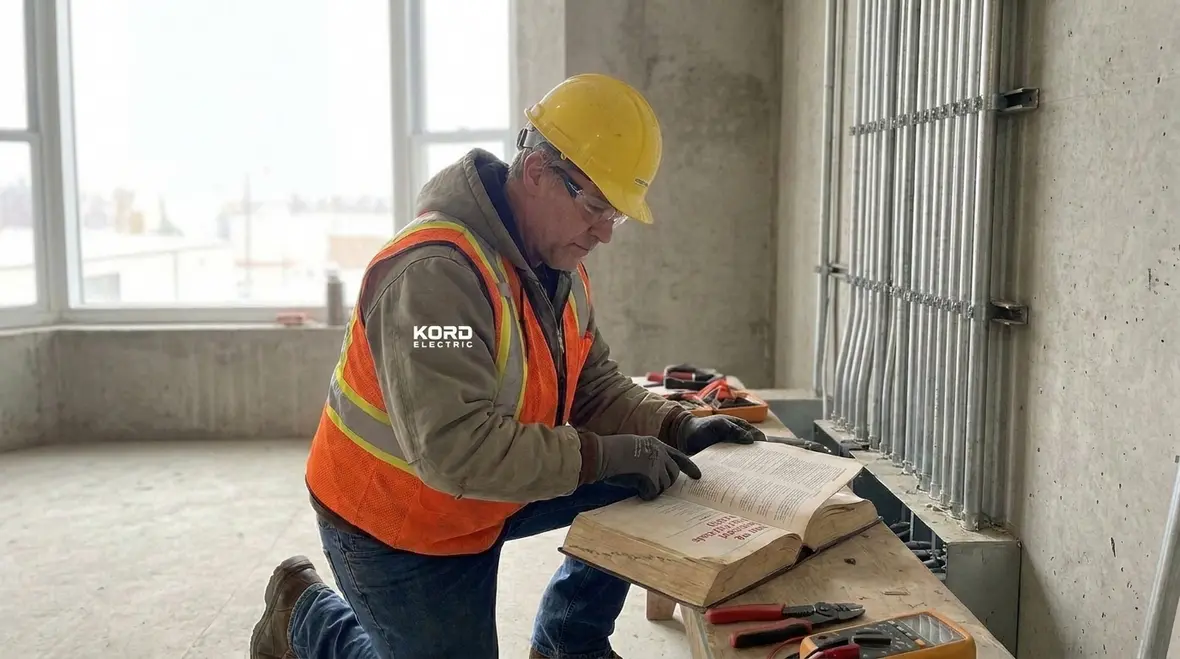
NEC Section 300.1 tells us the big picture. It establishes that the wiring methods covered in Article 300 must follow the general requirements of the NEC, and it sets boundaries for when those rules apply. In other words, it guides how cable, conductors, and wiring systems get installed across buildings where electrical work has to meet a consistent safety standard.
Next, we connect that scope to real construction decisions. For example, if a facility uses different wiring spaces for power, lighting, and control circuits, the scope helps ensure the general rules still “hold” across those areas. Then, when design teams coordinate with installers, our expert service staff can point to the scope and explain what changes, what stays stable, and what must be verified before rough in.
Meanwhile, this also helps avoid the classic problem: someone follows the letters of a single section, but misses the context set by the NEC general requirements scope. That is how you end up with work that looks fine until inspection day arrives, wearing a disappointed face.
For facility teams that want a deeper background on how NFPA 70 ties these ideas together, we often point them to broader explainers like Understanding NFPA 70: The National Electrical Code Explained for 2026, which shows how the code frames safety, documentation, and long-term planning before you ever open Article 300.
How the scope affects wiring methods and installation choices
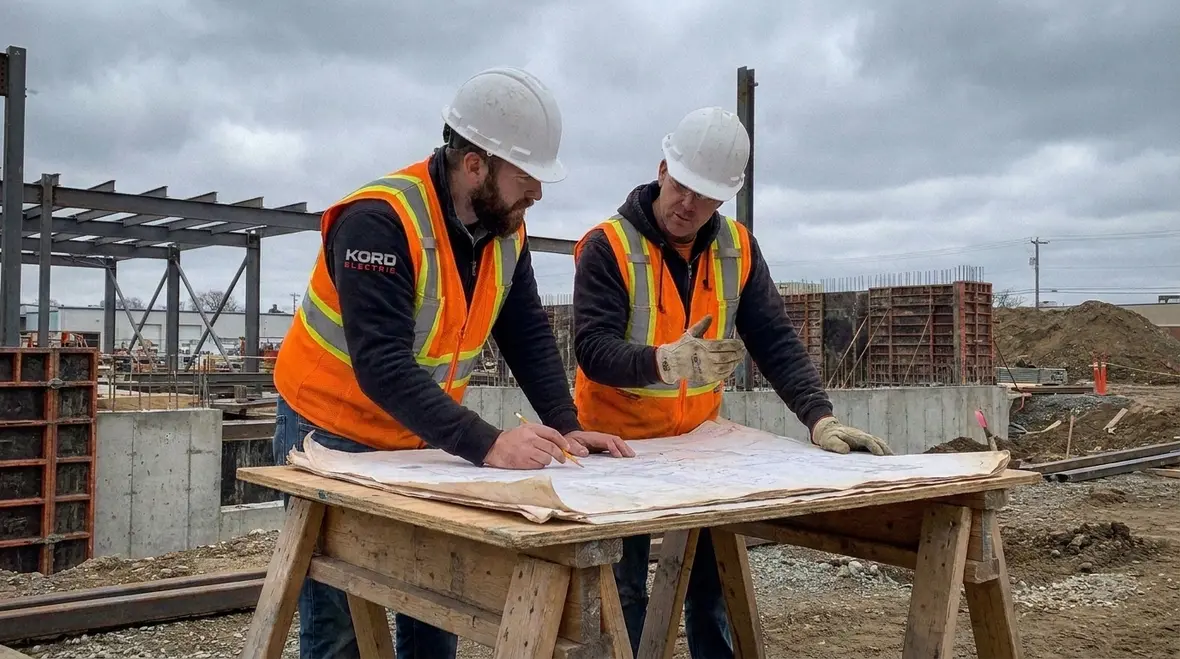
After we establish the scope, we look at how it shapes wiring methods. Article 300 runs through how wiring is supported, protected, routed, and separated where needed. Therefore, the NEC general requirements scope pushes us to treat wiring as a system, not a pile of parts. A conduit run is not just metal tube. It is also how moisture gets handled, how heat gets managed, and how physical damage gets prevented.
For commercial and industrial facilities and major property buildings, that systems view matters because buildings face real wear. People walk through corridors. Forklifts roll near service rooms. Maintenance teams open panels. Even when everyone behaves, the building keeps doing its day job.
Our technicians often explain it like this: if you install the wiring without thinking about what the space will do later, you will pay for it later. Often, that payment comes in rework, downtime, or a failed inspection. None of those are “fun,” even if someone tries to sell it like a limited time deal.
This is also where the NEC general requirements scope usage connects with other code themes, like workmanship standards and wiring integrity. When our crews talk through expectations from sections such as the workmanship guidance in Article 110, they tie it back to Section 300.1 so everyone sees how installation choices, support spacing, and protection details all live under the same safety umbrella.
Coordination on site: what our technicians explain during planning
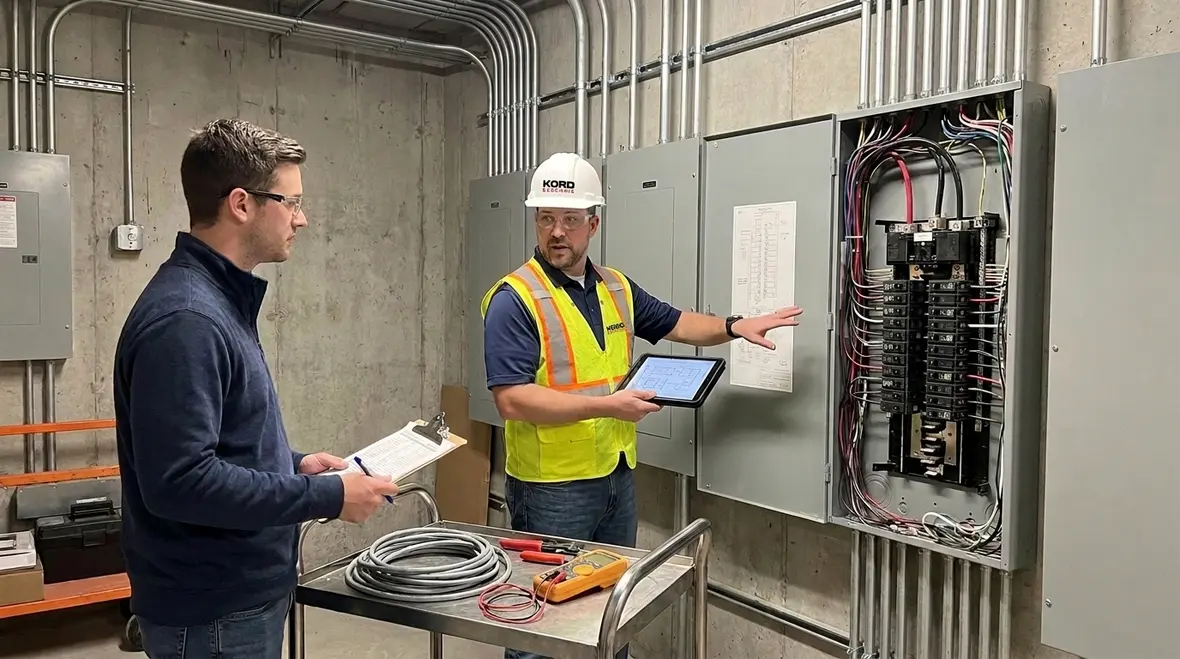
In practice, NEC scope guidance affects coordination meetings more than people expect. So we run our process with planning first, then verification. We review site conditions, building layouts, and how the wiring method will move from rooms, to chases, to equipment. Then we check how the scope ties back to the rest of the NEC.
Our expert service staff also uses plain language to help teams understand tradeoffs. For example, they help facility managers see how decisions in one area can affect another. If one wiring method choice increases congestion in a pathway, it can create clearance conflicts around cabinets. Likewise, if protection practices are inconsistent, it can raise safety risk where equipment gets replaced or serviced.
And when clients ask for a straight answer, we give one. If a part of the plan does not align with the NEC general requirements scope, we flag it early. We would rather be the calm voice in the room than the firefighter during the emergency phone call. (Different costumes, same goal.)
Because the NEC is more than one isolated rule, our planning conversations often pull in related topics like branch circuit protection, grounding for nonelectrical equipment, and multiwire branch circuit rules. When those pieces get aligned while designs are still on paper, the actual installation stands a much better chance of sailing through inspections instead of tripping alarms and schedules at the same time.
Where violations usually start, and how to prevent them
Even strong designs can drift during installation. That is where we pay attention. Most problems do not begin with huge mistakes. They begin with small gaps in process: a pathway that gets modified without updating routing plans, a support spacing that gets overlooked, or a wiring method that gets used in a location where protection requirements differ.
Because NEC Section 300.1 sets the scope for general wiring requirements, it also helps us spot where teams stop thinking in terms of the full installation picture. In commercial and industrial facilities, those “scope breaks” can show up in support details, separation practices, and protection around mechanical hazards.
So, we prevent issues with controlled steps. We document assumptions, we verify field conditions, and we follow through on inspection-ready practices. Our team keeps a focus on what the facility needs now and what it will need when equipment updates roll in later. That approach supports long-term safety, and it helps reduce surprise costs.
For teams working across different compliance resources, we also encourage a broader view. Some clients explore national code context through resources like NFPA 70 explainers, including content published by Kord Electric and Kord Fire. Still, we always translate it back to how the building will be wired, supervised, and maintained.
In that sense, the NEC general requirements scope usage becomes a kind of checklist for discipline. When a field decision starts drifting away from the original design, we ask simple questions: does this still meet the intent of Article 300, and does it still reflect what the code expects for wiring in this space? If the answer is no, the change does not move forward until it does.
Dual-column reality check: safety and compliance in action
|
What the NEC general requirements scope helps address Clear installation intent Consistent wiring method rules Protection and support thinking Better coordination across building areas Reduced risk of missing context |
How Kord Electric applies it for major properties Site walkthroughs before work starts Technician-led explanations for crews Verification steps during installation Documentation that supports inspections Service-ready systems for later changes |
This side-by-side view is how we keep projects grounded. On the left, the NEC general requirements scope reminds everyone what the rules are trying to do. On the right, our job is to turn that intent into walkable sites, readable diagrams, and wiring methods that hold up under real-world use. When you see both at once, “compliance” stops feeling like a mystery and starts looking like a practical safety plan.
Common concerns from facility managers
Facility managers often worry about two things: safety and schedule. Therefore, they ask how NEC wiring scope affects time. Our response is simple. When you align with the NEC general requirements scope up front, you cut down on late changes. That prevents rework and keeps projects moving.
Another concern involves maintenance. Commercial and industrial buildings evolve. They add equipment. They reconfigure spaces. They upgrade controls. When wiring methods follow the NEC general rules from the start, future work stays safer and more predictable.
We also address the “inspection panic” worry. Our technicians explain what inspectors usually look for in wiring systems, and they help teams avoid vague field decisions. In short, we help clients move from guesswork to a clear path. And yes, we still laugh a little when people call compliance “the paperwork monster,” but we do not let it eat the schedule.
If your facility is already juggling panel upgrades, new loads, or distribution changes, it can also help to think beyond a single project. Many of our Los Angeles County clients use our broader Los Angeles County electrical services support to coordinate inspections, future upgrades, and long-term NEC planning so every change keeps pointing in the same safe direction.
FAQ
Next steps with Kord Electric
If your commercial or industrial facility needs wiring work done right, we can help you plan, verify, and install with confidence. At Kord Electric, our technicians and expert service staff translate NEC wiring scope into clear, jobsite-ready steps that support safety and inspection success. Reach out to us for a review of your current approach or upcoming project. Let’s get ahead of the surprises before they show up in the most inconvenient hour, like an uninvited party guest.
Whether you are mapping a single upgrade or a multi-year improvement plan, treating NEC Section 300.1 as a living guide—not a footnote—helps every other decision land better. When the scope stays visible, wiring methods stay aligned, diagrams stay honest, and your facility team gets a system they can maintain without guesswork. That is the kind of “boring,” predictable safety story we like to see.


