
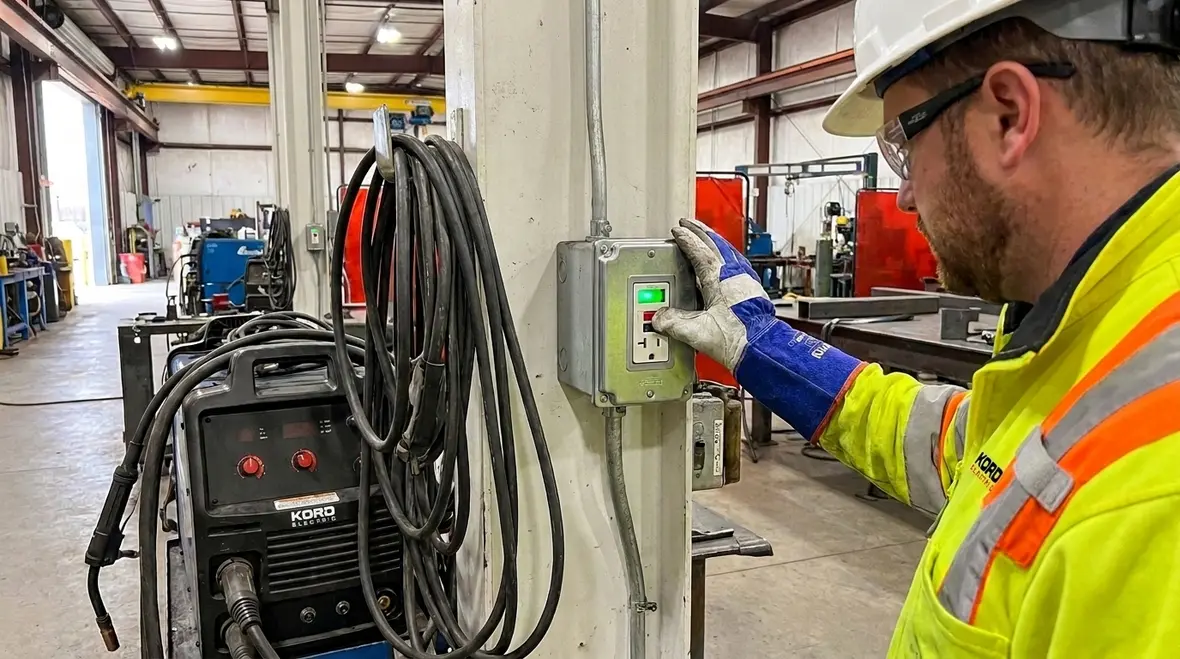
NEC Section 630.8 Welding GFCI Personnel Protection Guide
NEC Section 630.8 welding GFCI personnel protection: what we tell commercial teams first
At Kord Electric, we start with a simple truth: when a facility runs welding equipment, people get exposed in ways that paperwork often ignores. That is why we focus early on NEC Section 630.8 welding GFCI personnel protection, and we explain it in plain language before anyone signs off on a project plan. In the first few minutes, our technicians explain how personnel can still face shock hazards even when general power rules look “fine.” Then, we connect those risks to the details of the National Electrical Code, so your team understands what must be in place and why.
And yes, we have heard the joke that “welding is basically controlled chaos.” It is not. Controlled chaos still needs safe power. So we walk through what the Code requires, how it applies to commercial and industrial facilities, and how our expert service staff helps your site stay compliant without turning your shutdown schedule into a horror movie.
What the NEC really does for electrical design in major property buildings

People sometimes treat the NEC like a rulebook meant to slow everyone down. However, we see it as a roadmap that keeps energy use predictable and workers safer. The NEC covers installation rules, equipment ratings, wiring methods, and the conditions where those rules matter. Consequently, it helps designers, contractors, and maintenance teams build systems that perform as expected during normal operation and during fault events.
Further, when we work on commercial and industrial facilities, we do not only look at a section number and move on. Instead, we connect the requirements to the real-world layout: welding stations, temporary power setups, equipment rooms, and shared distribution areas. Moreover, we coordinate with fire protection partners such as the teams aligned with Kord Fire, because electrical hazards and fire risks often travel together like an awkward coworker who keeps showing up uninvited.
Finally, our expert service staff explains how updates in the NEC can affect existing systems, especially when facilities renovate or expand. That matters because a “safe enough” electrical plan can become a problem once you change loads, add welding work areas, or increase production hours. For teams who want a deeper background on the rulebook itself, we often point facility leaders to resources like Understanding NFPA 70: The National Electrical Code Explained for 2026, which shows how the code cycle shapes commercial and industrial planning.
Where welding risk shows up in commercial electrical systems

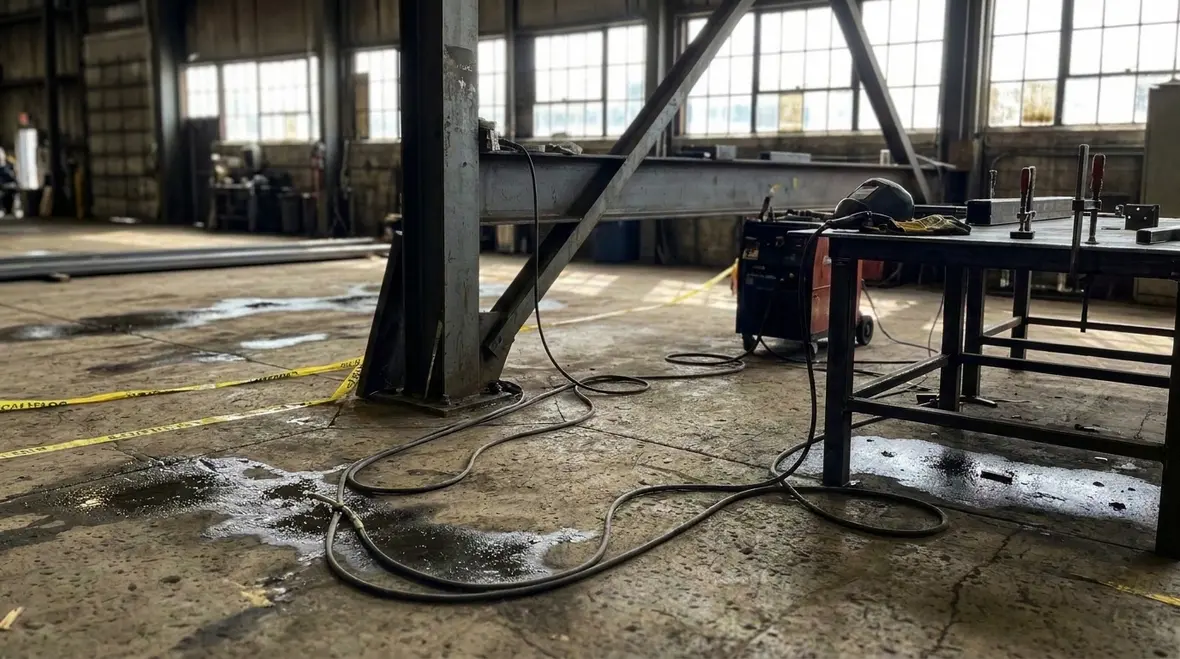
Welding work brings a specific set of electrical challenges. First, welding equipment often produces high currents and uses circuits that operate in demanding conditions. Then, the jobsite environment can add risk through wet locations, conductive surfaces, and the proximity of grounded metal structures. As a result, the shock hazard becomes more likely during setup, repositioning, or equipment adjustments.
In major property buildings, the situation can get more complicated. For example, welding tasks might happen in different bays, near dock areas, or inside spaces that connect to shared power. Meanwhile, maintenance teams may use temporary wiring, extension cords, or movable outlets to keep work moving. Therefore, the electrical design must plan for how personnel will access power safely, not just how the equipment will run once installed.
That is where we return to NEC guidance, including the idea behind NEC Section 630.8 welding GFCI personnel protection and why it targets the person, not only the equipment. In our field work, we explain that the goal is to reduce the chance that a worker becomes the path for current when something goes wrong.
NEC Section 630.8 welding GFCI personnel protection: what it covers and how we apply it
In our projects, we treat NEC Section 630.8 welding GFCI personnel protection as a key part of a larger safety plan. We explain to facility managers that this requirement focuses on protecting personnel where welding is being performed, and it ties directly to how GFCI protection works in these setups. Put simply, GFCI devices monitor current flow and help interrupt the circuit when conditions suggest a dangerous ground fault.
Next, we walk teams through practical application. We look at where receptacles or power outlets get installed, how welding cables connect, and what happens during frequent plug and unplug cycles. Because welding areas change, we also plan for durable outlet placement and clear labeling, so workers do not improvise.
Then we cover the operating details that often get missed. For instance, our technicians explain how nuisance trips can frustrate crews and how proper installation helps reduce that issue. At the same time, we make it clear that “resetting” is not a substitute for correct wiring and proper equipment. If a device keeps tripping, we investigate. We do not joke that it is “the electrical equivalent of a moody teenager.” We just troubleshoot, document, and fix the cause.
Finally, we align our approach with the way the NEC is explained in resources like the Kord Electric blog and related Kord Fire guidance. You can think of it as the bridge between theory and site work, where safety rules become practical steps. When facility leaders want to connect welding protection back to the broader code picture, we often recommend pairing this topic with articles such as NFPA 70: All About the National Electrical Code (NEC) 2026 from Kord Fire and Kord Electric’s own NEC explainers for 2026.
Technical installation details that determine real safety outcomes
Code language matters, but installation quality decides whether the protection works when it is needed. To keep that point crystal clear, our expert service staff goes deep on the details that affect GFCI performance and welding area safety.
Receptacle placement and access
We place outlets where welders can reach power without stretching cables across walkways or stepping over cords. Therefore, we reduce trip hazards and reduce the chance of cable damage, which can lead to faults.
Wiring method and routing
We install conductors using methods that match the environment and protect against physical damage. Additionally, we plan routing so cables do not sit where heat, sparks, or equipment movement can wear them down.
Grounding and connection quality
GFCI performance depends on correct wiring and dependable connections. So we verify grounding paths, terminations, and continuity during commissioning and after service work. We also document test results for facility records.
Coordination with fire and safety systems
Commercial facilities need more than electricity that “meets code.” They need systems that work together. Thus, we coordinate electrical safety steps with fire protection planning, and when needed, we support partners that focus on fire pumps and broader fire life safety needs. Sites often reference industry resources such as firepumps.org when aligning overall life safety design, because electrical and fire systems must function in a coordinated way.
In short, we do not treat welding protection as a checkbox. We treat it as a living system that must remain correct through daily operations and future changes.
Planning for compliance across the site lifecycle
Many facilities think about NEC compliance only during initial construction. However, commercial and industrial environments evolve. Consequently, compliance becomes a lifecycle task: design, install, test, maintain, and update. When a facility adds welding stations, expands production, or renovates a warehouse bay, the earlier plan can fall behind real work patterns.
To prevent that drift, we recommend a practical approach. First, we build a map of welding power locations and note how personnel access those outlets. Next, we align GFCI protection to those locations using the NEC direction tied to NEC Section 630.8 welding GFCI personnel protection. Then, we schedule inspection and testing so devices remain reliable.
Also, we help facility teams train the people who use the equipment. Our technicians explain how to recognize trouble signals and when to call for service instead of resetting and moving on. If your site treats safety devices like disposable gadgets, the Code will not be the problem. The culture will. And we are here to help you build a culture that keeps workers safe.
Finally, we stay aware of future-facing code updates by following how the Code gets interpreted and published in resources such as Kord Electric and Kord Fire. That way, planning decisions made today still make sense when you renew service contracts or tackle the next tenant improvement.
FAQ: quick answers facility teams ask us
When Kord Electric steps in, we bring order to the chaos
When your facility needs welding area power designed or upgraded, we handle it with a safety-first approach built for commercial and industrial buildings. We start with NEC Section 630.8 welding GFCI personnel protection, then we move through installation details, testing, and coordination so the system works in day-to-day reality. Our technicians and expert service staff explain each step in plain terms, and we leave your team with clear documentation. If you want your welding power to be safer, cleaner, and compliant, contact Kord Electric today and let us assess your site.
For facilities across the region, especially those in and around Los Angeles County, aligning welding protection with the broader electrical system often starts with a service partner who understands both the code and the schedule pressure. That is why many property teams review Kord Electric’s Los Angeles County electrical services overview when they plan upgrades. It outlines how a code-focused electrical contractor can help design, install, and maintain systems that keep welding, general power, and life safety infrastructure working together without last-minute surprises.
Whether you are adding new welding stations, reworking existing bays, or tying temporary power into long-running projects, the combination of NEC Section 630.8 welding GFCI personnel protection and a thoughtful electrical design gives your team a stable foundation. From there, you can focus on production, quality, and schedules, knowing that the power behind the work is built to protect the people doing it.
Ready to review your welding power and personnel protection plan? Our technicians and expert service staff can walk your site, map your welding locations, and give you a clear, step-by-step path to align real-world operations with the intent of the NEC.
If your facility team also wants a wider view of how the National Electrical Code shapes design, inspections, and long-term planning for commercial and industrial properties, you can explore additional resources on the Kord Electric blog. Articles such as Understanding NFPA 70: The National Electrical Code Explained for 2026, and related NEC primers, help connect section-specific topics like welding GFCI personnel protection to the bigger picture of safe, reliable electrical infrastructure.
From first layout sketches through commissioning and future expansions, Kord Electric is ready to help your welding areas stay grounded in code, backed by documentation, and trusted by the people who work there every day.
When you are ready to turn “controlled chaos” into controlled, compliant power, we are ready to help.


