
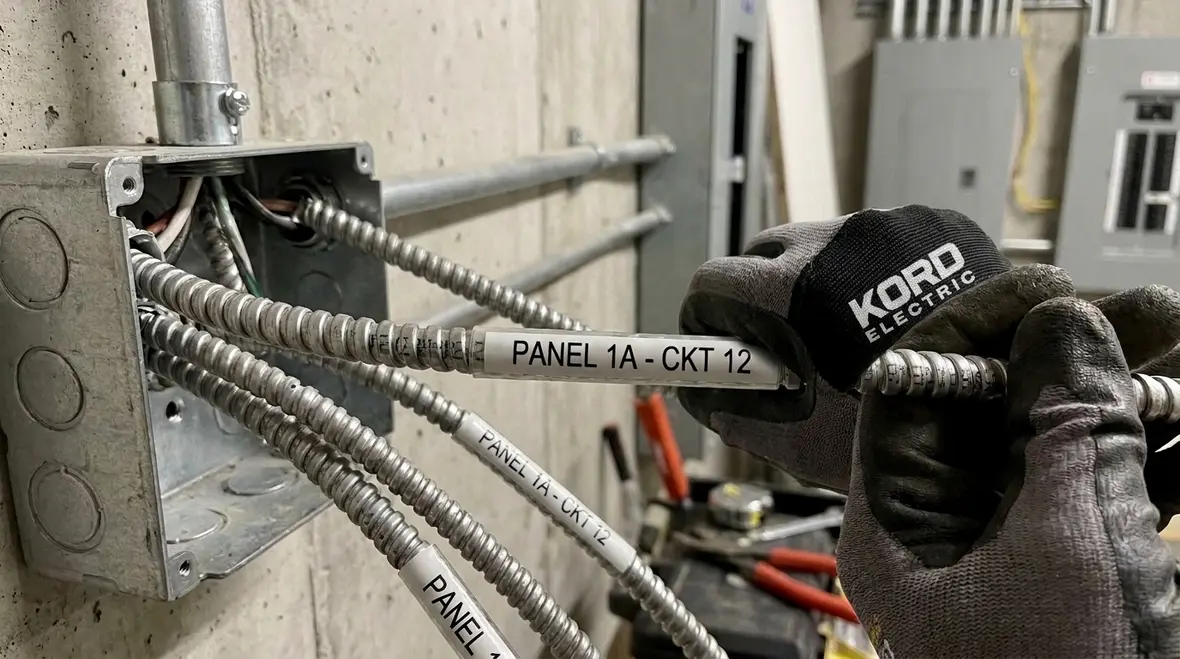
NEC MC Cable Marking Under NFPA 70 Section 322.120
At Kord Electric, we see the real world every day. On job sites, teams do not fail because they hate compliance. They fail because the details get missed, then everyone scrambles like it is the season finale and the lights go out mid plot. That is why we focus on NEC MC cable marking early in the process, including how NFPA 70 Section 322.120 handles labeling for Metal Clad cable, also known as MC cable. In this article, our field specialists walk you through what the code expects, why it matters for commercial and industrial facilities and major property buildings, and how proper marking supports safer inspection, faster troubleshooting, and cleaner closeout paperwork.
And yes, we know “labeling” sounds about as exciting as watching paint dry. However, in electrical work, good marking is the difference between “We’ll fix it tomorrow” and “We are stuck until we can identify every cable in the building.”
What NFPA 70 Section 322.120 requires for MC cable marking
How Section 322.120 frames NEC MC cable marking
NFPA 70 Section 322.120 sets clear rules for how MC cable must be identified through marking. In plain terms, the code wants the cable to carry information that helps others know what they are looking at, even when the system hides inside walls, ceilings, or dense cable trays. Therefore, when someone inspects the installation or returns later for troubleshooting, the marking guides them to the right cable without guessing.
Meanwhile, the requirement ties directly to the manufacturer’s identification and the markings placed on the cable jacket or the marking label that is part of the cable construction. In practice, Kord Electric emphasizes that you cannot treat marking like optional paperwork. You must plan it, verify it, and protect it during installation.
Why jacket markings and labels are non‑optional
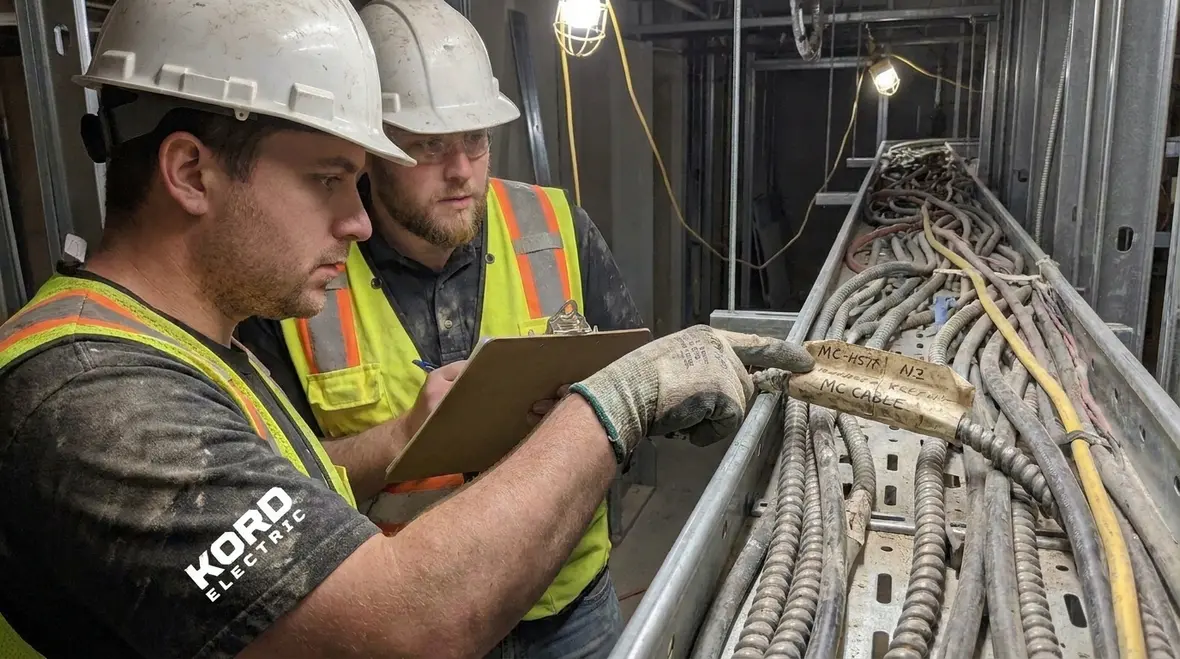
On paper, NFPA 70 Section 322.120 might look simple: MC cable must be marked with the right information and that identification has to stay intact. On a live job site, the story is more demanding. Crews pull cable through tight bends, across long tray runs, and into crowded equipment rooms. If the jacket printing or integrated label gets scuffed off, painted over, or buried behind non‑approved coverings, compliance stops being theoretical. It fails in real time.
That is why our project leads treat cable identification as part of the core electrical design instead of a last‑minute detail. The selection of MC cable type, the way the labeling appears on the jacket, and how it lines up with the one‑line diagrams all matter for long‑term safety, serviceability, and inspection readiness.
If you want to see how this section fits into the broader NEC picture, you can also review our companion code resource, Understanding NFPA 70: The National Electrical Code Explained for 2026, which lays out how these rules connect across commercial and industrial projects.
Why correct MC labeling matters in real commercial and industrial buildings
Downtime, inspections, and the cost of guessing
Commercial and industrial sites operate with schedules, uptime goals, and strict maintenance cycles. Because of that, the electrical system becomes part of the daily workflow. If MC cable marking is unclear, damaged, or missing, then maintenance slows down, inspections take longer, and fault finding becomes costly.
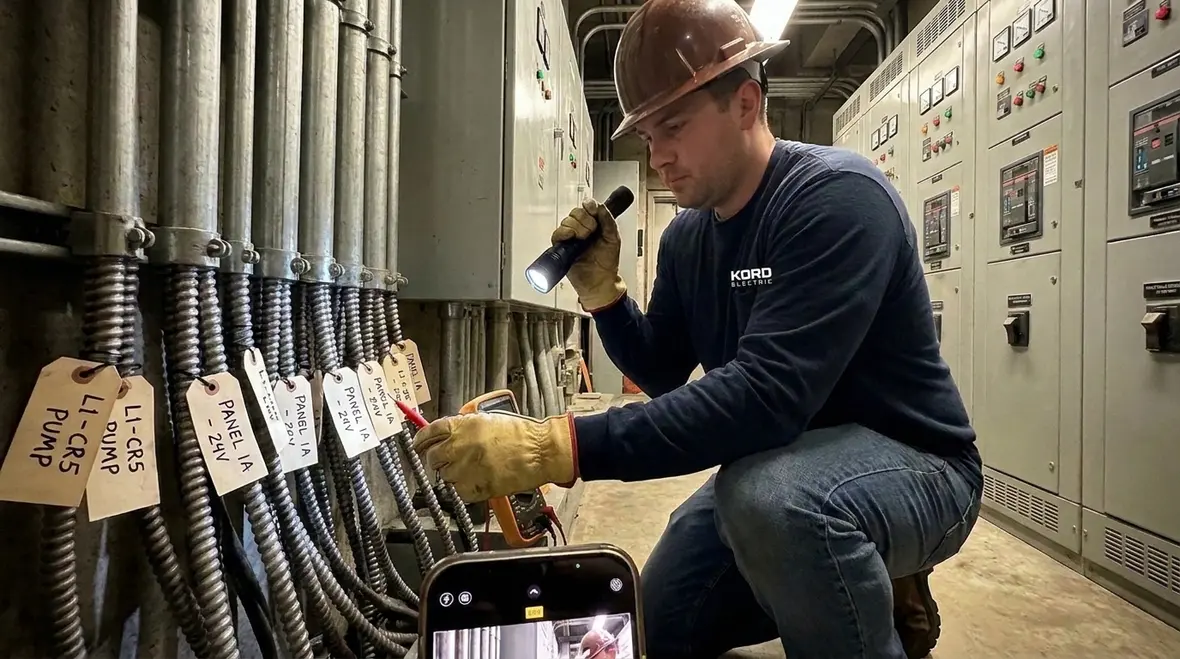
For example, when a facility team reports a nuisance trip or a sudden loss of power, our technicians need to trace the circuit fast. Then we can verify load type, termination location, and cable routing. When the marking is legible and correct, tracing stops being a scavenger hunt. However, when marking fails, the team wastes time checking multiple runs, which increases risk and labor hours.
Shared infrastructure and long project timelines
Additionally, in major property buildings, many contractors touch the same infrastructure over years. As projects change, access evolves, and as systems get expanded, marking remains the most stable clue. We also see that consistent marking supports stronger documentation for turnover and future upgrades.
And here is a small joke, because we like people to stay calm. Marking is like the barcode on a product. Without it, you can still try to guess what you bought, but you will not like the register total.
How our technicians verify NEC MC cable marking during installation
Planning, delivery checks, and field verification
At Kord Electric, we do not wait until the end of the job to talk about identification. Instead, our experienced service staff builds a check into the workflow. We confirm the cable type at delivery, we review labeling on the jacket or the approved marking method, and we verify that the marking stays readable after pulling, bending, routing, and final terminations.
Then, we make sure the installed condition still matches what the code expects. For instance, if someone uses abrasive tools that scuff the jacket heavily, marking can become hard to read. Likewise, if cables get covered with sealant or encased in a way that blocks the label without an accepted method, identification can fail. Therefore, we coach crews to handle MC cable with care and we track any cable batches that look off.
Inspection‑ready documentation and clear communication
Moreover, our process aligns with inspection reality. Inspectors need to confirm compliance without guessing. So we keep the documentation simple and consistent with what NFPA 70 expects, while also matching the installation practices required for commercial and industrial facilities.
Finally, we communicate clearly. We explain the “why” behind labeling requirements to reduce rework. We also make sure facility stakeholders understand what they will see during commissioning and later maintenance, especially when they review panel schedules, cable identifiers, and any NEC MC cable marking notes in the as‑built package.
NEC MC cable marking in the field: common mistakes we help prevent
Pull now, label later: the fastest way to fail an inspection
When we consult on ongoing projects, we often see the same patterns of failure. First, crews pull cable first and think about labeling later. Then marking gets worn, smeared, or covered. Second, teams mix cable types, and the markings do not reflect the circuit plan. Third, cable runs get reorganized after rough-in, so the original identification no longer matches the final circuit labeling.
Because these issues stack up, we address them before they grow. We also use practical steps on site. For example, we confirm that each cable’s labeling matches the electrical schedule and the equipment it serves. We then verify that routing decisions maintain access to the marking locations where inspection will happen.
Avoiding “mystery cable syndrome”
Additionally, we help prevent “mystery cable syndrome.” That is when a cable looks like it belongs to a system, but no one can confidently prove it. As a result, troubleshooters spend hours on verification. However, good cable marking and aligned labeling reduce that burden.
And if you are thinking, “People really do that,” the answer is yes. In electrical work, some surprises are as predictable as a sitcom misunderstanding. The trick is to keep it off your job site.
Interpreting marking requirements alongside installation practices
Keeping markings visible through routing and support choices
NFPA 70 does not live in isolation. While Section 322.120 focuses on marking, the success of compliance depends on installation practices around it. Therefore, we pair cable marking with correct pulling tension, bend radius, securing methods, and route planning.
When cable runs pass through tight spaces or get bundled heavily, marking can get lost in the crowd. So we plan cable tray layouts, support spacing, and access routes so markings remain visible where needed. Then we align terminations with the electrical design so the labeling supports real identification.
Avoiding hidden labels and non‑approved coverings
At the same time, we avoid sloppy coverage decisions. If a jacket label gets hidden under non-approved coverings, then the purpose of marking erodes. So we guide teams to use acceptable methods and we document what is used. We also review transitions, especially where cable enters equipment spaces or penetrates assemblies in major property buildings.
Ultimately, when marking and installation practices agree, inspections become smoother. Work schedules stay intact. And later maintenance teams thank us with fewer angry tickets.
How Kord Electric supports code-ready documentation and long term service
From code sections to usable field records
Code compliance should not end at rough-in. At Kord Electric, we support commercial and industrial facilities and major property buildings with documentation that stays useful over time. That means we help align labeling for MC cable marking with circuit schedules, equipment tags, and as-built records.
Furthermore, we explain how that documentation supports long term service. When a facility team returns for repairs, they should not need a time machine to decode what happened. Marking plus accurate records make the facility easier to manage, reduce downtime, and speed up safe restoration after faults.
Connecting MC cable marking to the bigger NEC picture
Our team also stays mindful of the broader NEC environment. For those who want background on how the National Electrical Code fits into real projects, Kord Electric and our related resources cover these topics in depth. Articles such as Understanding NFPA 70: The National Electrical Code Explained for 2026 and other NEC‑focused guides on the Kord Electric blog help facility teams see how NEC MC cable marking, conductor sizing, grounding, and wiring methods all work together in the same rulebook.
Additionally, when clients ask about how to plan for future changes, we recommend designing labeling and identification to survive renovations. Therefore, even as spaces evolve, cable identification remains reliable.
And yes, we still crack jokes with our service staff. It keeps the worksite human. But the standards never slide.
FAQ on NFPA 70 Section 322.120 and MC cable marking
Conclusion and call to action
When you run electrical work in commercial and industrial facilities and major property buildings, you do not need “almost compliant.” You need code ready systems that stay serviceable for years. Kord Electric helps your team apply NEC MC cable marking correctly under NFPA 70 Section 322.120, and we verify it during installation, not after problems appear. If you want a calm, expert path through compliance and documentation, contact Kord Electric today. Let us help you avoid the cable guessing game and keep your facility running smoothly.
For larger portfolios or sites across Southern California, our dedicated Los Angeles County electrical services team can also support broader upgrades, code reviews, and ongoing maintenance programs built around NEC expectations.


