
Kord Electric NFPA 70 Section 324.2 UF Cable Listing Requirements
Kord Electric explains NFPA 70 Section 324.2 UF cable listing requirements for commercial safety
In the real world, underground feeder cable does not fail politely. It fails when heat, moisture, and time team up like a sitcom villain duo. That is why NFPA 70 Section 324.2 matters, especially for UF cable used in commercial and industrial facilities. Here is the core idea we teach our teams: the cable must be listed for the purpose, meaning the product meets the requirements of a recognized testing and certification process. Then, when we install, we use that cable only in the conditions it is listed for. In the rest of this guide, we break down how those NEC principles connect to safe selection, correct installation practices, and what our expert service staff checks on site.
If you are getting ready for a project that also needs a bigger picture view of the code, you can pair this guide with our resource on Understanding NFPA 70: The National Electrical Code Explained for 2026, so your UF cable choices stay aligned with the broader NEC direction for 2026 and beyond.
What Section 324.2 actually requires for UF cable listings

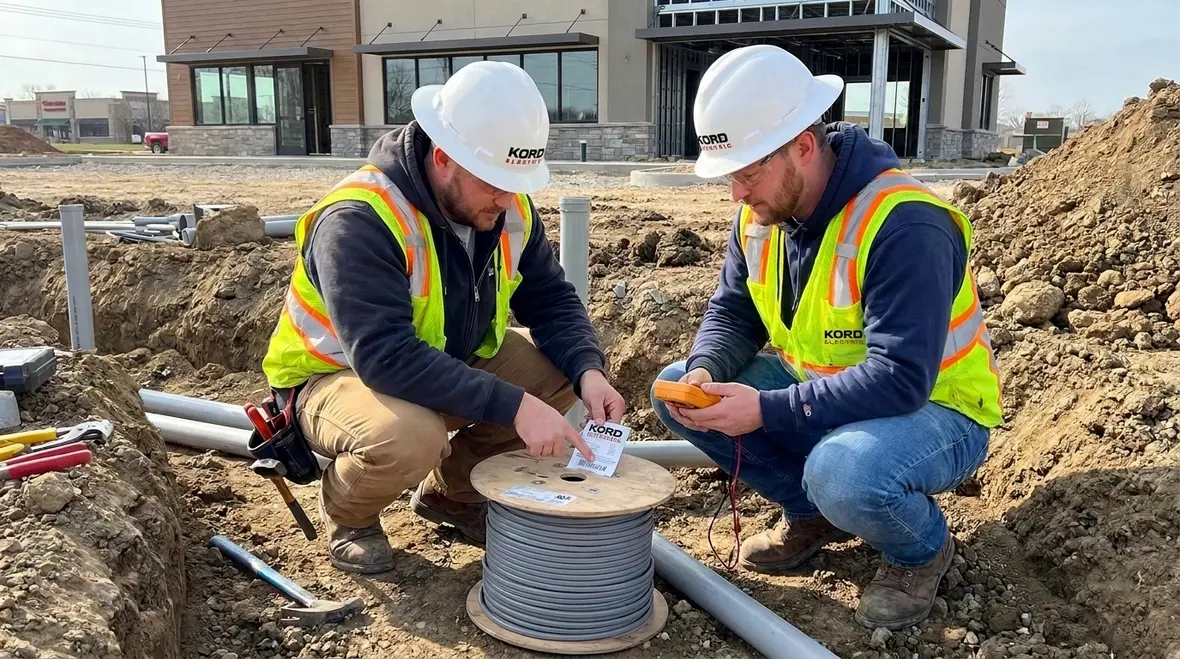
NFPA 70 Section 324.2 focuses on the listing requirements. So, in practice, we do not “guess” whether a UF cable is acceptable. Instead, our electricians verify that the cable is listed for use as an underground feeder, and they confirm the marked information matches the project needs. When we do this, we reduce hidden risk, and we prevent that classic failure mode where someone picks a cable that looks right but was never approved for the specific application.
At Kord Electric, our technicians treat listing like a passport. It is not decoration. It tells us the cable went through testing for specific performance expectations, including aspects like electrical safety and construction. Then, because commercial sites require repeatable results, we build our workflow around that listed status, not around personal preference or “it worked last time.”
This is where NEC UF cable listing requirements become more than code text. They become a filter our team uses from material submittals to final inspection. If a cable cannot prove its listing, it does not go in the ground on our watch.

How the NEC UF cable listing requirements show up during real installation
Even though the wording lives in NFPA 70, the real work shows up in the trench. Therefore, our crews plan the cable route, check the expected environment, and keep installation methods aligned with the cable’s listing. For example, if the listed use depends on certain burial depth, support, or protection, we follow those limits. Likewise, we avoid mixing materials and we keep splices within the approved approach for that cable type.
Next, we verify the cable markings and documentation before we pull it into conduit paths or direct burial runs. If the project includes upgrades, we also cross-check replacement cable selections so the new install matches the existing system expectations. This is the part where someone always says, “We can just make it work.” And sure, sometimes people can. However, in commercial and industrial electrical work, “making it work” is not a code-compliance strategy.
Instead, our technicians walk the site and compare conditions to what the NEC UF cable listing requirements actually assumed. Soil conditions, moisture exposure, nearby utilities, and mechanical protection all factor into whether that “almost right” cable truly belongs in that trench.

What “listed” means to building owners and facility managers
Most owners and property managers do not read every line of the NEC like a bedtime story. However, they still carry the outcomes, including inspection results, insurance questions, and long-term reliability. Consequently, we translate the listing rules into business language: a listed UF cable reduces uncertainty, supports inspection readiness, and supports a safer electrical path over time.
When our expert service staff walks a facility, they explain this in plain terms. We show how the cable’s listing supports consistent performance under expected conditions. Then we connect the dots to maintenance planning. If something changes later, such as adding loads or expanding a distribution run, we can select replacements more confidently because we know what the system was built with and why.
For major properties, this clarity helps with capital planning too. Teams can budget for future trenching or distribution changes knowing they will keep NEC UF cable listing requirements front and center, instead of discovering after bid day that the original installation cut corners.

Selection pitfalls we help customers avoid in commercial projects
Commercial and industrial facilities often face unique jobsite realities. There are shared corridors, heavy equipment traffic, renovations, and long cable routes. As a result, the common mistakes are rarely “obvious.” They come from speed, assumptions, or mismatched parts.
Our technicians routinely flag these risks during planning and preconstruction checks. For instance:
- Choosing UF cable without confirming it meets the NEC UF cable listing requirements for the intended underground use and environment
- Using cable that lacks the proper markings or documentation for the project scope
- Making field changes that bypass the listed application conditions
- Improper handling that damages the insulation before burial, then causing problems later
- Unapproved splicing or protection methods that conflict with listed installation expectations
Now, here is the pop culture truth: electrical work is not like improvisational TV where the audience forgives the plot holes. Inspectors do not laugh. They write notes. So we help customers avoid the plot holes early, while the solution is still affordable.
We also coordinate UF cable decisions with broader electrical design choices such as surge protection, power quality, and emergency power. That keeps underground runs aligned with the same disciplined approach we use in areas like Emergency Power for Business Continuity and other distribution strategies for commercial reliability.
Coordination with other code needs and common inspection expectations
Listing requirements do not exist alone. Therefore, we coordinate Section 324.2 with the broader NEC framework so the whole system holds up. That means we also pay attention to how the cable connects to equipment, how it routes through spaces, and how the installation plan supports safety during operation.
In addition, our team anticipates typical inspection and documentation needs for major property buildings. We help ensure the install practices line up with recognized standards and that the cable selection is defensible. When inspectors ask for details, we can point to the listed cable evidence and installation approach. Then we keep the conversation professional, calm, and clear, instead of turning it into a guessing game.
And yes, sometimes people treat cable selection like choosing between two brands of coffee. They taste similar, so they assume performance is the same. Unfortunately, electrical safety does not share that flexibility. It is more like choosing between “water” and “mystery liquid in a cup.” If the listing is wrong, the project can get messy fast.
To reduce that risk, our technicians also reference code-focused resources like our internal guides to reading NFPA 70 and interpreting new editions, so that every underground feeder decision connects back to a bigger compliance picture, not just a single trench detail.
Dual column checklist our technicians use on major property installs
To keep projects consistent across shifts and subcontractors, we use a practical checklist during planning and install. Here is how our technicians think about it:
|
Verification steps
|
Install quality steps
|
On larger projects, this checklist lives alongside schedule tools, submittal logs, and inspection prep notes. That way, NEC UF cable listing requirements do not fade into the background once the trench is backfilled; they stay visible through commissioning and turnover.
FAQ about NEC UF cable listing requirements in commercial work
Conclusion: bring your UF cable project under control with Kord Electric
When we install underground electrical systems, we do not rely on hope or habit. We follow the listing logic behind NFPA 70 Section 324.2, and our technicians document the decisions that keep a commercial site safe and inspection ready. If you are planning an upgrade, replacement, or new distribution run for a major property, we invite you to contact Kord Electric. Others may rush the cable. We take the time to do it right, the first time, and the time after that.
If your facility is in Southern California and you need a team that can coordinate UF cable work with the rest of your distribution and life safety systems, explore our dedicated Los Angeles County electrical services for commercial and industrial sites. Our crews connect trench-level details with whole-building reliability, so your underground feeders support the rest of your electrical strategy instead of fighting it.


