
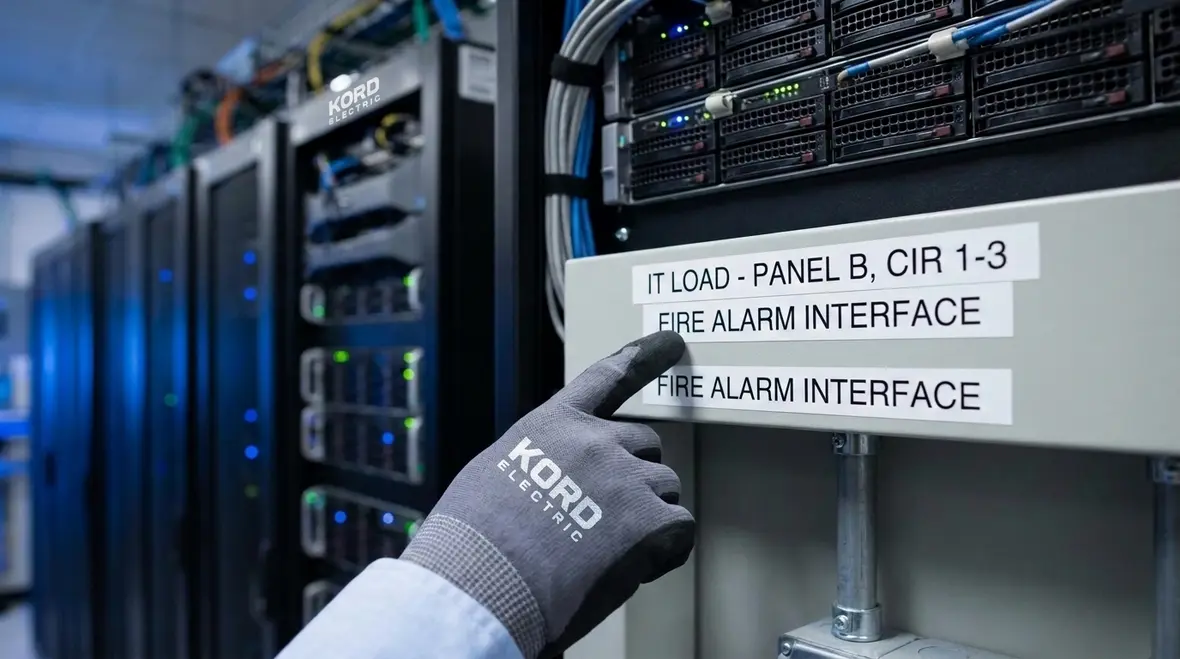
NEC Section 645.16 IT Equipment Marking NEC, Guide for Teams
NEC Section 645.16 IT equipment marking NEC: what commercial teams must get right
When we build and maintain power systems for commercial and industrial facilities, we do it with one goal: reliability that stands up under real life. That includes how we mark and manage IT and related equipment. In the NEC Section 645.16 IT equipment marking NEC applies rules for clearly identifying IT equipment pathways and devices tied to fire and electrical safety practices. We explain it in plain terms because your team should not need a decoder ring to run a safe facility. And yes, sometimes code language feels like it was written by someone who never met a busy electrician. We do not want that for you.
Below, our technicians and expert service staff walk you through the thinking behind the National Electrical Code, what the marking rules aim to prevent, and how teams can implement them without creating chaos in the field.
How the NEC guides electrical safety in real buildings
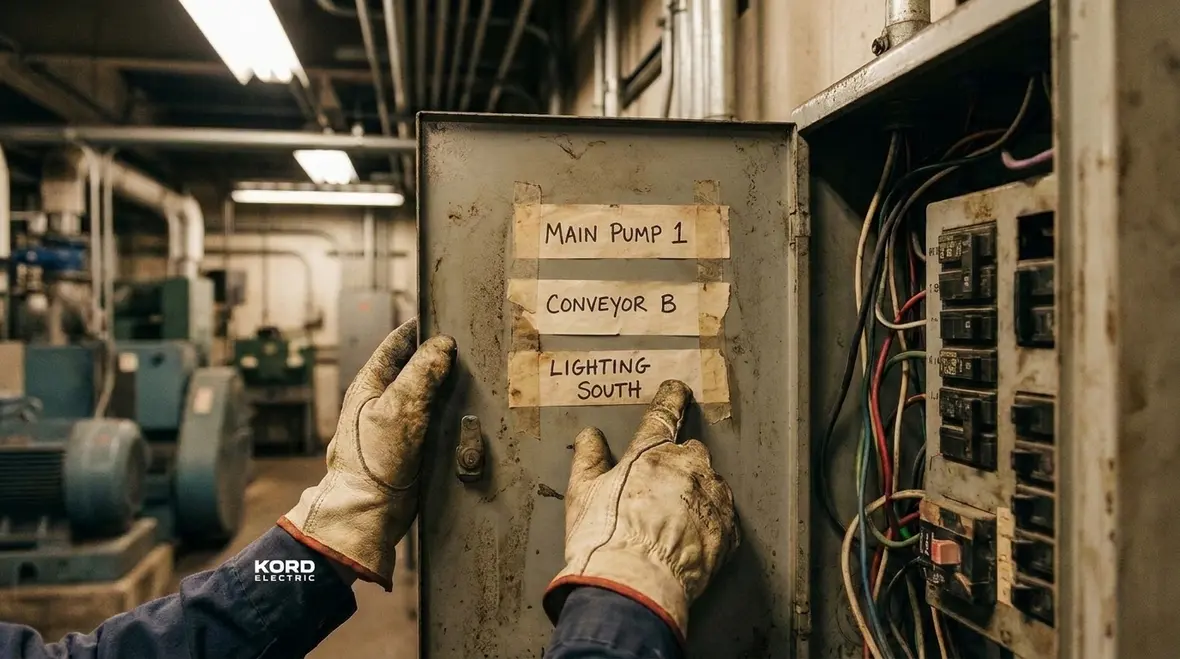
Commercial and industrial electrical work does not live in a vacuum. Instead, it sits inside a bigger safety framework that includes fire risk, emergency response, and building operations. The NEC provides minimum requirements, so we treat it as the floor, not the ceiling. Our approach at Kord Electric focuses on projects where outages cost money, downtime disrupts services, and safety failures create major risk.
As we work, we connect NEC concepts to what crews can do today. For example, we look at how power distribution supports life safety systems, how equipment labels prevent misrouting, and how documentation helps maintenance teams trace circuits quickly. If you have ever watched someone chase a circuit number like it is a missing TV remote, then you already know why clarity matters.
At Kord Fire and Kord Fire Pump resources, and through the broader fire and electrical guidance communities, the theme stays consistent: markings and system organization improve correct operation during inspection, maintenance, and emergencies. We borrow that mindset and apply it to electrical installation quality for major property buildings. For teams who want a deeper foundation on why the NEC exists and how it shapes projects, it also helps to review dedicated guidance like Kord Electric’s article Understanding NFPA 70: The National Electrical Code Explained for 2026, which connects code language to real facility decisions.
What marking rules try to prevent
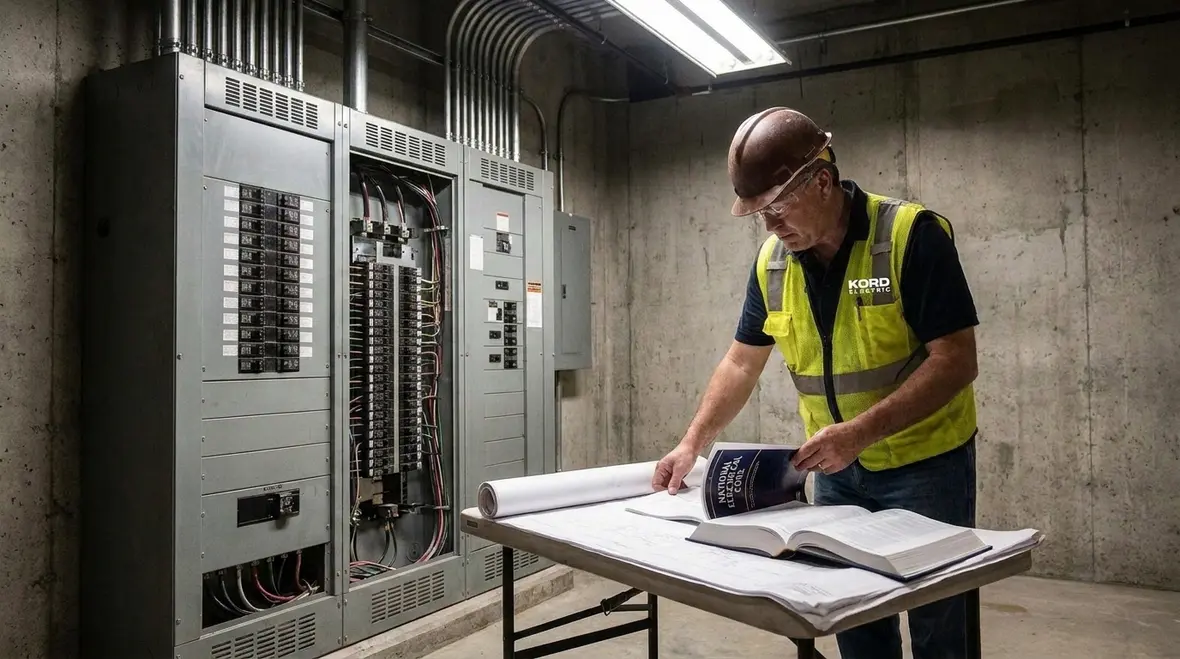
Marking rules exist for a reason, and it is not to make labels look pretty on a panel door. Instead, they reduce confusion when someone needs to identify IT equipment fast. Furthermore, they support safe service by reducing the chance that a technician re-energizes the wrong part of a system. We see this most often during troubleshooting, renovations, and emergency repairs.
When we help owners and facility managers, we explain the core idea like this: electrical safety depends on correct identification, not guesses. If a label is missing, outdated, or ambiguous, the next person must spend time confirming details. During emergencies, time disappears quickly. During normal maintenance, small delays become large costs.
Our technicians use a simple method: we tie the marking to the physical location and the functional purpose of the equipment. Then we confirm it matches the drawings and the real wiring. That step matters because the best label in the world fails if the underlying system changes and the documentation does not.
Applying NEC marking to IT equipment in facility workflows
In commercial and industrial environments, IT equipment often sits behind critical operations. Therefore, teams must treat IT power and supporting infrastructure as part of the overall safety plan. The rules under NEC Section 645.16 IT equipment marking NEC push us to mark equipment and spaces so that qualified people can identify what they need to identify, and when they need to do it.
To apply this well, we build the process around how your staff works. First, we review the site and determine where IT equipment and associated pathways exist. Next, we verify which panels, raceways, and disconnects connect to the relevant loads. After that, we place markings that crews can read during maintenance, not only during initial commissioning.
Then we do something many projects skip. We test the label workflow. We ask our service staff to find the related equipment using the markings and compare the result to the field. If the route takes extra steps, we adjust the labels or the identification scheme before it becomes a long term problem. In short, we make markings part of operations, not a one-time finishing task.
NEC and coordination between electrical and fire safety teams

Electrical markings rarely work alone. In major property buildings, electrical safety connects with fire safety planning, emergency response procedures, and inspections. So we coordinate across trades and disciplines so that everyone uses the same language and locations.
For example, when teams plan duct, conduit, or pathway layouts, they must ensure that labeling does not conflict with other safety systems. Meanwhile, fire protection needs consistent identification so response crews can locate equipment quickly. This is where our expert service staff becomes valuable. We explain not just what to do, but why the coordination matters. And we do it with a steady pace, because panic makes people forget labels, and labels make panic less likely.
We also help facilities maintain this over time. When renovations happen, electrical systems change. If someone adds a circuit or swaps a device and labels do not follow, the facility slowly drifts away from compliance. Our ongoing service mindset helps reduce that drift for commercial and industrial facilities where uptime matters. That same mindset supports broader strategies, from emergency power in offices to modern electrical systems for commercial buildings, where labeling, documentation, and code awareness all support uptime and safety.
Best practices we install and document for inspections

We aim for clarity that holds up under inspection and real use. So we follow best practices that our technicians can repeat, even on fast turnarounds.
- Use location based labeling that matches the physical route and panel or equipment it identifies, so crews do not have to guess.
- Keep markings consistent with drawings and update documentation when changes happen, because mismatches create risk.
- Choose durable label materials for the environment, such as areas with heat, dust, or vibration.
- Plan label placement so it remains readable during normal access and maintenance, not buried behind a yearly decoration nobody asked for.
- Perform a field verification step where we confirm identification before closing work, so mistakes get caught early.
Additionally, we structure our documentation to support inspections. We keep the chain tight between what we install, what we label, and what we record. This reduces back and forth, and it helps your facility team focus on operations rather than chasing answers. For facilities planning larger upgrades or renovations, pairing these practices with dedicated electrical code upgrade consulting helps align labeling, equipment changes, and NEC expectations so inspections stay predictable instead of stressful.
Understanding IT equipment marking details for smoother maintenance
When a facility operates day after day, maintenance becomes a rhythm. Therefore, markings should support that rhythm. They should help a technician identify what to isolate, where to verify, and how to restore power safely. If your maintenance process relies on memory, then eventually it breaks. We prefer systems that do not rely on luck.
Our technicians typically focus on three details during project closeout. First, they confirm that IT related equipment marking aligns with the intended system boundaries. Second, they confirm that the marking helps someone trace the power source without stopping every three steps to ask a question. Third, they verify that the marking remains accurate after operational changes.
We also guide your staff on how to keep labels current. For instance, we recommend that your internal process includes a label check whenever a device, disconnect, or circuit changes. That simple habit keeps compliance strong and reduces the chance that someone flips the wrong breaker because the label felt too vague to trust.
And if you are thinking, “Will all this really matter?” consider this: the best time to clarify a label is before an emergency. In emergencies, everyone moves fast. Faster than your ability to read a tiny tag that says “Stuff.”
How Kord Electric supports compliance and operations
IT equipment power rarely lives on its own breaker schedule. It usually ties into broader commercial electrical systems with life safety, process loads, and building automation all layered together. That is why we fold NEC Section 645.16 marking into a wider approach that includes panel labeling, circuit documentation, and clear one line diagrams for your facility.
For teams across Los Angeles County and the surrounding region, this often starts with a systematic review of your existing infrastructure. We trace key IT loads, confirm how they connect through distribution boards, and map them against your operations. From there, we design or refine a marking strategy that your technicians can actually use at 2 a.m. on a stormy night, not just at 2 p.m. during a calm walkthrough.
If your facility is already planning upgrades or needs targeted help with code-driven improvements, our broader Los Angeles County electrical services support electrical panels, lighting, emergency power, and preventive maintenance. That context matters, because NEC Section 645.16 IT equipment marking NEC works best when it is integrated into the rest of your electrical strategy instead of treated as a side note.
FAQ
Conclusion: let us help you mark, verify, and stay ready
Kord Electric supports commercial and industrial facilities that need safe power, clean documentation, and markings that hold up in the field. We work with your teams to apply NEC Section 645.16 IT equipment marking NEC principles through clear labeling, field verification, and ongoing service habits that prevent drift after changes. If you want fewer surprises during inspections and faster troubleshooting during real-world events, reach out to us. We will review your current setup and help you build a safer electrical identification system, one label at a time.


