
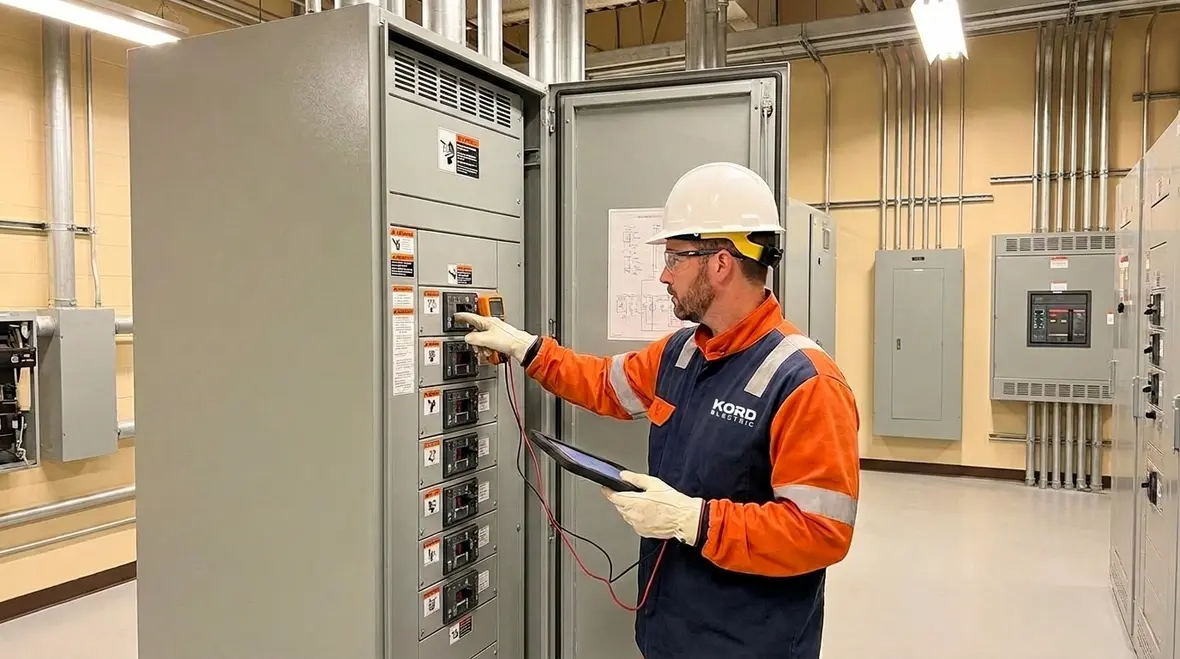
NEC Section 670.6 MCC Short-Circuit Rating You Should Not Ignore
Kord Electric and the NEC short-circuit rating you should not ignore
In commercial and industrial facilities, electrical safety is not a “nice to have,” it is a line in the sand. That is why we pay close attention to the NEC Section 670.6 MCC short-circuit rating early in design and during upgrades. This requirement helps ensure the electrical gear connected to motor control centers (MCCs) can handle fault current without turning into a very expensive science project. In other words, we build for reality, not for the fantasy version where every fault current stays politely low.
Our experienced service staff and technicians explain the standards in plain language, and they do it the same way they would explain it onsite, one step at a time. So, while the NEC can feel like a legal thriller written by electricians, we help you read it like a map. And yes, maps beat guessing. Guessing is for trivia night, not for power distribution.
What the NEC requires for MCCs under Section 670.6
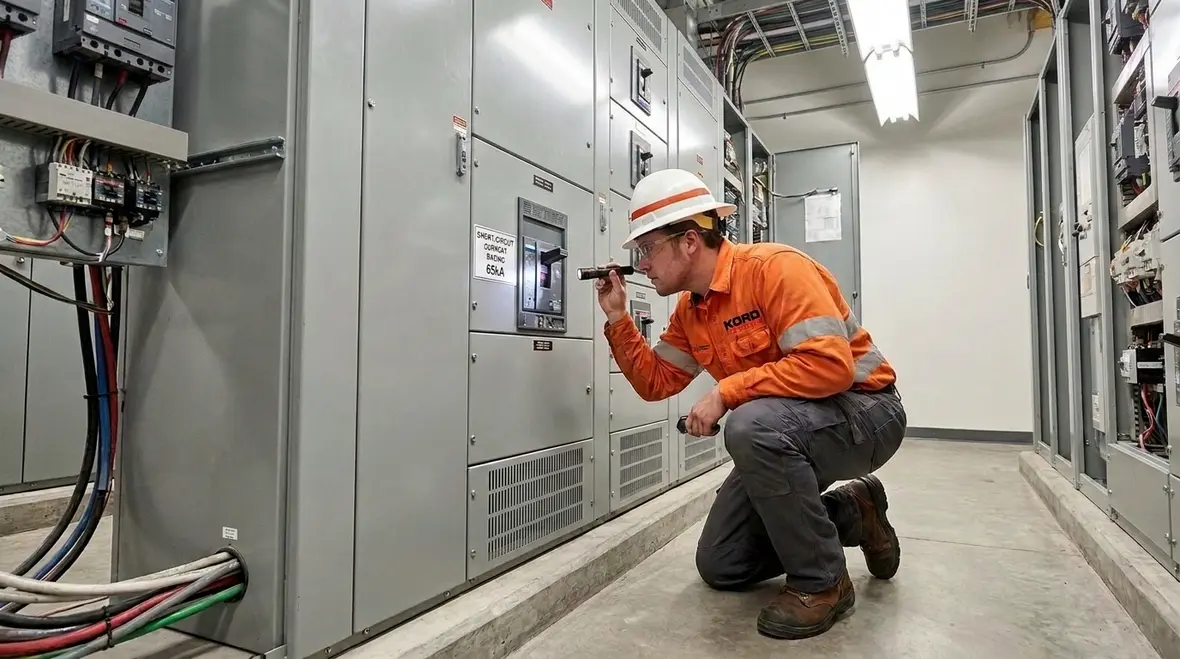
When we look at NEC Section 670.6 MCC short-circuit rating, we focus on one practical goal: equipment must be rated for the fault current it will actually see at its installation point. Fault current depends on system design, upstream equipment, conductor impedance, and utility source conditions. Therefore, the MCC short-circuit rating cannot be treated like a generic label you slap on and forget.
To comply, we help teams confirm three core things. First, we identify the available fault current at the MCC location. Next, we verify the MCC, its components, and overcurrent protective devices work together. Finally, we document the rating relationships so inspections and future maintenance make sense. Our technicians often explain it this way: if you pick parts without matching the system fault level, you do not “maybe” get a problem. You usually get it. The only question is when.
Also, we do not stop at theory. We verify settings and coordination so the protective devices clear faults in a controlled way. That means we think about how the system responds during abnormal events, not just how it looks on paper.
How fault current analysis protects real equipment in real buildings
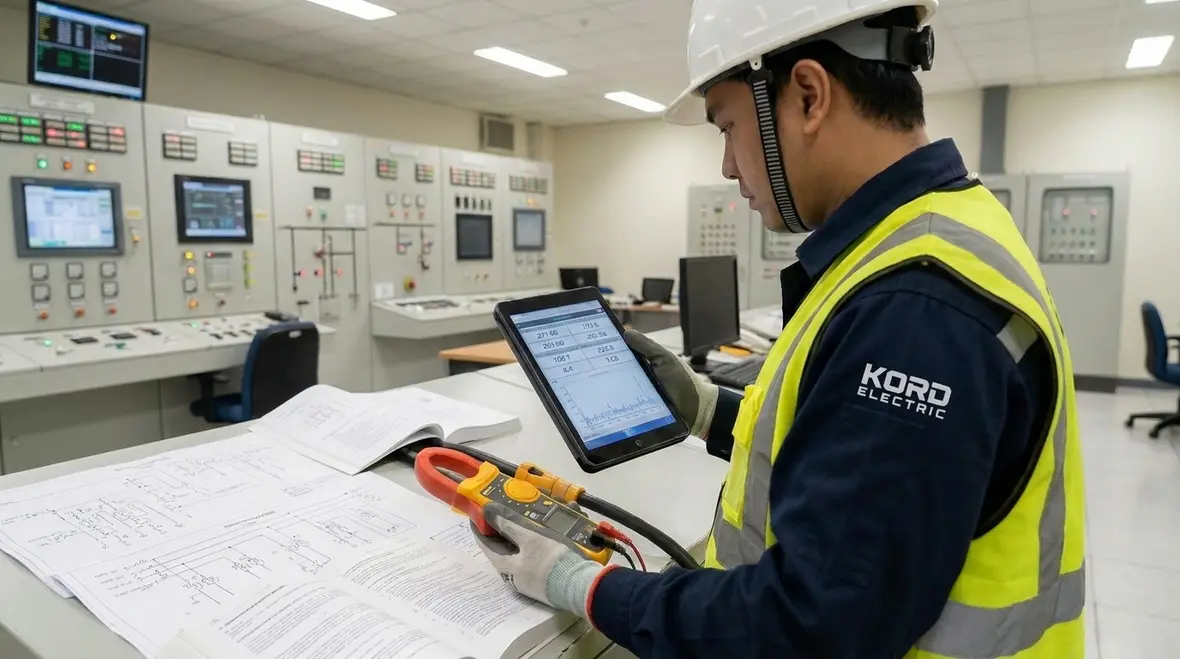
Commercial and industrial buildings experience different electrical realities than smaller sites. Larger services and multiple loads can drive higher available fault current. As a result, a single MCC installation must align with the system model. Then, when a fault occurs, the MCC enclosure, bus, breakers, and protective devices must withstand thermal and mechanical forces.
Our team approaches this with careful coordination of engineering data and field conditions. We compare design assumptions to actual utility configuration, transformer details, and upstream protective device ratings. Then we run the numbers so the system’s available fault current matches what the equipment is expected to survive.
When our technicians review these details, they explain the “why” behind each check. For example, they break down how short-circuit current generates heat, how heat affects conductors and bus structures, and why mechanical forces matter during the first moments of a fault. In plain terms, the fault event happens fast, and the weakest link fails first. We help you remove that weak link before it removes your uptime.
If you want more background on how the broader National Electrical Code shapes these calculations, our team often points facility leaders to our resource on Understanding NFPA 70: The National Electrical Code Explained for 2026, which breaks down how code cycles influence real-world design choices.
Coordination matters: overcurrent devices, selectivity, and clearing time
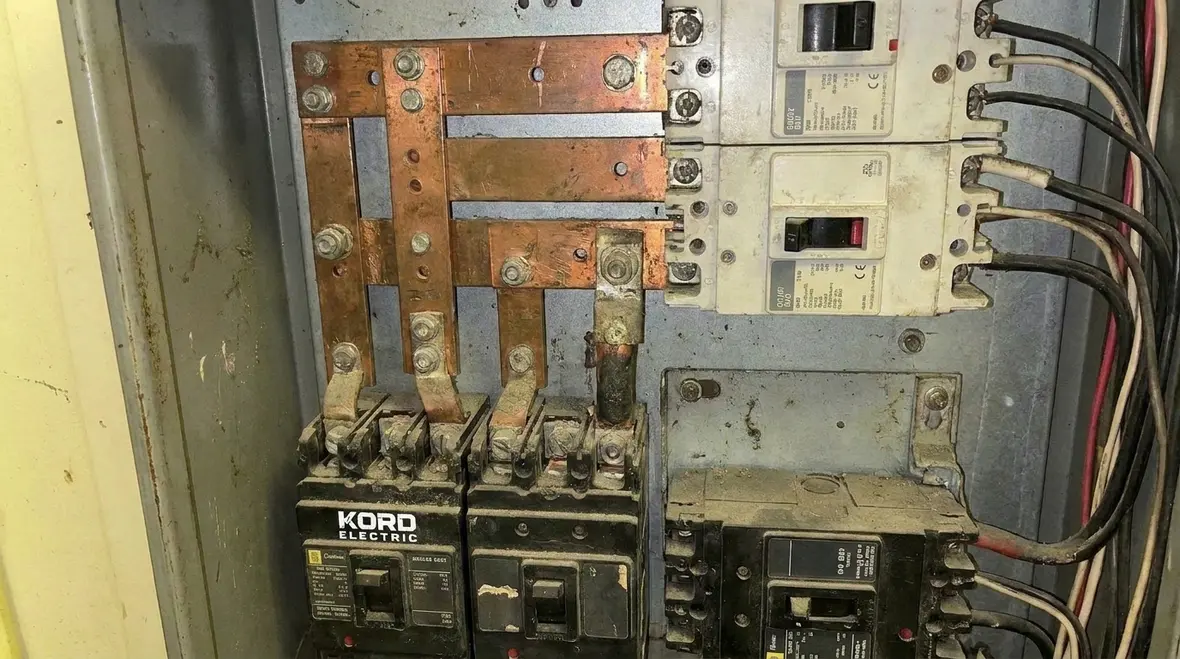
After we establish the MCC rating basis, we focus on coordination. In a well-coordinated system, protective devices clear the fault without damaging downstream gear more than necessary. That means selectivity, proper trip curves, and realistic clearing times, not wishful thinking.
Here is where we earn our keep. Our experienced service staff does not just “confirm” equipment. Instead, we examine how upstream devices, feeder protection, and branch protection interact. Additionally, we look at how coordination reduces nuisance trips and helps keep critical operations running.
And yes, it is possible to build a system where everything trips at once, like a popcorn machine that never stops. We aim to avoid that. We want the right device to act at the right time, so the problem is contained, repairs are easier, and downtime stays limited.
Common mistakes we see during MCC upgrades and renovations
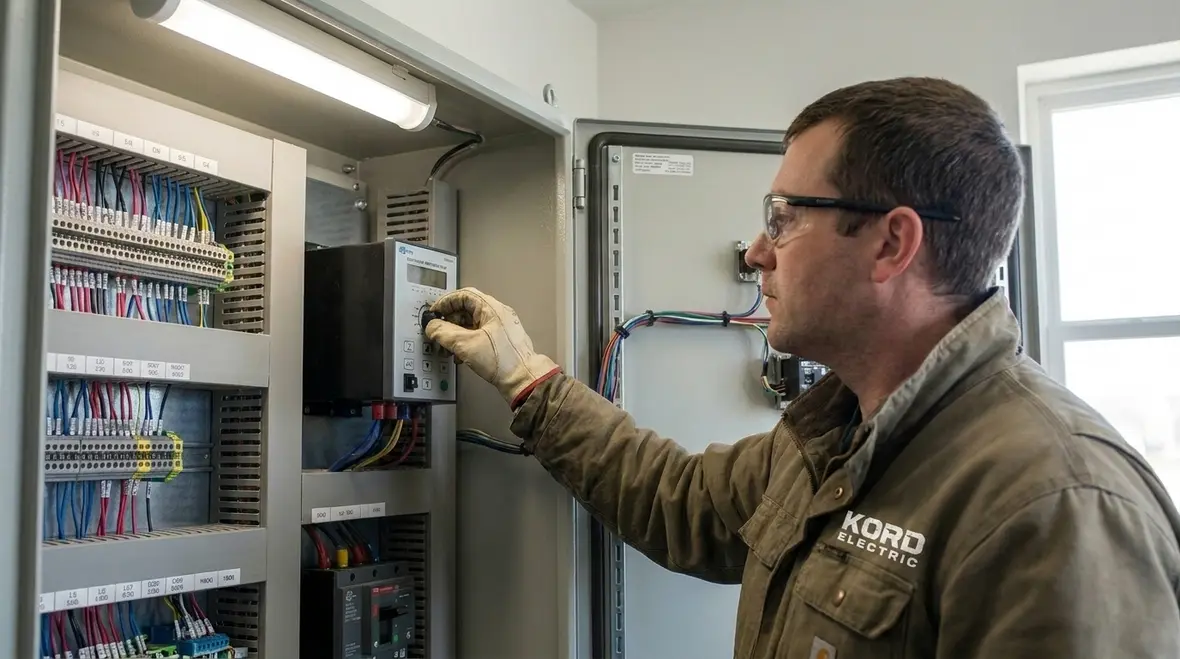
Even smart teams stumble when schedules tighten and scope expands. We often see the same patterns, especially in major property buildings where renovations touch multiple distribution levels.
First, teams reuse older MCC lineups without confirming the available fault current at the new installation point. Next, they assume equipment labels automatically match the system without verifying the system model. Then, they overlook how changes in transformers, feeders, or upstream breakers alter fault current levels.
Our technicians also see gaps in documentation. If the paperwork does not show the rating basis, future troubleshooting becomes slower and riskier. Moreover, maintenance crews need clear references for what is installed and why.
Finally, we notice teams treat coordination like an afterthought. But coordination affects safety and uptime. Therefore, we encourage proactive reviews before equipment arrives on site, not after the conduit is already bent. If you ever want a project to feel like a sitcom, wait until after installation to discover a rating mismatch. Otherwise, we prevent the plot twist.
For teams planning broader electrical upgrades, resources like our articles on data-driven electrical design and emergency power planning help connect these MCC ratings to the bigger picture of system reliability and business continuity across your facility.
How we apply the NEC concepts across industrial fire pump and power systems
Many major property buildings blend general power distribution with life safety power needs. In those cases, standards guidance from NEC resources and fire protection references becomes more than “background reading.” For instance, when facilities manage fire pump systems, they must align electrical performance with safety requirements so the system performs when called.
We work in step with the principles explained in NEC based guidance from our broader ecosystem, including our teams that support fire pump perspectives through resources like firepumps.org. And while our focus at Kord Electric remains on commercial and industrial electrical work, we still treat these cross system dependencies seriously. When power quality, coordination, and protection do not align, life safety systems may face avoidable risk.
That is why our expert service staff explains standards in a way that connects sections to outcomes. We also coordinate with other specialists so MCCs, feeders, and life safety related circuits share a consistent model. In a real building, those systems do not live in separate worlds, and neither should the design review.
Implementation roadmap: how commercial teams can move from code talk to safe work
To keep projects smooth, we recommend a clear sequence that we follow with our clients in commercial and industrial environments.
- Gather system data including utility source details, transformer data, and existing protective device ratings
- Compute available fault current at the MCC location using the actual distribution path
- Verify MCC short-circuit rating using the NEC Section 670.6 MCC short-circuit rating requirement and the related equipment ratings
- Confirm protective device coordination so the correct device clears faults with realistic clearing times
- Document everything so inspection and future maintenance teams can trace the rating basis
- Plan commissioning and field verification including settings checks and visual checks that match the design
As we execute, our technicians explain each step and point out what to look for during review. That helps teams avoid last minute surprises. Then, when someone asks, “Why is this rating different from the old lineup?” we already have the answer, and it sounds less like guesswork and more like a professional report.
For facilities in our local service regions, this roadmap ties directly into broader offerings such as Los Angeles County electrical services for commercial and industrial facilities, where MCC studies, coordination reviews, and fault current analysis sit alongside distribution upgrades and project planning.
FAQ
Final thoughts and next step with Kord Electric
We know code text can feel dense, but safety and uptime cannot wait for a “later read.” Kord Electric supports commercial and industrial facilities with practical MCC reviews built around the NEC and real system conditions, including the NEC Section 670.6 MCC short-circuit rating concept. If you are planning an upgrade, expansion, or life safety related electrical work, reach out to us. We will review your system data, confirm fault current assumptions, and help you move forward with confidence.
Whether you are working through a single MCC replacement or a campus wide distribution upgrade, our team can connect fault current studies, coordination analysis, and NEC compliance with hands-on installation and commissioning support. The result is straightforward: equipment that behaves correctly when something goes wrong, not just when everything is calm.


