
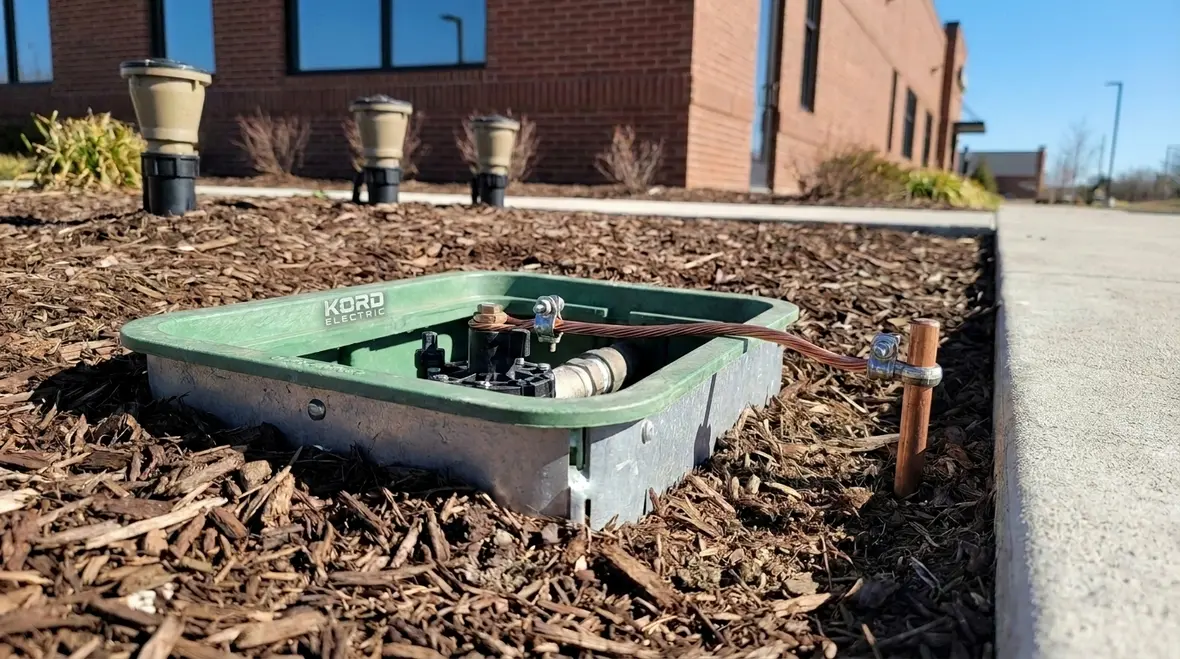
NEC Section 675.14 Irrigation Equipment Bonding for Commercial Sites
NEC Section 675.14 irrigation equipment bonding: why it matters for commercial sites
In commercial and industrial electrical work, we do not guess. We verify. In the first part of our review of the NEC Section 675.14 irrigation equipment bonding, we focus on one clear goal: keeping irrigation equipment safely connected to the site’s electrical system so a fault does not turn metal parts into the next “electrical surprise.” Under NEC Section 675.14, bonding requirements help manage conductive paths and reduce shock risk, especially where irrigation equipment connects to wiring systems. Now, that does not sound glamorous, but neither does a fire drill until you hear the alarm. At Kord Electric, our technicians and expert service staff explain these rules in plain language, then we apply them with the discipline they deserve.
In this article, we break down how the National Electrical Code supports safe installations for commercial and major property buildings, what bonding and grounding mean in practice, and how we help your team stay compliant without slowing down operations. Yes, we can be soothing, but we still move fast.
What the NEC really does for large properties
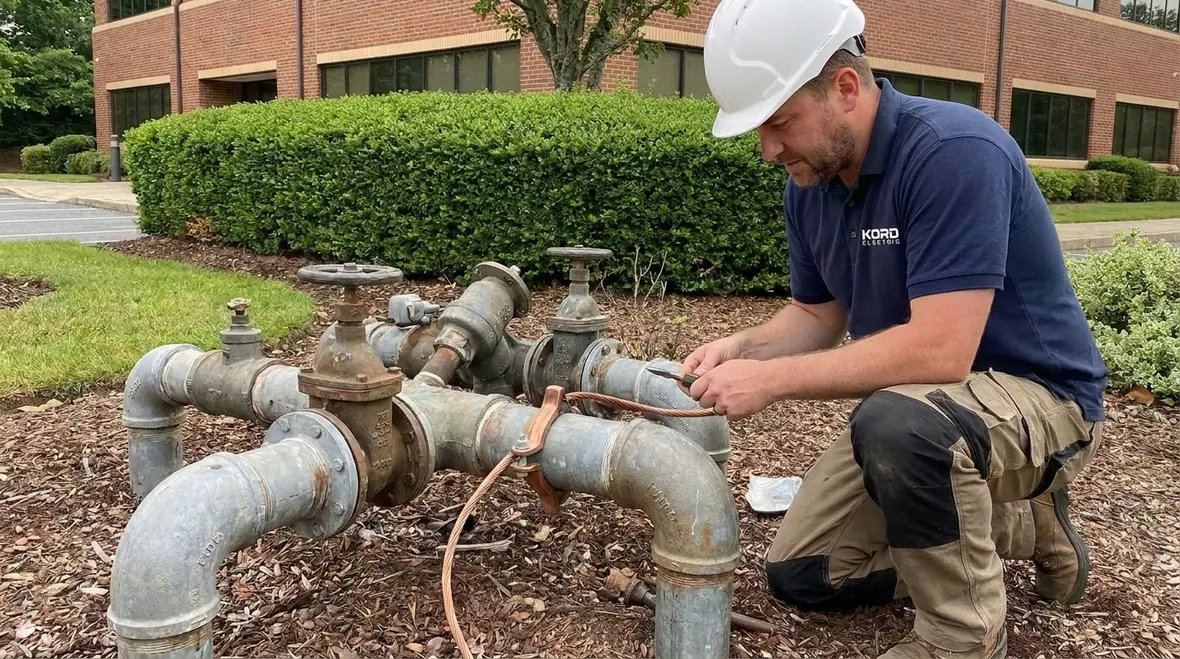
The NEC is not a set of vibes. It is a detailed safety framework that supports consistent electrical design and installation practices. For commercial and industrial facilities, it helps reduce hazards that come from common realities: moisture, equipment movement, upgrades over time, and multiple trades working in the same areas. Others may treat code as paperwork. We treat it as protection for people, assets, and downtime risk.
Importantly, the NEC also clarifies how to build systems that work together. For example, bonding and grounding connect equipment and wiring to control potential differences during a fault. As a result, protective devices can operate as expected. Meanwhile, your facility maintains stability during both normal operation and abnormal events. Our technicians walk through the logic: when a fault occurs, current needs a safe path. Then breakers and protective devices clear the fault. That is not just theory. We verify it with our field methods and documentation.
And if you think “fault current paths” sounds like a sci fi plot, trust us, it is less exciting than it sounds, but it saves lives. Every time.
If your facility team wants a broader overview of how the National Electrical Code anchors these decisions, you can also explore our related Kord Electric guide “Understanding NFPA 70: The National Electrical Code Explained for 2026”, which links high level code organization to field choices for major properties.
How bonding differs from grounding, and why both show up in NEC rules
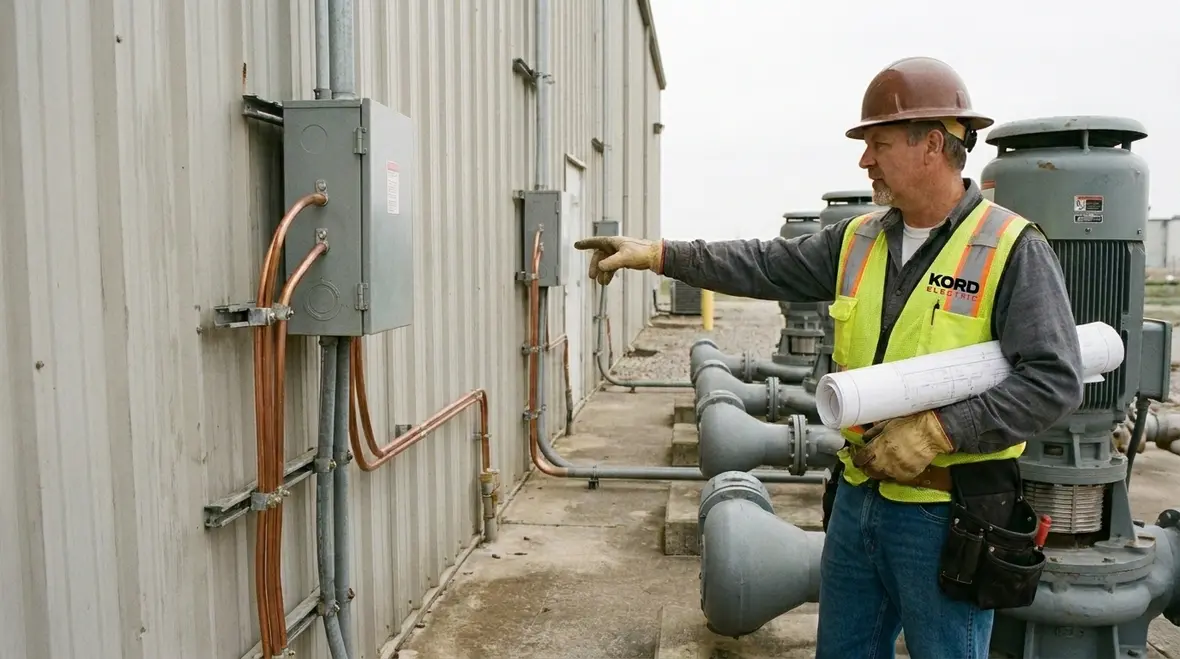
Many facility teams hear “bonding” and “grounding” and assume they mean the same thing. They do not. Bonding ties conductive parts together so they stay at the same electrical potential. Grounding connects the system to the earth or an approved grounding conductor path. Together, they help control voltage, reduce shock risk, and allow fault protection to function correctly.
When we work on NEC Section 675.14 irrigation equipment bonding, we treat bonding as a key step in making irrigation equipment part of the facility’s electrical safety system. In other words, if an irrigation component can become energized through a fault, bonding gives that energy a controlled route. Then grounding supports the overall fault handling method.
Our expert service staff explain it like this: grounding is your route to the earth, while bonding is your route between metal parts that must act as a team. If that sounds like an overqualified sports analogy, well, we have seen what happens when “teamwork” is missing on a job site.
Where bonding shows up around irrigation gear
In commercial irrigation systems, bonding typically connects:
- Metal enclosures for irrigation controllers and timers
- Metallic raceways and junction boxes that serve pumps or control valves
- Metallic frames, housings, or structural components that can become energized
- Supplemental metal parts in contact with wet soil or walkways near the equipment
Each of those parts needs a reliable bonding path so a fault current has somewhere intentional to go, instead of choosing a person standing on damp concrete.
Irrigation equipment in commercial environments: where risks increase
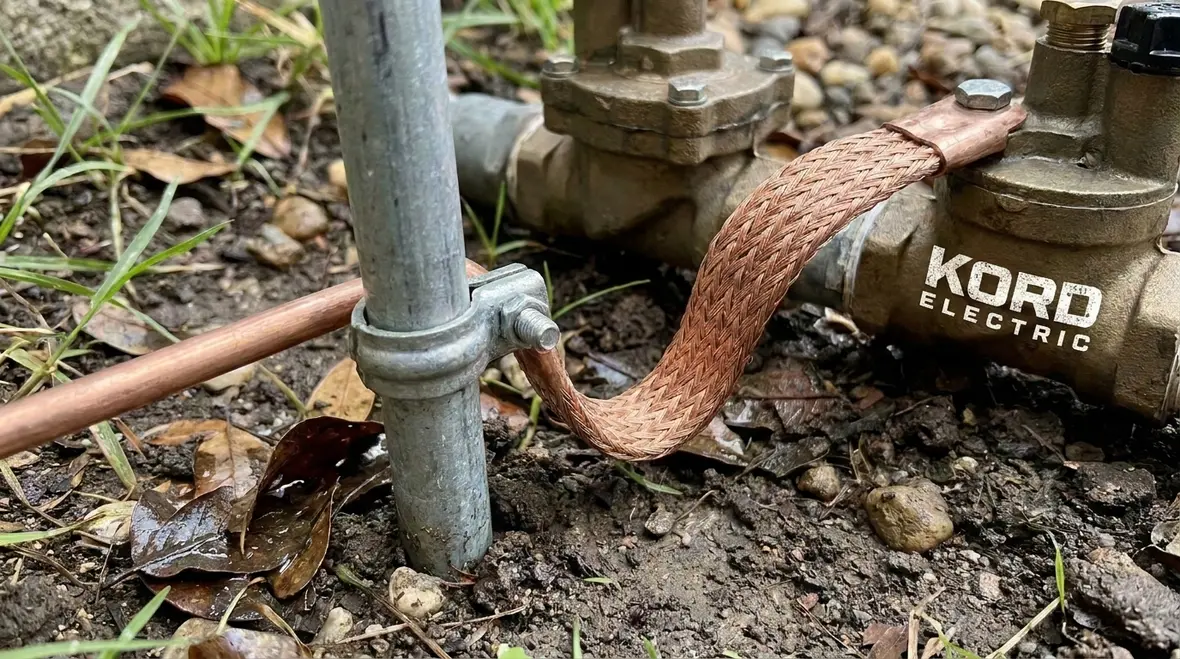
Commercial landscapes and irrigation systems operate around the clock or on predictable schedules, and the environment keeps challenging the equipment. Water exposure, wet soil, sprinklers that cycle through pressure changes, and seasonal system upgrades create conditions that can stress electrical connections. Additionally, irrigation equipment often sits near walkways, maintenance access points, and utility pathways. That means a safety failure impacts real people, not just equipment.
We also see that irrigation systems evolve. Someone adds a control valve later. Another team replaces a section pump. A contractor installs a new controller. These changes can introduce mismatched components and incomplete conductive connections if bonding and grounding are not reviewed each time. Therefore, we treat irrigation electrical reviews as an ongoing process, not a one time event.
From our experience with major property buildings, we know where issues hide: tight junction boxes, aging conduits, poorly labeled bonding jumpers, and conductor routing that looks neat but skips required connections. Our technicians inspect for physical continuity, correct conductor sizing, proper connection points, and code-aligned installation practices.
Real world scenarios we watch for
- Metallic irrigation pump housings set on concrete pads where people walk or work
- Controllers mounted on metal posts fed by underground raceways that pass through wet soil
- Retrofit projects where old and new equipment share enclosures but do not share a bonding jumper
- Expansions where one area is carefully bonded, and the new wing quietly “forgets” to connect
In each case, the NEC expectations are not about making paperwork thicker. They are about making sure every exposed metal part that could become energized is part of the same controlled path back to the source.
What NEC Section 675.14 irrigation equipment bonding requires in real work
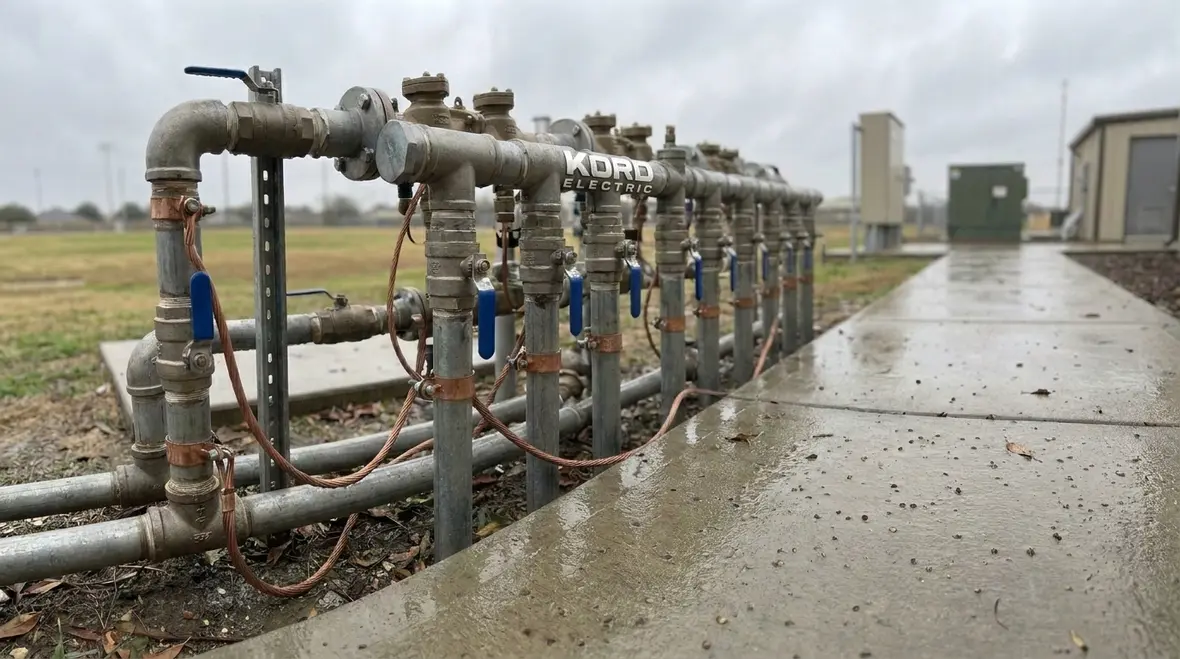
NEC rules do not live in a vacuum. They show up at the job site when we select hardware, route conductors, and secure connections. Under NEC Section 675.14 irrigation equipment bonding, our goal is to ensure irrigation equipment metal parts that can become energized are bonded as required, so the facility safety system can respond during faults.
In practical terms, we focus on these job site outcomes:
- Correct bonding connections: We ensure irrigation equipment metal parts connect to the system bonding network using approved methods and connection points.
- Reliable continuity: We check for secure termination and stable contact, because loose connections do not stay loose only for a day.
- Clean equipment integration: We align irrigation equipment wiring and bonding with the broader electrical installation design used across the site.
- Coordination with protection devices: We help your team confirm that fault current pathways support proper operation of protective devices.
Now, some people ask us whether bonding matters if nothing “seems wrong.” We respond calmly: the absence of a problem does not prove the installation can handle a fault. However, proper bonding and grounding reduce the odds that an invisible problem turns into a visible incident later.
To keep your facility safe and compliant, we also document our work so your maintenance staff and stakeholders understand what we connected, why it meets requirements, and how it fits into your larger electrical system.
How NEC Section 675.14 links to your broader safety plan
On major commercial properties, irrigation bonding rarely stands alone. It interlocks with:
- Grounding electrode systems that serve the whole site
- Service and feeder bonding conductors that tie equipment together
- Life safety systems that depend on stable electrical behavior during faults
- Site wide electrical design choices informed by NFPA 70 and related guidance
That is why we align NEC Section 675.14 irrigation equipment bonding with your larger electrical safety strategy instead of treating it like a small side project hiding near the landscaping line item.
Keeping code aligned across projects: our process for commercial compliance
At Kord Electric, we work with commercial and industrial facilities and major property buildings. That means we plan for long-term reliability, safety, and minimal disruption. We follow a process designed to keep NEC alignment consistent across design, installation, and service.
Here is how our technicians and expert service staff usually approach NEC aligned bonding work:
- Site review and electrical context: We look at how the irrigation equipment connects to controllers, power sources, and the facility grounding and bonding scheme.
- Component verification: We confirm that equipment, wiring methods, and termination hardware match the intended installation plan.
- Bonding path checks: We confirm that conductive parts connect as needed and that the bonding method provides stable continuity.
- Protective device coordination: We support safe operation during fault events so protective devices can do their job.
- Service-ready documentation: We leave clear records so future updates do not break the system quietly.
And yes, we coordinate with other teams. Construction does not pause because a code requirement exists. So we manage the work in a way that respects scheduling, safety rules, and ongoing facility operations. When a facility needs multiple trades to work together, we help make sure the electrical safety side does not get left behind like a pop quiz no one studied for.
Support beyond one project cycle
We also help facilities fold NEC Section 675.14 irrigation equipment bonding into their ongoing maintenance plans. That includes periodic checks during seasonal irrigation work, upgrades to controllers, and capital projects where irrigation infrastructure moves or expands.
NEC updates, reference resources, and how we stay current
Electrical code language evolves, and facilities need service providers who keep pace. We support teams that rely on the NEC as a living standard, not as a one time checklist. That is why we review relevant NEC guidance and code interpretation resources, including industry explanations that help translate requirements into installation logic. We also pay attention to related topics across the electrical and fire protection ecosystem, because bonding and grounding connect to broader safety outcomes.
For example, fire related resources remind us that electrical safety and fire risk reduction tie together through correct system design and fault control. When a facility has fire pumps or fire alarm and suppression systems, the electrical design needs to integrate correctly across disciplines. Organizations focused on fire pump standards also reinforce why clear electrical pathways matter when equipment has to perform under stress. Therefore, we treat bonding work as part of an overall safety strategy, not isolated compliance.
If your property team wants to see how these concepts connect, we encourage you to explore code education sources and relevant industry references, including NEC explainers and fire and pump related guidance that support practical understanding. Then we bring that knowledge to your site with trained staff.
Connecting irrigation bonding to broader NEC education
Many of our commercial clients use irrigation focused projects as a starting point to dive deeper into NFPA 70 coverage. Articles like our NEC organization and “how to read the code” guides help teams understand where NEC Section 675.14 sits in the bigger structure, so irrigation bonds line up with service conductors, raceway choices, and life safety requirements across the property.
FAQ
Choose Kord Electric for code aligned irrigation bonding
If your commercial property uses irrigation equipment, we help you handle NEC aligned NEC Section 675.14 irrigation equipment bonding with clear planning, skilled technicians, and documented results. We work with facility managers, general contractors, and property teams on major buildings where uptime matters and safety cannot wait. Call Kord Electric to review your irrigation electrical setup, verify bonding continuity, and strengthen fault protection readiness. Let’s handle it now, before the next “mystery” issue shows up like a sitcom problem that never ends.
For multi site portfolios across the region, our Los Angeles County electrical services team can also integrate irrigation bonding checks into broader electrical inspections, upgrades, and planning work, so your outdoor systems match the same NEC expectations you rely on indoors.
Whether you are updating a single controller or coordinating a campus wide irrigation retrofit, we connect Section 675.14 requirements to your real timelines, budgets, and risk controls. That way, your landscaping can run on schedule while your electrical system quietly does its job in the background—without surprises.


