
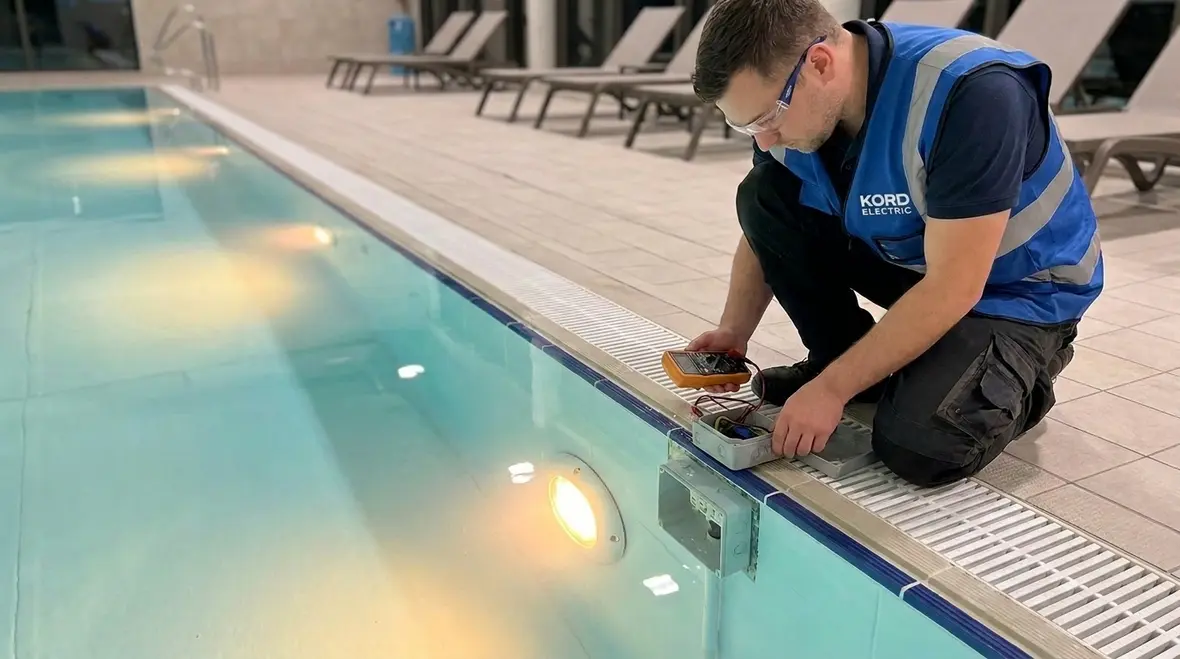
NEC Section 680.23 Underwater Pool Luminaires Guide
At Kord Electric, we handle lighting and power for commercial and industrial facilities, and we take code compliance just as seriously as we take customer comfort. That is why, when we plan an outdoor or pool lighting upgrade, we start with NEC Section 680.23 underwater pool luminaires. These fixtures sit in a tough environment: wet areas, changing temperatures, and constant exposure. However, the code is there to keep people safe and systems reliable. And if you think paperwork is boring, trust us, we have seen a lot worse things than paperwork, like a breaker that trips right when the client is hosting a big event. So we explain the rules clearly, and our technicians walk you through the practical “how” from design to installation.
In this guide, we outline what the National Electrical Code demands for pool and wet-area lighting, how NEC 680.23 connects to broader wiring rules, and what your facility should expect when our expert service staff manages the work.
NEC Section 680.23 underwater pool luminaires: what it protects and why it matters
NEC Section 680.23 underwater pool luminaires sets requirements for luminaires installed underwater or in places where water creates a high risk. In plain terms, it focuses on reducing shock hazards and limiting fire and equipment damage. Yet it also supports a bigger goal: stable operation. A pool lighting system should not become a recurring service call or a safety concern during peak season.
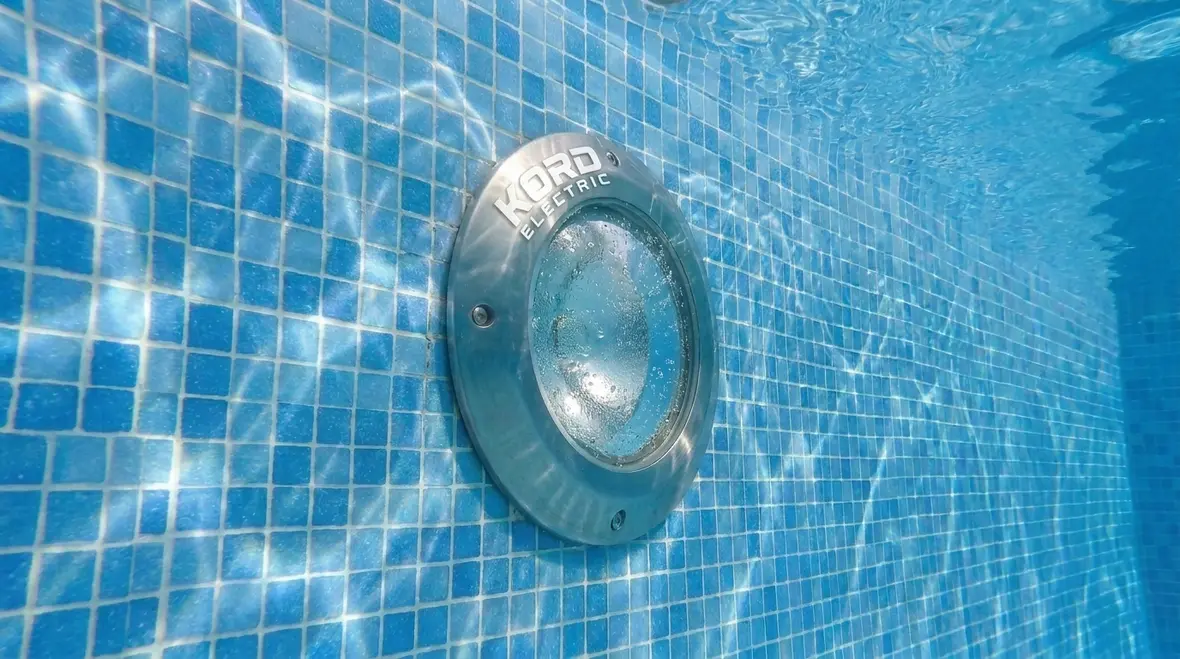
Our technicians treat this section as a starting point, not a finish line. First, we verify the fixture location and the way it is mounted. Next, we confirm the electrical characteristics that the code expects for underwater use. Then, we coordinate the wiring method and protection so the system can handle the conditions it will face every day.
Think of it like choosing the right tool for a job. You can force a wrench on a bolt all day, but eventually something gives. Code compliance does not rely on luck. It relies on design choices that prevent failure modes.
When we explain these rules, we also connect them to broader NEC guidance. Many facility teams review educational resources like Understanding NFPA 70: The National Electrical Code Explained for 2026 before they dive into focused topics such as NEC Section 680.23 underwater pool luminaires. That context helps leaders see how pool lighting rules fit into the larger safety picture.
Where the wiring rules show up in real facility projects
Many building owners assume code compliance is only about the fixture. However, in the field, the wiring path matters just as much. Even when NEC Section 680.23 underwater pool luminaires is followed correctly, a weak connection, an improper raceway, or missing protection can still create risk.
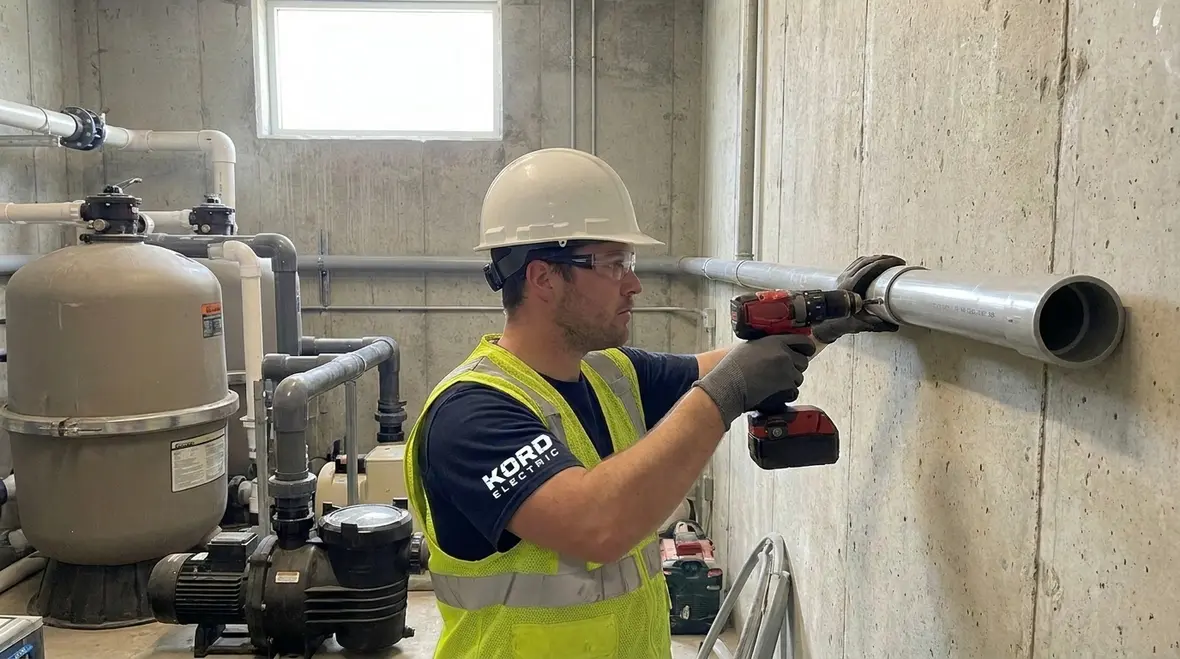
For commercial and industrial sites, we also plan around operational realities. Maintenance teams need access. Contractors need clean routing. Facility managers want fewer outages. Therefore, we map out the lighting circuits, review how power feeds the pool lighting, and confirm the installation details match the intended use.
Our expert service staff often explains it this way: the code does not care about our schedule, but it does care about our workmanship. So we build the wiring system with durability in mind, using proper materials and installation practices that hold up in wet environments.
That wiring discipline lines up with the workmanship expectations described in NFPA 70 Section 110.7 and other core NEC sections that Kord Electric covers in detail in our code-focused resources. When we manage pool lighting, those wiring integrity standards move from “nice idea” to daily practice.
How the NEC treats pools, wet areas, and the path to safe installation
The NEC is not just a list of random rules. It is a structure that ties together system design, equipment selection, and safety outcomes. When we work on pool-related installations, we align decisions across the plan set and the field work so the entire assembly stays consistent.
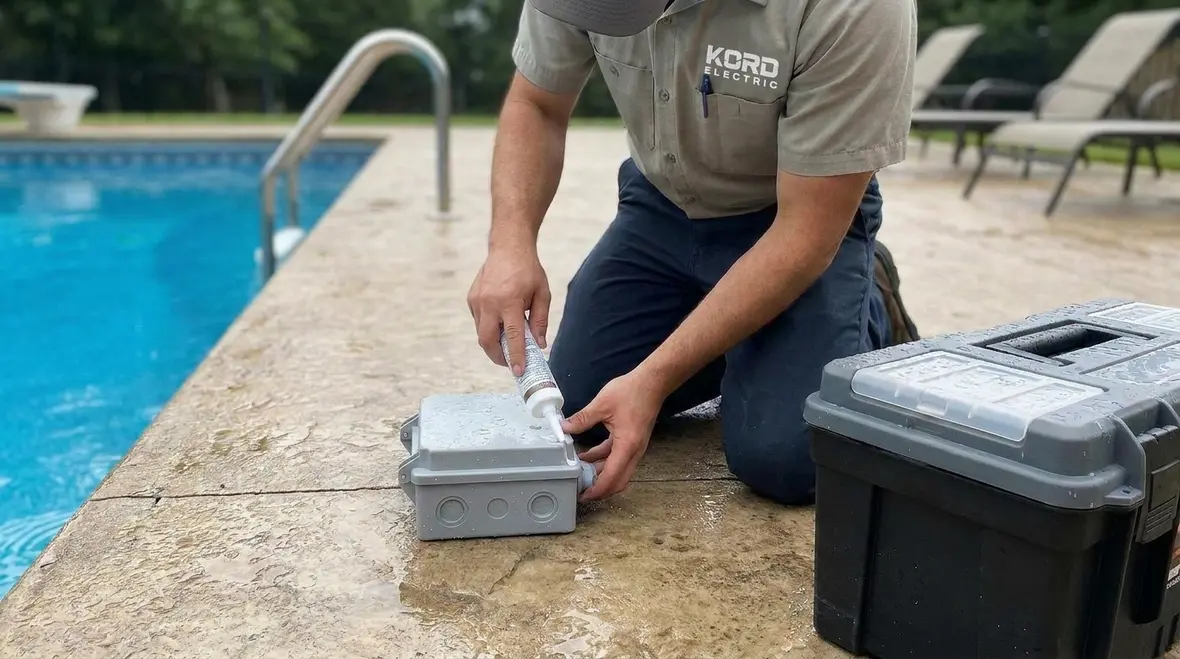
From our work across Kord Electric and our wider resources, we see a common pattern. Teams focus on the visible part and miss the invisible part. Yet the invisible part is where problems like corrosion, insulation breakdown, and unwanted conductive paths usually start. As a result, we focus on the entire circuit, including the way conductors enter equipment and how joints stay protected.
At this point, many clients ask, “Why does the code get so specific?” The answer is simple: pools combine electricity and water. That mix demands tighter controls than typical indoor lighting. And if you ever watched a pop culture hero ignore safety rules and then learn a lesson the hard way, you already understand why this matters. We do not build systems that rely on dramatic failure. We build systems that prevent it.
In practice, this means we cross-reference NEC Section 680.23 underwater pool luminaires with related articles, such as underground pool wiring guidance and general NEC safety rules. That way, the choice of luminaire, wiring method, and protective devices fit together like a single system rather than a pile of parts.
Coordination with fire safety and facility standards

Electrical design in wet areas does not live alone. It connects to fire safety planning, emergency response needs, and overall facility standards. When a facility team updates pool lighting, they often also review alarm power, emergency circuits, and any nearby equipment that interacts with life safety functions.
Our approach is to coordinate early. We review the broader electrical scope and the site conditions, including pathways for raceways, distances to other systems, and the way the lighting system affects ongoing maintenance. Then we align the installation schedule with facility operations, so you avoid shutting down more areas than you need. In other words, we help you keep the building running while we keep the risk down.
Our partner fire resources also stress the importance of integrated thinking. If the electrical system feeds or supports equipment that falls under life safety review, we help the facility team document what is installed and why it meets requirements. That documentation matters during inspections and when teams need to troubleshoot later.
Because pool areas often tie into fire pumps and related systems, facility leaders sometimes review Kord Fire and Kord Electric educational content side by side. Doing so helps align NEC Section 680.23 underwater pool luminaires work with fire protection design and inspection expectations.
What our technicians check during planning and commissioning
When we send our technicians, we do not show up and “wing it.” We use a clear sequence so nothing gets missed. First, we verify the fixture selection for underwater service. Second, we confirm the electrical rating and installation method. Third, we review the circuit protection and how the system will operate under expected load.
Then we move into field checks. Our team inspects mounting details, conductor routing, and the integrity of connections in wet or potentially wet zones. Finally, we test and verify operation so the lights perform as expected. If something fails, we fix it before we call the job complete. That is not just best practice. It is how commercial and industrial clients protect their downtime and their reputation.
Our expert service staff also explains the “why” behind each check, because clients should not have to guess. People do not manage facilities to memorize code books. They manage facilities to keep spaces safe and operational. We bridge that gap with clear communication and steady workmanship.
On many jobs, we also coordinate with facility leaders who are planning broader code upgrades. In those cases, we connect the NEC Section 680.23 underwater pool luminaires work to larger electrical code strategies, so your pool project supports, rather than complicates, long-term compliance planning.
Common mistakes we see and how to prevent them
Over time, we have seen predictable issues in wet-area projects. Some mistakes come from rushed planning. Others come from outdated assumptions. And yes, sometimes mistakes happen because someone believed the fixture itself was the whole story.
Here are the patterns we watch for, and the fixes we apply:
- Improper installation details: When the mounting and sealing do not match underwater use expectations, water exposure can increase long term failure risk.
- Wrong wiring approach: Even if the luminaire is correct, the circuit method and protection must align with wet-area rules.
- Loose or poorly protected connections: Connections that lack the right protection in wet conditions can corrode and fail.
- Missing coordination with the rest of the facility: If electrical work affects life safety planning, teams need clear documentation and integration.
- Skipping commissioning: Without proper testing and verification, problems may hide until the next maintenance cycle.
We address these issues through process. We review plans before we install, we inspect as we go, and we test at the end. This keeps the system stable and reduces the odds of “surprise outages.” You should not need a fortune teller for electrical reliability. You need a trained team.
For facilities in regions like Los Angeles County, that trained team also understands local enforcement and inspection expectations. Our Los Angeles County electrical services support pool lighting work as part of a wider portfolio of commercial and industrial electrical services.
Regulations change: how we stay ahead for future upgrades
Electrical codes update over time. Therefore, the safest strategy is to design with future flexibility and clear compliance documentation. When new requirements emerge, facilities benefit from systems built to current standards with clean installation practices that make upgrades easier.
Our team stays current through industry resources and ongoing training. We also use structured documentation during installs, so your maintenance team can trace circuit paths and equipment details later. If you plan future expansions, we help you design in a way that reduces disruption. In commercial and industrial settings, time costs money, and outages cost even more.
When the day comes for a lighting refresh, our records help teams move quickly. And if you are asking, “Will we need to rework everything?” our technicians and expert service staff evaluate the condition, the installation history, and the compliance basis. Then we recommend the most practical path, not the most expensive one.
For leaders who want a deeper foundation before planning pool upgrades, Kord Electric’s NEC explainers, including the guide on understanding NFPA 70 for 2026, help connect article-specific rules like NEC Section 680.23 underwater pool luminaires to the bigger picture of electrical safety and reliability.
FAQ
Conclusion: get it right the first time with Kord Electric
If your facility needs pool lighting work, we help you build a system that stays safe, performs reliably, and aligns with applicable NEC requirements, including underwater luminaire rules. Kord Electric serves commercial and industrial sites, and our technicians and expert service staff plan, install, inspect, and commission with care. So instead of rolling the dice and hoping the lights last through the season, contact us for a professional review and a clear path to compliance. We will bring calm, steady execution to a job that cannot afford surprises.
For facilities planning broader electrical improvements in addition to pool lighting, our team can integrate NEC Section 680.23 underwater pool luminaires work with overall service upgrades, code consulting, and maintenance strategies. That way, your pool area does not become an isolated project, but a well-documented part of a reliable electrical system.


